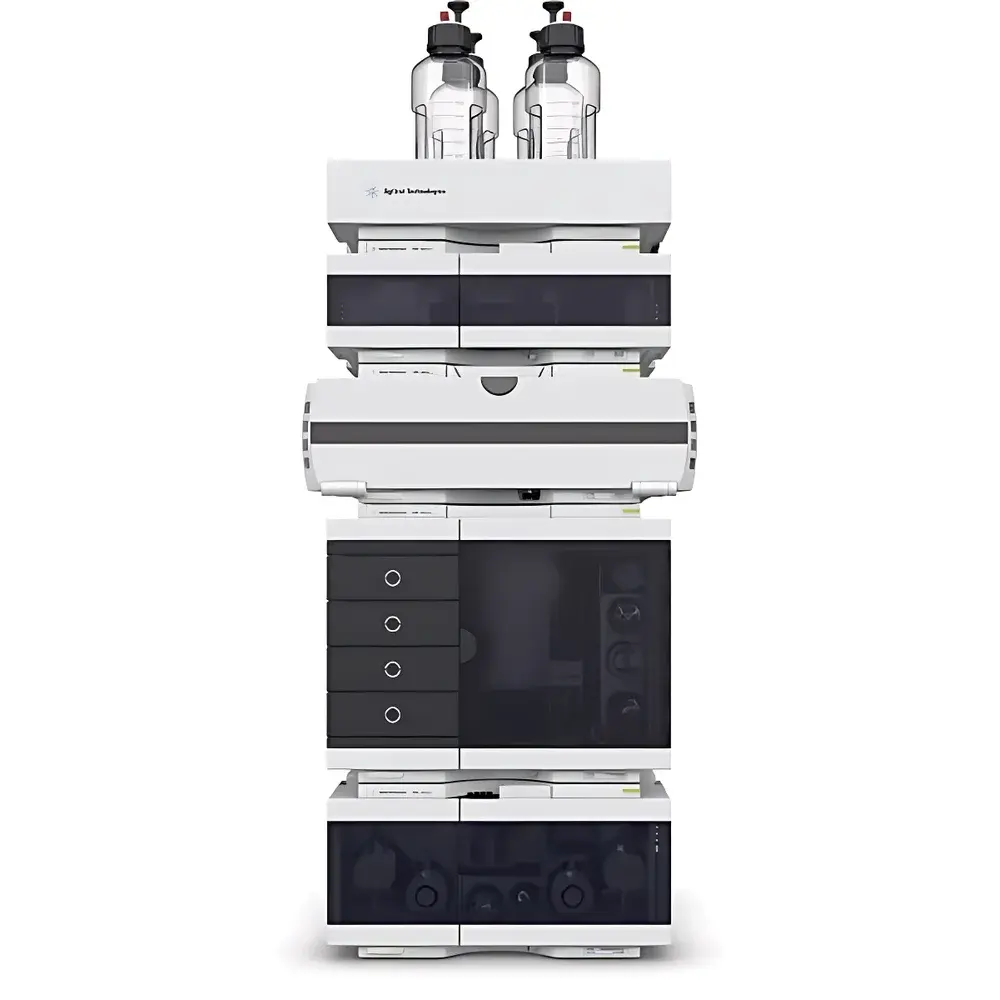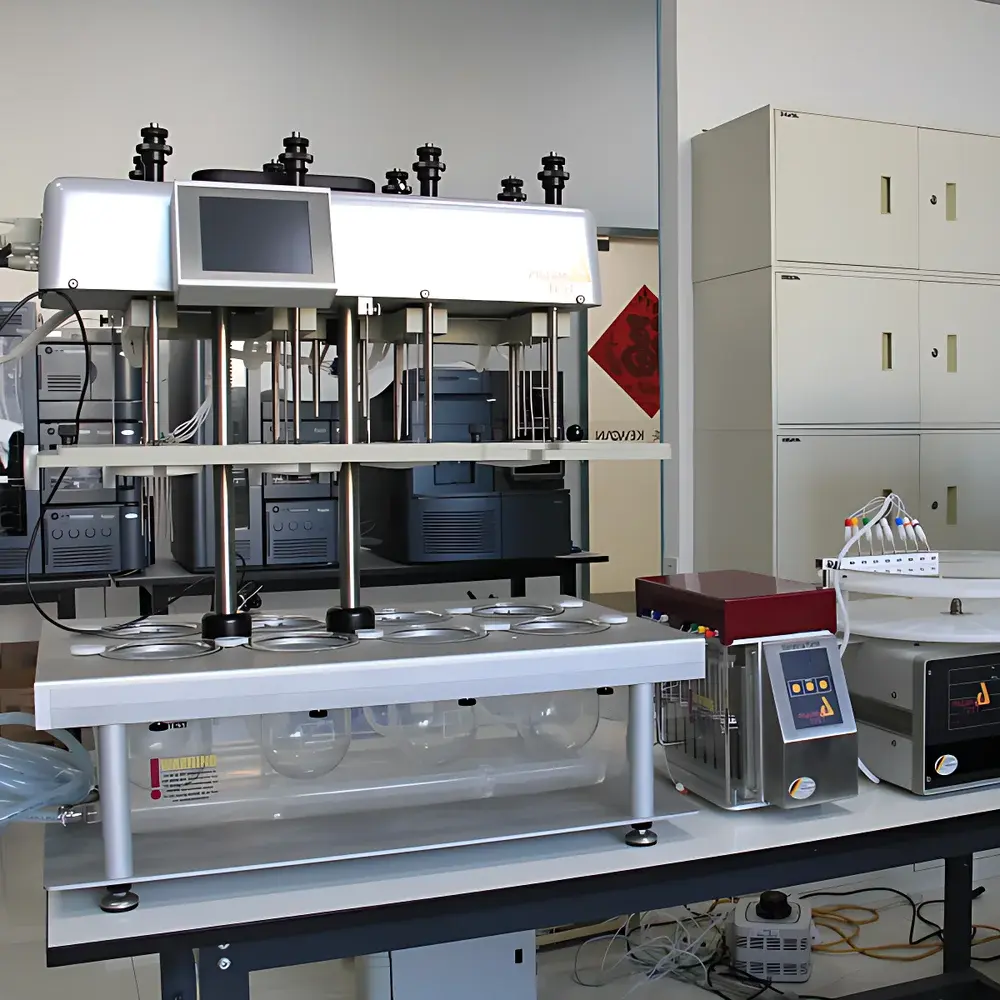
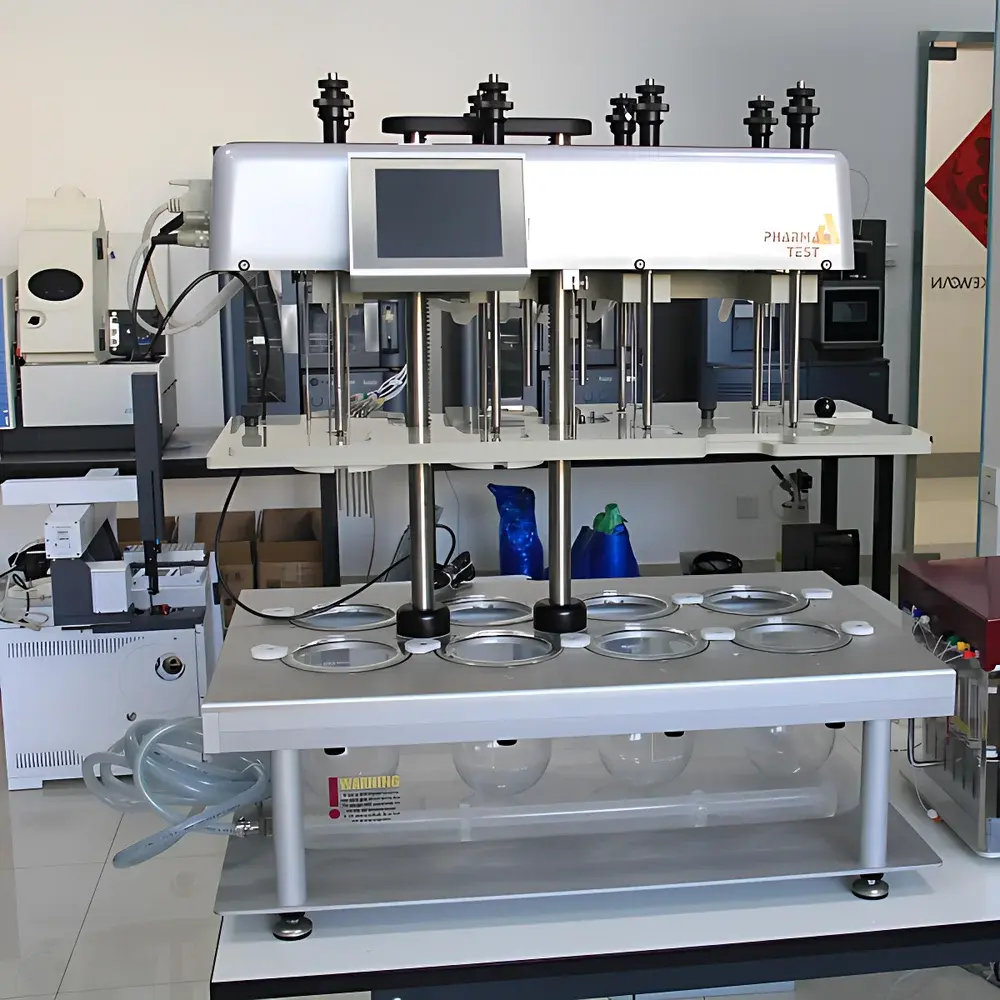
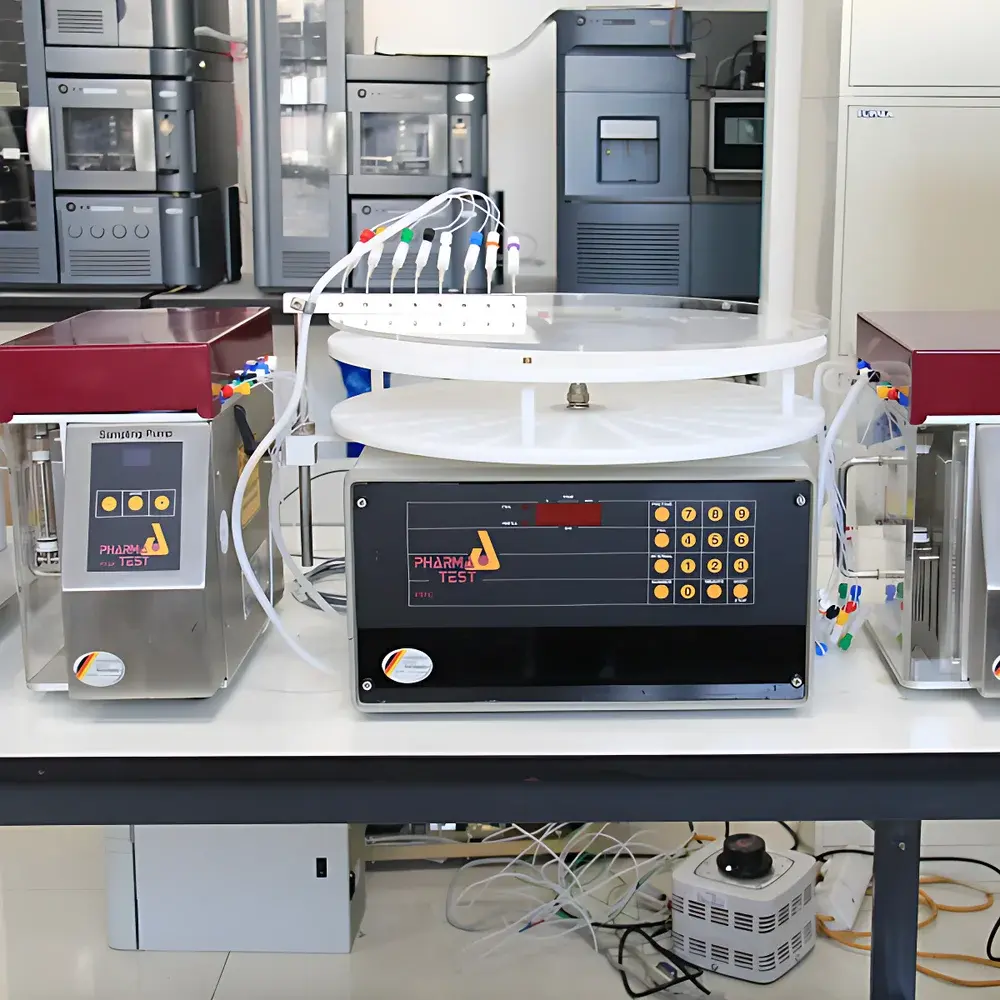
Pharma-test PTWS 1420 Dual-Drive Dissolution Tester
| Brand | Pharma-test |
|---|---|
| Origin | USA |
| Model | PTWS 1420 |
| Configuration | Dual-motor independent paddle/stirrer control |
| Test Stations | 14 dissolution vessels + 2 auxiliary heating/medium reservoir vessels |
| Compliance | USP <711>, <724>, EP 2.9.3 & 2.9.4, BP, DAB, JP 15 |
| Temperature Monitoring | Individual cup-level ITM sensors |
| Automated Sampling | EPE robotic arm with precise Z-axis immersion and positioning |
| Dosing | TMA automatic tablet/capsule drop module |
| Drive System | Monoshaft™ single-shaft universal adapter for USP Apparatus 1 (basket), 2 (paddle), 5 (paddle-over-disk), and 6 (cylinder) |
| Method Storage | Unlimited protocols via SD card |
| Calibration & Qualification | Built-in OQ/PQ reminder, pre-run self-diagnostic (optical + audible feedback) |
| Fluid Handling | DSR-M 13-channel piston pump with LCD display, 20-sample capacity, HPLC vial/tube rack compatibility |
| Thermal System | 1500 W rapid-heating water bath with removable tank, diffuser-assisted uniformity, low-volatility vessel lids |
| Connectivity | USB remote control, RS232 printer interface |
| Acoustic Design | Low-noise, vibration-damped recirculating pump |
| Software Features | User management, method management, stepwise manual start, audit-ready event logging |
Overview
The Pharma-test PTWS 1420 is a dual-drive, 14-position dissolution testing system engineered for regulatory compliance and operational reproducibility in pharmaceutical quality control laboratories. It implements the hydrodynamic principles defined in USP <711> (Dissolution) and <724> (Drug Release), as well as European Pharmacopoeia monographs 2.9.3 (Dissolution Test for Solid Dosage Forms) and 2.9.4 (Release Test for Transdermal Systems), alongside British Pharmacopoeia, German Pharmacopoeia (DAB), and Japanese Pharmacopoeia Chapter 15 requirements. The instrument employs a precision-controlled water bath with active temperature uniformity management—achieved via a high-power (1500 W) heating element, integrated thermal diffusion baffles, and removable stainless-steel bath architecture designed for rapid cleaning and validation traceability. Its core mechanical architecture utilizes Monoshaft™ technology, enabling seamless interchange of USP Apparatus 1 (basket), 2 (paddle), 5 (paddle-over-disk), and 6 (cylinder) without recalibration or vertical repositioning—critical for minimizing setup variability across multi-method campaigns.
Key Features
- Dual independent motor drive system: Enables synchronized or differential speed control for left- and right-side stirrers, supporting comparative dissolution studies and method development under asymmetric hydrodynamic conditions.
- EPE (Extended Positioning Equipment) robotic sampling arm: Fully automated Z-axis immersion, precise radial positioning over each of 14 dissolution vessels, and return-to-home sequencing—eliminating manual intervention and positional drift between sampling events.
- ITM (Individual Temperature Monitoring): Real-time, cup-specific temperature sensing with ±0.1 °C resolution; integrated into closed-loop bath control to maintain ISO 8573-1 Class 3 thermal stability across all test positions.
- TMA (Tablet/Media Auto-dosing): Pneumatically actuated, programmable drop module for consistent, timed introduction of solid dosage forms—reducing operator-induced variability in t0 initiation.
- DSR-M 13-channel piston pump: High-accuracy positive-displacement fluid handling with LCD status display; supports sequential or parallel sampling into customizable HPLC vials, microtubes, or 96-well plates (up to 20 discrete time points per run).
- Built-in qualification support: Automated OQ/PQ checklist prompts, pre-run hardware diagnostics (motor torque verification, temperature sensor validation, pump priming confirmation), and optical/audible status signaling aligned with ICH Q5A and ASTM E2503-17 guidance.
- User-accessible service architecture: Removable water bath, tool-free vessel tray extraction, and modular pump head assembly—all facilitating routine maintenance, cleaning, and third-party calibration verification.
Sample Compatibility & Compliance
The PTWS 1420 accommodates standard USP-compliant dissolution vessels (900 mL, 1000 mL, or custom volumes) and supports both immediate-release and modified-release formulations—including tablets, capsules, transdermal patches, and osmotic pumps. Its 14 primary test stations are individually numbered and thermally isolated via optimized bath flow dynamics, while two auxiliary heated reservoirs enable simultaneous preparation of dissolution media and reference standards—essential for forced degradation or sink condition validation. All electronic subsystems meet IEC 61000-6-3 (EMC) and IEC 61010-1 (safety) requirements. Data integrity features—including user authentication, role-based access control, and timestamped audit trails—support alignment with FDA 21 CFR Part 11, EU Annex 11, and WHO TRS 996 Annex 5 for computerized system validation in GMP environments.
Software & Data Management
Control and data acquisition are managed through Pharma-test’s proprietary Windows-based software suite, compliant with ALCOA+ principles (Attributable, Legible, Contemporaneous, Original, Accurate, Complete, Consistent, Enduring, Available). Methods—including rotation speed profiles, temperature setpoints, sampling schedules, and TMA drop timing—are stored indefinitely on industrial-grade SD cards with cryptographic write-lock capability. Remote operation via USB HID protocol allows integration into centralized laboratory information management systems (LIMS), while RS232 output enables direct printing of QC release reports meeting ISO/IEC 17025 documentation requirements. All system events—including motor faults, temperature excursions, and sampling deviations—are logged with millisecond timestamps and retained for ≥15 years per internal archive policy.
Applications
This system is routinely deployed in pharmaceutical R&D for formulation optimization, in QC labs for batch release testing per compendial monographs, and in contract research organizations (CROs) conducting bioequivalence and biowaiver studies. Its dual-drive architecture supports specialized applications such as sink condition evaluation, pH-shift dissolution profiling, and biphasic release modeling. Regulatory submissions leveraging PTWS 1420-generated data have been accepted by the U.S. FDA, EMA, PMDA, and Health Canada—provided method validation follows ICH Q2(R2) and reporting adheres to CDISC SDTM standards.
FAQ
Is the PTWS 1420 compatible with legacy USP Apparatus 3 (reciprocating cylinder) and Apparatus 4 (flow-through cell)?
No—Monoshaft™ design supports only USP 1, 2, 5, and 6. Apparatus 3 and 4 require separate dedicated platforms.
Can the EPE sampler be retrofitted with UV flow cells for real-time spectrophotometric analysis?
Yes—EPE mounting interfaces comply with ISO 15197 mechanical standards, permitting third-party flow cell integration with appropriate tubing and pressure regulation.
What is the maximum allowable viscosity range for media when using the DSR-M pump?
The DSR-M piston pump is validated for aqueous media up to 20 mPa·s at 37 °C; higher-viscosity solvents require pre-filtration and reduced stroke volume to prevent seal wear.
Does the system support 21 CFR Part 11-compliant electronic signatures?
Yes—software includes configurable digital signature workflows with biometric or PKI token options, fully auditable against NIST SP 800-63B assurance levels.
Are calibration certificates provided with second-hand units?
Each refurbished PTWS 1420 undergoes full metrological verification per ASTM E2503-17 and ships with a traceable certificate of performance, including temperature uniformity maps and rotational speed accuracy reports.