
Pharmaceutical Stability Testing Chamber – Temperature and Humidity Controlled Environmental Test Chamber
| Key | Temperature Range: −40 °C to +150 °C (optional down to −70 °C) |
|---|---|
| Humidity Range | 30–98% RH (optional 5–98% RH) |
| Temp. Resolution | 0.01 °C |
| Humidity Resolution | 0.1% RH |
| Temp. Uniformity | ±0.5 °C |
| Temp. Deviation | ≤±2 °C |
| Humidity Deviation | ≤±2.5% RH |
| Heating Rate | 2.0–3.0 °C/min |
| Cooling Rate | 0.7–1.0 °C/min |
| Control System | TEMI880 color LCD touchscreen controller |
| Internal Construction | SUS304 stainless steel |
| Power Supply | 380 V ±5%, 50 Hz, 3P+N+G (220 V optional) |
| Compliance | GB10589, GB10592, GB11158, GB/T5170.2, GB/T5170.5, GB2423.1/2/22, GB2424.1 |
Overview
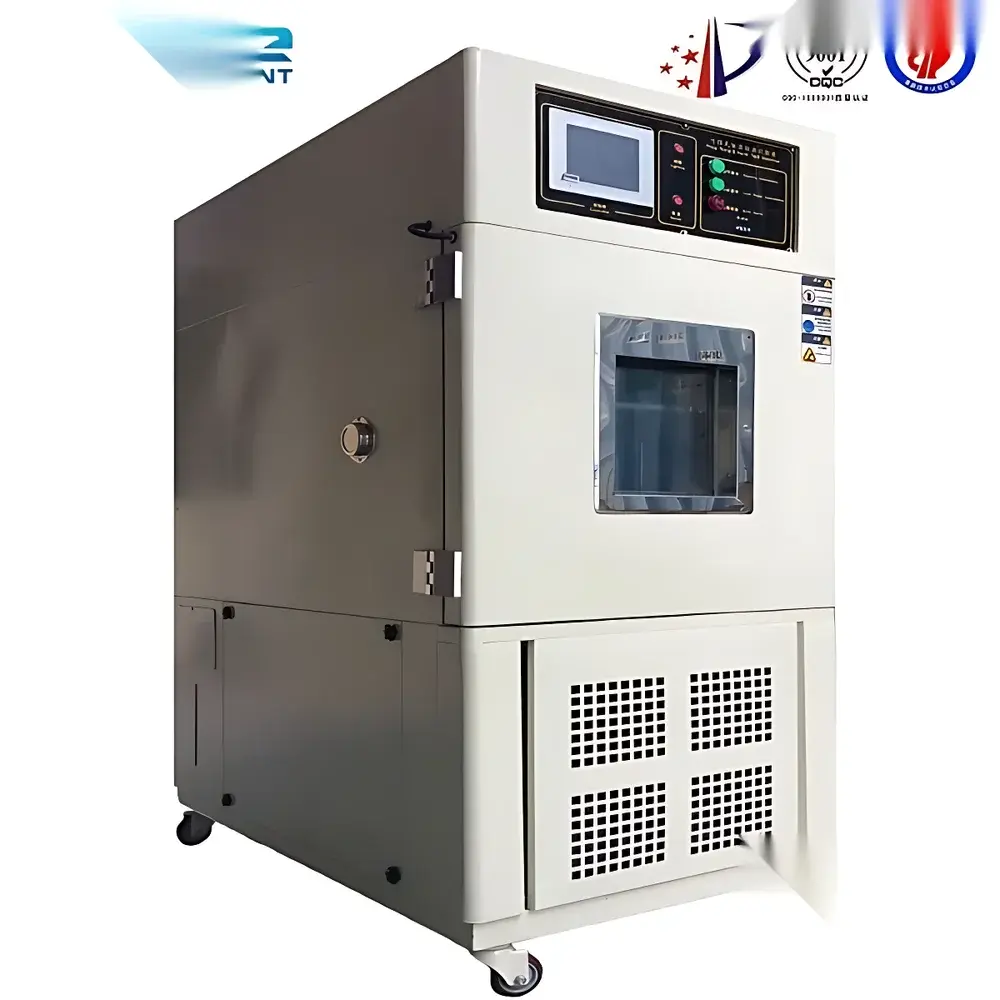
The Pharmaceutical Stability Testing Chamber is an ISO- and ICH-compliant environmental test system engineered for long-term, real-time stability studies of drug substances and products under controlled temperature and humidity conditions. Designed in accordance with ICH Q1A(R2), Q5C, and Q5D guidelines, this chamber supports regulatory submissions by delivering precise, reproducible, and auditable environmental profiles required for accelerated, intermediate, and long-term stability protocols. Its core architecture employs dual-refrigeration circuits with PID-controlled heating and multi-stage humidification/dehumidification systems, enabling stable operation across wide climatic ranges while maintaining strict adherence to pharmacopeial tolerances—critical for qualifying storage conditions per USP , , and EU Annex 1.
Key Features
- Compact footprint design: Optimized chamber geometry minimizes floor space requirements—ideal for constrained laboratory environments without compromising internal volume or airflow uniformity.
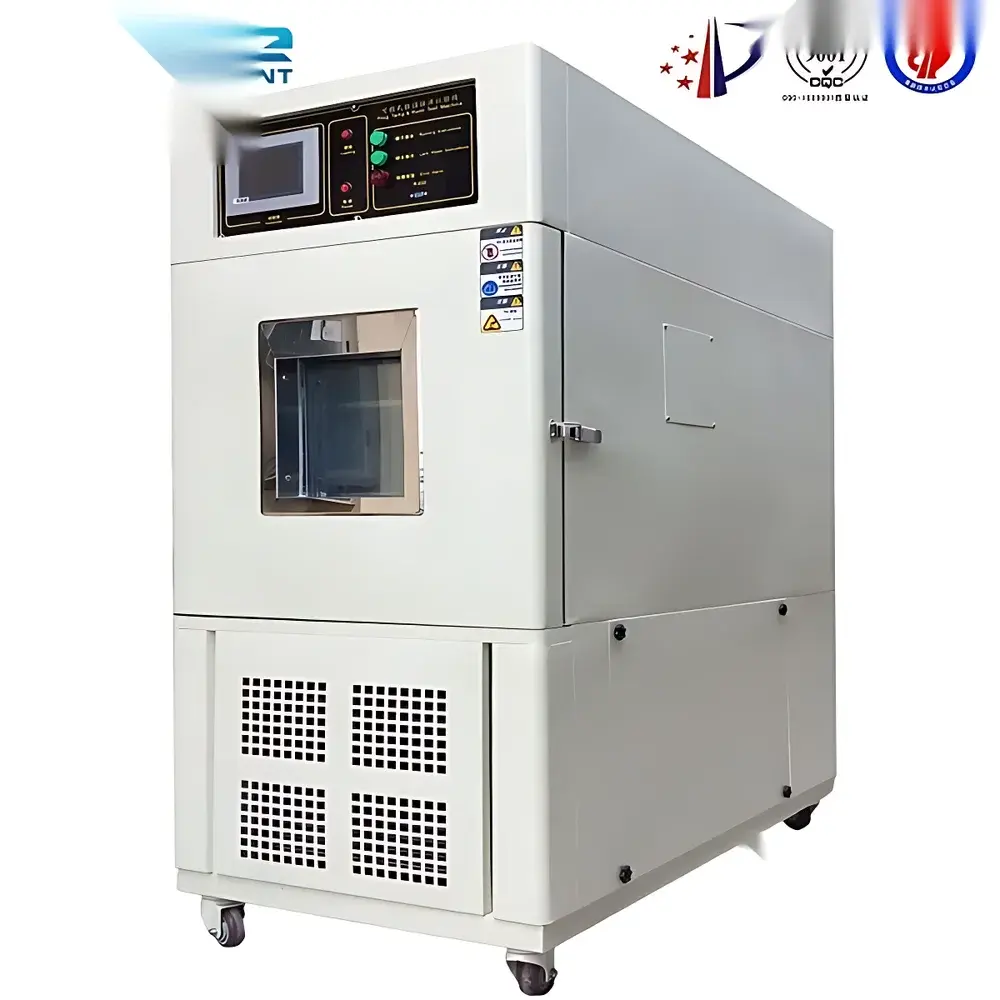
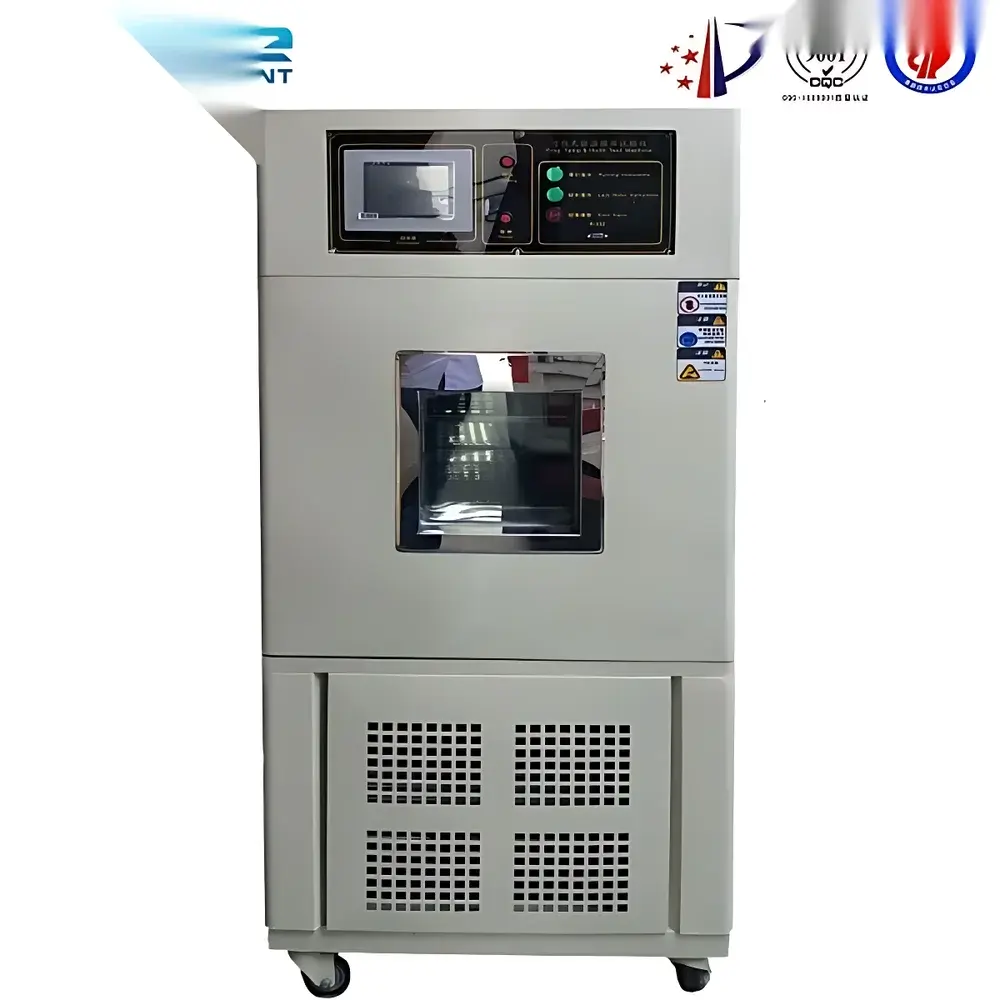
- Large observation window: Tempered double-glazed viewport with anti-fog coating ensures continuous visual monitoring of samples during extended testing cycles, supporting non-invasive inspection per GLP documentation requirements.
- High-capacity water reservoir with drawer-type access: Facilitates rapid refilling and thorough cleaning between study phases; integrated level sensors prevent dry-run operation and support traceable maintenance logs.
- Multi-layer safety architecture: Includes over-temperature/over-humidity cut-off, refrigerant pressure monitoring, door interlock, phase failure protection, and independent mechanical thermostat backup—ensuring uninterrupted sample integrity and personnel safety.
- Intuitive TEMI880 control interface: Full-color 7-inch touchscreen with real-time graphing, multi-step programmability, event logging, and password-protected user roles—designed for compliance with FDA 21 CFR Part 11 electronic record and signature requirements.
- Robust construction: Interior chamber fabricated from electropolished SUS304 stainless steel; external casing available in either SUS304 or A3 steel with epoxy-polyester powder coating for corrosion resistance and cleanroom compatibility.
Sample Compatibility & Compliance
This chamber accommodates standard pharmaceutical packaging formats—including blister packs, vials, ampoules, bottles, and sachets—as well as stability-indicating analytical reference standards. Its uniform air distribution system (validated per ISO 14644-1 Class 8 airflow criteria) ensures consistent exposure across all shelf positions. The unit meets and exceeds national and international environmental test standards including GB10589-89 (low-temperature), GB10592-89 (combined temp/humidity), GB11158-89 (high-temperature), GB/T5170.2–1996 (temperature calibration), GB/T5170.5–1996 (humidity calibration), and GB2423 series (IEC 60068-2 equivalents). It is fully compatible with GMP-aligned validation protocols (IQ/OQ/PQ) and supports automated data export for integration into LIMS and ELN platforms.
Software & Data Management
The TEMI880 controller provides comprehensive data governance features: time-stamped parameter logging at user-defined intervals (1 sec to 60 min), automatic alarm history retention (≥10,000 events), and encrypted USB data export in CSV and PDF formats. Audit trails capture operator ID, timestamp, parameter changes, and alarm acknowledgments—fully compliant with ALCOA+ principles (Attributable, Legible, Contemporaneous, Original, Accurate, Complete, Consistent, Enduring, Available). Optional Ethernet/WiFi connectivity enables remote monitoring via secure web interface and integration with enterprise MES or ERP systems through Modbus TCP or OPC UA protocols.
Applications
- ICH Q1A(R2) accelerated stability testing (40 °C/75% RH, 30 °C/65% RH)
- Long-term storage condition qualification (25 °C/60% RH, 30 °C/65% RH, 2–8 °C refrigerated)
- Intermediate condition assessment (30 °C/65% RH)
- Photostability pre-screening (when paired with optional UV/visible light modules)
- Excipient compatibility studies under variable hygroscopic stress
- Package integrity evaluation under cyclic humidity exposure
- Reference standard storage validation per USP
FAQ
What is the typical temperature and humidity uniformity performance across the working chamber?
Uniformity is validated per GB/T5170.2 and GB/T5170.5: temperature deviation ≤±2 °C and humidity deviation ≤±2.5% RH across all designated test zones under loaded conditions.
Can the chamber be validated for GMP compliance?
Yes—the system supports full IQ/OQ/PQ documentation packages, including sensor mapping reports, alarm response verification, and recovery time assessments aligned with Annex 15 and ASTM E2500.
Is remote monitoring and data backup supported?
Standard Ethernet port enables secure remote access; optional cloud-based data archiving with TLS 1.2 encryption and daily automated backups to NAS or SFTP servers.
What cooling water specifications are required for optimal low-temperature performance?
Cooling water inlet temperature must be maintained between 10–28 °C at 0.1–0.3 MPa pressure to ensure rated cooling rates below −40 °C.
Are custom chamber dimensions and configurations available?
Yes—custom internal volumes, shelf layouts, cable ports, and power configurations (including 220 V single-phase variants) can be engineered per client specification and validated per ISO/IEC 17025 requirements.



