
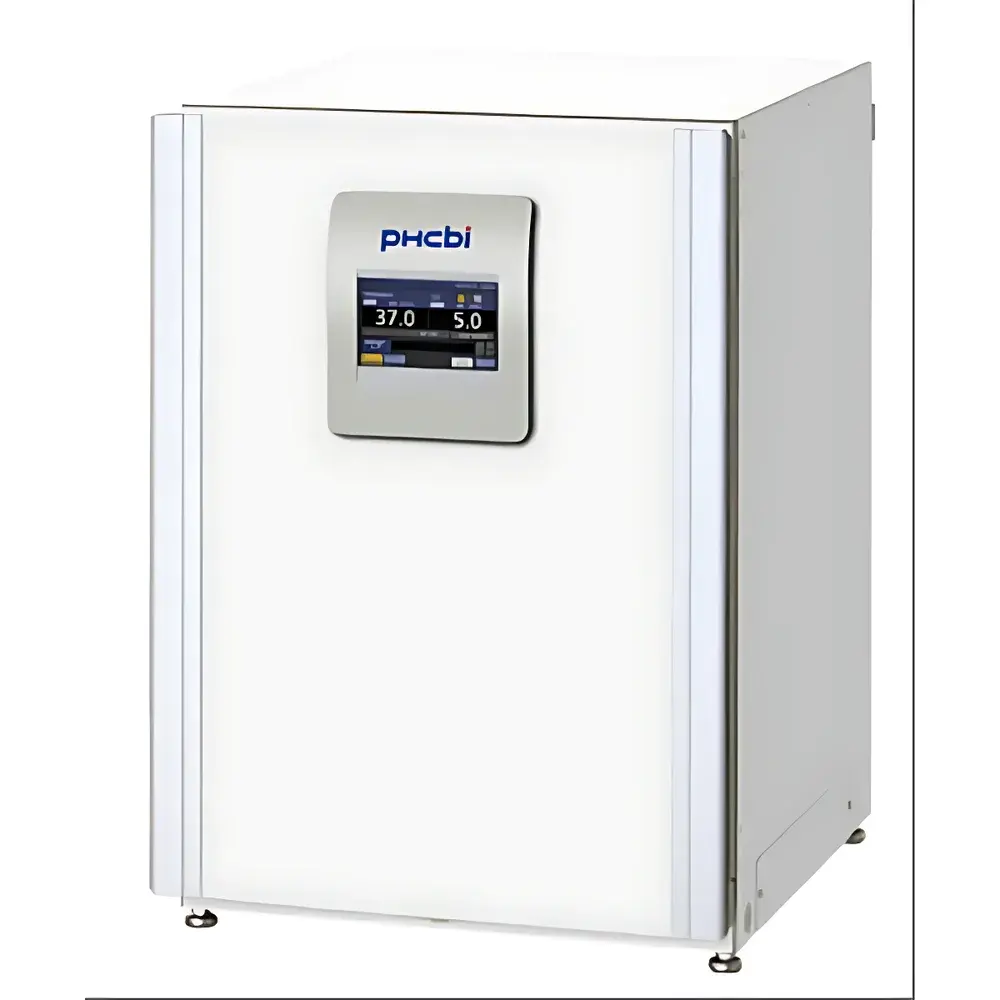
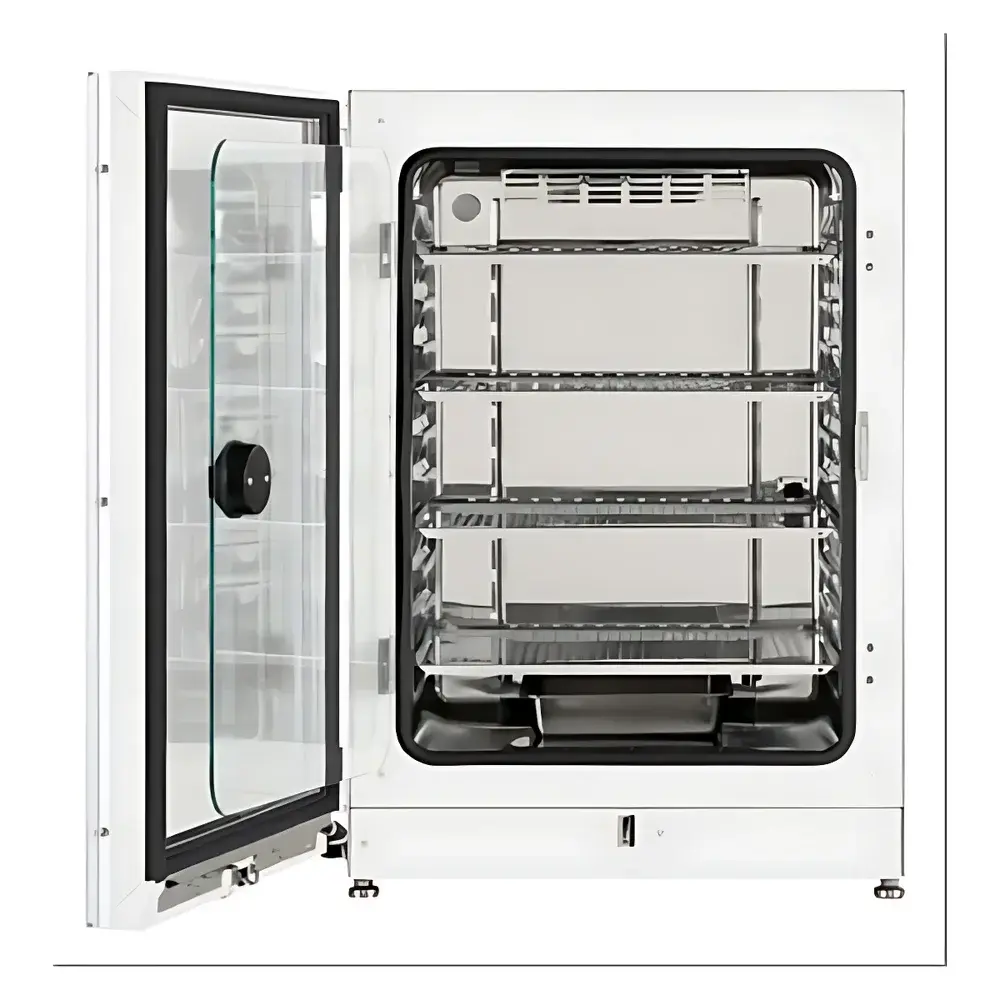
PHCbi MCO-170AICL / MCO-170AICUVL / MCO-170AICUVHL Carbon Dioxide Incubator
| Brand | PHCbi |
|---|---|
| Origin | Japan |
| Instrument Type | Air-jacketed CO₂ Incubator |
| CO₂ Detection | Dual-channel Infrared (IR) Sensor |
| Temperature Control Range & Accuracy | RT +5°C to 50°C, ±0.1°C |
| Temperature Uniformity | ±0.25°C |
| CO₂ Concentration Control Range & Accuracy | 0–20% vol, ±0.15% vol |
| Humidity Control | 95% RH (±5% RH, natural evaporation via humidification pan) |
| Chamber Capacity | 170 L |
| External Dimensions (W×D×H) | 620 × 730 × 905 mm (MCO-170AICL / MCO-170AICUVHL) or 620 × 755 × 905 mm (MCO-170AICUVL) |
| Key Configurations | SafeCell UV Sterilization System, H₂O₂ Decontamination Module with Generator & Reagent, Password-protected Electronic Outer Door Lock, Independent Inner Door Kit, CO₂ Pressure Regulator, Automatic CO₂ Cylinder Switching System, Standard Gas Auto-Calibration Kit, Copper-Alloy Stainless Steel Shelving & Half-Width Dividers, Stackable Mounting Brackets, Castor Base |
Overview
The PHCbi MCO-170AICL, MCO-170AICUVL, and MCO-170AICUVHL series represent a generation of high-integrity, air-jacketed carbon dioxide incubators engineered for demanding cell culture workflows in academic research laboratories, biopharmaceutical QC/QA environments, and GLP-compliant facilities. These models operate on the fundamental principle of maintaining precise, independent control over three critical environmental parameters—temperature, CO₂ concentration, and relative humidity—within a sealed, contamination-resistant chamber. Unlike water-jacketed systems, the air-jacket architecture enables rapid thermal recovery after door openings while minimizing condensation risks and eliminating water-bath maintenance. Dual-channel infrared (IR) CO₂ sensing ensures long-term stability and immunity to cross-interference from temperature or humidity fluctuations—a critical advantage in high-traffic core facilities where door cycles exceed 20–30 times per day. The incubators integrate a microprocessor-based PID control system managing three discrete heating zones: main chamber, base plate, and outer door—each optimized to sustain uniform thermal distribution (±0.25°C) and suppress cold spots that compromise cell monolayer integrity.
Key Features
- Dual IR CO₂ sensor architecture with real-time drift compensation, delivering ±0.15% vol accuracy across 0–20% CO₂ range without periodic recalibration.
- DHA (Dual Heating Architecture): Independent PID-controlled heating elements for chamber wall, floor plate, and outer door—enabling sub-15-second temperature recovery post-door-open and eliminating dew formation on inner glass surfaces.
- inCu-safe™ interior: Seamless chamber walls and shelving fabricated from copper-alloy stainless steel (ASTM F2857-compliant), demonstrating >99.9% reduction of E. coli, S. aureus, and C. albicans within 2 hours under ISO 22196 testing conditions.
- Integrated decontamination suite: Includes programmable 253.7 nm SafeCell UV lamps (ozone-free), vaporized hydrogen peroxide (VHP®) cycle (≤180 min, no component removal required), and 180°C dry-heat sterilization mode (11 h, full chamber, sensors remain installed).
- Full-color capacitive touchscreen interface with glove-compatible operation, graphical trend display (temperature, CO₂, RH, alarm history), and USB data export (CSV-formatted logs with timestamps, user IDs, and event annotations).
- Multi-tier access control: Administrator-configurable user accounts (up to 99), role-based permissions, and audit-trail logging compliant with FDA 21 CFR Part 11 requirements for electronic records and signatures.
Sample Compatibility & Compliance
The MCO-170AIC series accommodates standard tissue culture formats—including T-25 to T-225 flasks, 6–96-well plates, Petri dishes, roller bottles, and cryovial racks—without airflow obstruction, thanks to perforated copper-alloy shelves and optimized internal air circulation paths. Chamber geometry supports simultaneous use of multiple humidity pans without compromising RH homogeneity. All models comply with IEC 61010-1 (safety), IEC 61326-1 (EMC), and ISO 13485:2016 (medical device QMS). Optional configurations meet ISO 14644-1 Class 5 cleanroom integration standards when paired with HEPA-filtered air supply modules. The integrated VHP and dry-heat cycles are validated per ISO 14644-3 Annex B and USP for sterile barrier validation in aseptic processing environments.
Software & Data Management
Embedded firmware supports continuous monitoring and secure data retention for ≥30 days (configurable). Event logs—including door open/close duration, CO₂ setpoint deviations, temperature excursions, and user login/logout—export directly to USB flash drives in CSV format for traceability and regulatory review. Optional PHCbi LabManager™ software (sold separately) enables remote monitoring via Ethernet/Wi-Fi, centralized fleet management, automated report generation (PDF/Excel), and integration with LIMS platforms through HL7 or RESTful API endpoints. All data handling conforms to GDPR and HIPAA privacy frameworks; encryption at rest and in transit is enabled by default.
Applications
These incubators serve as primary environmental control platforms for adherent and suspension mammalian cell culture (e.g., CHO, HEK293, iPSCs), stem cell expansion, hybridoma production, microbiological co-culture studies, and organoid development. Their precision humidity control and low-vibration design support sensitive applications such as embryonic stem cell differentiation and neuronal network assays. In biomanufacturing settings, they function as qualification-grade units for media fill simulations, process validation chambers, and stability storage of master/working cell banks under cGMP Annex 1 guidelines.
FAQ
Does the dual IR CO₂ sensor require routine calibration?
No—factory-calibrated dual IR sensors are drift-compensated in real time and do not require user-performed calibration under normal operating conditions. Annual verification using certified gas standards is recommended for ISO/IEC 17025-accredited labs.
Can the VHP decontamination cycle be initiated remotely?
Yes—via PHCbi LabManager™ software or local touchscreen, provided the incubator is connected to a network and the VHP generator module is installed.
Is the 180°C dry-heat cycle validated for sterility assurance?
Yes—the cycle achieves ≥6-log reduction of Geobacillus stearothermophilus spores (ISO 14937) and is documented in the manufacturer’s IQ/OQ/PQ protocol package.
Are shelf positions adjustable without tools?
Yes—all copper-alloy shelves feature tool-free, indexed height adjustment with audible click-lock mechanism and load-rated support (max. 15 kg per shelf).
What happens to CO₂ and temperature calibration after VHP or dry-heat cycles?
No recalibration is required—sensor electronics and IR optics are fully protected during both decontamination modes; system self-verifies parameter stability upon cycle completion.






