
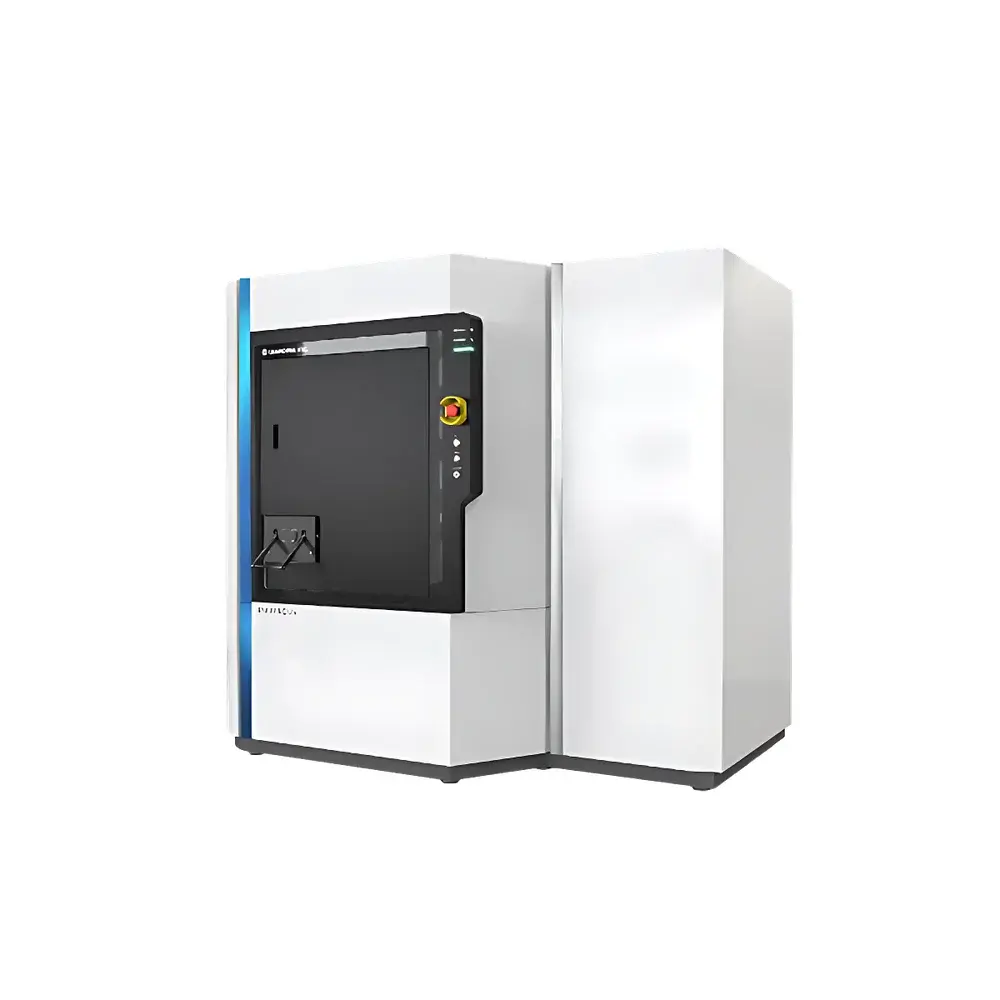
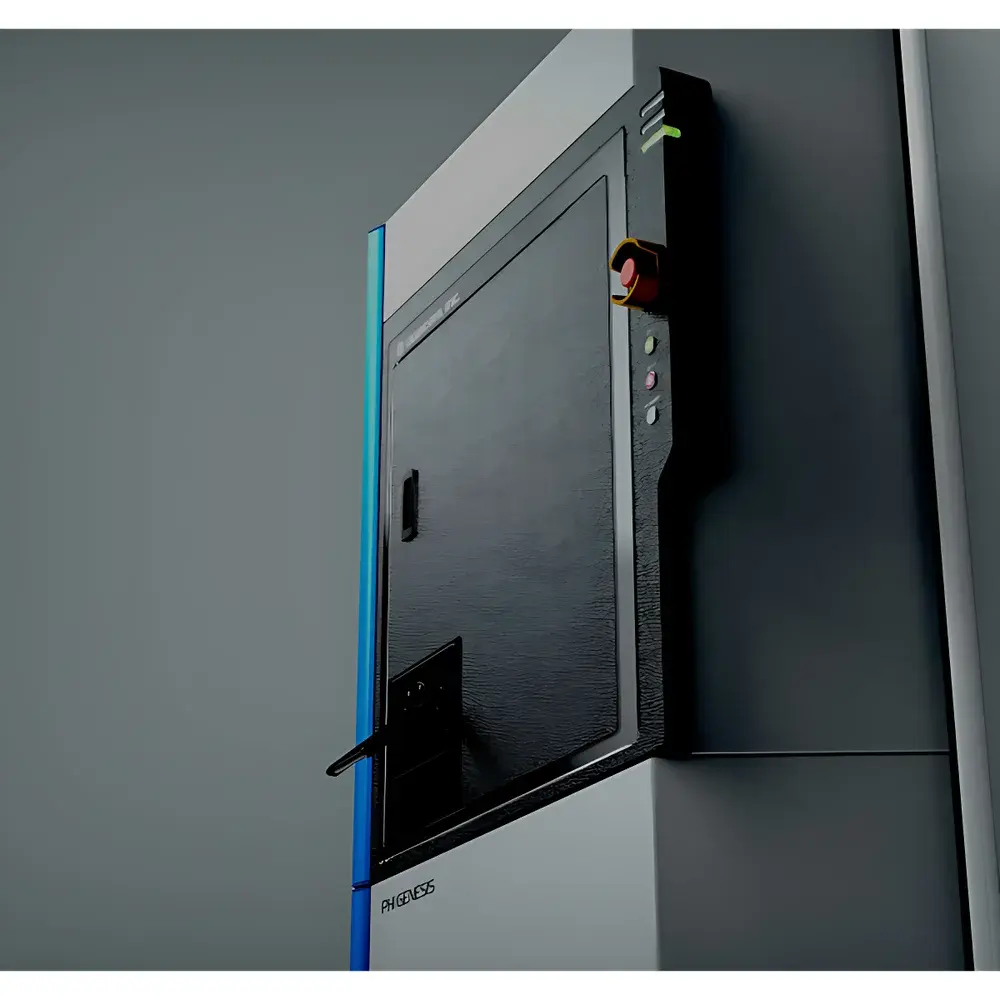
PHI GENESIS 500 X-Ray Photoelectron Spectrometer
| Brand | ULVAC-PHI |
|---|---|
| Origin | Japan |
| Model | PHI GENESIS 500 |
| Category | Imported Instrument |
| Distribution Status | Authorized Distributor |
| Pricing | Upon Request |
Overview
The PHI GENESIS 500 is a state-of-the-art, fully automated scanning focused X-ray photoelectron spectrometer (XPS) engineered for high-precision surface chemical analysis and depth-resolved characterization of solid-state materials. Based on the core principle of photoemission—where monochromatic X-rays eject core-level electrons from sample surfaces—the instrument measures kinetic energy distributions to determine elemental composition, chemical state, oxidation state, and empirical formula at nanometer-scale depths (typically 0.5–10 nm). Its integrated high-brightness Al Kα microfocus X-ray source (≤5 µm spot size), hemispherical energy analyzer with multi-channel detection, and ultra-high vacuum (UHV) environment (<5×10⁻¹⁰ mbar base pressure) ensure exceptional signal-to-noise ratio, energy resolution (<0.45 eV FWHM for Ag 3d5/2), and quantitative reproducibility across heterogeneous surfaces. Designed for rigorous R&D environments—including battery interface engineering, semiconductor process development, and organic electronic device optimization—the PHI GENESIS 500 delivers traceable, standards-compliant surface analysis aligned with ISO 18118, ASTM E1529, and IEC 62471 requirements.
Key Features
- Fully automated sample handling system supporting up to three 80 mm × 80 mm sample carriers; enables unattended batch analysis of powders, rough substrates, insulators, and geometrically complex components.
- Scanning microfocus X-ray source with ≤5 µm beam spot, enabling true micro-area XPS mapping, sub-micron registration via secondary electron imaging (SXI), and “see-what-you-analyze” spatial correlation.
- Integrated dual-beam charge neutralization system (low-energy electron + Ar⁺ ion flood) optimized for insulating samples—ensuring stable binding energy referencing and minimal differential charging artifacts.
- Modular accessory architecture supporting simultaneous or sequential operation of UPS (ultraviolet photoelectron spectroscopy), LEIPS (low-energy inverse photoemission spectroscopy), REELS (reflected electron energy loss spectroscopy), AES (Auger electron spectroscopy), and GCIB (gas cluster ion beam) sputtering.
- High-throughput depth profiling capability combining a high-current Ar⁺ ion gun (0.1–5 kV), real-time SXI-guided crater navigation, and synchronized multi-point acquisition within a single sputter pit—enabling quantifiable interfacial chemistry evolution (e.g., Li redistribution in solid-state electrolytes).
- Angle-resolved XPS (AR-XPS) mode with motorized ±80° sample tilt and continuous rotation, facilitating non-destructive chemical depth distribution modeling without sputtering.
Sample Compatibility & Compliance
The PHI GENESIS 500 accommodates diverse sample geometries and material classes: conductive metals, semiconducting thin films (Si, GaN, MoS₂), dielectric oxides (LiPON, Al₂O₃), polymer blends, organic small molecules (C₆₀, PTAA), nanoparticle assemblies, and cross-sectioned device structures. All vacuum interlocks, pressure monitoring, and emission controls comply with CE Machinery Directive 2006/42/EC and IEC 61010-1 safety standards. Data acquisition and processing workflows support audit-ready GLP/GMP documentation per FDA 21 CFR Part 11, including electronic signatures, user access logs, and immutable raw-data archiving. Calibration protocols are traceable to NIST SRM 2051 (Ag foil) and ISO/IEC 17025-accredited reference materials.
Software & Data Management
The proprietary MultiPak™ software suite provides unified control of hardware modules, intuitive workflow scripting (via Python API), and standardized reporting templates compliant with ASTM E1905 and ISO 20716. Real-time spectral preview, automatic peak deconvolution using Shirley background subtraction and Voigt line shapes, and stoichiometric quantification with Scofield sensitivity factors are embedded. All raw spectra (.vms), processed datasets (.csv/.xlsx), and metadata (instrument parameters, vacuum history, calibration records) are stored in a relational database with version-controlled backups. Export options include CIF-compatible formats for inter-laboratory data exchange and PDF reports with embedded spectral overlays, depth profiles, and elemental maps.
Applications
- Battery Materials: Quantitative depth profiling of Li-rich cathode/electrolyte interfaces (e.g., LiCoO₂/LiPON), identification of SEI component evolution (LiF, LixPOyFz, ROCO₂Li), and redox-state mapping of transition metals during cycling.
- Semiconductor Devices: Non-destructive interface analysis of high-k/metal gate stacks, HAXPES-enabled valence band offset determination at buried heterojunctions (e.g., SiO₂/Si, GaN/AlN), and contamination screening of EUV lithography masks.
- Organic Electronics: Energy level alignment studies via UPS/LEIPS combined with GCIB depth profiling—resolving HOMO/LUMO positions, interfacial dipole formation, and molecular orientation at electrode/organic layer boundaries.
- Catalysis & Nanomaterials: Oxidation state mapping of supported metal nanoparticles (Pt, Ni, Co), surface segregation behavior in bimetallic alloys, and ligand-binding confirmation on functionalized quantum dots.
- Advanced Packaging: Solder joint intermetallic compound (IMC) phase identification (Cu₆Sn₅ vs. Cu₃Sn), oxidation assessment of bond pad surfaces, and void-induced interfacial degradation analysis.
FAQ
What vacuum level does the PHI GENESIS 500 maintain during analysis?
The system achieves and sustains a base pressure below 5×10⁻¹⁰ mbar in the analysis chamber using a combination of turbomolecular pumping and cryogenic trapping—critical for minimizing hydrocarbon contamination and ensuring long-term spectral stability.
Can the instrument perform both XPS and AES on the same sample location without breaking vacuum?
Yes. The PHI GENESIS 500 integrates a dual-mode electron detector and configurable excitation sources, allowing seamless switching between XPS and AES modes while preserving sample position and vacuum integrity.
Is angle-resolved XPS (AR-XPS) performed with mechanical tilt only, or does it include sample rotation?
Both: motorized ±80° tilt and continuous 360° rotation are independently programmable, enabling decoupled angular sampling for enhanced depth resolution and artifact-free chemical gradient modeling.
How is charge compensation handled for highly insulating samples such as polymers or metal oxides?
A dynamically balanced dual-beam neutralizer (low-energy electrons + dispersed Ar⁺ ions) automatically adjusts flux ratios in real time based on surface potential feedback—eliminating peak shifts and preserving chemical shift fidelity.
Does the system support GLP-compliant data archiving and electronic signature functionality?
Yes. MultiPak™ includes full 21 CFR Part 11 compliance features: role-based user authentication, audit trails for all analytical steps, tamper-evident raw data containers, and digital signature integration with enterprise identity management systems.



