
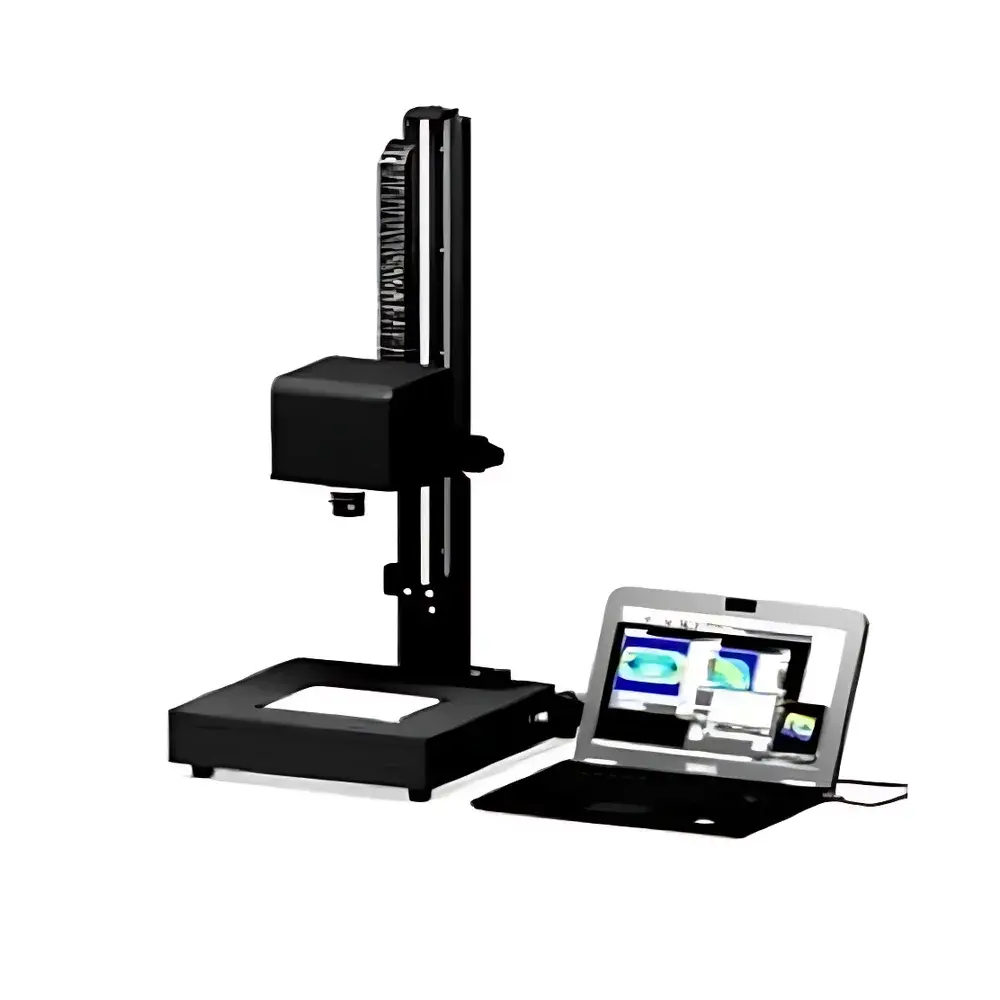
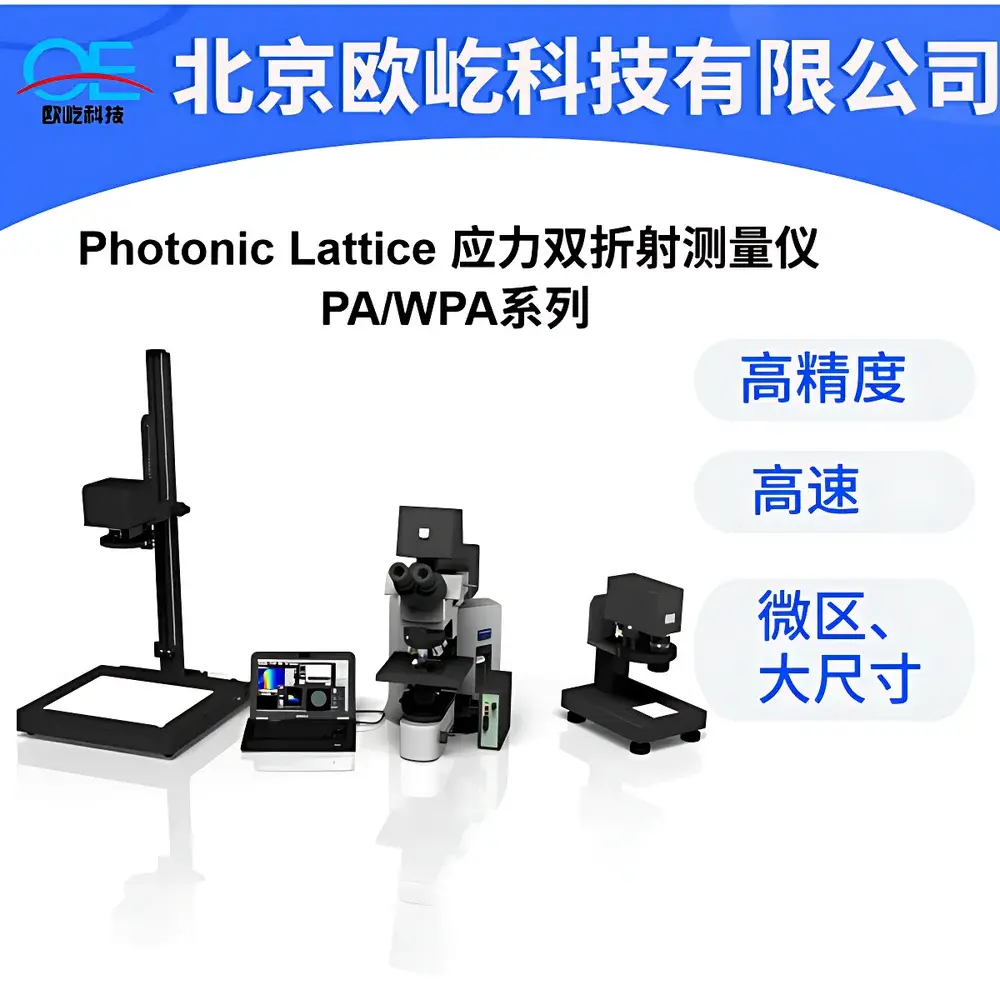
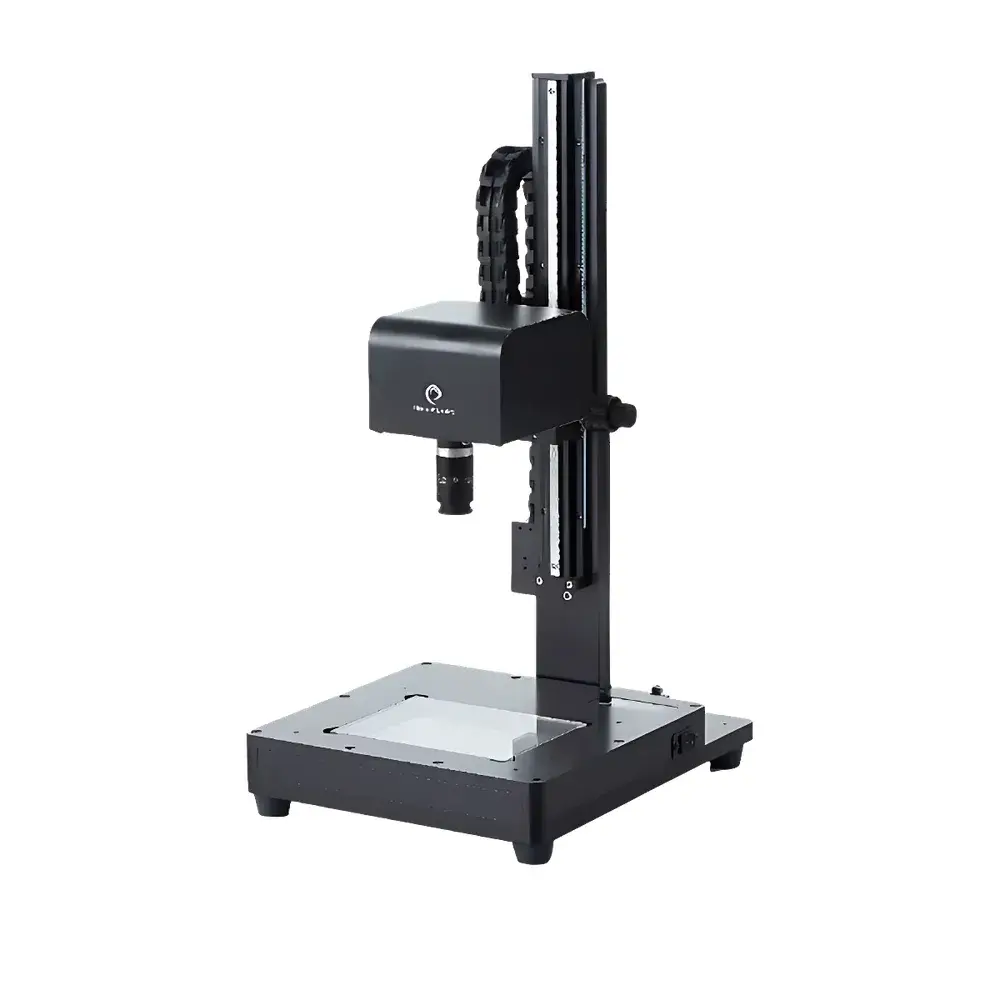
PHL PA-300 Photonic Lattice Dual-Beam Polarization Interferometric Birefringence Analyzer
| Key | Brand: Photonic Lattice |
|---|---|
| Origin | Japan |
| Model | PA-300 |
| Measurement Range | 0–130 nm (retardation) |
| Wavelength | 520 nm |
| Minimum Resolution | 0.001 nm |
| Repeatability | < 0.1 nm (σ) |
| Field of View (Standard) | 27 × 36 mm to 99 × 132 mm |
| Optional FOV (with beam-expanding lens) | 7 × 8.4 mm |
| Camera Resolution | 2056 × 2464 pixels |
| Output Parameters | Retardation (nm), Fast Axis Orientation (°), Stress Conversion (MPa, optional) |
| Compliance | ISO 11146, ASTM F2649, JIS R3203 |
Overview
The PHL PA-300 is a high-precision, full-field birefringence measurement system engineered by Photonic Lattice Co., Ltd. (Japan) for quantitative stress and optical anisotropy analysis in transparent and semi-transparent materials. Based on polarization interferometry with a patented photonic crystal polarizer array, the instrument captures spatially resolved retardation and fast-axis orientation maps in a single static exposure—eliminating mechanical scanning or rotating optics. This solid-state architecture enables non-contact, non-destructive evaluation of internal stress distribution, thermal residual strain, and crystalline anisotropy at sub-nanometer resolution. Designed for both R&D laboratories and high-throughput production environments, the PA-300 meets metrological requirements for optical component certification, display substrate qualification, and advanced ceramic validation under controlled environmental conditions.
Key Features
- Single-shot, full-field acquisition using a monolithic photonic crystal polarizer array—no moving parts, no motorized filter wheels, and zero mechanical drift over time.
- High-resolution polarization camera (2056 × 2464 pixels) operating at 520 nm wavelength, optimized for sensitivity to low-level birefringence in thin-film and bulk substrates.
- Measurement speed ≤ 3 seconds per frame—including data capture, real-time phase unwrapping, axis orientation calculation, and optional stress mapping.
- Dynamic field-of-view adaptability: standard configuration supports 27 × 36 mm to 99 × 132 mm; optional beam-expanding lenses extend coverage down to 7 × 8.4 mm for micro-scale feature analysis.
- Sub-nanometer resolution (0.001 nm) and exceptional repeatability (< 0.1 nm σ) validated per ISO 5725-2 and ASTM E2554 protocols.
- Integrated calibration traceability to NIST-traceable retardation standards; factory-certified axis orientation accuracy ±0.3°.
Sample Compatibility & Compliance
The PA-300 accommodates planar samples ranging from 3 mm diameter micro-lenses to 500 mm × 500 mm flat panels—ideal for optical glass, sapphire wafers, SiC substrates, cover glass for smartphones and tablets, and polymer-based optical films. Sample thickness is unrestricted, provided transmission exceeds 15% at 520 nm. The system complies with key international standards governing optical stress metrology, including ISO 11146 (laser beam characterization), ASTM F2649 (birefringence measurement of optical materials), and JIS R3203 (stress evaluation of glass products). Data integrity adheres to GLP/GMP principles: audit trails, user access control, and electronic signature support are available via optional software modules compliant with FDA 21 CFR Part 11.
Software & Data Management
The PA-300 operates with modular PC-based software supporting three operational tiers: Real-Time Analysis Suite (basic live imaging and ROI quantification), Lens Analysis Module (Zernike decomposition, radial stress profiling, edge distortion mapping), and Advanced Data Processing Toolkit (batch export to HDF5/CSV, cross-sample statistical comparison, custom stress conversion coefficient tables per material). All software versions maintain native compatibility with MATLAB, Python (via PyPA-SDK), and LabVIEW. Raw image data are stored with embedded metadata (timestamp, calibration ID, environmental sensor readings), enabling full traceability for ISO/IEC 17025 accreditation audits.
Applications
- Optical lens manufacturing: verification of annealing uniformity, detection of localized stress-induced wavefront error in aspheric and freeform elements.
- Display technology: residual stress mapping across large-area cover glass (e.g., Gorilla Glass), OLED encapsulation layers, and touch sensor laminates.
- Wide-bandgap semiconductor substrates: strain distribution analysis in SiC and sapphire wafers prior to epitaxial growth.
- Medical optics: certification of intraocular lens (IOL) blanks per ISO 11979-2 and ophthalmic prism tolerance verification.
- Automotive HUD components: birefringence assessment of curved combiner substrates under thermal cycling conditions.
- Research applications: real-time monitoring of stress evolution during polymer curing, crystal growth, or thin-film deposition processes.
FAQ
What is the maximum sample thickness the PA-300 can measure?
The system imposes no inherent thickness limit; performance depends on optical transmission at 520 nm. Samples with >15% transmittance yield reliable quantitative results. For highly absorbing materials, optional near-infrared illumination modules (780 nm) are available.
Can the PA-300 be integrated into an automated production line?
Yes—the instrument supports Ethernet/IP and Modbus TCP communication protocols, enabling seamless integration with PLCs and MES systems. Trigger input/output signals and programmable exposure control allow synchronization with conveyor motion and robotic handling.
Is stress conversion included as standard or optional?
Stress conversion (retardation → MPa) is optional and requires material-specific photoelastic coefficients. Pre-loaded libraries exist for BK7, fused silica, sapphire, and common optical polymers; custom coefficients may be imported.
Does the system require periodic recalibration?
Annual recalibration is recommended per ISO/IEC 17025. The built-in reference mode allows daily verification using certified calibration plates; deviation logs are automatically generated and exportable.
What environmental conditions affect measurement stability?
Ambient temperature fluctuations > ±0.5°C/hour or relative humidity shifts > 5%/hour may induce air-path birefringence artifacts. Operation within Class 10,000 cleanroom conditions or temperature-stabilized enclosures (±0.2°C) is advised for metrology-grade repeatability.




