
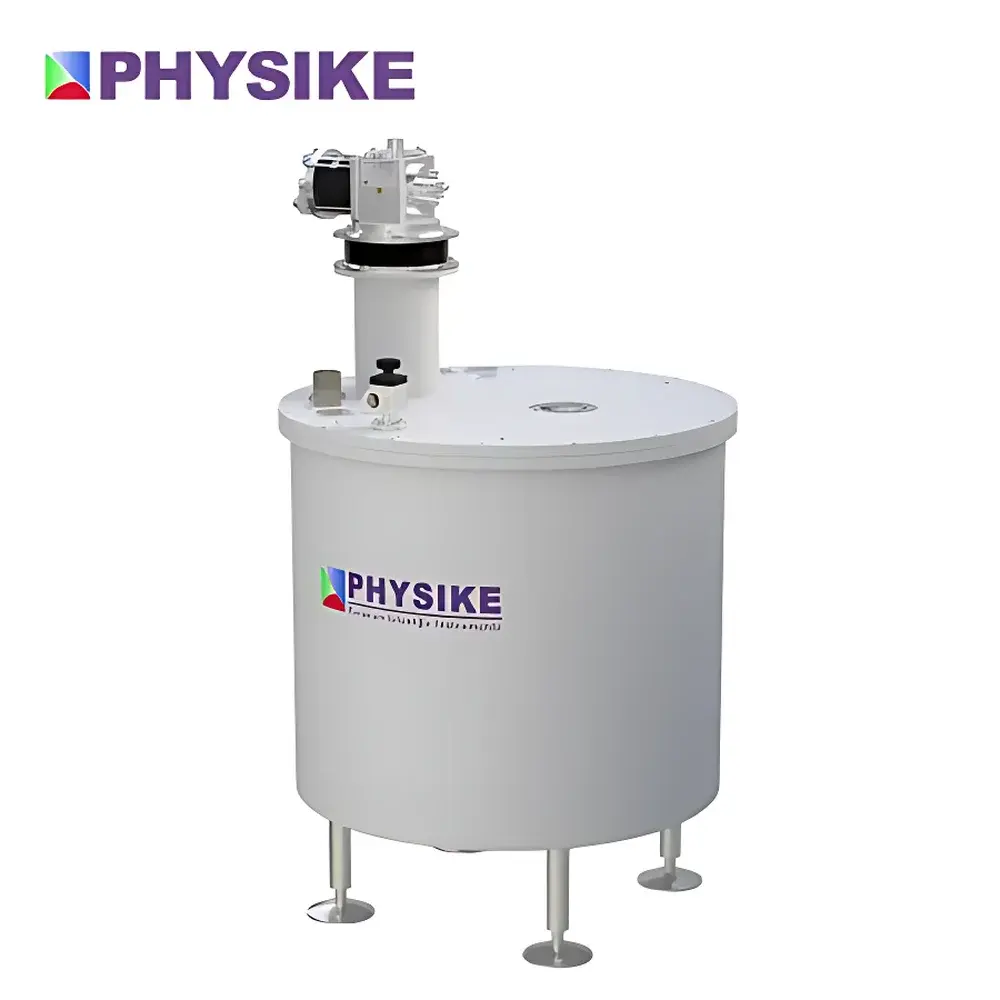
PHYSIKE PHY-CryoM Dry-Type Room-Temperature-Bore Superconducting Magnet
| Brand | PHYSIKE |
|---|---|
| Origin | Beijing, China |
| Manufacturer Type | Direct Manufacturer |
| Country of Origin | China |
| Model | PHY-CryoM |
| Pricing | Available Upon Request |
Overview
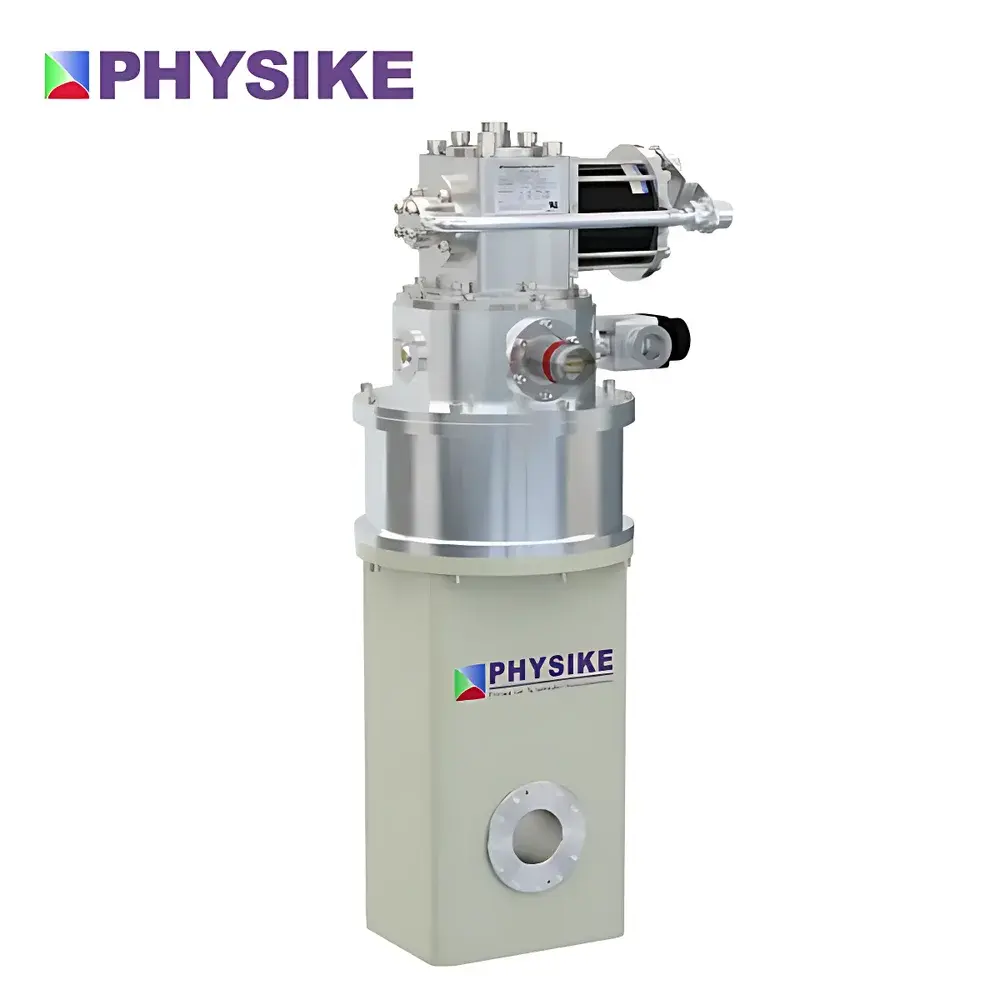
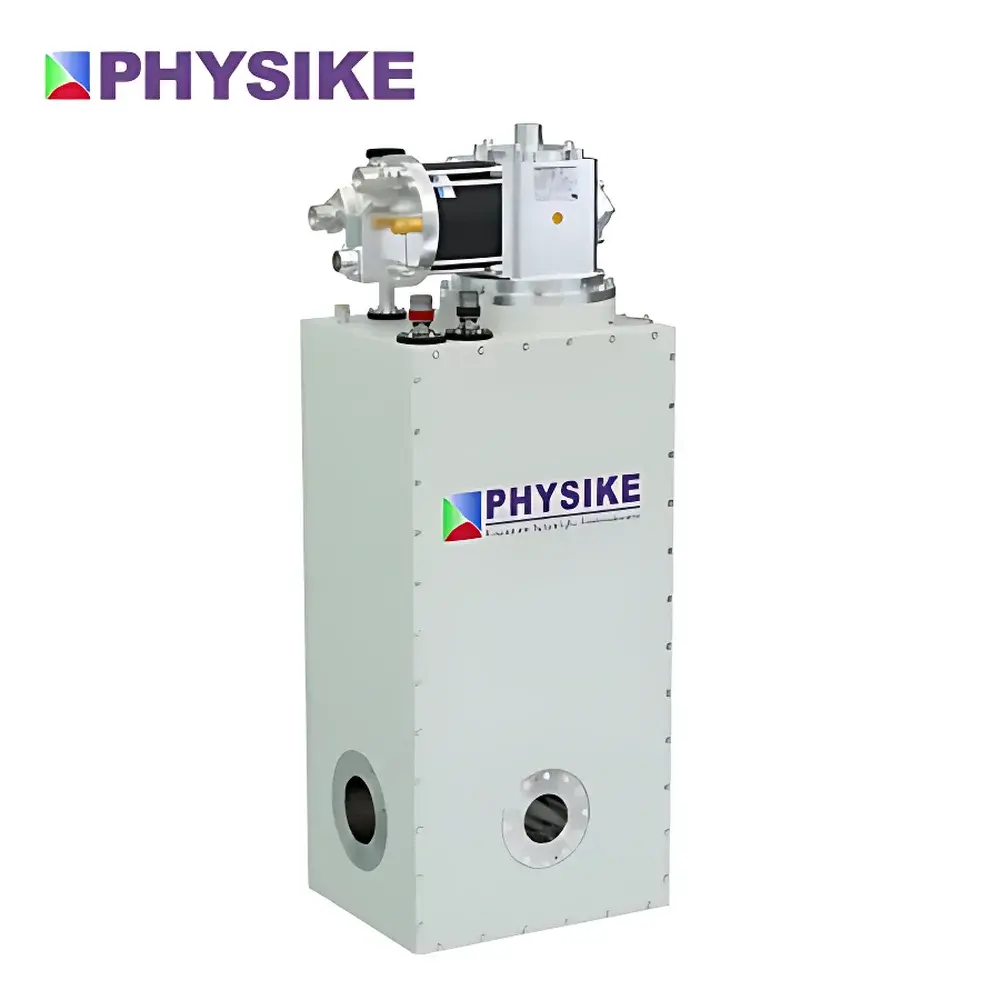
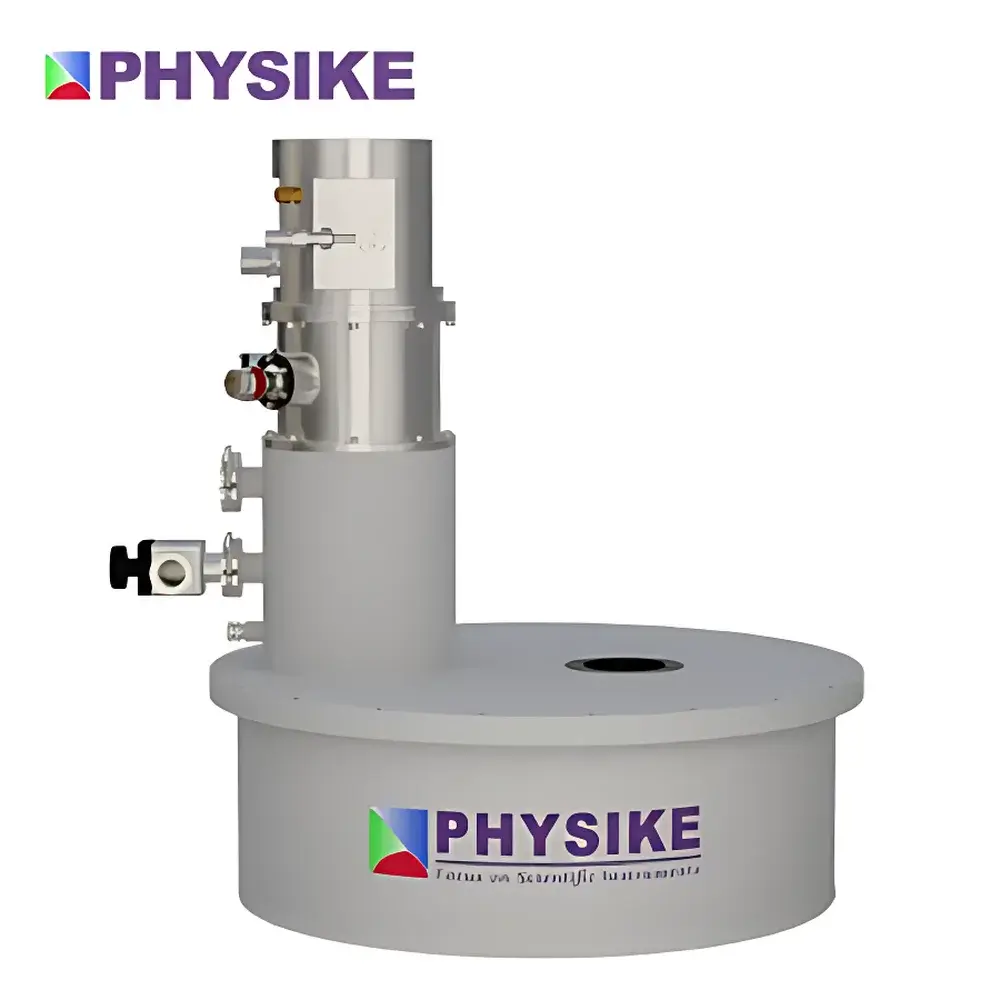
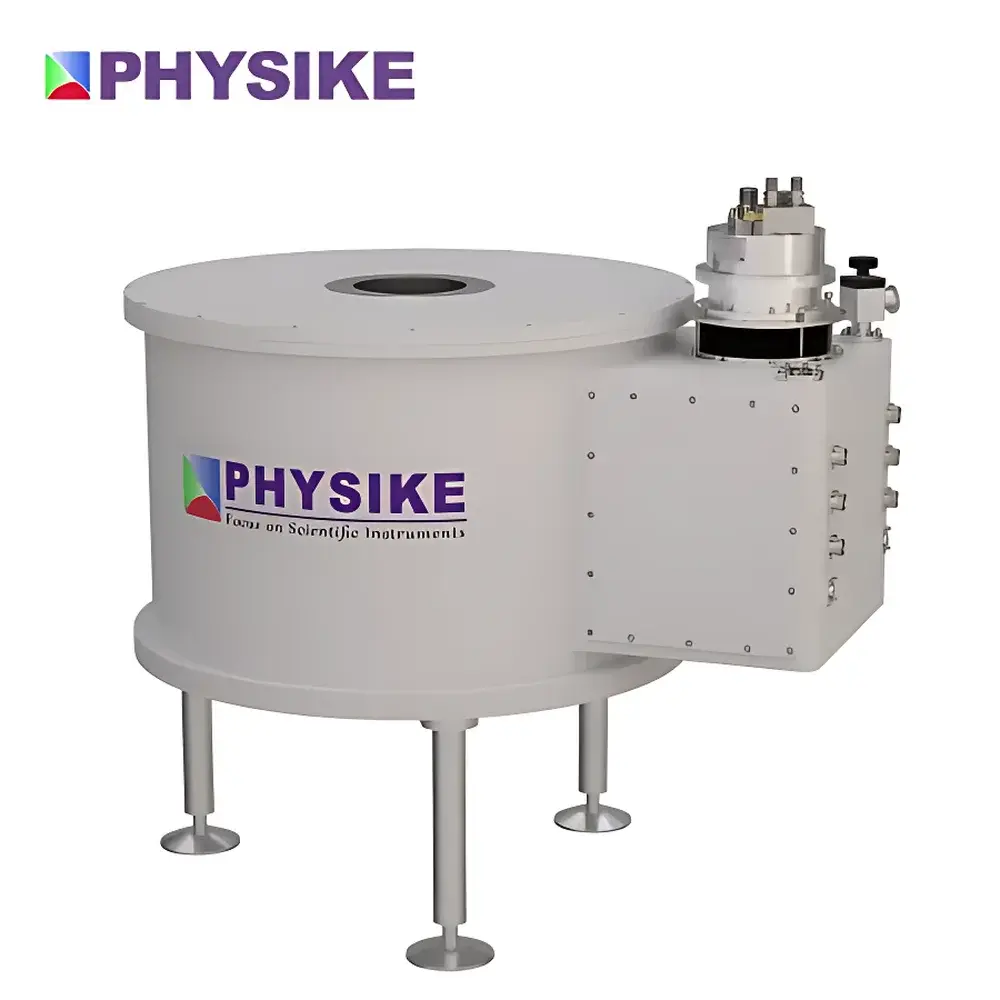
The PHYSIKE PHY-CryoM is a dry-type, room-temperature-bore superconducting magnet system engineered for high-field, high-stability operation in advanced condensed matter physics, quantum materials research, and multi-modal spectroscopic characterization. Unlike traditional wet magnets requiring continuous liquid helium circulation, the PHY-CryoM employs a closed-cycle cryocooler-based cooling architecture—enabling persistent-mode operation without cryogen refills while maintaining field homogeneity and temporal stability suitable for precision magnetic measurements. Its core design centers on a warm-bore (room-temperature) solenoidal or split-pair configuration, optimized to accommodate in-situ integration with cryogenic platforms (e.g., top-loading dilution refrigerators, 1.5 K cryostats), vacuum chambers, optical access ports, and sample manipulation stages. The magnet operates on NbTi or Nb₃Sn superconducting wire technology, with field strengths ranging from 5 T to 14 T depending on bore geometry and coil architecture. Field uniformity (ΔB/B) over a 1 cm DSV is typically ≤100 ppm, and field drift remains <0.1 ppm/h after stabilization—meeting requirements for long-duration transport, magnetization, and resonance experiments.
Key Features
- Dry operation: No liquid helium dependency; integrated two-stage or four-stage Gifford-McMahon or pulse-tube cryocoolers maintain coil temperature below 4.2 K.
- Room-temperature bore options: Standard bores include 76 mm (12 T), 160 mm (triaxial configuration), and compact 50–65 mm variants (5–9 T), all compatible with standard VTI, DR, or optical cryostat interfaces.
- High mechanical rigidity: Monolithic or segmented coil support structures minimize microphonic coupling and thermal contraction mismatch, ensuring sub-100 nm vibration amplitude at the sample position when paired with low-vibration cryostats.
- Field programmability: Equipped with digital power supply and persistent switch control enabling ramp rates from 0.01 T/min to 0.5 T/min, with field settling time <30 s per 0.1 T step.
- Modular integration: Designed for direct mechanical and electrical interfacing with Qcryo-S series cryostats, diamond anvil cells (DAC), rotating sample rods, microwave waveguides, and optical feedthroughs (UV–THz spectral range).
Sample Compatibility & Compliance
The PHY-CryoM supports diverse experimental configurations including thin-film growth under magnetic field, magneto-transport (van der Pauw, Hall bar, Corbino), SQUID-based magnetometry, and hybrid techniques such as magneto-optical Kerr effect (MOKE), scanning tunneling microscopy (STM), and electron spin resonance (ESR/EPR). All systems comply with IEC 61000-6-2 (EMC immunity) and IEC 61000-6-4 (EMC emission) standards. Magnetic field calibration is traceable to NIST-certified Hall probes. When integrated into GLP/GMP-compliant laboratories, the magnet control firmware supports audit-trail logging and user-access-level authentication in accordance with FDA 21 CFR Part 11 requirements for electronic records.
Software & Data Management
PHYSIKE provides the CryoM-Control Suite—a cross-platform application (Windows/Linux) supporting real-time field monitoring, ramp profiling, interlock management (quench detection, temperature thresholding), and synchronization with third-party data acquisition systems (e.g., LabVIEW, Python-based PyVISA drivers). All field setpoints, current logs, and thermal status are timestamped and exportable in HDF5 or CSV format. Optional API modules enable integration with experiment orchestration frameworks such as EPICS or Bluesky for automated beamline or synchrotron-compatible workflows.
Applications
- Quantum phase transitions in correlated electron systems under high magnetic fields (up to 14 T) and sub-kelvin temperatures.
- In-situ high-pressure Raman spectroscopy using DAC-integrated 9 T magnets coupled to 500 mK dilution refrigerators.
- Terahertz time-domain spectroscopy (THz-TDS) with five-degree-of-freedom sample positioning inside dual-magnet infrared beamlines.
- Magnetic anisotropy mapping via vector field control in triaxial 160 mm bore systems for spin texture analysis.
- NMR probe development and shimming validation under static fields up to 12 T with 76 mm clear aperture.
FAQ
What cooling method does the PHY-CryoM use?
It utilizes a closed-cycle cryocooler (typically GM or pulse-tube type) directly coupled to the superconducting coil assembly—eliminating reliance on liquid cryogens.
Can the magnet be operated in persistent mode?
Yes; all models include a superconducting persistent switch and external dump resistor circuit for safe, zero-power field maintenance.
Is remote operation supported?
Yes—Ethernet and RS-485 interfaces enable full command-and-control via SCPI protocol and custom TCP/IP APIs.
What is the typical field homogeneity specification?
Standard homogeneity is ≤100 ppm over a 10 mm diameter spherical volume (DSV); optional active shimming coils can improve this to ≤10 ppm.
Are custom bore geometries or field profiles available?
Yes—PHYSIKE offers OEM engineering services for tailored coil winding patterns, asymmetric apertures, and hybrid (split-pair + solenoid) configurations.



