
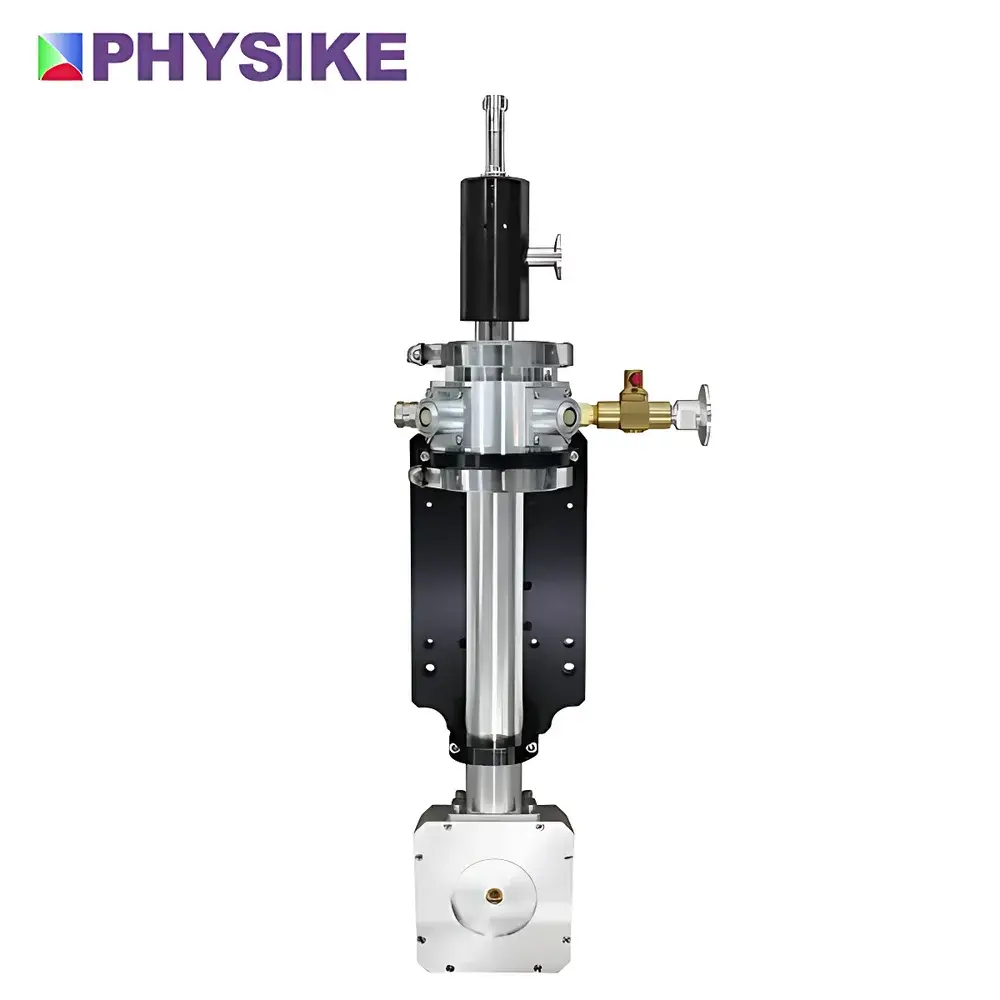
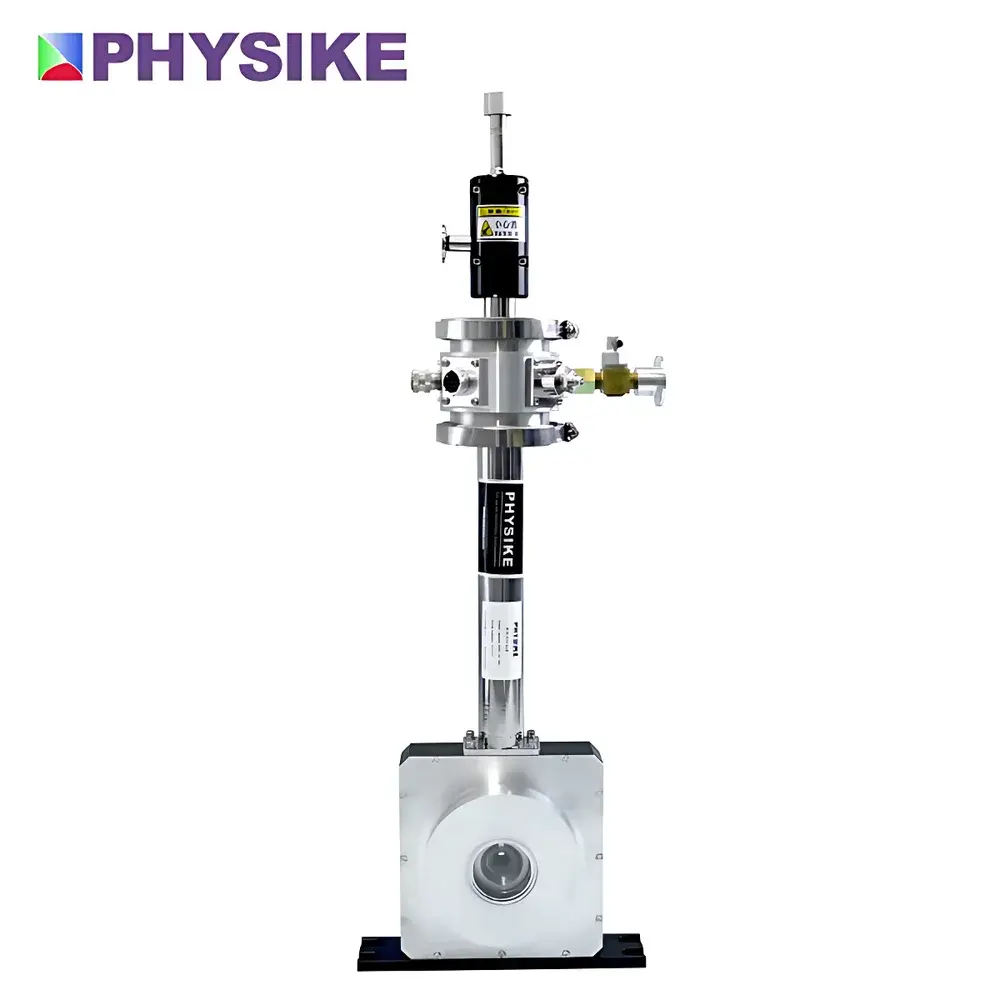
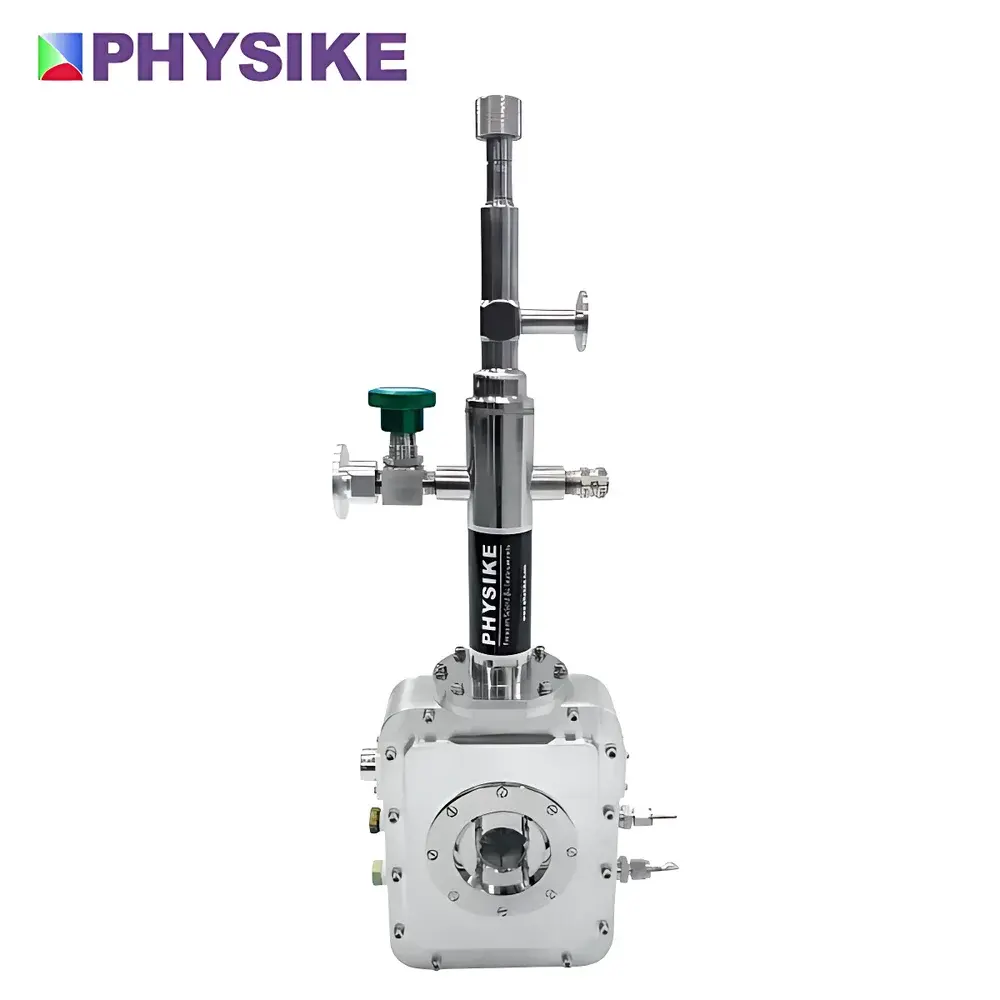
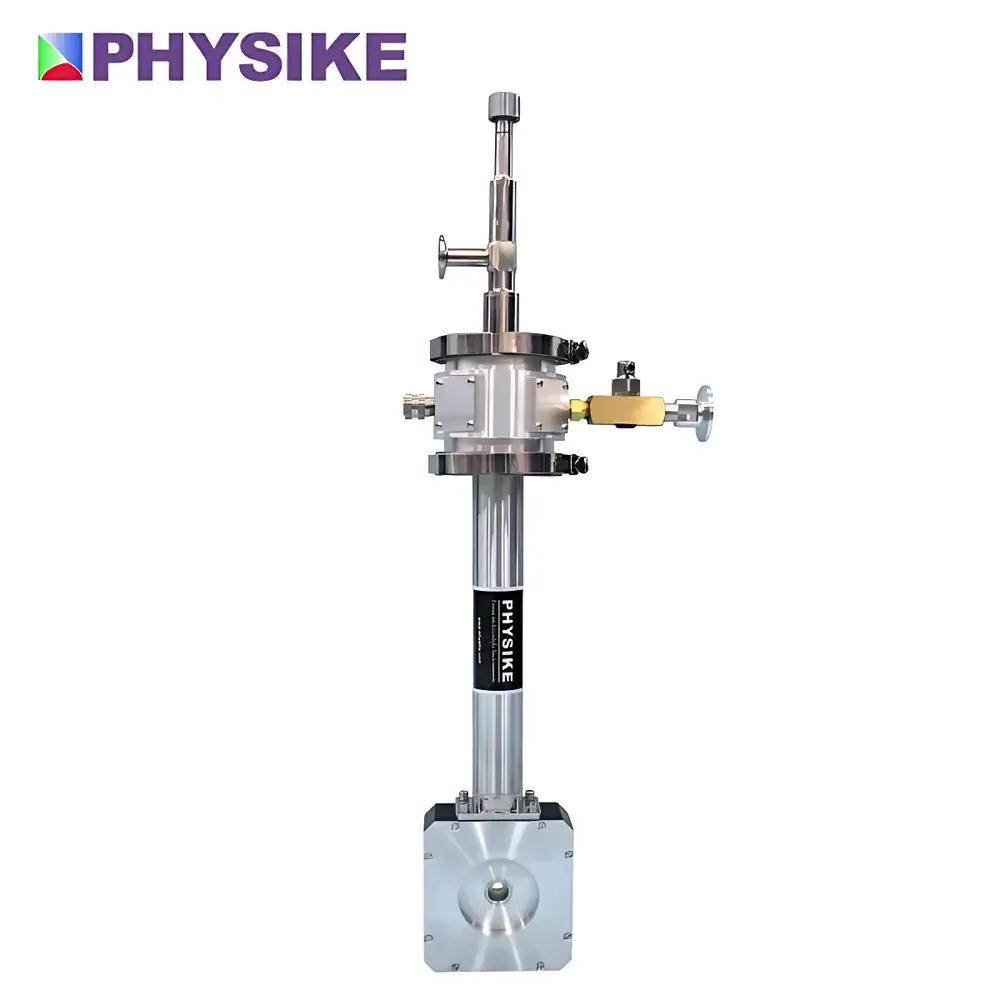
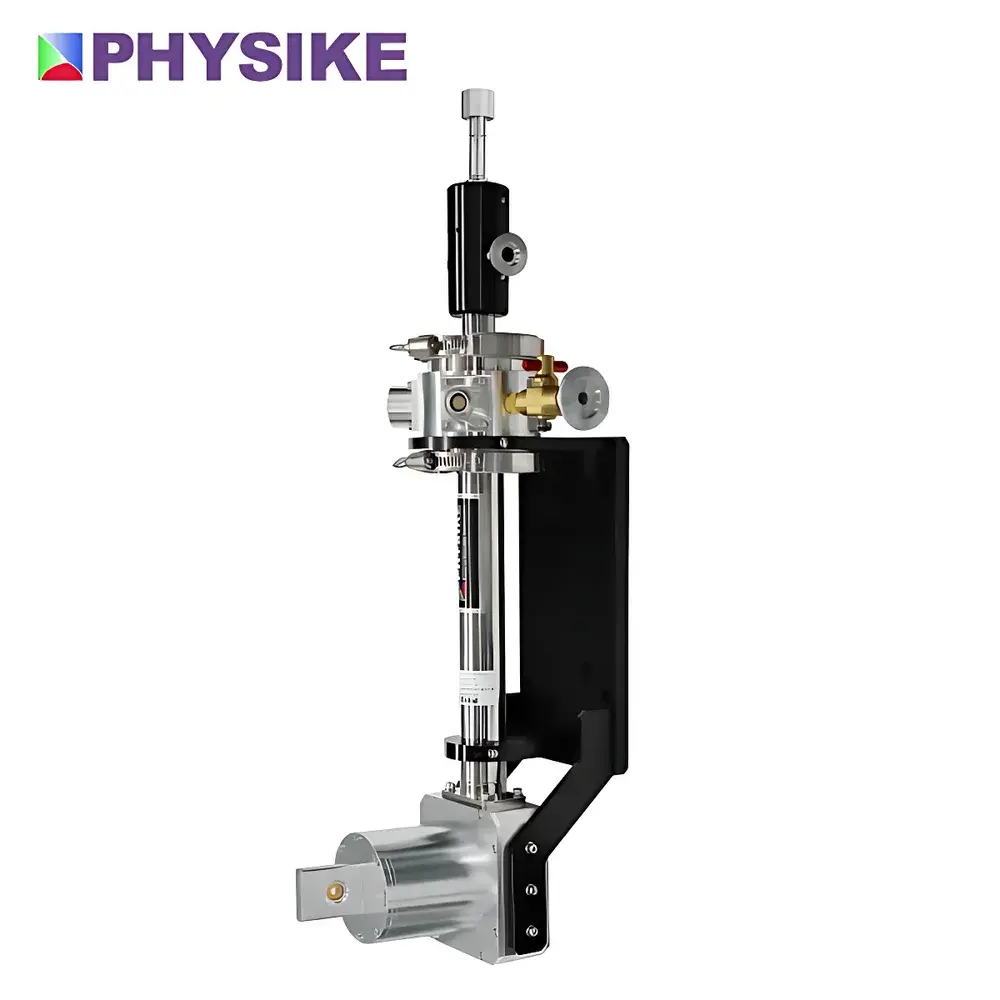
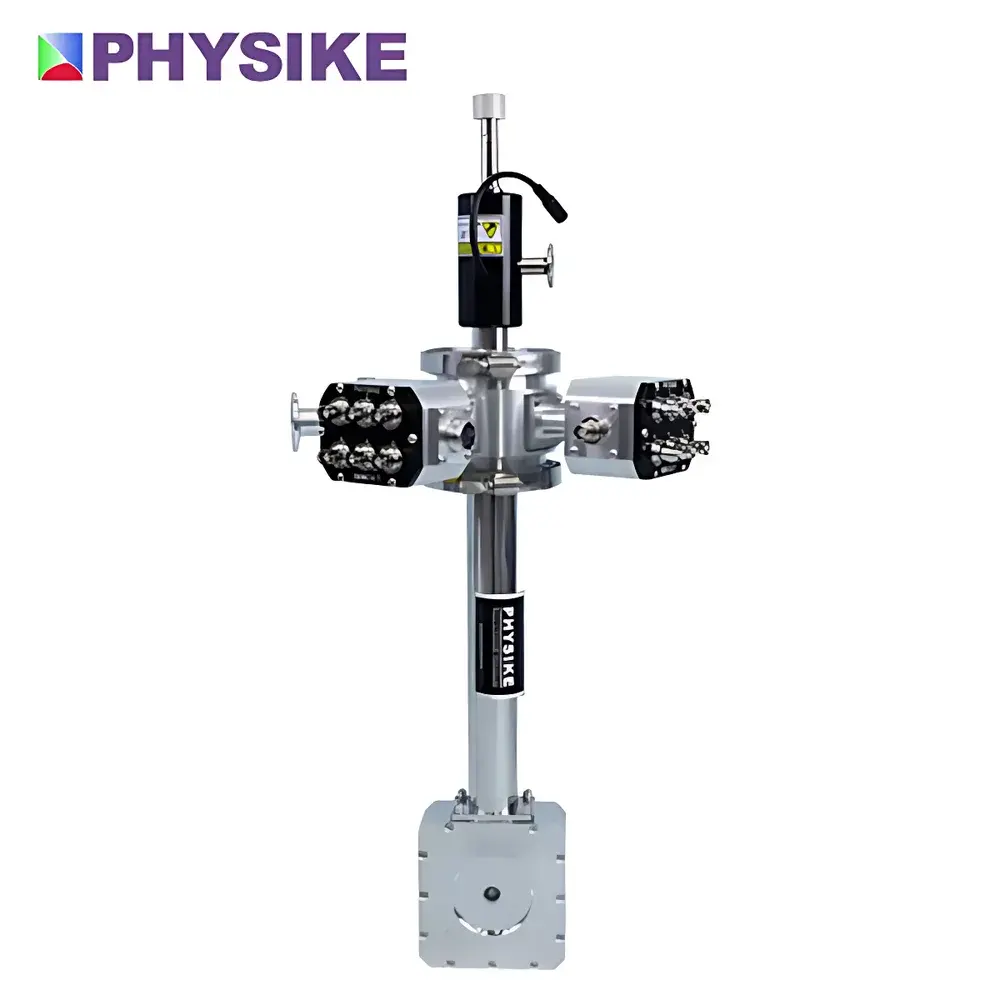
PHYSIKE Scryo-S-300 Compact Microscope Cryogenic Thermostat
| Brand | PHYSIKE |
|---|---|
| Origin | Beijing, China |
| Manufacturer Type | Direct Manufacturer |
| Country of Origin | China |
| Model | Scryo-S-300 |
| Vibration Stability | ±5 nm |
| Circulating Medium | Helium Gas |
| Cooling Architecture | Continuous-Flow Open-Cycle |
| Optional Dry-Cycle Integration | Compatible with Qcryo® Helium Recirculation System |
Overview
The PHYSIKE Scryo-S-300 is a compact, continuous-flow open-cycle cryogenic thermostat engineered for high-resolution microscopy and spectroscopy applications requiring sub-Kelvin thermal stability and nanometer-scale mechanical integrity. Operating on the principle of helium gas expansion through a high-efficiency vaporizer and ultra-low-conductivity transfer lines, the Scryo-S-300 achieves rapid cooldown (≤3 hours from 300 K to 4 K) and sustained base temperatures below 2 K when integrated with the optional Qcryo® helium recirculation system—forming the Qcryo-S-300 dry-cycle configuration. Its core architecture integrates active temperature drift compensation and a rigid, super-insulated support structure, delivering exceptional thermal stability (<±1 mK over 24 h at 4 K) and mechanical quietness (vibration stability ≤±5 nm RMS). Designed explicitly for space-constrained optical setups, the Scryo-S-300 maintains full compatibility with upright and inverted optical microscopes, confocal platforms, FTIR, Raman, photoluminescence (PL), and time-resolved absorption spectrometers—without compromising optical access or alignment fidelity.
Key Features
- Ultra-compact form factor (diameter <80 mm, height <180 mm) enables seamless integration into commercial microscope frames and spectrometer sample chambers
- Open-cycle helium gas cooling with optimized vaporizer and vacuum-jacketed transfer lines—minimizing helium consumption while maximizing thermal response
- Dual-mount capability: supports vertical and horizontal orientation without performance degradation
- Super-insulated mechanical support with active thermal drift compensation—ensuring long-term positional stability for diffraction-limited imaging
- Qcryo-S-300 dry-cycle mode: fully recirculating helium system eliminating liquid helium dependency while preserving open-cycle vibration and drift performance
- Modular vacuum interface design accommodating SMA, BNC, Triax, multi-pin, and fiber-optic feedthroughs
- Low-thermal-expansion stainless-steel vacuum housing with indium-sealed CF flanges (optional)
Sample Compatibility & Compliance
The Scryo-S-300 accommodates diverse sample geometries and experimental configurations—including puck-style electrical devices, DIP/LCC packages, transmission cells, powder holders, solar cell test substrates, and thermal transport platforms with in-situ gate biasing. Its optical window options span UV (quartz), visible (BK7), NIR/IR (CaF₂, ZnSe, KBr), THz (HDPE), and X-ray transparent materials (beryllium, diamond), enabling cross-platform use in synchrotron beamlines, neutron scattering facilities, and high-energy physics experiments. The system complies with ISO 2768-mK (general tolerances) and adheres to vacuum integrity standards per ASTM E595 for outgassing control. When configured with Qcryo-S-300, it meets GLP-compliant operational requirements for repeatable low-temperature material characterization under audit-ready conditions.
Software & Data Management
The Scryo-S-300 operates via PHYSIKE’s CryoControl™ software suite, supporting real-time PID tuning, multi-zone temperature ramping, and programmable hold profiles. All temperature setpoints, sensor readings (Cernox®, RuO₂, diode), and pressure logs are timestamped and exportable in CSV or HDF5 format. The software architecture supports 21 CFR Part 11–compliant user authentication, electronic signatures, and full audit trails—essential for regulated environments including semiconductor metrology labs and academic core facilities subject to NIH or DOE instrumentation validation protocols. Remote operation via Ethernet or RS-485 ensures integration into automated experiment workflows and LabVIEW-based control ecosystems.
Applications
- Confocal Raman and photoluminescence mapping of 2D materials (e.g., MoS₂, WSe₂) at <4 K
- In-situ high-pressure diamond anvil cell (DAC) studies coupled with IR/Raman spectroscopy
- Low-temperature magneto-optical Kerr effect (MOKE) imaging and domain dynamics analysis
- X-ray diffraction and scattering under simultaneous cryogenic and high-pressure conditions
- Time-resolved transient absorption spectroscopy (e.g., HARPS systems) with sub-picosecond laser synchronization
- Thermoelectric and thermal conductivity measurements using suspended micro-bridge platforms
- Quantum dot and perovskite solar cell optoelectronic characterization across 2–300 K
- Neutron reflectometry and small-angle neutron scattering (SANS) sample environments
FAQ
What is the base temperature achievable with the Scryo-S-300 in open-cycle mode?
The Scryo-S-300 reaches ≤4.2 K in standard open-cycle helium gas mode. With Qcryo® integration (Qcryo-S-300), base temperature drops to <2.0 K.
Can the Scryo-S-300 be used with superconducting magnets?
Yes—its compact footprint and non-magnetic construction (standard titanium/aluminum alloys) allow direct mounting inside room-temperature bore magnets (up to 12 T) and compatible with split-pair and vector magnet configurations.
Is vacuum compatibility maintained during cooldown?
Yes—the system maintains UHV compatibility (<1×10⁻⁸ mbar) throughout thermal cycling, validated by helium leak testing per ISO 15848-1.
How is vibration isolation achieved without active dampers?
Through passive mechanical decoupling: ultra-stiff, low-thermal-conductivity support rods; optimized mass distribution; and helium flow path damping within the vaporizer and transfer lines.
Does the Qcryo-S-300 system require external helium purification?
No—the Qcryo® recirculator includes integrated cold traps and catalytic purifiers ensuring >99.999% helium purity over >10,000 hours of continuous operation.



