
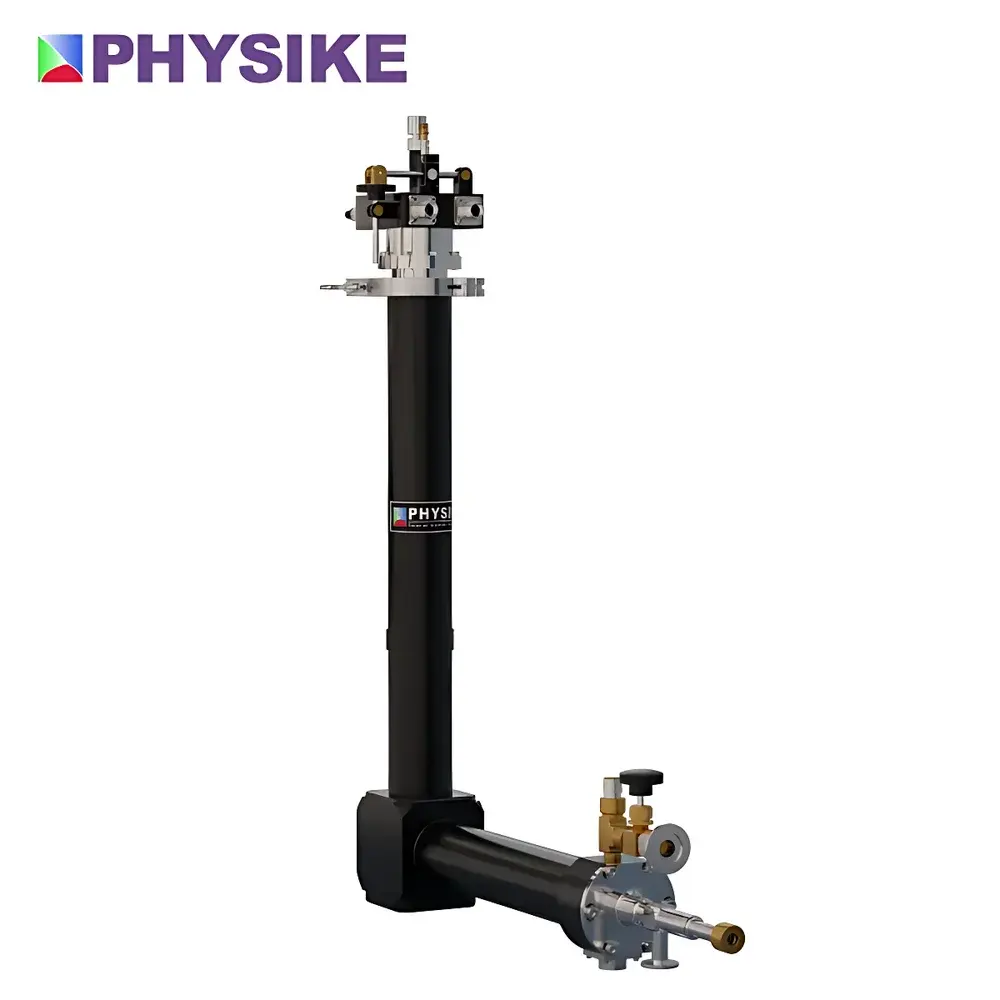
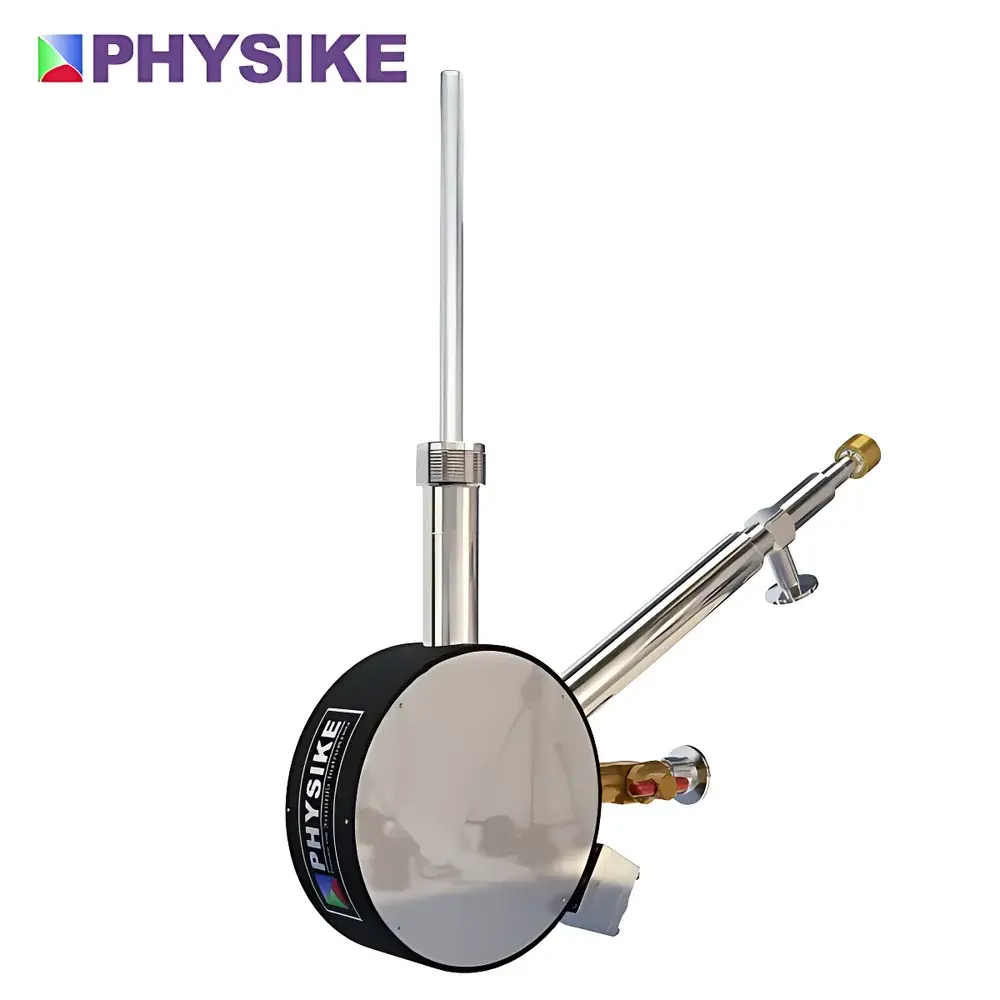
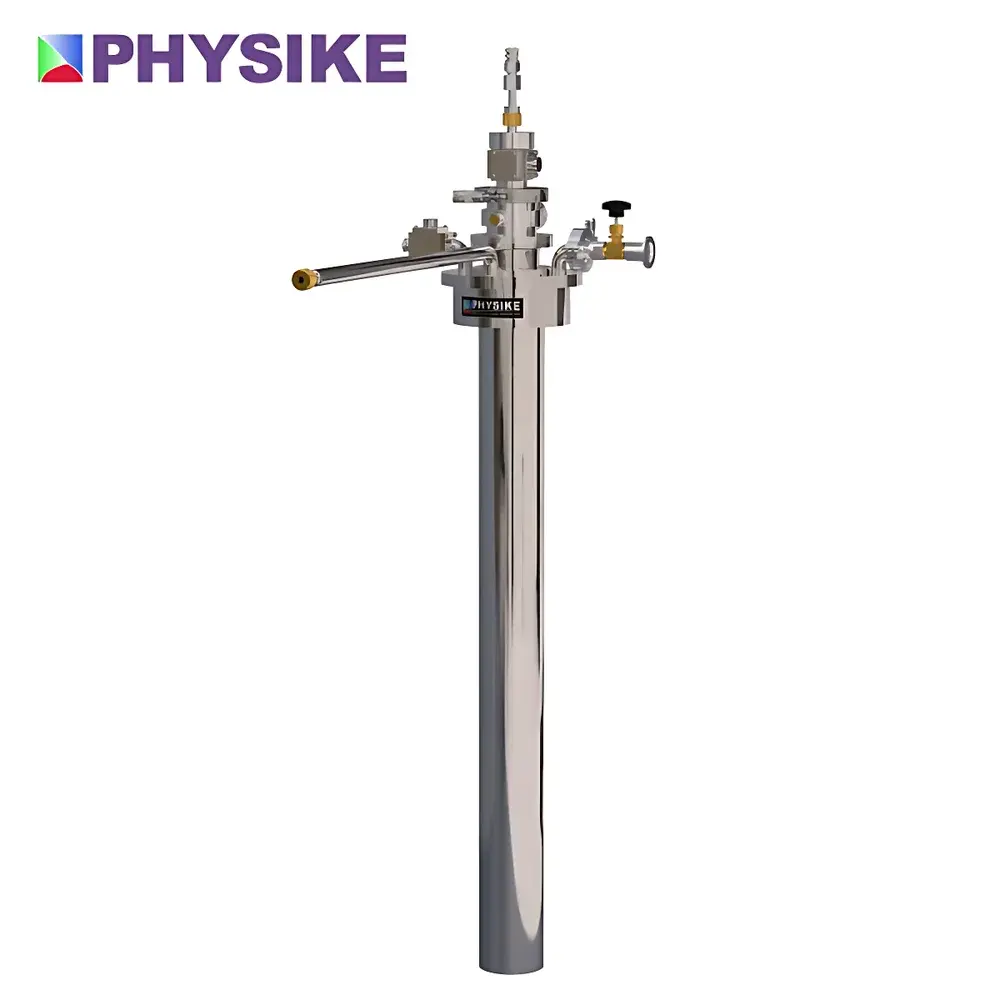
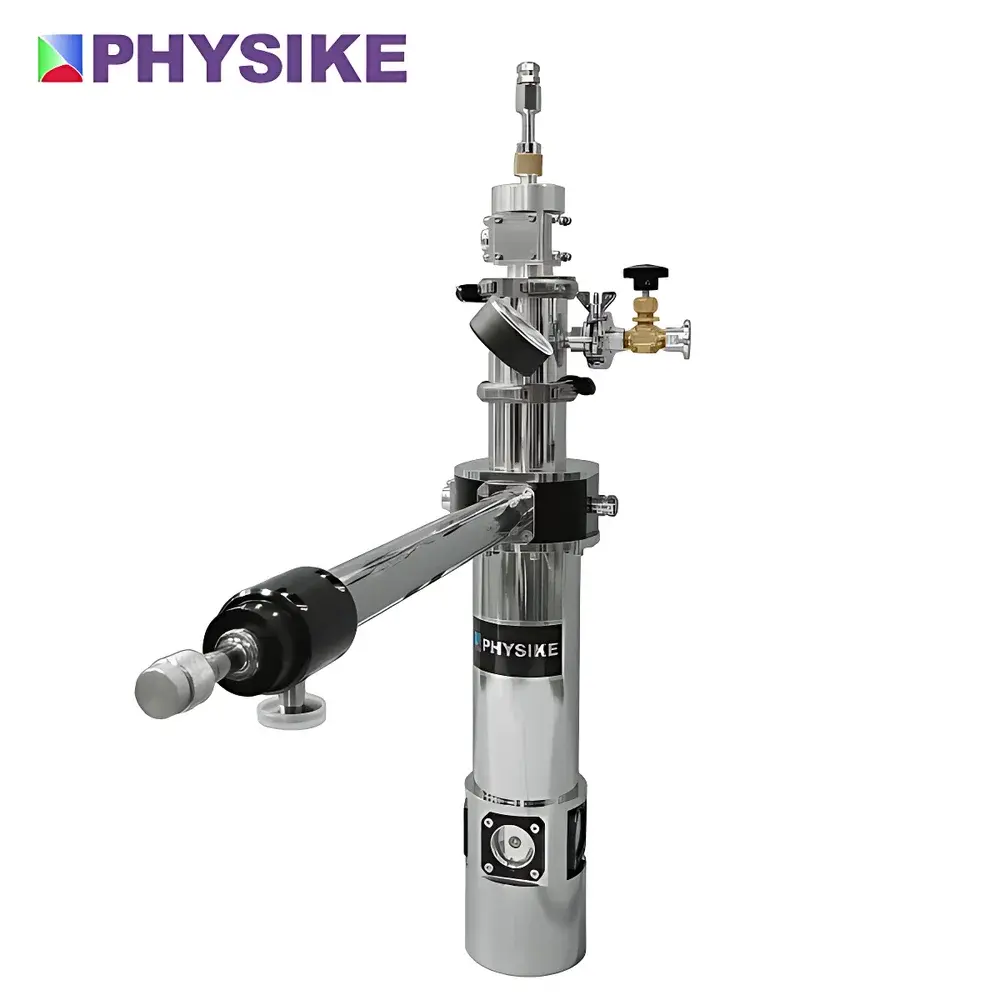
PHYSIKE Scryo-SV Top-Loading Continuous-Flow Cryogenic Thermostat
| Brand | PHYSIKE |
|---|---|
| Origin | Beijing, China |
| Manufacturer Type | Direct Manufacturer |
| Country of Origin | China |
| Model | Scryo-SV |
| Pricing | Upon Request |
Overview
The PHYSIKE Scryo-SV is a top-loading, continuous-flow cryogenic thermostat engineered for high-fidelity thermal control in advanced physical science experiments. It operates on the principle of controlled helium gas exchange—either dynamic or static—where liquid helium (or liquid nitrogen) is metered via a needle-valve-equipped transfer line from an external dewar into an integrated vaporizer. The resulting cold helium gas flows continuously through a sample chamber or over the specimen, enabling efficient thermal anchoring of materials with poor thermal conductivity (e.g., stainless steel, ceramics), irregular geometries (e.g., diamond anvil cells), powders, and liquids. Unlike bath-type cryostats, the Scryo-SV maintains sub-Kelvin stability without immersing samples in cryogen, thereby minimizing mechanical drift, condensation risks, and thermal gradients across heterogeneous samples. Its modular architecture supports integration with helium recirculation systems (Qcryo series), forming closed-cycle dry cryogenic platforms capable of sustained operation below 2.5 K without liquid helium consumption—critical for long-duration measurements under GLP/GMP-compliant or ISO/IEC 17025-accredited laboratory conditions.
Key Features
- Top-loading configuration enables rapid, tool-free sample exchange without breaking vacuum or warming the entire system
- Continuous-flow cooling with precise helium mass flow regulation via integrated needle valve and optional mass flow controller
- Dual-cryogen compatibility: supports both liquid helium (LHe) and liquid nitrogen (LN₂) as primary coolants
- Interchangeable operating modes: dynamic exchange gas (DEG) for fast cooldown and high heat load capacity; static exchange gas (SEG) for ultra-low vibration and reduced risk of blockage during repeated sample changes
- Thermal range: standard <2 K to 325 K; extended options available up to 500 K or 800 K with calibrated resistive heating elements
- Low-vibration design validated for sensitive techniques including AFM, STM, and confocal Raman spectroscopy
- Modular tail-end configurations: optical variants (SV-300) with four customizable windows (quartz, Kapton, beryllium, vanadium); ESR-optimized variants (SV-100/SV-200) with L-shaped or coaxial feedthroughs; magnet-compatible variants (SV-400) with tubular tails for NMR, superconducting magnets, and DAC integration
Sample Compatibility & Compliance
The Scryo-SV accommodates diverse sample formats—including puck-, LCC-, DIP-, and dielectric-mount carriers—as well as custom inner-diameter sample tubes (down to 6 mm, up to 80 mm). Its gas-cooled environment ensures uniform thermalization of thermally isolated specimens, satisfying ASTM E2903-22 requirements for low-temperature thermal performance validation. All models comply with IEC 61000-6-2 (EMC immunity) and IEC 61000-6-4 (EMC emission) standards. When operated in conjunction with Qcryo helium recirculation systems, the platform meets FDA 21 CFR Part 11 requirements for electronic record integrity when paired with compliant data acquisition software. Vacuum integrity is maintained to ≤1×10⁻⁷ mbar using all-metal seals and stress-relieved cryogenic windows, fulfilling ISO 27401:2018 criteria for vacuum-assisted instrumentation in research-grade facilities.
Software & Data Management
Temperature control is managed via a dual-channel, field-calibrated PID algorithm with real-time feedback from multiple traceable sensors—including magnetic-field-independent Cernox™ and RuO₂ resistance thermometers mounted at the vaporizer, sample stage, and outer radiation shield. Optional LabVIEW™-compatible drivers and Python API support enable seamless integration into automated test sequences. Audit trails, calibration logs, and temperature ramp profiles are stored with time-stamped metadata, supporting ISO/IEC 17025 traceability and GLP audit readiness. For regulated environments, optional 21 CFR Part 11–compliant user access controls, electronic signatures, and immutable data archiving modules are available.
Applications
The Scryo-SV series serves as a foundational platform across quantum materials characterization and precision spectroscopy. Key application domains include:
- Electron spin resonance (ESR/EPR) at Q-band (34 GHz) and X-band (9.5 GHz), with SV-100 and SV-200 variants optimized for resonator coupling and magnetic field homogeneity
- Optical spectroscopy (UV-Vis-IR, THz, Raman, photoluminescence) enabled by SV-300’s multi-window tail and transmission-grade window options
- Nuclear magnetic resonance (NMR) and Mössbauer spectroscopy requiring large-bore, low-vibration sample environments (SV-400 with 65 mm ID tube for 89 mm bore 9.4 T magnets)
- High-pressure studies using diamond anvil cells (DAC), where gas cooling avoids thermal shock and enables in situ pressure tuning
- Quantum device testing (SQUIDs, TES detectors, superconducting qubits) demanding sub-3 K base temperatures and minimal electromagnetic interference
- Mechanical property evaluation (tensile testing, creep analysis) at cryogenic temperatures with integrated linear actuators and multi-position sample stages
- Neutron scattering and synchrotron X-ray diffraction experiments requiring large-volume, low-background sample chambers
FAQ
What cooling media are supported by the Scryo-SV?
The Scryo-SV operates with liquid helium (LHe), liquid nitrogen (LN₂), or as part of a closed-cycle helium recirculation system (Qcryo), eliminating ongoing LHe consumption.
Can the Scryo-SV be used in high magnetic fields?
Yes—SV-200 and SV-400 variants feature non-magnetic construction and field-insensitive temperature sensors, making them compatible with superconducting magnets up to 20 T.
Is vacuum or static helium environment available?
Both options are supported: high-vacuum mode (<1×10⁻⁷ mbar) and static helium exchange mode (1–10 mbar He), the latter reducing vibration and avoiding flow-induced noise.
How is temperature calibrated and verified?
Each unit ships with NIST-traceable calibration certificates for all embedded sensors; optional on-site verification per ISO/IEC 17025 is available upon request.
Are custom electrical or optical feedthroughs supported?
Yes—standard offerings include SMA, BNC, triaxial, fiber-optic, and twisted-pair feedthroughs; custom configurations (e.g., RF-tight microwave ports, multi-channel optical bundles) can be engineered to specification.



