
PiCUS TreeQinetic Arboricultural Tension Tester
| Brand | Argus |
|---|---|
| Origin | Germany |
| Model | PiCUS TreeQinetic |
| Application | Non-destructive in-situ assessment of trunk and root anchorage stability under controlled tensile loading |
| Measurement Principle | Quasi-static mechanical displacement-based biomechanical response analysis |
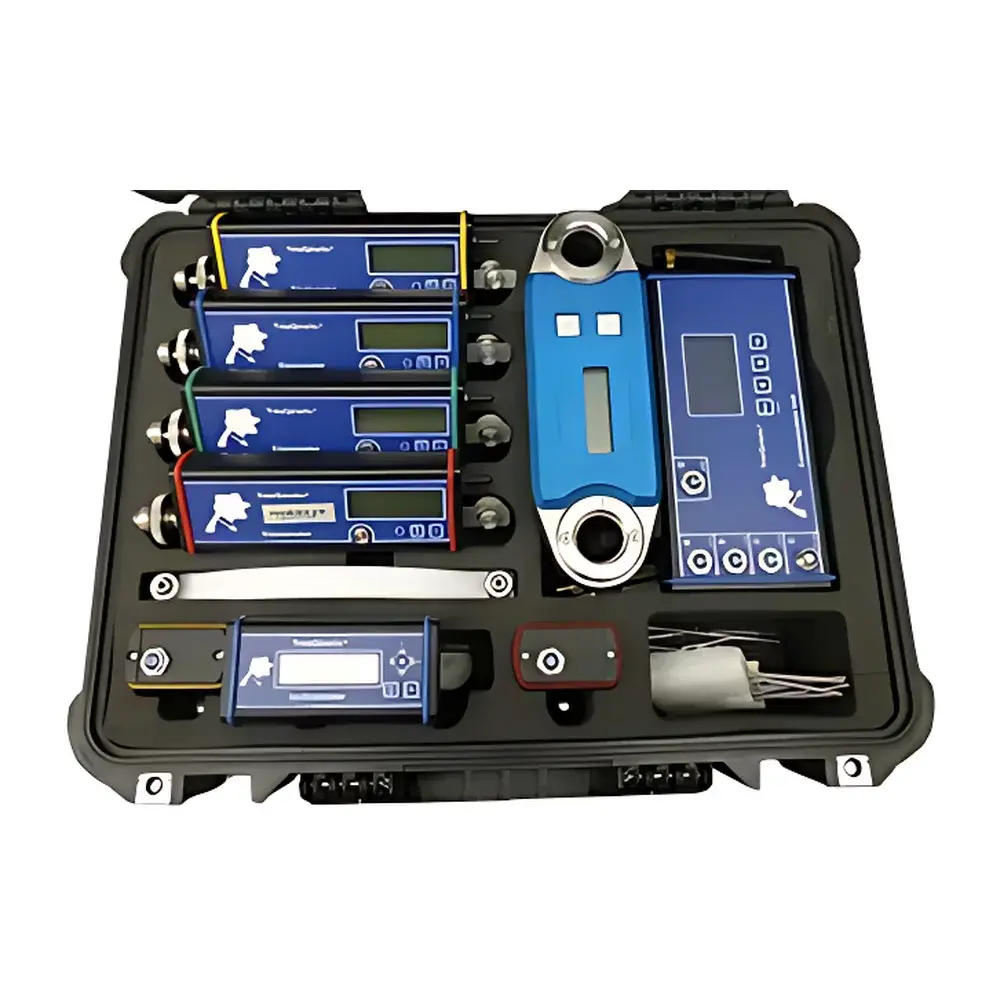
| Key Components | Wireless elastometer (±2 mm, 0.1 µm resolution), dual-axis inclinometer (±15°, 0.002° resolution), digital forcemeter (0–60 kN, 0.01 kN resolution), overload indicator, Bluetooth-enabled data hub, and proprietary TreeQinetic software suite |
| Compliance | Designed for field use in accordance with DIN EN 1991-1-4 (wind actions), ISO 17225-6 (biomass stability reference frameworks), and GLP-aligned data integrity protocols |
| Power | Rechargeable Li-ion battery pack (10 h typical runtime at 20°C) |
| Wireless Range | Up to 30 m (line-of-sight, Bluetooth 5.0) |
| Mechanical System | Winch assembly rated for 2800 kg pulling force |
Overview
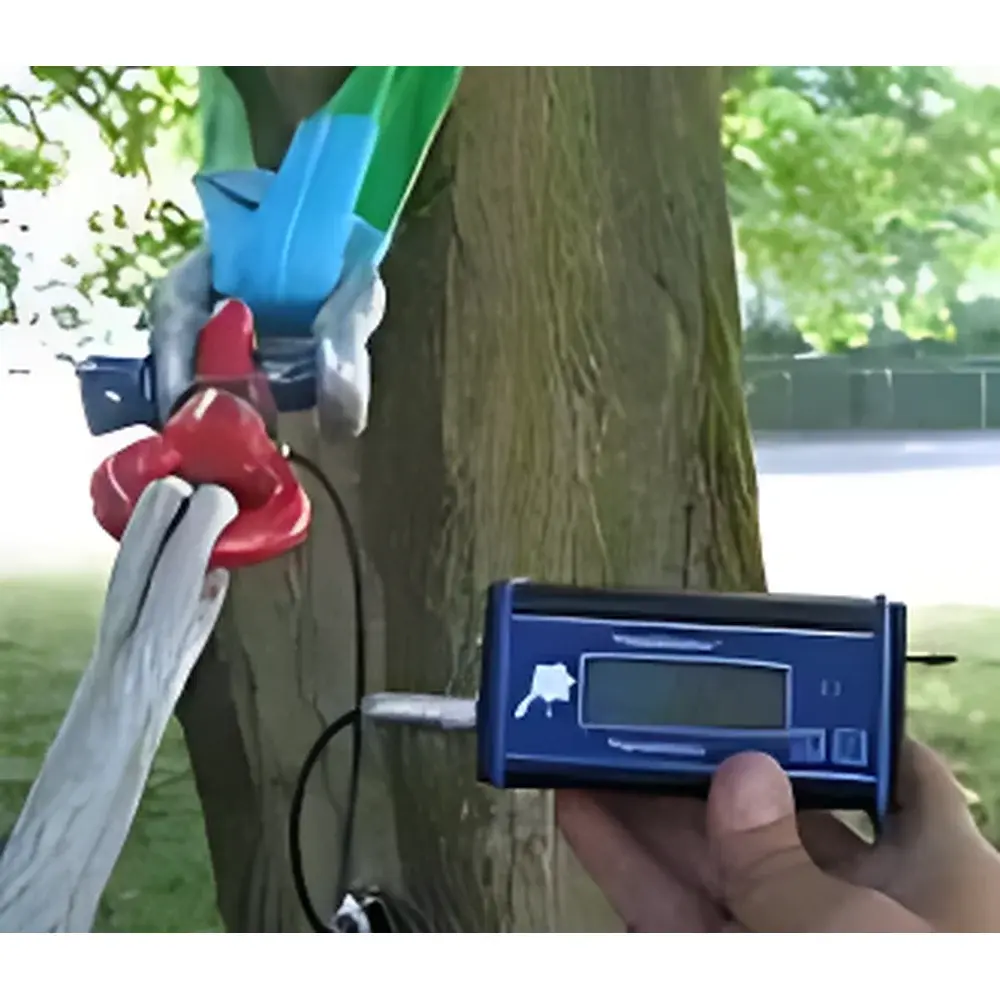
The PiCUS TreeQinetic Arboricultural Tension Tester is an engineered field instrument designed for quantitative, non-destructive evaluation of tree structural stability under simulated wind-induced tensile loading. Unlike empirical visual assessments or static resistance tests, the TreeQinetic system applies controlled, incremental horizontal tension to the trunk—mimicking dynamic wind loading—and measures the resulting biomechanical response across three orthogonal domains: radial deformation of the cambial zone (via high-resolution elastometry), angular displacement of the trunk axis (via precision dual-axis inclinometry), and applied load magnitude (via calibrated digital forcemetry). This multi-parameter acquisition enables calculation of key biomechanical indices—including trunk flexural rigidity, root-soil anchorage stiffness, and critical overturning moment thresholds—based on established arboricultural mechanics models such as the “bending moment–deflection” relationship described in Mattheck & Breloer (1994) and refined in recent DIN 18920-compliant guidelines. The system operates entirely in situ without coring, drilling, or root excavation, preserving long-term tree health while delivering repeatable, auditable datasets suitable for municipal risk management, heritage tree preservation, and post-storm forensic analysis.
Key Features
- Real-time synchronized wireless acquisition from all four core sensors (elastometer, inclinometer, forcemeter, overload indicator) via Bluetooth 5.0, eliminating cable entanglement and enabling operator mobility during testing.
- On-device LCD displays integrated into each sensor unit—allowing immediate visual verification of raw values (e.g., µm displacement, ° tilt, kN load) prior to transmission.
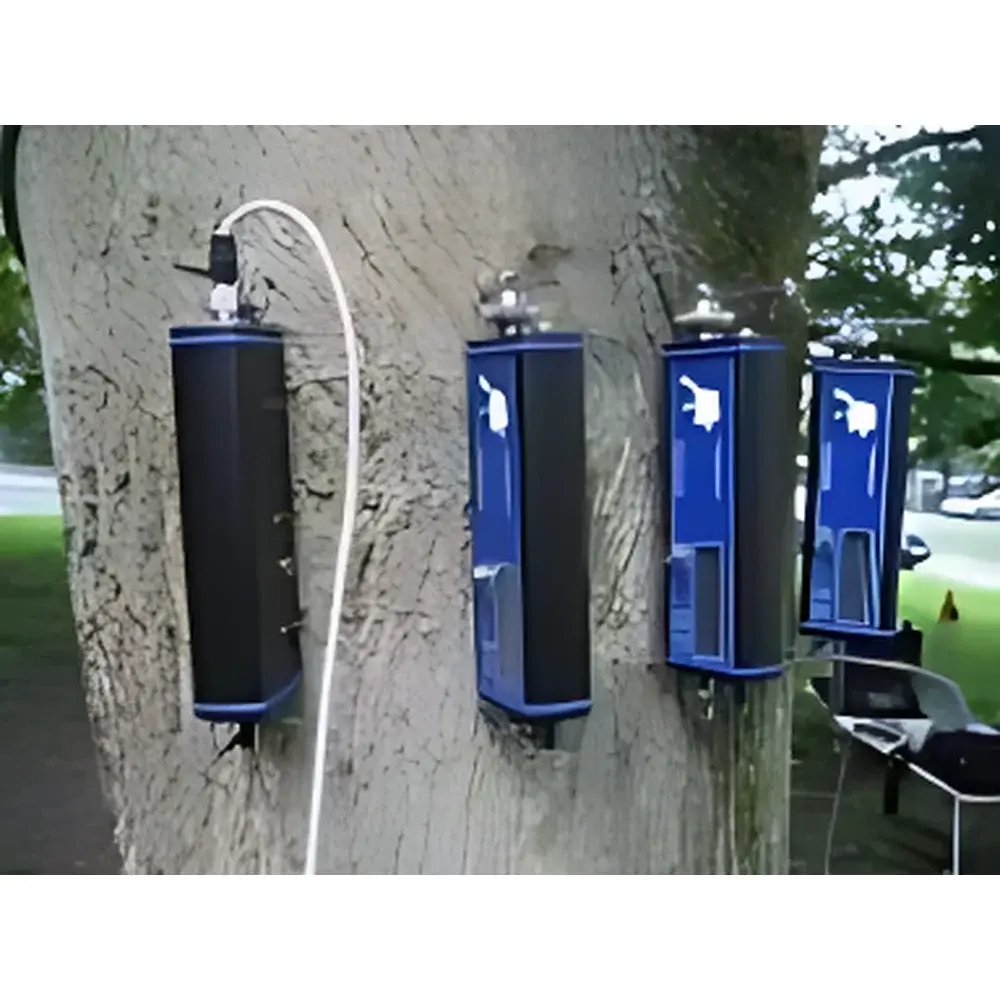
- Modular hardware architecture: elastometer pins (2–4 mm diameter) insert non-invasively into bark layers; inclinometer mounts directly to trunk surface using magnetic or adhesive base; forcemeter integrates inline with winch cable path.
- Configurable acoustic-optical overload alerts triggered at user-defined thresholds (e.g., 16 kN tensile force or 0.2° basal tilt), enhancing field safety during high-load protocols.
- Field-ruggedized design: IP65-rated electronics; operating temperature range −10°C to +50°C; shock-absorbing housing compliant with IEC 60068-2-64 for transport and deployment.
- Integrated power management: rechargeable lithium-ion batteries provide ≥10 h continuous operation per charge (20°C ambient); low-power sleep mode extends standby time to 72 h.
Sample Compatibility & Compliance
The TreeQinetic system accommodates broad species and size ranges: trunk diameters from 15 cm to >120 cm; height classes up to 35 m; and soil types ranging from shallow urban clay to deep loam profiles. Sensor geometry (e.g., fixed 200 mm elastometer gauge length) ensures consistent strain localization across heterogeneous bark textures. All measurement outputs comply with traceability requirements under ISO/IEC 17025:2017 for field instrumentation. Data files include embedded metadata (GPS coordinates, UTC timestamps, operator ID, calibration certificate IDs) and support audit trails required by municipal arboriculture departments and insurance assessors. Optional anemometer integration (0–30 m/s, ±0.5 m/s accuracy) permits concurrent wind velocity logging during live-load trials—enabling correlation of real-time environmental conditions with mechanical response curves.
Software & Data Management
TreeQinetic Control Suite (v4.2+) runs on Windows 10/11 and provides full workflow automation: sensor pairing, test protocol definition (ramp rate, hold duration, maximum load), real-time overlay plots (load vs. tilt, load vs. radial strain), and automated derivation of stability indices (e.g., Root Plate Stiffness Index, Trunk Elastic Modulus Estimate). Export formats include CSV (for statistical modeling in R or Python), PDF reports with annotated graphs and pass/fail annotations per DIN V 18920 Annex B, and encrypted .tqs binary archives supporting FDA 21 CFR Part 11–compliant electronic signatures and version-controlled revisions. Audit logs record every parameter change, file export, and report generation event—fully aligned with GLP documentation standards for regulatory submissions.
Applications
- Municipal urban forestry programs conducting routine stability screening of street trees adjacent to pedestrian zones or infrastructure.
- Consulting arborists performing pre-construction risk assessments for development sites with protected specimens.
- Research institutions investigating species-specific anchorage mechanics under climate-driven wind pattern shifts.
- Insurance loss adjusters documenting biomechanical failure thresholds after storm events for liability determination.
- Botanic gardens and arboreta monitoring long-term stability trends in heritage collections using longitudinal dataset comparison.
- Academic teaching labs demonstrating plant biomechanics principles through quantifiable, repeatable field experiments.
FAQ
What standards does the PiCUS TreeQinetic comply with for field stability assessment?
It supports methodologies referenced in DIN V 18920, ISO 17225-6, and the British Standard BS 5837:2012+A1:2022 for tree survey and risk evaluation.
Can the system be used on leaning or asymmetrically loaded trees?
Yes—the inclinometer’s dual-axis capability captures both forward/backward and lateral tilt components independently, allowing vector decomposition of resultant displacement.
Is calibration traceable to national metrology institutes?
All sensors ship with DAkkS-accredited calibration certificates (Germany), and field recalibration kits are available with documented uncertainty budgets per ISO/IEC 17025.
How is data security managed during wireless transmission?
Bluetooth pairing uses AES-128 encryption; local storage employs BitLocker encryption; cloud sync (optional) adheres to GDPR-compliant hosting with zero-knowledge architecture.
Does the software support multilingual interface and reporting?
Yes—UI and report templates are localized in English, German, French, Spanish, and Dutch, with customizable terminology fields for regional arboricultural nomenclature.




