
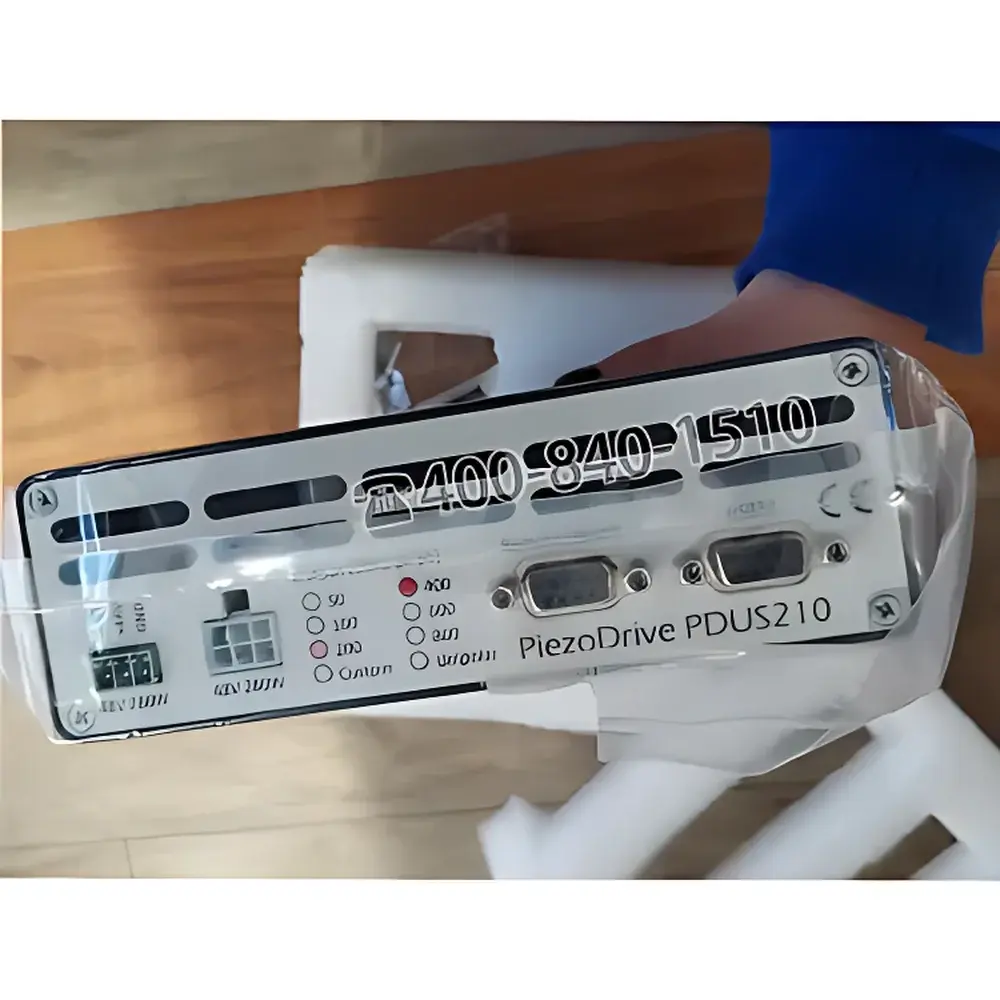
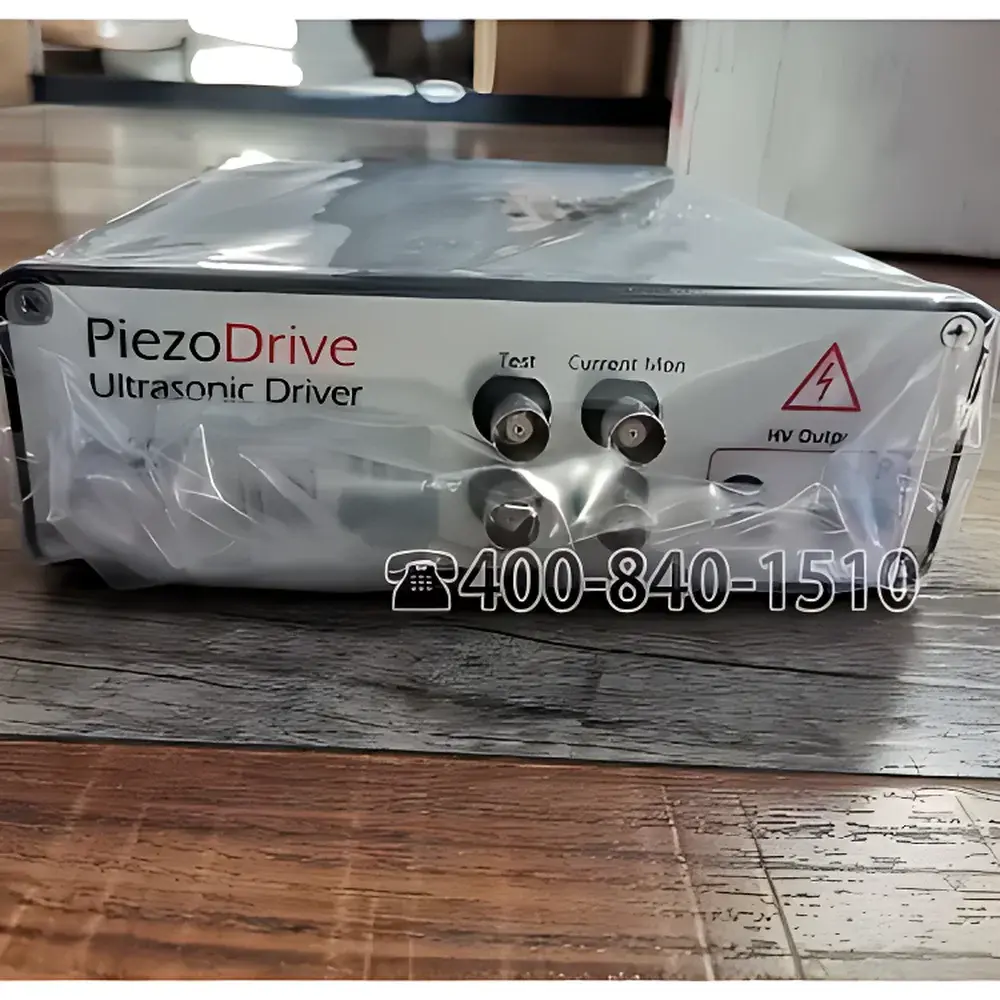
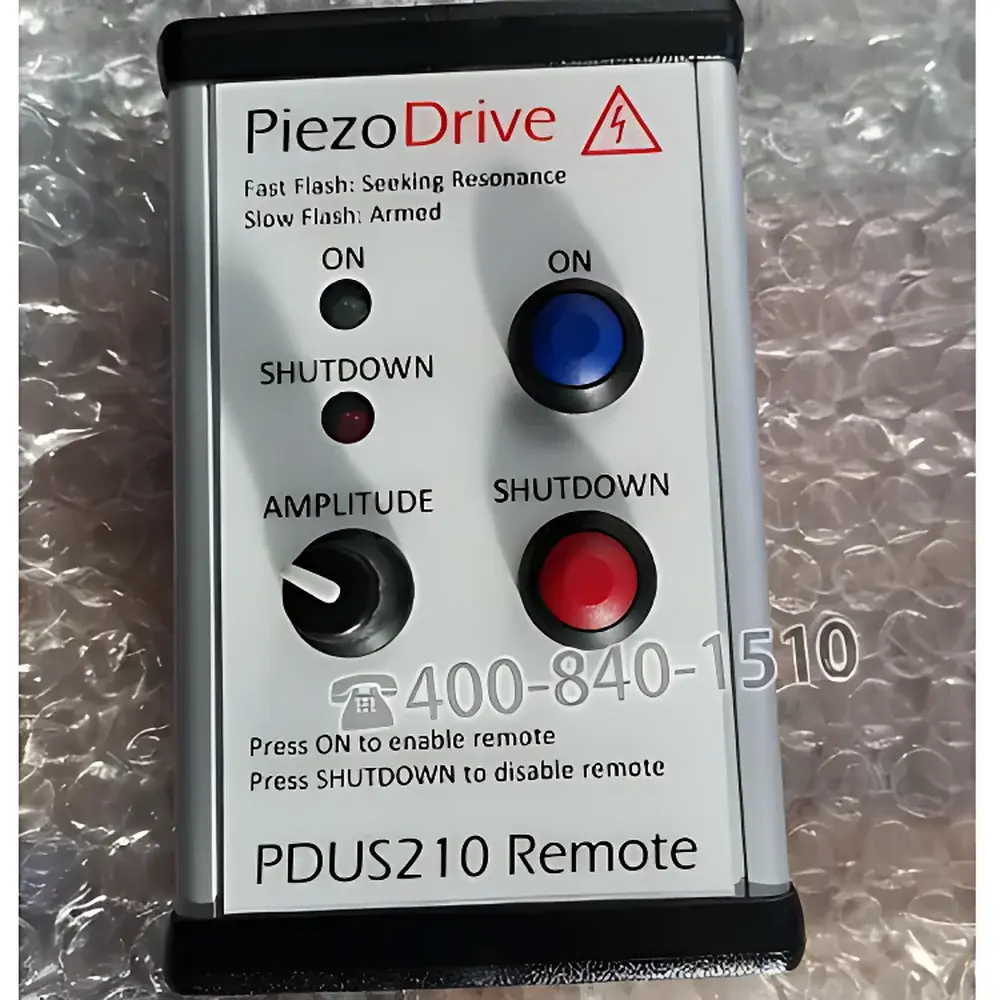
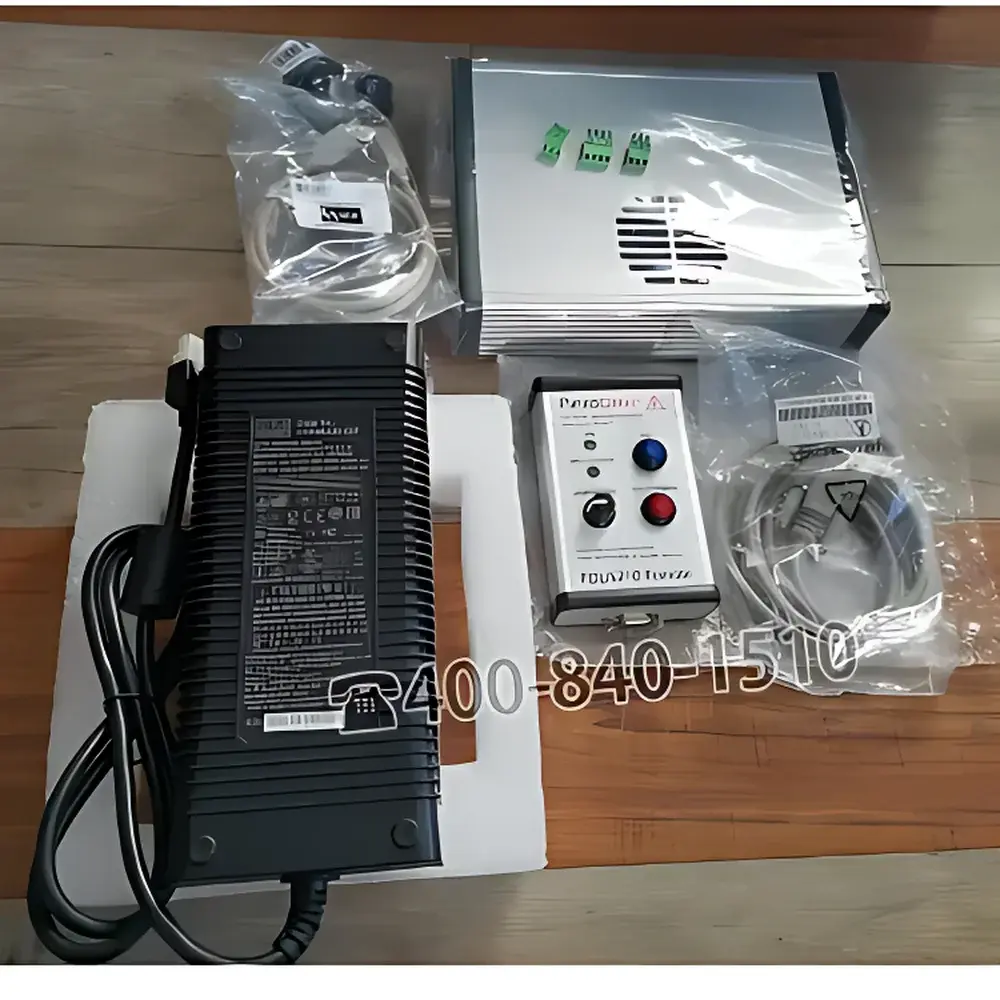
Piezodrive PDUS210 Ultrasonic Piezoelectric Driver
| Brand | Piezodrive |
|---|---|
| Origin | Australia |
| Model | PDUS210 |
| Output Power | 210 W |
| Output Voltage Range | 17–282 Vrms |
| Output Current Range | 0.7–11 Arms |
| Load Impedance Range | 1.5–400 Ω (optimized) |
| Frequency Range | 6–500 kHz |
| Waveform | Pure Sine |
| Control Interfaces | USB, RS485, Digital I/O (4-channel), Front Panel, Footswitch |
| Compliance | CE, RoHS |
| Software | Included PC-based control suite with real-time impedance analysis and resonance tracking |
Overview
The Piezodrive PDUS210 is a high-fidelity, digitally controlled ultrasonic piezoelectric driver engineered for precision actuation and dynamic characterization of resonant piezoceramic transducers. Operating on the principle of closed-loop series/parallel resonance tracking, the PDUS210 delivers stable, low-distortion sinusoidal excitation across a broad frequency spectrum (6 kHz to 500 kHz), enabling accurate operation at both mechanical resonance (series mode) and anti-resonance (parallel mode). Its architecture integrates real-time impedance spectroscopy, adaptive phase-locking, and programmable amplitude regulation—making it suitable for applications demanding strict amplitude stability under variable mechanical loading, such as ultrasonic machining, medical device actuation, and non-destructive testing. Unlike fixed-frequency amplifiers, the PDUS210 continuously monitors and adjusts drive frequency to maintain optimal coupling efficiency, minimizing thermal drift and maximizing energy transfer into the transducer.
Key Features
- Real-time dual-mode resonance tracking: Automatically locks to either series (minimum impedance) or parallel (maximum impedance) resonance points with <1 ms update rate
- Programmable amplitude control: Supports both voltage-controlled and current-controlled output modes, enabling consistent displacement in load-sensitive environments
- Multi-modal excitation: Configurable pulse-width modulation (PWM), frequency sweep, and burst-mode operation for cavitation studies and transient response analysis
- Integrated impedance analyzer: Measures complex load impedance (Z, θ) and frequency response (Bode plots) without external instrumentation
- Isolated high-voltage output stage: Galvanically isolated up to 1 kV, supporting grounded or floating transducer configurations
- Flexible control ecosystem: Native support for front-panel operation, footswitch triggering, PC-based GUI, and headless automation via RS485/USB API with full command set documentation
- Scalable output variants: Standard models (PDUS210-XX) cover 50–800 Vp-p ranges; the PDUS210-FLEX variant enables user-defined voltage scaling via external matching transformers
Sample Compatibility & Compliance
The PDUS210 is compatible with commercially available piezoelectric stack actuators, Langevin-type transducers, and custom-designed ultrasonic horns operating within its specified impedance (1 Ω to 5 kΩ) and power (≤210 W) envelope. It supports both bipolar and unipolar transducer topologies when used with appropriate external biasing circuits. The unit complies with EN 61326-1 (EMC for laboratory equipment) and EN 61010-1 (safety requirements for electrical equipment for measurement, control, and laboratory use). All firmware and software components adhere to GLP-relevant audit trail principles, with timestamped parameter logging, user-access controls, and exportable CSV/JSON data files suitable for regulatory submissions. While not FDA-certified as a medical device itself, the PDUS210 meets essential performance criteria referenced in ISO 13485-aligned design controls for Class II ultrasound equipment development.
Software & Data Management
The included PiezoControl Suite provides a Windows-based interface with real-time oscilloscope-style waveform visualization, impedance magnitude/phase plotting, and automated resonance mapping. All measurements—including drive frequency, RMS voltage/current, instantaneous power, and load Q-factor—are logged at ≥1 kHz sampling rates and stored with metadata (date, user ID, configuration hash). Export formats include CSV, MATLAB .mat, and HDF5 for downstream statistical analysis or integration with LabVIEW, Python (via PySerial/PyUSB bindings), or MATLAB Instrument Control Toolbox. The RS485 and USB APIs implement a deterministic ASCII command protocol with error-checking and synchronous response framing—enabling reproducible test sequences in automated QA/QC workflows compliant with ISO/IEC 17025 and ASTM E2929 standards.
Applications
- Ultrasonic machining: Precision drilling, cutting, and milling of ceramics, composites, and hardened metals using resonant amplitude stabilization
- Medical & dental instrumentation: Driving piezoelectric scalers, bone surgery tools, and microfluidic nebulizers requiring repeatable mechanical output
- Non-destructive evaluation (NDE): Excitation of broadband transducers for time-of-flight diffraction (TOFD) and phased array ultrasonic testing (PAUT)
- Cavitation research: Controlled generation of acoustic streaming and inertial cavitation for sonochemistry and drug delivery studies
- OEM system integration: Embedded control of ultrasonic welders, atomizers, and cleaning tanks with programmable duty cycling and fault detection
- Materials characterization: Dynamic mechanical analysis (DMA) of viscoelastic polymers and piezocomposites via forced harmonic response
FAQ
What is the difference between series and parallel resonance operation?
Series resonance occurs at the frequency of minimum impedance (Zmin) and maximum current flow; parallel resonance occurs at Zmax and minimum current. The PDUS210 can lock to either point depending on transducer topology and application stability requirements.
Can the PDUS210 drive transducers outside its nominal 20–200 kHz range?
Yes—firmware-modified units support extended operation from 6 kHz to 500 kHz, though output power derating may apply above 200 kHz due to switching losses and transducer efficiency roll-off.
Is the PDUS210-FLEX compatible with third-party transformers?
Only transformers meeting Piezodrive’s specified turns ratio tolerance (±0.5%), leakage inductance (<5 µH), and insulation rating (≥2 kV AC) are supported; use of non-certified transformers voids calibration validity and safety certification.
Does the unit support analog input for external amplitude modulation?
No—amplitude modulation is implemented digitally via USB/RS485 commands or internal waveform synthesis; analog voltage control is not provided to ensure signal integrity and noise immunity.
How is traceability ensured for regulated laboratory use?
All firmware versions, calibration timestamps, and user-initiated parameter changes are recorded in non-volatile memory with SHA-256 checksums, satisfying ALCOA+ data integrity requirements for 21 CFR Part 11 compliance when deployed with validated IT infrastructure.



