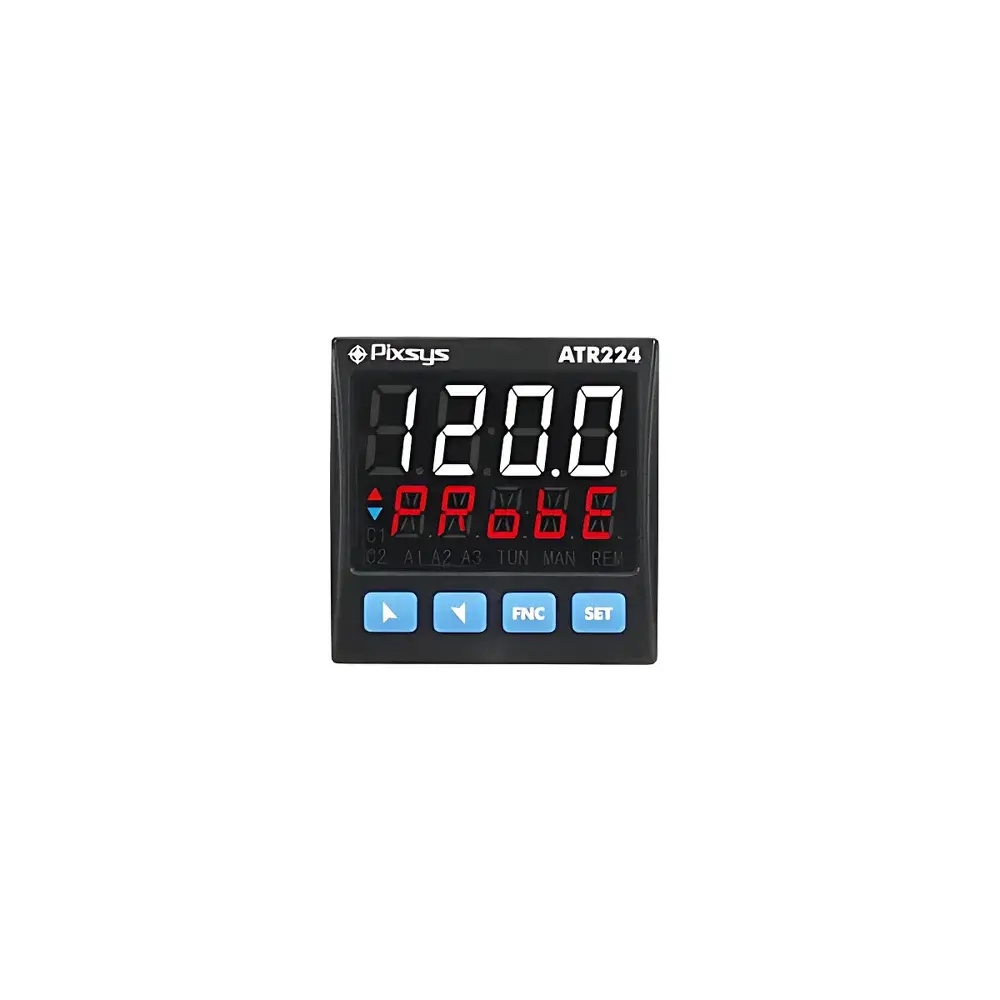
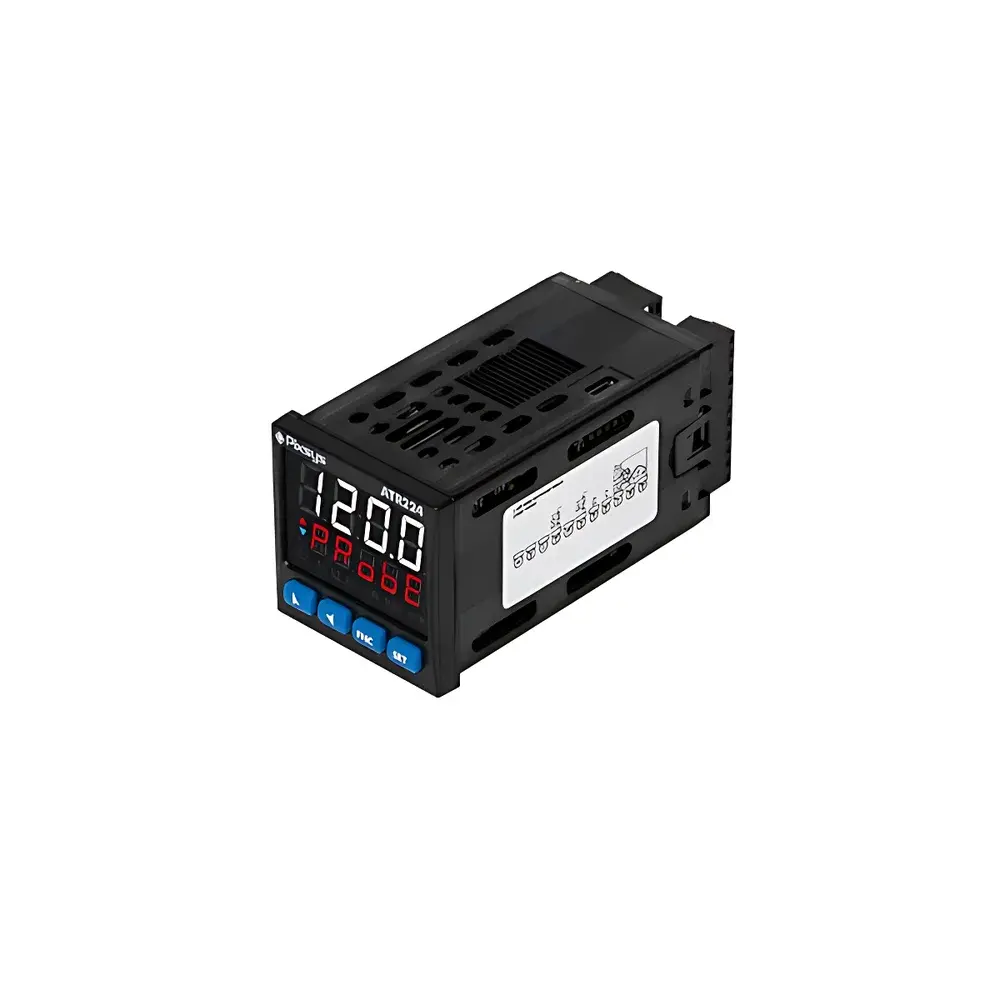
Pixsys ATR224 PID Temperature & Process Controller
| Brand | Pixsys |
|---|---|
| Origin | Italy |
| Model | ATR224 |
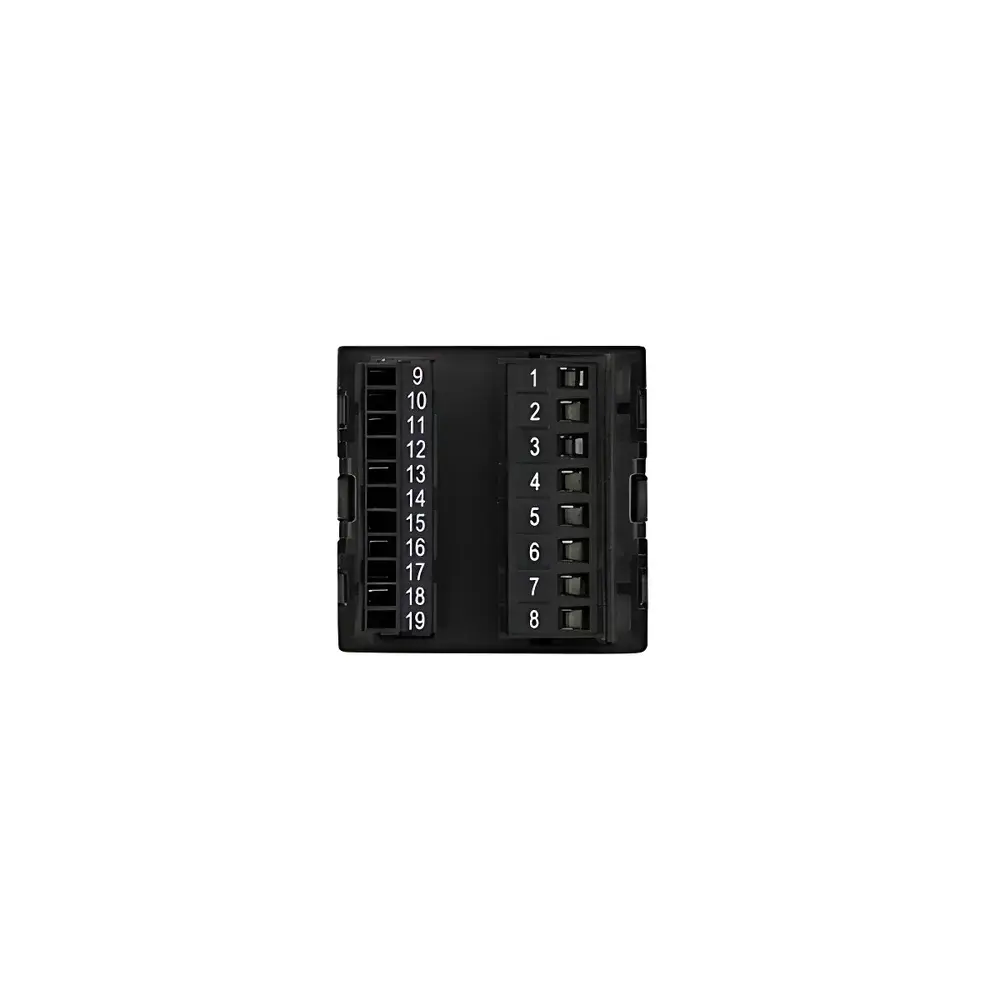
| Input Types | Thermocouples (K, S, R, J, T, N, B), RTDs (PT100/500/1000, Ni100, PTC1K, NTC10K), 0–10 V, 0/4–20 mA, 0–60 mV, Potentiometer (1–150 kΩ) |
| Input Resolution | 16-bit |
| Sampling Time | Programmable down to 2.1 ms (up to 470 Hz) |
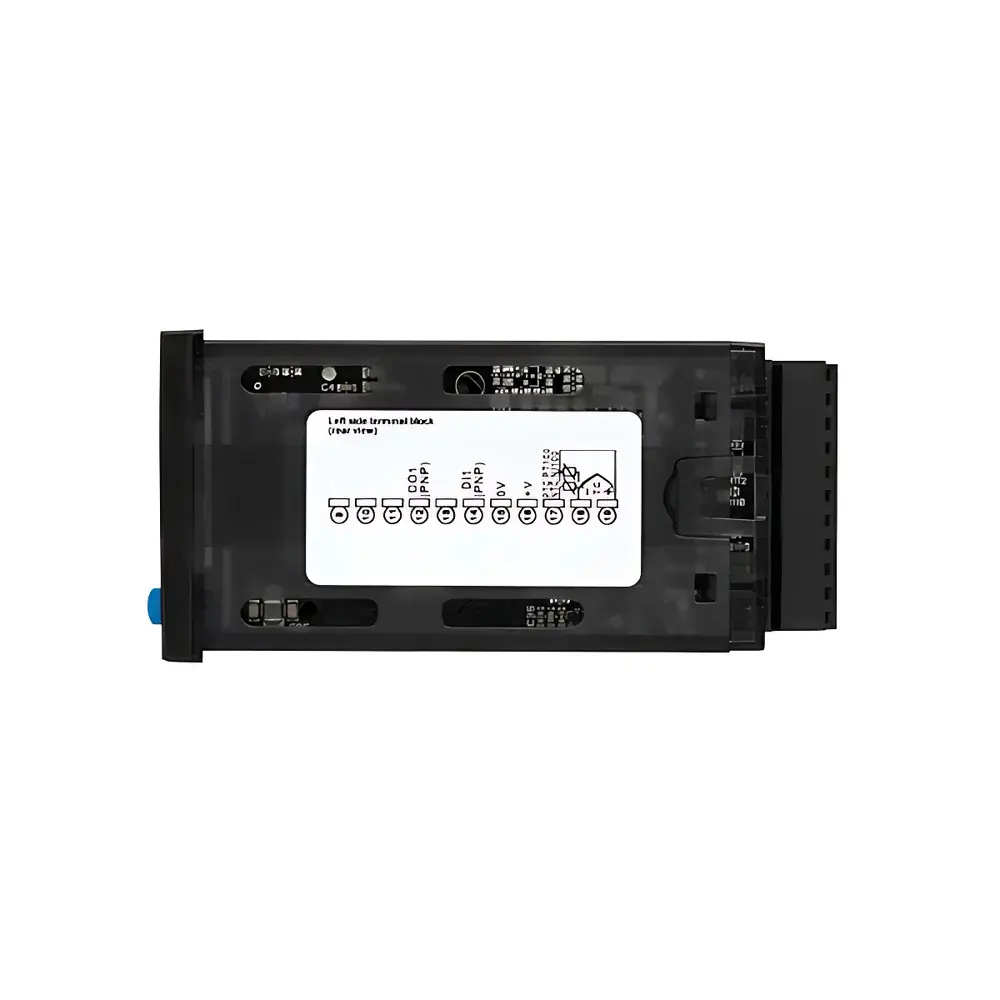
| Control Outputs | 2 x Relay (2 A / 250 V AC resistive), 1 x SSR (12/24 V DC / 25 mA), 1 x Auxiliary 12/24 V DC (30 mA max for sensor excitation) |
| Digital Input | 1 x PNP |
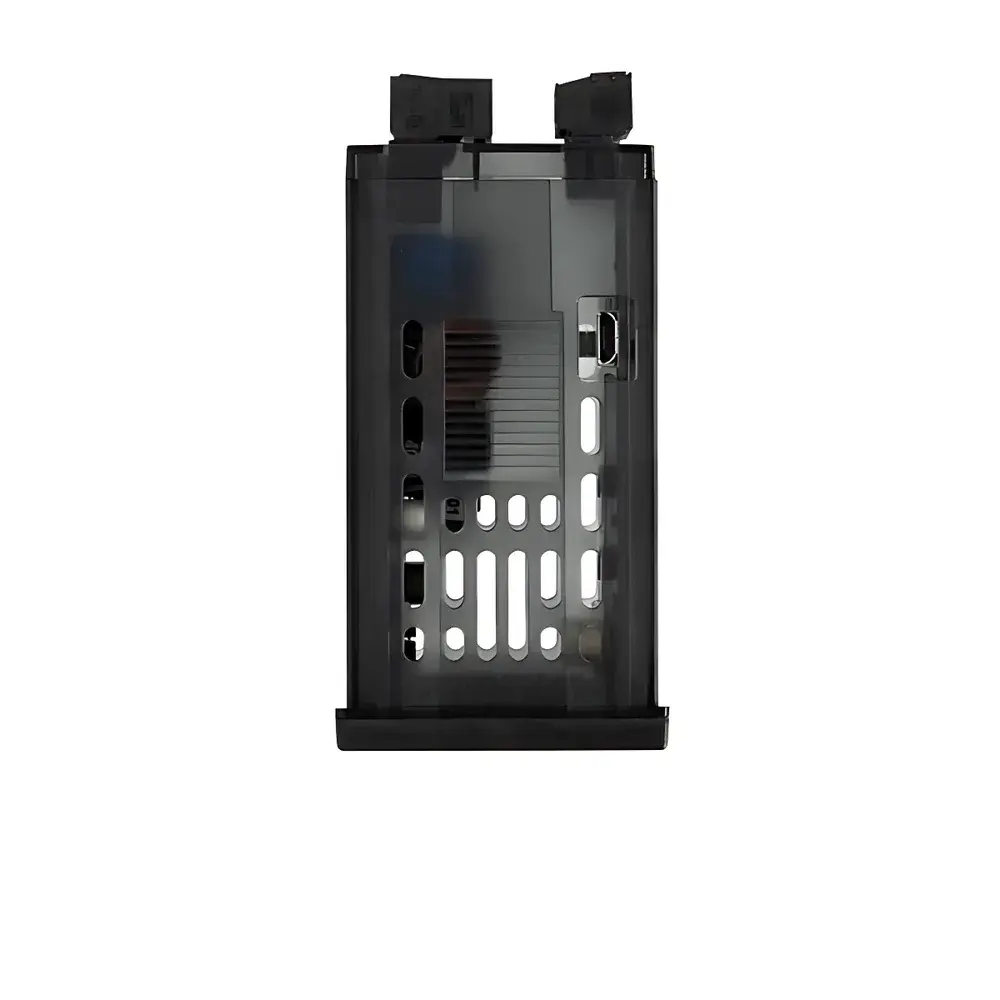
| Communication | microUSB (MyPixsysLab PC software), NFC/RFID (MyPixsys mobile app for Android/iOS) |
| Display | 48 × 48 mm front panel, IP65-rated polycarbonate (UL94V2), housing IP20 |
| Power Supply | 24–230 V AC/DC ±15%, 50/60 Hz, 2.5 kV galvanic isolation |
| Power Consumption | 8 VA |
| Operating Environment | 0–45 °C, 35–95 % RH (non-condensing), max. 2000 m altitude |
| Dimensions | 48 × 48 × 105 mm (W×H×D) |
| Weight | ~185 g |
| Compliance | CE-marked, conforms to EN 61000-6-2 (immunity) and EN 61000-6-4 (emission), designed for industrial control environments per IEC 61000-4 series |
Overview
The Pixsys ATR224 is a compact, DIN-rail mountable PID temperature and process controller engineered for precision regulation in demanding industrial and laboratory environments. Built upon the proven architecture of the ATR244 series, the ATR224 delivers streamlined functionality without compromising core control integrity—making it ideal for OEM integration, HVAC system optimization, thermal chamber management, and small-scale process lines where space, cost-efficiency, and configurability are critical. Its measurement principle relies on high-resolution analog signal acquisition (16-bit ADC) coupled with adaptive digital PID computation, enabling stable closed-loop control across diverse sensor inputs—including thermocouples (K, S, R, J, T, N, B), RTDs (PT100/500/1000, Ni100, PTC1K, NTC10K), voltage (0–10 V), current (0/4–20 mA), low-level mV signals (0–60 mV), and potentiometric sensors (1–150 kΩ). Cold-junction compensation is performed automatically within a –25 °C to +85 °C ambient range, ensuring thermocouple accuracy across variable cabinet conditions.
Key Features
- Programmable 16-bit analog input with configurable sensor type, linearization, and filtering—supporting full thermocouple and RTD families per IEC 60584 and IEC 60751 standards
- Dual relay outputs (2 A / 250 V AC resistive load) plus dedicated SSR output (12/24 V DC, 25 mA) and auxiliary 12/24 V DC supply (30 mA max) for sensor excitation or auxiliary logic
- Flexible control algorithms: On/Off with hysteresis, P, PI, PD, PID, and time-proportional (phase-angle or burst-fire) modes—tunable via manual or auto-tuning routines
- Configurable alarm logic including absolute threshold, band, high/low deviation, and loop-break detection—with optional manual reset and soft-start ramping (programmable in °C/h or %/s)
- NFC/RFID-enabled configuration via MyPixsys mobile application (Android/iOS), eliminating need for physical programming cables during field commissioning
- MicroUSB interface for advanced parameter setup, firmware updates, and data logging using MyPixsysLab PC software—compatible with Windows-based engineering workstations
- Robust mechanical design: UL94V2 flame-retardant polycarbonate front panel (IP65 sealed), DIN enclosure (IP20), 2.5 kV galvanic isolation between power, I/O, and communication circuits
Sample Compatibility & Compliance
The ATR224 interfaces seamlessly with standard industrial sensors used in thermal, pneumatic, and hygroscopic process monitoring—including Pt100 Class B RTDs per EN 60751, Type K thermocouples per IEC 60584-1, and 4–20 mA transmitters compliant with NAMUR NE43. Its electrical architecture meets CE requirements under the Low Voltage Directive (2014/35/EU) and EMC Directive (2014/30/EU), with immunity testing per EN 61000-6-2 (ESD, surge, fast transients) and emission compliance per EN 61000-6-4. While not certified for SIL or functional safety applications, its deterministic scan cycle (minimum 2.1 ms sampling interval) and hardware watchdog support repeatable performance in non-safety-critical automation layers. It operates reliably in ambient conditions defined by IEC 60721-3-3 Class 3K3 (0–45 °C, 35–95% RH non-condensing, up to 2000 m altitude).
Software & Data Management
Configuration and diagnostics are managed through two complementary tools: MyPixsysLab (Windows desktop application) and the MyPixsys mobile app (NFC/RFID pairing). MyPixsysLab supports full parameter export/import, firmware version tracking, and batch configuration of multiple units—enabling traceable setup aligned with GLP documentation practices. The mobile app allows rapid field calibration checks, setpoint adjustments, and alarm status review without opening enclosures. All user-defined parameters—including PID gains, alarm thresholds, input scaling, and relay logic—are stored in non-volatile memory with write-protection options. While the ATR224 does not feature onboard data logging, its real-time analog/digital status can be polled via USB for external SCADA or LabVIEW integration using Modbus RTU over virtual COM port.
Applications
- Thermal profiling in ovens, curing chambers, and environmental test cabinets
- Temperature stabilization in bioreactors, incubators, and pharmaceutical storage units
- Process control of heating elements, cooling valves, and fan speed via SSR or relay actuation
- OEM integration into analytical instrumentation requiring embedded thermal regulation (e.g., sample pre-heaters, detector chillers)
- Humidity and pressure loop control when paired with compatible 4–20 mA transmitters
- Energy-efficient HVAC zone control in laboratories and cleanrooms
FAQ
Does the ATR224 support Modbus communication?
No—the ATR224 lacks native RS485 or Modbus protocol support. Communication is limited to microUSB (virtual COM port for MyPixsysLab) and NFC/RFID (for MyPixsys app).
Can I use the ATR224 with a 3-wire PT100 sensor?
Yes—input wiring configuration for 2-, 3-, or 4-wire RTDs is programmable in the sensor setup menu.
Is cold-junction compensation automatic for all thermocouple types?
Yes—automatic CJC is applied across all supported thermocouple types (K, S, R, J, T, N, B) using an internal sensor calibrated to ±0.2 °C accuracy within –25 °C to +85 °C.
What is the maximum update rate for the analog input?
The shortest programmable sampling interval is 2.1 ms, corresponding to a maximum effective sampling frequency of approximately 470 Hz.
Does the device retain settings after power loss?
Yes—all configuration parameters, setpoints, and tuning constants are retained in EEPROM with no battery backup required.