
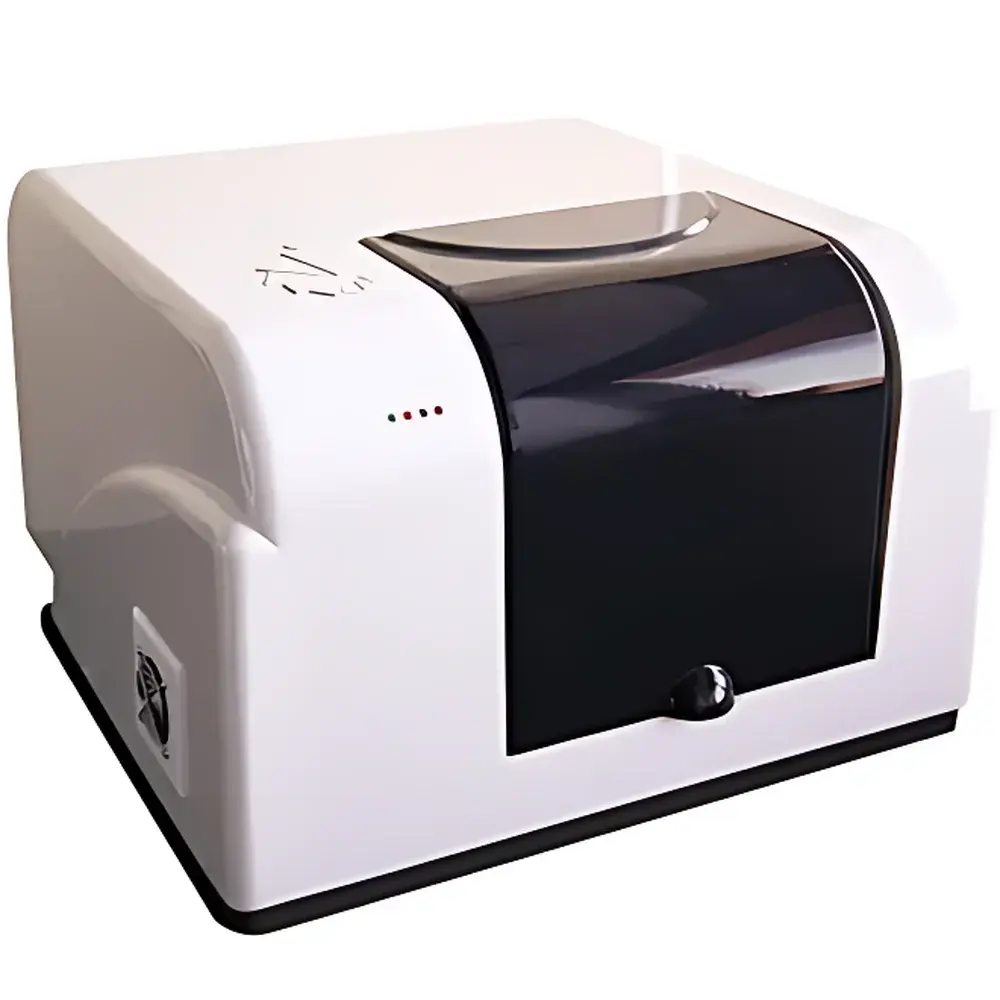
Planelight QLS-scope High-Speed Multiview Light Sheet Fluorescence Microscope
| Brand | Planelight |
|---|---|
| Origin | Spain |
| Model | QLS-scope |
| Light Sheet Technology | Uniform, tunable-thickness light sheet (1 µm) |
| Field of View (FOV) | 0.2–8 mm |
| Maximum Sample Dimensions | 25 × 25 × 25 mm |
| Objective Lenses | 1×, 2×, 7.5×, 10×, 20× (water immersion), 40× (water immersion), motorized variable magnification |
| Imaging Modes | Single-angle, dual-angle, quad-angle, SPOT (500-angle rotational acquisition), Z-Motor scanning |
| Acquisition Speed | 7–10 ms per plane |
| Autofocus | Real-time focal plane correction during acquisition |
| Sample Chamber | Motorized, adaptable for varying sample sizes and compatible with CO₂ incubators |
| Imaging Media Compatibility | Aqueous and organic clearing agents |
| Required Imaging Medium Volume | 20 mL |
| Vibration-Free Sample Handling | Active stabilization for soft or delicate specimens |
Overview
The Planelight QLS-scope is a high-performance, multiview light sheet fluorescence microscope engineered for quantitative 3D imaging of large, optically cleared, and semi-cleared biological specimens. It operates on the principle of selective plane illumination microscopy (SPIM), where a thin, diffraction-limited light sheet (1 µm thickness) illuminates only the focal plane of the detection objective—minimizing phototoxicity, out-of-focus bleaching, and background scatter. Unlike conventional multi-sheet or multi-laser SPIM systems, the QLS-scope employs a single, uniformly illuminated, dynamically tunable light sheet that spans the full field of view without intensity gradients or shadow artifacts. This optical architecture enables rapid volumetric acquisition across millimeter-scale samples while preserving subcellular resolution and signal-to-noise fidelity. Designed for longitudinal in vivo and ex vivo studies—including embryogenesis, neurovascular mapping, organoid development, and root growth dynamics—the system integrates precision mechanics, adaptive optics, and standardized data workflows compliant with FAIR (Findable, Accessible, Interoperable, Reusable) principles.
Key Features
- Uniform 1 µm-thick light sheet with tunable lateral extent—eliminates multi-angle shadowing and ensures isotropic illumination across FOVs from 0.2 mm to 8 mm.
- Motorized, fully automated objective turret supporting 1×, 2×, 7.5×, 10×, 20× (water), and 40× (water) objectives—enabling seamless switching between macro- and micro-scale imaging without manual intervention.
- Five acquisition modes: Single-angle SPIM (for speed), dual-angle and quad-angle SPIM (for improved axial symmetry), Z-Motor scanning (for extended depth coverage), and SPOT mode—a proprietary 500-angle rotational acquisition protocol that reconstructs isotropic 3D volumes even from suboptimally cleared tissues.
- Real-time focal plane correction via integrated focus tracking—maintains optimal z-position throughout time-lapse or multi-hour acquisitions, critical for live embryo or organoid imaging.
- Vibration-isolated sample stage and passive thermal management—ensures mechanical stability during high-speed scanning, especially essential for soft hydrogel-embedded specimens such as zebrafish embryos or plant roots.
- Modular chamber design compatible with environmental control (e.g., CO₂ incubation at 37°C/5% CO₂) and low-volume medium usage (as little as 20 mL)—reducing reagent cost and improving experimental scalability.
Sample Compatibility & Compliance
The QLS-scope accommodates specimens up to 25 × 25 × 25 mm, including whole mouse organs (e.g., heart, kidney, brain), cleared rat vasculature, Arabidopsis root systems, and large-scale tissue sections. It supports both aqueous-based (e.g., CUBIC, ScaleS) and organic solvent-based (e.g., BABB, DBE) clearing protocols without optical degradation. The system meets ISO 13485-aligned manufacturing standards and incorporates hardware-level safeguards for GLP-compliant operation, including timestamped acquisition logs, user-access-controlled configuration locking, and audit-trail-enabled software updates. While not FDA-cleared for diagnostic use, its data output conforms to OME-TIFF and HDF5 formats—ensuring compatibility with NIH-supported platforms such as QuPath, BigDataViewer, and Napari for downstream analysis and publication-ready rendering.
Software & Data Management
QLS-scope is controlled via QScanOS—a Linux-based, deterministic acquisition engine with deterministic real-time scheduling for sub-10 ms plane triggering. The software provides intuitive mode selection (SPOT, Z-Motor, Multi-View), automated registration of angular datasets using iterative closest point (ICP) alignment, and GPU-accelerated deconvolution with constrained Richardson-Lucy algorithms. All metadata—including objective ID, laser power, exposure time, stage position, and environmental conditions—is embedded in OME-XML headers. Raw data are written directly to network-attached storage (NAS) or local SSD arrays with checksum validation. For regulated environments, optional 21 CFR Part 11 compliance packages include electronic signatures, role-based access control (RBAC), and immutable audit trails—fully traceable to individual acquisition sessions and operator IDs.
Applications
- Developmental biology: Time-resolved 4D imaging of zebrafish and Drosophila embryogenesis with minimal photodamage; quantification of cell migration trajectories over >24 h periods.
- Neuroscience: Whole-brain vascular mapping in adult mice post-CUBIC clearing; co-registration of neuronal GFP expression with endogenous autofluorescence channels.
- Plant science: Non-invasive longitudinal tracking of Arabidopsis root tip growth and gene expression (e.g., atHB8::GFP) within agar-based growth media—acquiring full 3D volumes in under 45 s without perturbing sterility or morphology.
- Organoid & tissue engineering: Volumetric assessment of lumen formation, cell polarity, and extracellular matrix deposition in human intestinal or cerebral organoids cultured in Matrigel or synthetic hydrogels.
- Aging & disease modeling: Quantitative comparison of endothelial subset dynamics and capillary density decline across endocrine tissues in aged murine models—supporting publications in high-impact journals such as The EMBO Journal.
FAQ
What is the minimum required sample transparency for reliable SPOT-mode reconstruction?
SPOT mode achieves robust volumetric reconstruction with specimens exhibiting ≥60% effective transmission at 488 nm—making it suitable for moderately cleared tissues where full optical homogenization is impractical.
Can the QLS-scope be integrated into an existing core imaging facility’s workflow?
Yes. The system supports DICOM-SR export, ONNX-compatible AI inference pipelines for segmentation, and direct API access via Python SDK for custom pipeline integration with institutional LIMS or image analysis servers.
Is water immersion the only option for high-magnification objectives?
No. While 20× and 40× objectives are optimized for water immersion, the 1×–10× range includes air and silicone oil variants—available as configurable options upon order.
How does the QLS-scope handle thermal drift during long-term acquisitions?
The optical bench features low-expansion Invar alloy construction, active temperature stabilization (±0.1°C), and closed-loop focus feedback—ensuring <100 nm axial drift over 12-hour acquisitions.
Are raw data files compatible with open-source reconstruction tools like Fiji/BigStitcher?
Yes. All acquisitions are saved as OME-TIFF stacks with complete multi-channel, multi-angle, and multi-timepoint metadata—natively supported by BigStitcher, ClearVolume, and Lightsheet4D.
Related Products




