
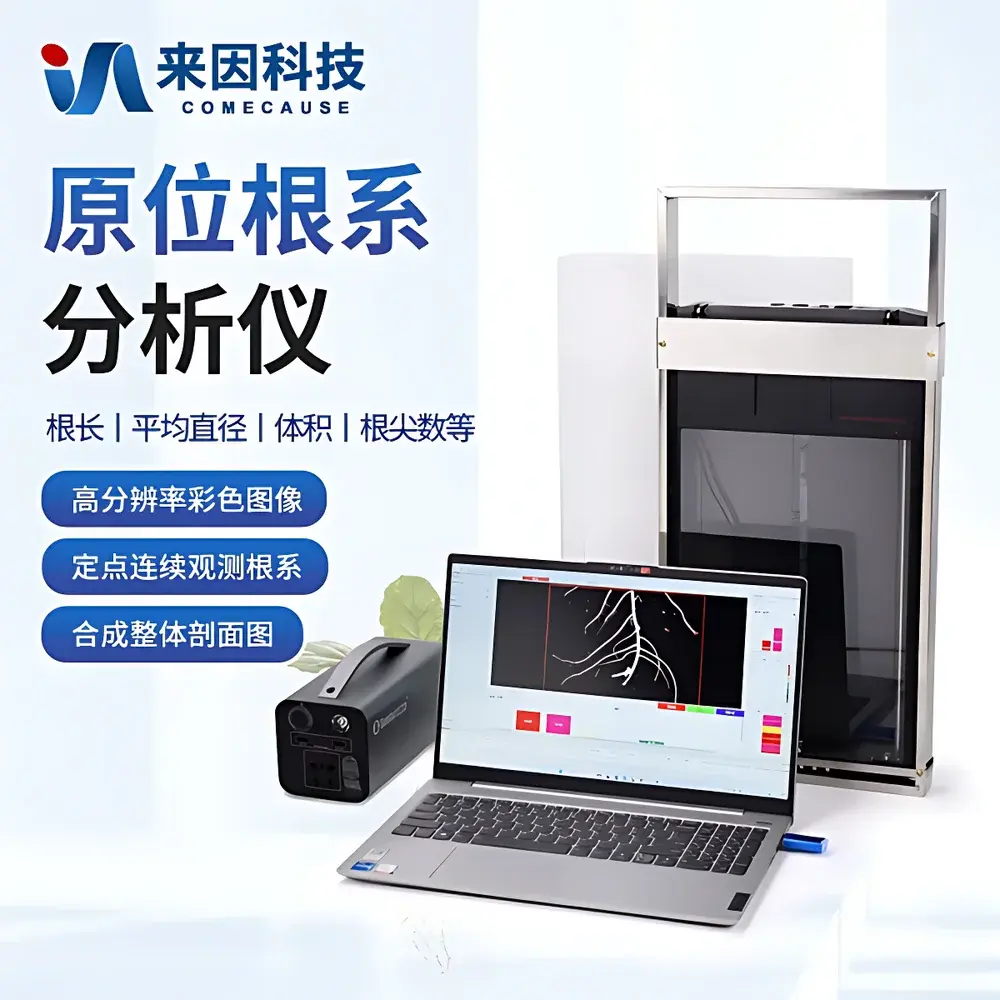
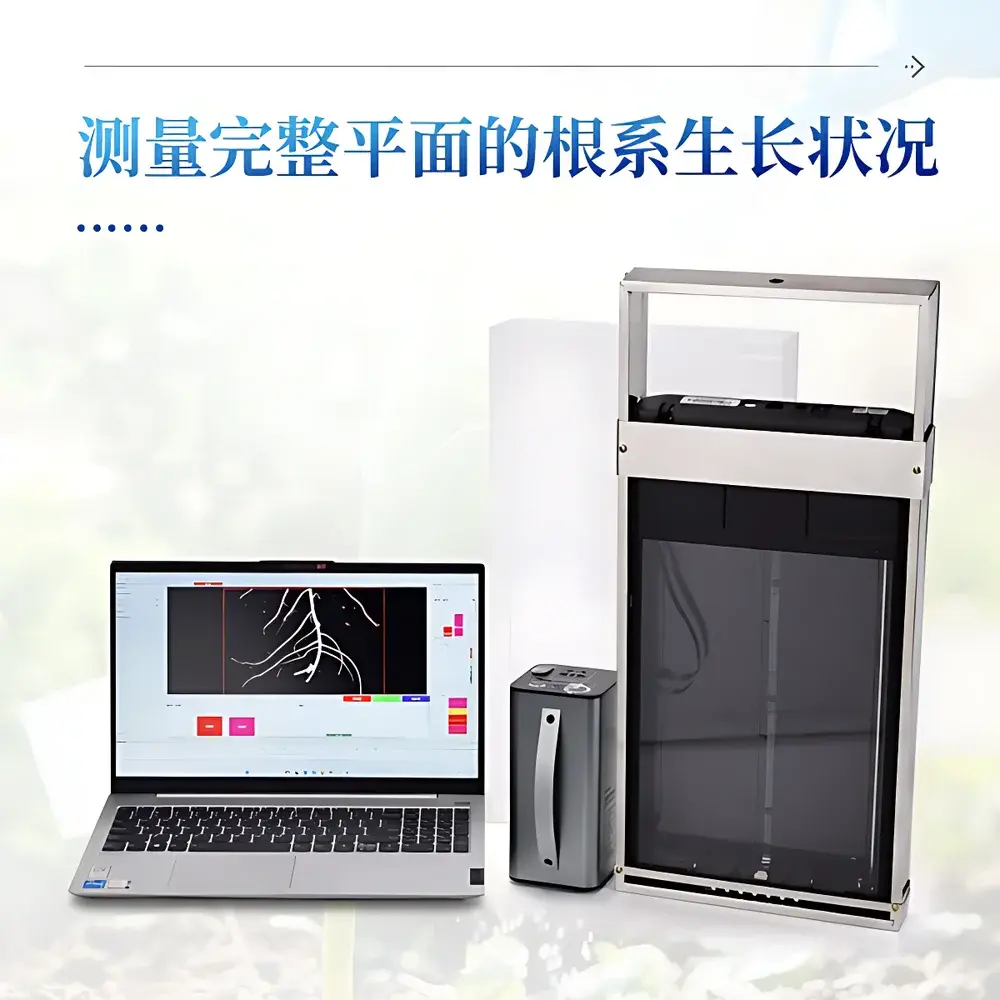
Plant Root Growth Monitoring System IN~GXY by COMECAUSE
| Brand | COMECAUSE |
|---|---|
| Origin | Shandong, China |
| Manufacturer Type | Direct Manufacturer |
| Model | IN~GXY |
| Optical Resolution | 4800 × 9600 dpi |
| Image Acquisition Time | 8 s per scan |
| Sensor | High-Sensitivity CCD |
| Illumination | Uniform LED Array |
| Single-Scan Width | 216 mm |
| Single-Scan Depth | 297 mm |
| Color Depth | 48-bit |
| Scan Chamber Dimensions | Dual-Sided, 280 × 58 × 1000 mm & 280 × 58 × 500 mm |
| Power Supply | External 68,000 mAh Li-ion Battery Pack |
| Integrated Laptop | 13th Gen Intel® Core™ i5-13420H, 15.6" FHD Display, 16 GB DDR5 RAM, 512 GB PCIe NVMe SSD |
Overview
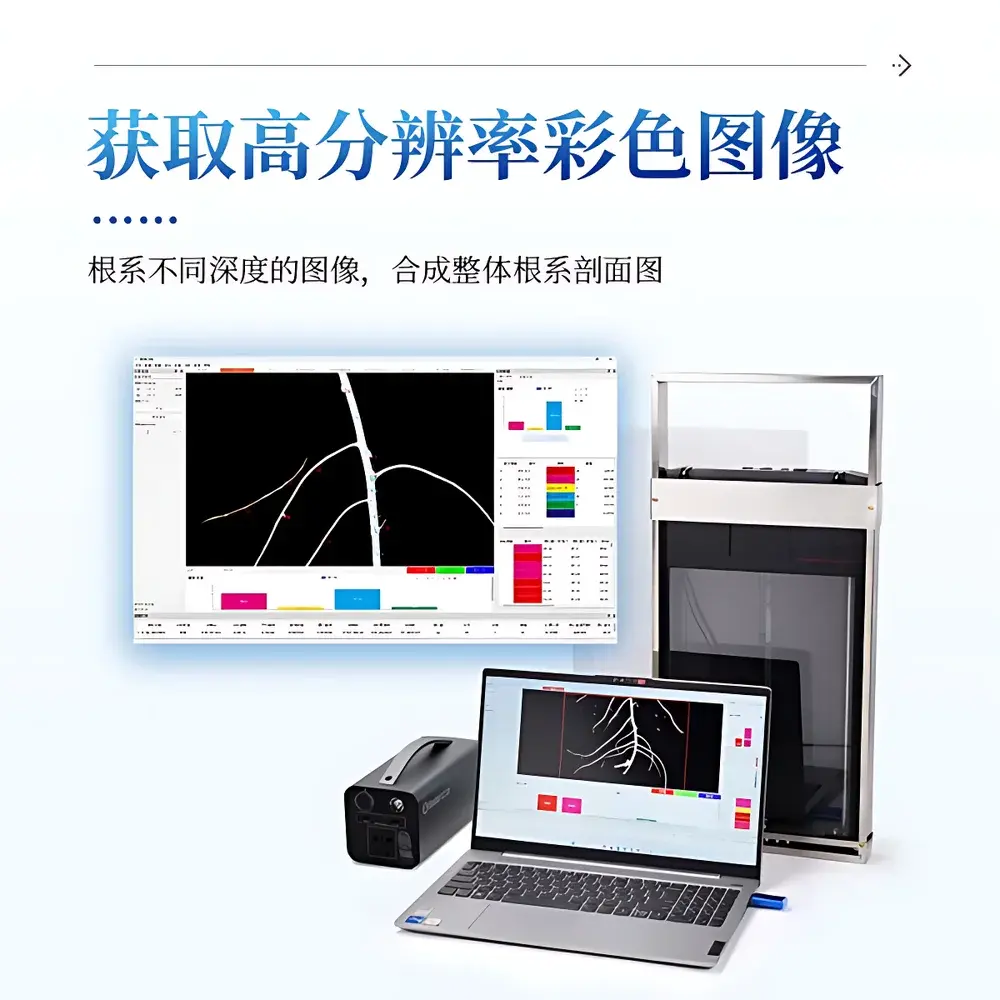
The COMECAUSE IN~GXY Plant Root Growth Monitoring System is a non-invasive, in situ planar imaging platform engineered for high-fidelity, time-resolved visualization and quantitative morphometric analysis of living root systems within soil or growth media. Unlike rotary or pull-through scanners, the IN~GXY employs a stationary dual-sided optical chamber with synchronized high-resolution CCD line-scan imaging, enabling full-plane cross-sectional capture of root architecture at defined soil depths without physical disturbance. Its core measurement principle relies on controlled LED-illuminated, contactless optical sectioning—leveraging diffraction-limited resolution and 48-bit color depth to resolve fine root structures (including root hairs and cortical cell patterns) under natural or semi-controlled rhizosphere conditions. Designed specifically for longitudinal phenotyping studies, the system supports repeated, co-registered scanning over weeks or months, generating temporally aligned volumetric root reconstructions suitable for developmental modeling, stress response quantification, and genotype–phenotype correlation.
Key Features
- True in situ planar imaging: Captures intact lateral root profiles across a 216 mm × 297 mm vertical plane—eliminating root extraction artifacts and preserving spatial context.
- Dual-chamber configuration: Accommodates both deep-root (1000 mm) and shallow-root (500 mm) experimental setups with identical optical geometry and calibration traceability.
- High-fidelity optical subsystem: 4800 × 9600 dpi CCD sensor with 48-bit RGB output ensures sub-pixel edge detection for accurate segmentation of fine roots (diameter ≥ 0.1 mm) against heterogeneous soil backgrounds.
- Integrated field-deployable computing: Pre-configured laptop with 13th Gen Intel i5-13420H processor, 16 GB RAM, and SSD storage enables real-time image acquisition, on-device preprocessing, and offline batch analysis without network dependency.
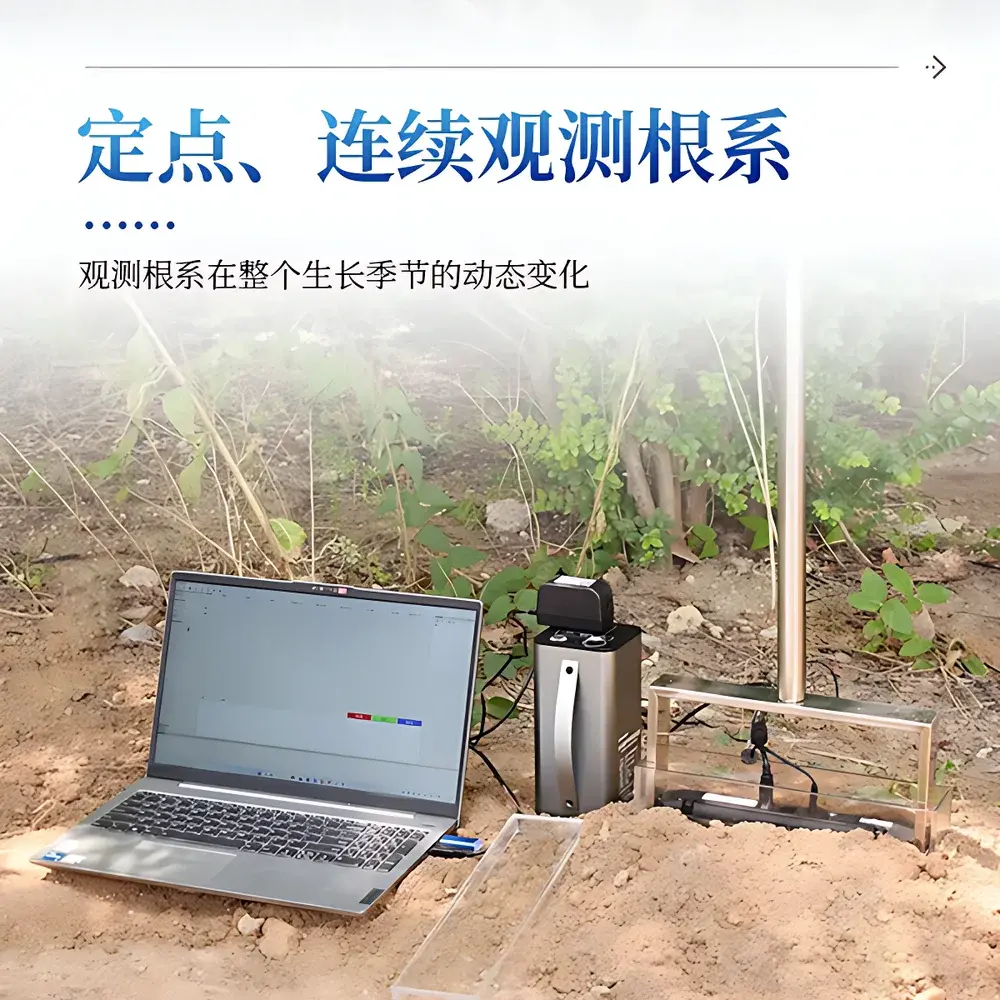
- Modular power architecture: 68,000 mAh external lithium battery pack delivers >12 hours of continuous operation—validated for unattended multi-day deployments in greenhouse, growth chamber, and field mesocosm environments.
- Calibration-integrated workflow: Embedded geometric and radiometric calibration routines ensure pixel-to-mm conversion accuracy and inter-scan intensity consistency across seasonal campaigns.
Sample Compatibility & Compliance
The IN~GXY accommodates standard rhizoboxes (up to 280 mm width), split-root containers, hydroponic gels, agar plates, and soil-filled columns with minimal preparation. It supports both monocot (e.g., maize, rice) and dicot (e.g., Arabidopsis, soybean, tomato) species across vegetative and reproductive stages. All hardware and software components comply with IEC 61000-6-3 (EMC emission limits) and IEC 60950-1 (safety). The embedded analysis pipeline adheres to FAIR data principles (Findable, Accessible, Interoperable, Reusable), and raw image metadata conforms to the MIAPPE v1.1 standard for plant phenotyping experiments. While not FDA-regulated, the system meets GLP-aligned documentation requirements—including timestamped audit logs, user authentication, and version-controlled analysis scripts—for academic, breeding, and regulatory submission workflows.
Software & Data Management
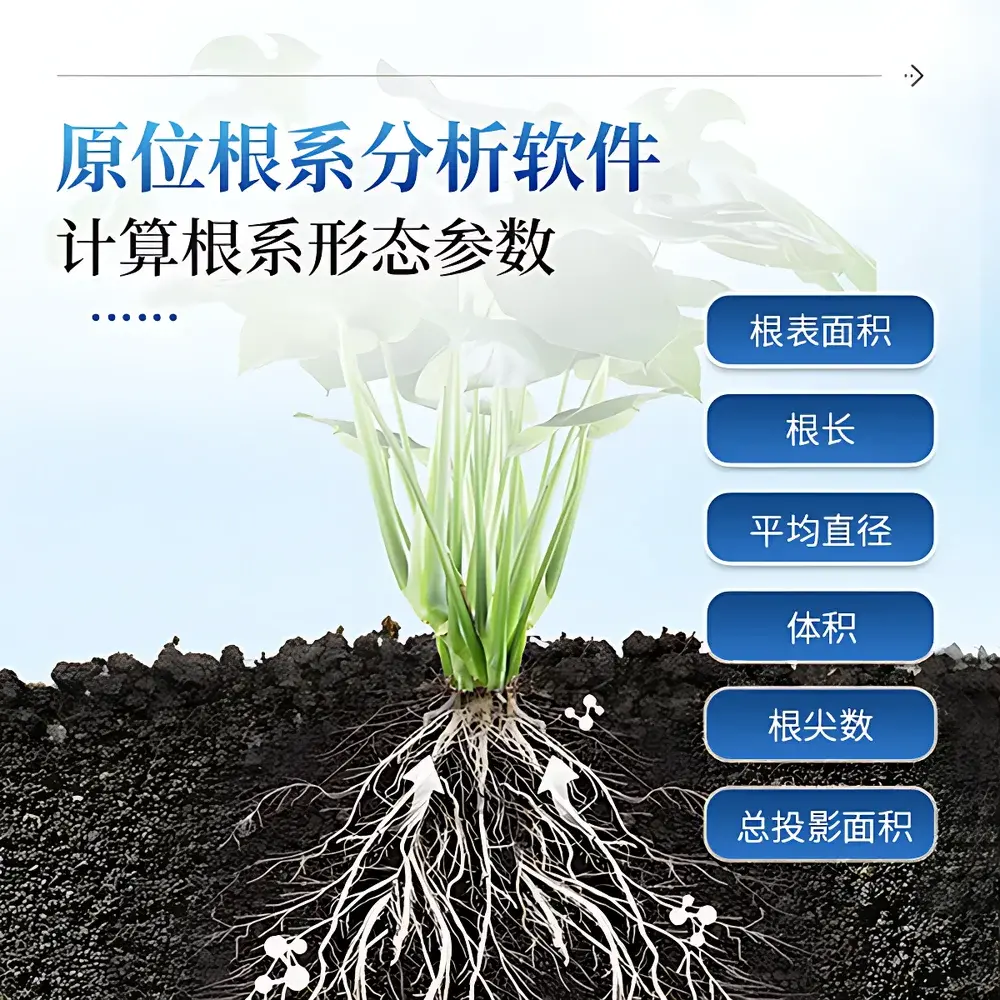
The proprietary RootScape™ Analysis Suite (v4.2) provides automated root segmentation, skeletonization, and topological reconstruction using adaptive thresholding and machine learning–enhanced edge detection. Output parameters include total root length, average diameter, surface area, projected area, volume estimate, root tip count, branching frequency, and depth-wise root density profiles. All analyses generate ISO/IEC 17025–compatible trace reports with uncertainty estimates derived from pixel noise modeling and calibration variance. Data export supports HDF5 (for volumetric stacks), CSV (morphometrics), and GeoJSON (spatial annotations), ensuring compatibility with R/qtl, PlantCV, and CropQuant pipelines. Software includes built-in 21 CFR Part 11–compliant electronic signature support, role-based access control, and immutable audit trails for GxP-aligned studies.
Applications
- Long-term root architectural phenotyping under abiotic stress (drought, salinity, nutrient deficiency)
- Evaluation of rootstock–scion interactions in perennial crops
- In vivo assessment of mycorrhizal colonization dynamics and root–microbe interface mapping
- Validation of root trait QTLs and genome-wide association signals
- High-throughput screening of breeding populations for drought resilience markers
- Calibration and ground-truthing of proximal soil sensing and AI-based root prediction models
FAQ
What is the minimum detectable root diameter under optimal lighting and contrast conditions?
Roots ≥ 0.1 mm in diameter are reliably segmented with >92% precision (measured against synthetic ground-truth phantoms and stained validation samples).
Can the system be used in outdoor field mesocosms with variable ambient light?
Yes—the sealed optical chamber and uniform LED illumination eliminate ambient light interference; field deployment requires only stable mounting and battery connection.
Is raw image data stored in open, vendor-neutral format?
Yes—TIFF and HDF5 formats are natively supported; no proprietary binary wrappers are applied to acquired scans.
Does the software support batch processing of time-series datasets with automatic alignment?
Yes—RootScape™ includes rigid and elastic registration modules that correct for minor chamber drift or substrate settling between scans.
What calibration standards are supplied with the system?
NIST-traceable 2D resolution target, grayscale step wedge, and depth calibration ruler are included with full certificate of conformity.






