
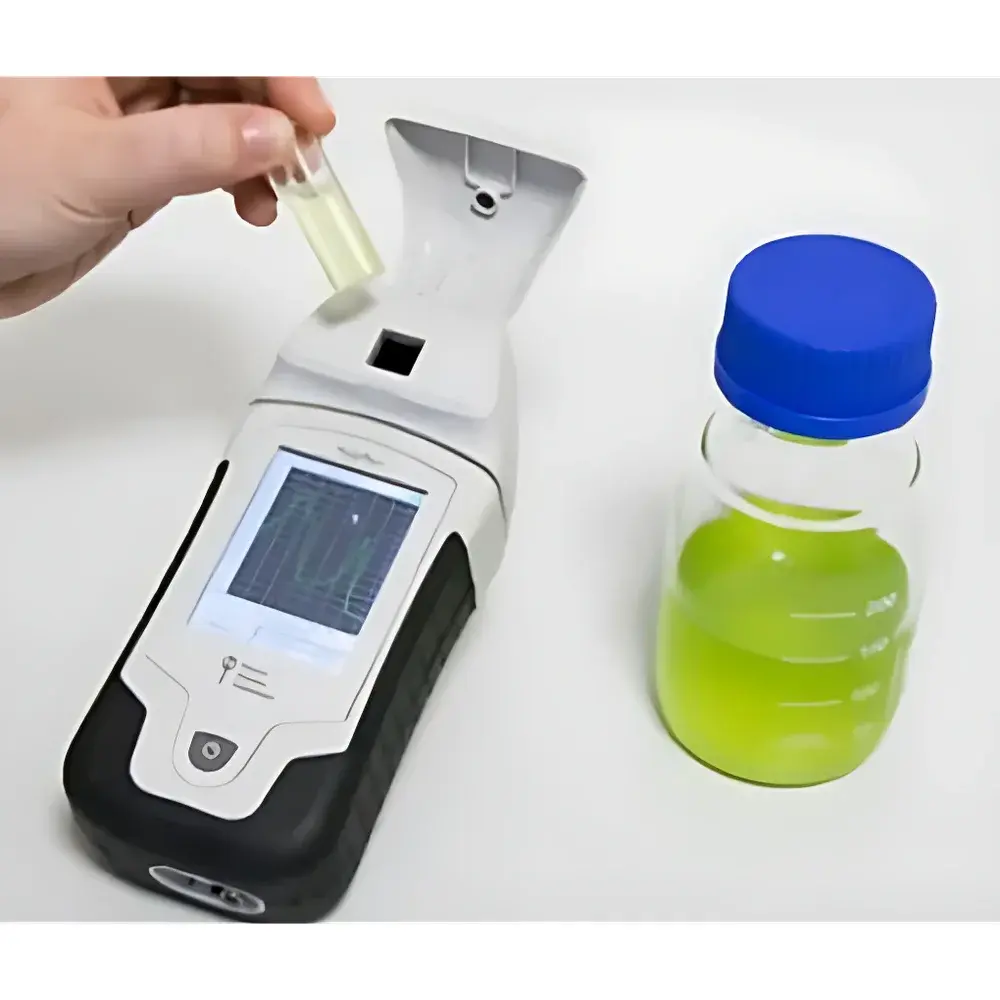
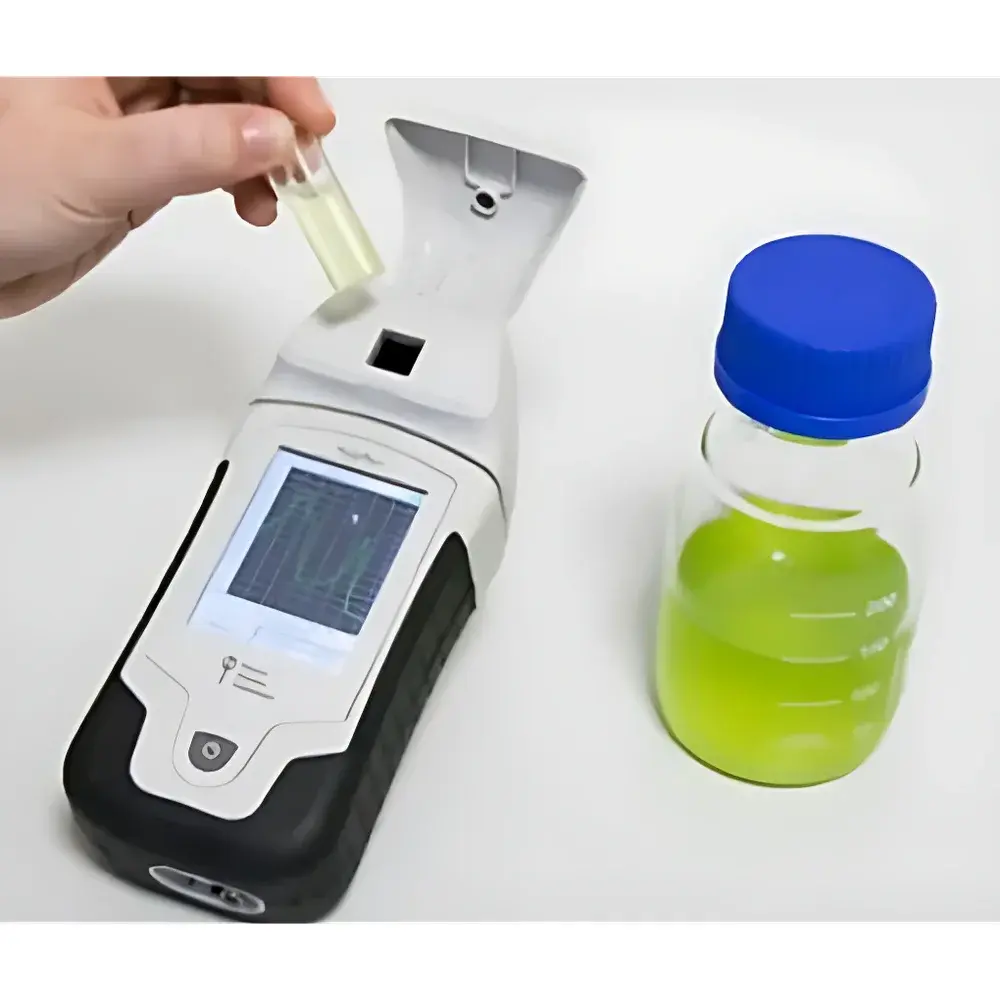
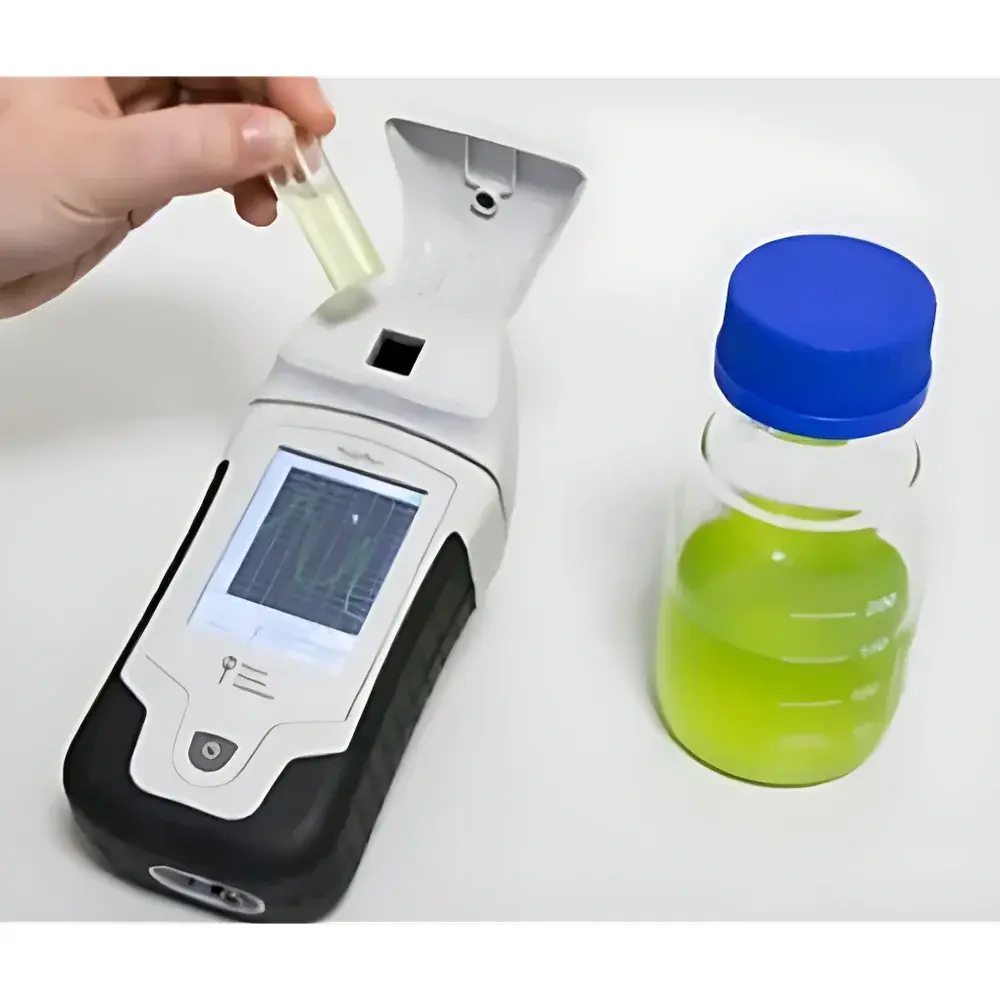
PolyPen-Aqua Handheld Algal Spectrometer
| Brand | Starwood |
|---|---|
| Origin | Beijing, China |
| Manufacturer Type | OEM Manufacturer |
| Region of Origin | Domestic (China) |
| Model | PolyPen-Aqua |
| Instrument Type | Algal Counter |
| Light Source | Pulsed Xenon Lamp (380–780 nm) |
| Spectral Range | 380–780 nm |
| Measurement Modes | Reflectance, Absorbance, Transmittance |
| Data Output | Spectral curves (Aλ), derived pigment indices, GPS-tagged georeferenced records |
| Software Interface | PolyPen Control & Analysis Suite (Windows/macOS) |
| Compliance | Designed for field-deployable GLP-aligned workflows |
Overview
The PolyPen-Aqua Handheld Algal Spectrometer is an optical instrumentation platform engineered for rapid, non-destructive assessment of phytoplankton pigment composition and physiological status in aqueous suspensions. Operating on the principle of pulsed xenon lamp-based absorbance and transmittance spectroscopy across the visible spectrum (380–780 nm), the device quantifies spectral attenuation characteristics of algal cultures or natural water samples to infer chlorophyll-a, phycocyanin, phycoerythrin, and carotenoid-related absorption features. Unlike flow cytometry- or microscopy-based enumeration methods, the PolyPen-Aqua delivers spectrally resolved data without sample filtration, centrifugation, or chemical extraction—enabling real-time, in situ evaluation of photosynthetic biomass and pigment ratios. Its compact, ruggedized housing and integrated GPS module support both laboratory-controlled calibration protocols and field-deployable surveys across lakes, reservoirs, estuaries, aquaculture ponds, and wastewater treatment basins.
Key Features
- Pulsed xenon light source delivering stable, broadband illumination (380–780 nm) with minimal thermal load on sensitive biological samples
- Simultaneous acquisition of absorbance (Aλ) and transmittance (Tλ) spectra using dual-channel photodiode array detection
- Onboard calculation of absorbance via Aλ = log10(I0,λ/Iλ), where I0,λ is reference intensity measured from blank medium
- User-definable spectral index formulas for custom pigment ratio derivation (e.g., Chl-a/Phyco ratio, Car/Chl-a)
- Real-time spectral visualization with wavelength-resolved peak identification and baseline correction tools
- Integrated high-precision GPS receiver (±2.5 m CEP) for geotagging each spectral measurement with UTC timestamp and coordinate metadata
- Rechargeable lithium-ion battery supporting >8 hours of continuous operation under typical field conditions
Sample Compatibility & Compliance
The PolyPen-Aqua accommodates liquid samples in standard 10 mm pathlength cuvettes (glass or quartz) or direct immersion measurements in turbid natural waters using optional waterproof probe sleeve (IP67-rated). It supports suspension densities ranging from 103 to 107 cells/mL for common freshwater and marine phytoplankton taxa including Microcystis, Anabaena, Diatoma, and Cryptomonas. While not certified for regulatory compliance per se, its measurement traceability aligns with ISO 10260 (water quality — determination of chlorophyll-a by spectrophotometry) and ASTM D3921-20 (standard practice for determination of algal pigments by HPLC), serving as a rapid screening tool prior to confirmatory lab analysis. Data export formats (CSV, XML) support integration into LIMS environments compliant with FDA 21 CFR Part 11 requirements when used with validated software configuration.
Software & Data Management
The PolyPen Control & Analysis Suite provides instrument control, spectral preprocessing, and quantitative interpretation. Key capabilities include Savitzky-Golay smoothing, derivative spectroscopy for overlapping band deconvolution, and automated peak area integration at diagnostic wavelengths (e.g., 430 nm, 650 nm, 680 nm). All raw spectra are stored with full metadata: GPS coordinates, ambient temperature, operator ID, sample ID, and measurement geometry. Audit trails record parameter changes, calibration events, and export actions—supporting GLP documentation standards. Batch processing enables comparative analysis across time-series or spatial transects, generating contour maps of pigment distribution when paired with GIS platforms.
Applications
- Early detection of cyanobacterial blooms via phycocyanin-specific absorbance signatures at 620 nm
- Monitoring culture health in photobioreactors through time-resolved chlorophyll-a spectral shifts
- Assessing eutrophication status in lacustrine systems using carotenoid-to-chlorophyll ratios as oxidative stress indicators
- Validating remote sensing algorithms by ground-truthing satellite-derived water reflectance products
- Supporting ecological risk assessments in environmental impact studies per OECD Test Guideline 201 (algal growth inhibition)
- Teaching applications in limnology, aquatic ecology, and environmental analytical chemistry laboratories
FAQ
What spectral resolution does the PolyPen-Aqua achieve?
The device reports spectra at 1 nm intervals across 380–780 nm, with effective optical resolution approximating 3 nm FWHM based on detector pixel density and grating dispersion.
Can it distinguish between different algal classes (e.g., diatoms vs. dinoflagellates)?
While not a taxonomic classifier, it resolves class-specific pigment fingerprints—such as fucoxanthin peaks near 450 nm (diatoms) or peridinin at 475 nm (dinoflagellates)—when combined with multivariate calibration models.
Is calibration required before each use?
A single air or deionized water blank measurement establishes the reference spectrum; no daily recalibration is needed unless optical path conditions change significantly.
Does the instrument comply with ISO/IEC 17025 requirements?
It is not accredited as a testing laboratory, but its documented measurement uncertainty, traceable calibration procedures, and data integrity controls facilitate implementation within ISO/IEC 17025-compliant QA frameworks.
How is firmware updated?
Firmware updates are delivered via USB-C connection using the PolyPen Control Suite, with version history and checksum verification embedded in the update package.







