
Polytech TR717 Soil Drying Oven
| Brand | Polytech |
|---|---|
| Origin | Beijing, China |
| Manufacturer Type | Direct Manufacturer |
| Country of Origin | Domestic (China) |
| Model | TR717 |
| Pricing | Upon Request |
Overview
The Polytech TR717 Soil Drying Oven is an engineered laboratory drying system specifically designed for the controlled, low-temperature air-drying of soil, sediment, and sludge samples in environmental testing, geochemical analysis, and regulatory compliance laboratories. Unlike conventional convection ovens, the TR717 employs a simulated natural air-flow principle—referred to as “ambient-mode air-drying”—to replicate field-relevant drying kinetics while maintaining sample integrity. It operates at a precisely regulated 35 °C, the empirically validated optimal temperature for moisture removal without inducing volatilization of semi-volatile organic compounds (SVOCs), loss of ammonium nitrogen, or structural alteration of clay mineralogy. The unit integrates a patented gas purification and heating module that treats incoming ambient air through multi-stage filtration (particulate and activated carbon) prior to gentle thermal conditioning, ensuring contaminant-free airflow across all sample chambers.
Key Features
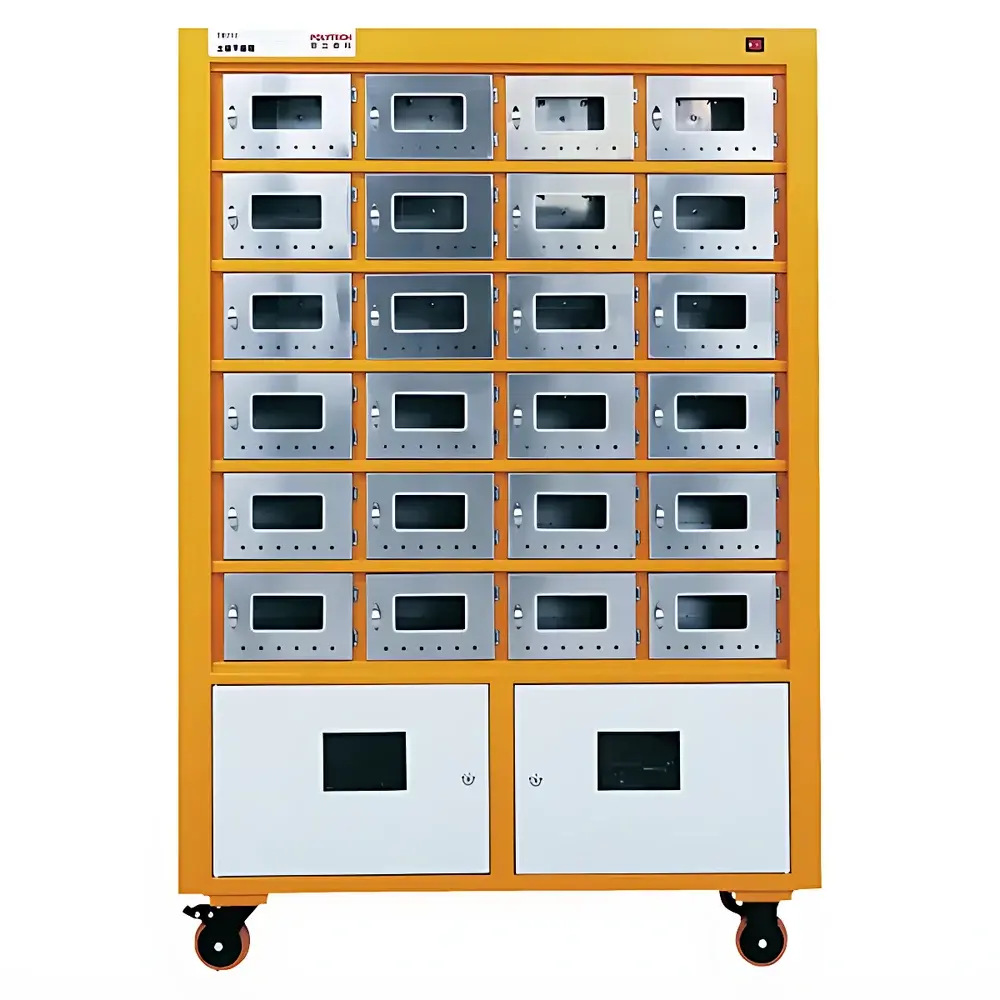
- 24 independent, modular sample chambers—each fully isolated to eliminate cross-contamination and enable flexible batch configuration (users may activate any subset of chambers per run)
- Transparent polycarbonate observation windows on each chamber, allowing real-time visual monitoring of sample texture, cracking, and drying progression without opening doors or interrupting airflow
- Optimized three-tube air distribution system (two long + one short duct per chamber) ensures laminar, uniform air velocity across the entire sample surface—validated via flow visualization studies to minimize boundary-layer stagnation
- Dedicated, physically separated pneumatic circuits for each chamber—no shared manifolds or valves—guarantee zero carryover between samples, critical for trace-metal or pesticide residue analysis
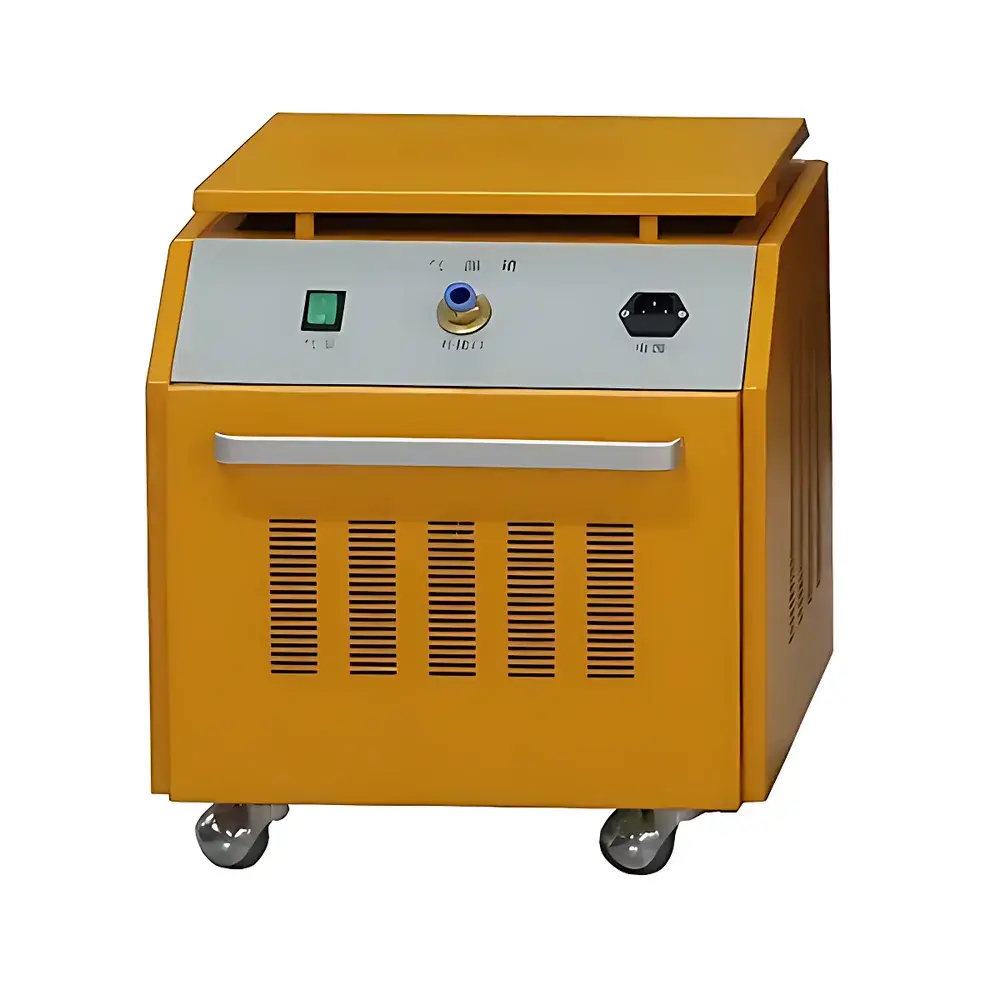
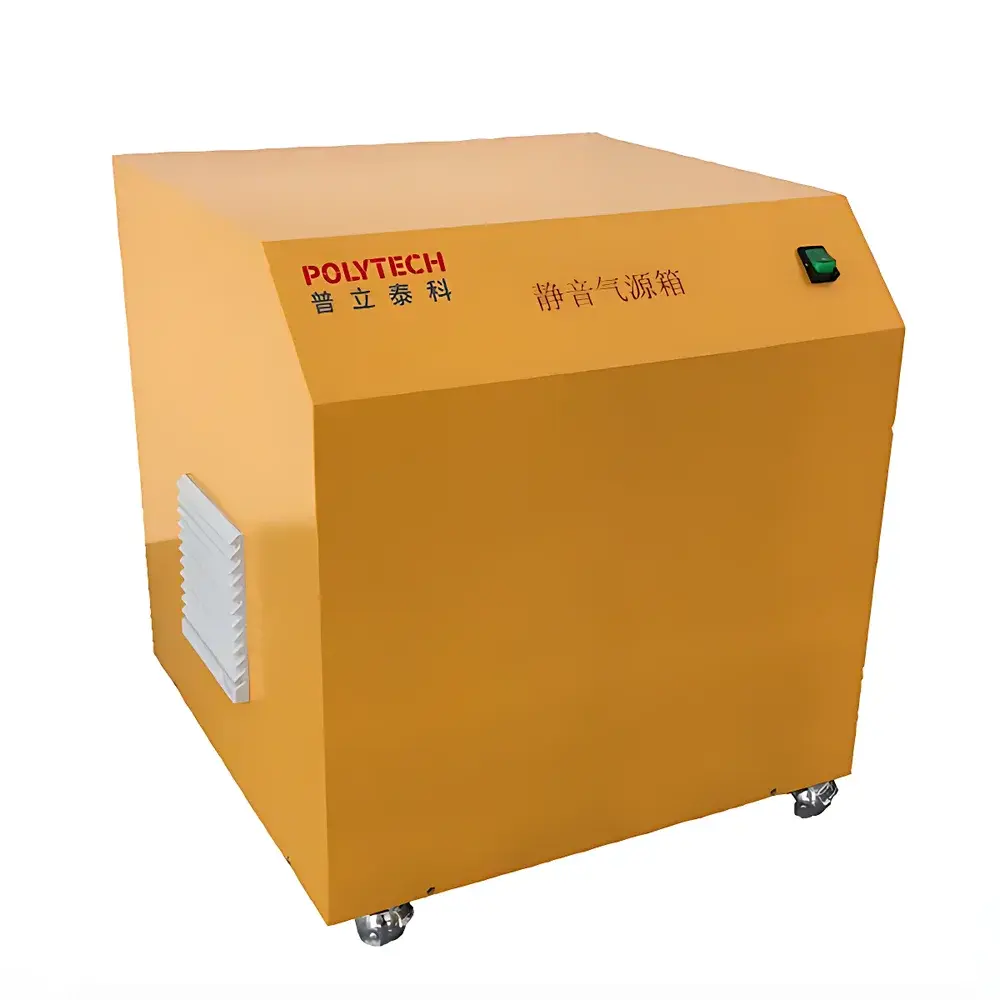
- Integrated vacuum pump noise-dampening enclosure with passive thermal dissipation fins; reduces operational sound pressure level (SPL) to ≤52 dB(A) at 1 m distance while maintaining pump operating temperature below 65 °C
- Gas source cabinet equipped with dual-stage thermal protection: intelligent fan-assisted cooling activates at 45 °C, and automatic cut-off engages at 70 °C to prevent overheating under extended duty cycles
- Four heavy-duty locking casters (two with brakes) mounted on reinforced chassis—enables safe repositioning within lab aisles or transfer between preparation and analytical zones
Sample Compatibility & Compliance
The TR717 accommodates heterogeneous solid matrices including loam, clay-rich soils, dredged sediments, riverbed muds, and organically enriched sludges—regardless of initial moisture content (up to 85 wt%) or particulate contamination (e.g., gravel, root fragments, microplastics). Its design aligns with standard methods requiring air-drying prior to sieving, homogenization, or extraction—including EPA Method 5035A (VOC stabilization), ISO 11464:2019 (pre-treatment of soil samples), and GB/T 22105.2–2008 (Chinese national standard for soil testing). All internal chamber surfaces are electropolished stainless steel (AISI 304), non-reactive to acidic or alkaline matrices and compliant with GLP facility requirements for traceability and cleaning validation.
Software & Data Management
The TR717 is a standalone hardware platform without embedded microprocessor control or digital interface; it operates via analog thermostatic regulation and mechanical airflow balancing—intentionally designed to meet ISO/IEC 17025:2017 Clause 6.4.7 requirements for equipment simplicity, maintainability, and audit transparency. Temperature stability is verified using NIST-traceable Class A platinum RTD probes (±0.15 °C accuracy), with calibration records retained per laboratory quality management system (QMS). No firmware, cloud connectivity, or electronic data logs are present—eliminating 21 CFR Part 11 compliance overhead while supporting paper-based or LIMS-integrated workflow documentation.
Applications
- Pre-extraction conditioning for metals analysis (EPA 6010D, 6020B) and organic contaminant profiling (EPA 8270E, 8082A)
- Drying of wet-sieved fractions prior to particle-size distribution (PSD) analysis per ASTM D422 or ISO 14688-1
- Stabilization of field-moist samples for long-term archiving under ISO 5725-2:2019 reproducibility conditions
- Moisture content determination per gravimetric protocols (ASTM D2216, ISO 11274) with minimized mass drift due to uniform airflow
- Preparation of reference materials and certified soil samples where thermal history must remain strictly defined and documented
FAQ
Does the TR717 support programmable temperature ramping or multi-step drying profiles?
No. The TR717 maintains a fixed 35 °C setpoint optimized for regulatory-compliant soil drying; it does not offer variable-temperature programming.
Can the unit be used for drying biological tissues or plant material?
It is not validated for biological matrices; its airflow design and thermal profile are calibrated exclusively for mineral-soil and sediment applications.
Is the air filtration system replaceable, and what is the recommended maintenance interval?
Yes—particulate and carbon filters are user-replaceable; Polytech recommends replacement every 6 months under continuous operation or after 500 drying cycles, whichever occurs first.
What electrical specifications does the TR717 require?
Standard input: 220 V AC ±10%, 50 Hz, 16 A dedicated circuit; no phase balancing or UPS required.
Are chamber dimensions and loading capacity provided in the technical documentation?
Each chamber measures 180 × 120 × 100 mm (W × D × H) and accommodates up to 500 g of wet soil (typical load: 200–300 g for optimal airflow penetration).



