
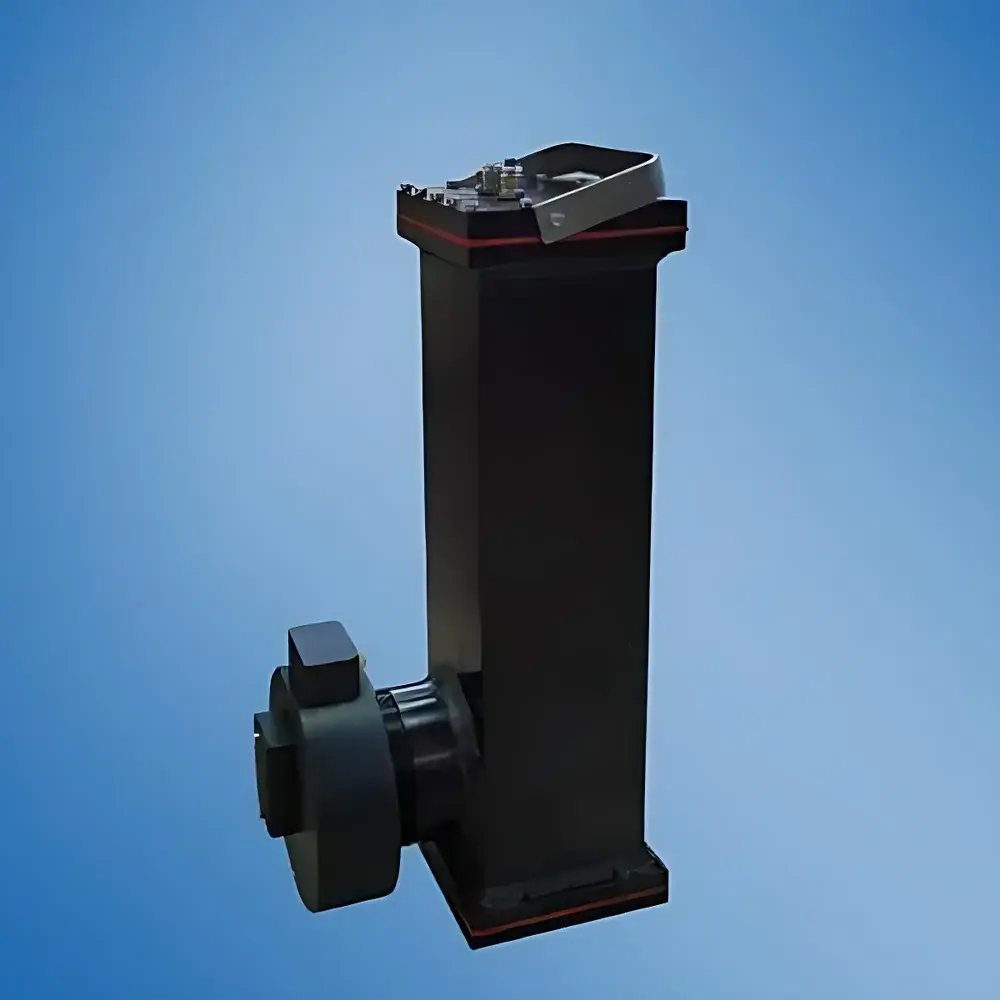
PowerEach JXWNP-WJS-1 Submerged In-Situ Microbubble Real-Time Dynamic Imaging System
| Brand | PowerEach (Shanghai Zhongchen Digital Technology Co., Ltd.) |
|---|---|
| Origin | Shanghai, China |
| Manufacturer Type | Authorized Distributor & OEM Partner |
| Country of Origin | China |
| Model | JXWNP-WJS-1 |
| Pricing | Available Upon Request |
Overview
The PowerEach JXWNP-WJS-1 Submerged In-Situ Microbubble Real-Time Dynamic Imaging System is an engineered optical measurement platform designed for non-invasive, continuous, and quantitative characterization of microbubbles (1–100 µm) directly within flowing or static aqueous environments. It operates on the principle of high-resolution submerged microscopy coupled with real-time dynamic image analysis — a methodology formally standardized in ISO 21910-2:2025 “Fine bubble technology — Characterization of microbubbles — Part 2: In-situ dynamic image analysis method”, for which Shanghai Jinxiang Environmental Technology Co., Ltd. served as lead drafting organization. Unlike offline sampling-based techniques (e.g., laser diffraction or resistive pulse sensing), this system eliminates sample transfer artifacts by performing measurements *in situ*: the imaging head is fully submersible (IPX7-rated), positioned at a fixed working distance of 13 mm from the target fluid volume, and captures native bubble morphology, size distribution, velocity vectors, and trajectory dynamics without perturbing gas–liquid interface stability or flow hydrodynamics.
Key Features
- Submerged optical architecture with sealed borosilicate viewport, enabling direct immersion into tanks, reactors, pipelines, or open-water systems
- Motorized zoom lens (0.7×–4.5×, 9-step discrete magnification) paired with high-sensitivity CCD camera (60 fps standard; up to 2000 fps optional with synchronized high-intensity LED illumination)
- Pixel resolution adjustable between 0.6–4 µm/pixel, supporting reliable detection and sizing of bubbles ≥1 µm in diameter per ISO 21910-2 definition
- “Hole-aware automatic segmentation” algorithm to distinguish gas bubbles from solid particles and colloidal aggregates based on internal void contrast and boundary topology
- Integrated calibration workflow with traceable micrometer-scale reference targets and real-time magnification validation
- Compact industrial housing (600 × 200 × 200 mm), 10 kg mass, AC 220 V ±10 % / 50 Hz ±1 % power input, compliant with CE electromagnetic compatibility directives
Sample Compatibility & Compliance
The JXWNP-WJS-1 is validated for use in transparent or semi-transparent aqueous media including municipal wastewater, aquaculture recirculation systems, membrane bioreactors, flotation pulp streams, ozonated treatment basins, and nutrient-rich hydroponic solutions. It excludes opaque, highly turbid, or strongly scattering fluids unless pre-filtered to ≤5 NTU. The system conforms to the metrological requirements defined in ISO 21910-2 for in-situ microbubble characterization, and supports audit-ready data generation aligned with GLP principles. While not FDA 21 CFR Part 11-certified out-of-the-box, its software architecture permits integration with validated electronic lab notebook (ELN) platforms for regulated environments requiring electronic signature and audit trail functionality.
Software & Data Management
The proprietary PowerEach Dynamic Imaging Analysis Suite (v4.2+) provides full control over acquisition parameters (exposure time, gain, frame rate, ROI selection), real-time thresholding, multi-stage particle classification, and statistical reporting. All image sequences are stored in lossless TIFF format with embedded metadata (timestamp, magnification, calibration ID, environmental notes). Export options include CSV files containing per-bubble metrics (equivalent circular diameter, aspect ratio, convexity, centroid displacement), cumulative size distribution histograms, and time-resolved population density heatmaps. Batch processing mode enables retrospective analysis across multi-hour datasets. Software licensing includes annual updates and remote technical support via secure SSH-enabled diagnostics.
Applications
This system serves as a primary metrology tool in process-critical domains where microbubble behavior dictates functional performance: optimization of dissolved air flotation (DAF) units in water treatment plants; validation of microbubble-enhanced oxygen transfer in aquaculture and bioremediation; quantification of bubble residence time and coalescence kinetics in mineral flotation cells; verification of nanobubble generator output stability under variable pressure/flow conditions; and assessment of bubble-mediated delivery efficiency in agricultural spray formulations and soil amendment protocols. It is routinely deployed in R&D labs at universities, national institutes (e.g., Chinese Academy of Sciences), and industrial innovation centers focused on fine bubble technology transfer.
FAQ
Can the JXWNP-WJS-1 measure nanobubbles (<1 µm)?
No. This model is specifically engineered for microbubbles (1–100 µm) per ISO 21910-2 scope. Nanobubble characterization requires complementary techniques such as nanoparticle tracking analysis (NTA) or resonant mass measurement (RMM); PowerEach offers dedicated instrumentation for that range.
Is the system compatible with aggressive chemical environments (e.g., ozone, chlorine, H₂O₂)?
Yes — the imaging head uses chemically resistant borosilicate glass and stainless-steel 316L housing. For prolonged exposure to strong oxidants, optional quartz viewport upgrade and PTFE-sealed cable glands are available.
Does it support automated long-term unattended operation?
Yes. Scheduled acquisition mode allows programmable start/stop times, interval-triggered capture, and auto-save to network-attached storage (NAS) or local SSD. System health monitoring includes temperature, voltage, and frame-drop alerts.
What validation documentation is provided?
Each unit ships with a Factory Calibration Certificate referencing NIST-traceable stage micrometers, ISO 21910-2 conformance statement, IPX7 test report, and CE Declaration of Conformity.
Can raw image data be exported for third-party analysis?
Yes. Full-resolution TIFF stacks, along with XML metadata files describing acquisition settings and calibration coefficients, are exportable without proprietary codec restrictions.







