
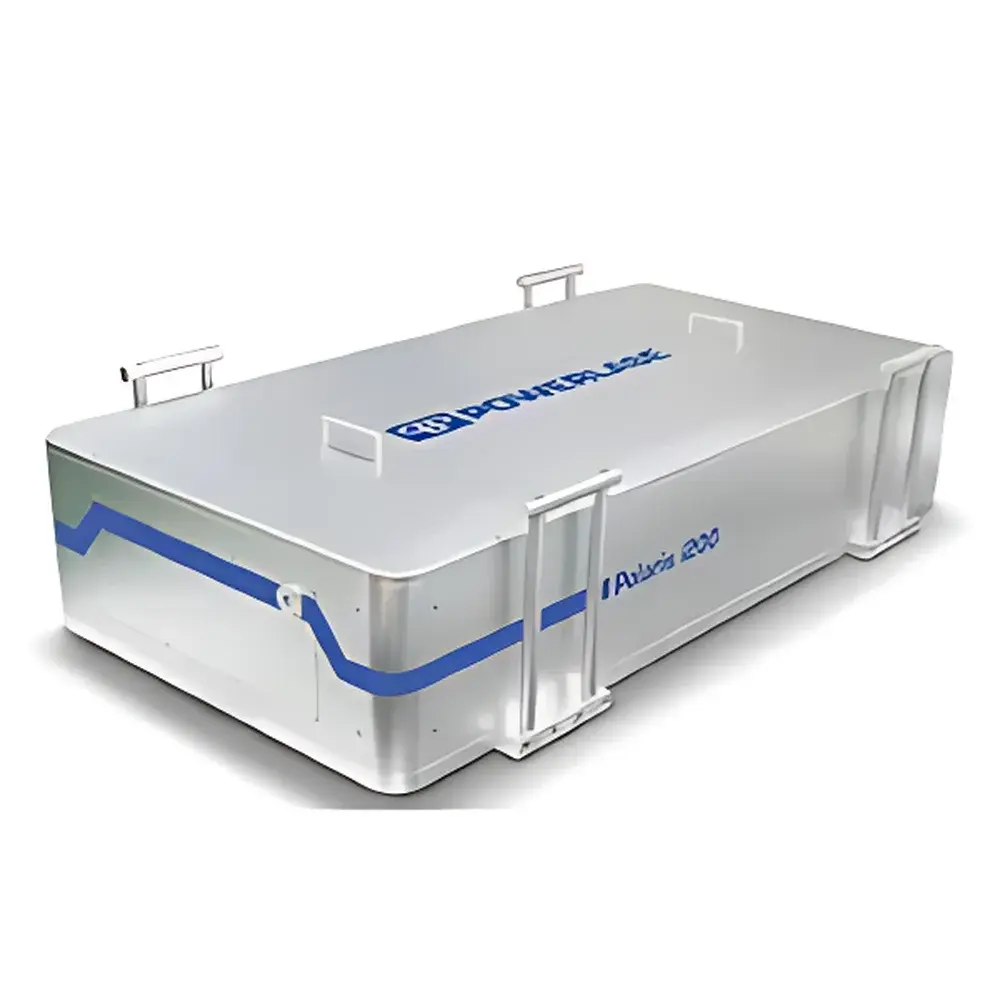
Powerlase Polaris i200 High-Power Picosecond DPSS Laser
| Brand | Powerlase |
|---|---|
| Origin | United Kingdom |
| Model | Polaris i200 |
| Wavelength | 1064 nm |
| Pulse Width | 10 ps |
| Average Power | up to 200 W |
| Pulse Energy | up to 1 mJ |
| Repetition Rate | 10–1000 kHz |
| Burst Mode | configurable (1–10 pulses per burst) |
| Long-Term Power Stability (RMS) | < 1.0% |
| Laser Type | Diode-Pumped Solid-State (DPSS), Nd:YAG-based |
Overview
The Powerlase Polaris i200 is a high-repetition-rate, diode-pumped solid-state (DPSS) picosecond laser engineered for industrial and scientific ultrafast material processing applications. Operating at the fundamental wavelength of 1064 nm with a fixed pulse duration of 10 ps, the system delivers exceptional temporal precision while maintaining high average power output—up to 200 W—with pulse energies reaching 1 mJ. Its design leverages a robust Nd:YAG gain medium and optimized thermal management architecture to ensure stable, long-term operation under demanding duty cycles. Unlike femtosecond systems that often require complex chirped-pulse amplification (CPA) stages, the Polaris i200 achieves its performance through a compact, monolithic oscillator-amplifier configuration, minimizing alignment sensitivity and maximizing reliability in production environments. The laser’s sub-10-ps pulse regime enables predominantly non-thermal ablation mechanisms—critical for minimizing heat-affected zones (HAZ) in brittle or thermally sensitive substrates such as optical glass, sapphire, silicon carbide, and thin-film semiconductor structures.
Key Features
- Stable 10 ps pulse width with <1.0% RMS power stability over 8-hour continuous operation—validated per ISO 11554 calibration protocols.
- Programmable burst mode supporting variable intra-burst pulse counts (1–10) and inter-burst timing, enabling precise control over energy deposition density and thermal accumulation.
- Diffraction-limited beam quality (M² < 1.5) ensures tight focusability down to <15 µm spot size when coupled with standard F-theta scan lenses—essential for high-resolution micro-machining and selective surface structuring.
- Full digital control interface (Ethernet + RS-232) compliant with industrial PLC integration standards; supports external TTL triggering with jitter < 2 ns.
- Integrated water-cooling loop with temperature stabilization ±0.1°C, eliminating thermal lensing drift during extended runs.
- CE-marked and RoHS-compliant construction; designed to meet IEC 60825-1:2014 Class 4 laser safety requirements with integrated interlock circuitry.
Sample Compatibility & Compliance
The Polaris i200 is routinely deployed in cleanroom-certified manufacturing lines for precision machining of optically transparent and electrically conductive materials. It demonstrates consistent process repeatability on fused silica, BK7, lithium niobate, alumina ceramics, and copper-clad polyimide flex circuits—materials where conventional nanosecond lasers induce micro-cracking or delamination. Its pulse parameters align with ASTM F3049-16 guidelines for ultrafast laser micromachining qualification, and system logging functions support traceability required under ISO 9001:2015 and FDA 21 CFR Part 11 for regulated medical device component fabrication. Optional harmonic generation modules (e.g., 532 nm, 355 nm) extend compatibility to UV-sensitive polymers and photoresists without compromising pulse fidelity.
Software & Data Management
The laser is operated via Powerlase’s proprietary LaserControl Suite v4.2—a Windows-based application supporting real-time monitoring of pulse energy, repetition rate, burst structure, and coolant temperature. All operational parameters are timestamped and exportable in CSV/JSON formats for statistical process control (SPC) analysis. Audit trails record user logins, parameter changes, and emergency stop events—enabling full GLP/GMP compliance in pharmaceutical packaging tooling and aerospace-grade component marking workflows. Remote diagnostics and firmware updates are performed securely over TLS-encrypted Ethernet connections, with role-based access control (RBAC) configurable for multi-user lab environments.
Applications
- Drilling sub-50 µm vias in display cover glass and touch sensor stacks without edge chipping.
- Surface texturing of turbine blade leading edges to enhance aerodynamic boundary layer control.
- Selective removal of ITO layers from OLED substrates with <2 µm lateral resolution.
- High-throughput scribing of perovskite solar cell modules with minimal shunt path formation.
- Direct-write fabrication of fiber Bragg gratings in photosensitive germanosilicate fibers.
- Pre-ablation conditioning of diamond-turned aluminum mirrors prior to thin-film coating.
FAQ
Is the Polaris i200 compatible with third-party scanning galvanometers?
Yes—it provides standard analog modulation inputs (±10 V) and digital TTL sync outputs, fully interoperable with Cambridge Technology, SCANLAB, and Aerotech motion controllers.
What cooling infrastructure is required?
A closed-loop chiller delivering 18–22°C deionized water at ≥4 L/min flow rate and ≤1.5 bar backpressure is mandatory; integrated flow and temperature sensors trigger automatic shutdown upon deviation.
Can pulse energy be adjusted without changing repetition rate?
Yes—via internal acousto-optic modulator (AOM) control, enabling real-time energy scaling from 10% to 100% of maximum while preserving pulse width and timing jitter specifications.
Does the system include beam delivery optics?
No—beam delivery is configured separately based on application-specific focal geometry; Powerlase offers optional Q-switched collimation and harmonic separation modules as accessories.
What maintenance schedule is recommended?
Annual preventive maintenance includes cavity alignment verification, diode pump lifetime assessment, and coolant filter replacement—documented in accordance with ISO/IEC 17025 calibration traceability requirements.



