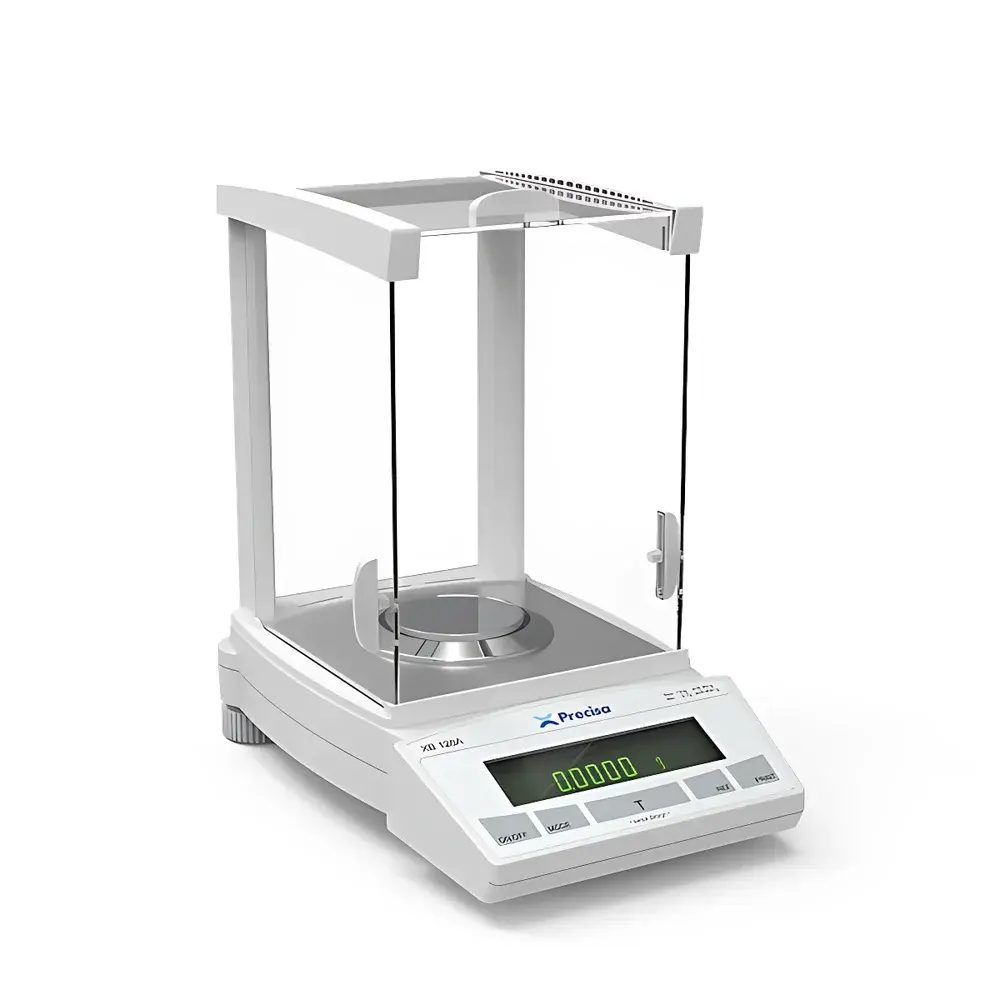
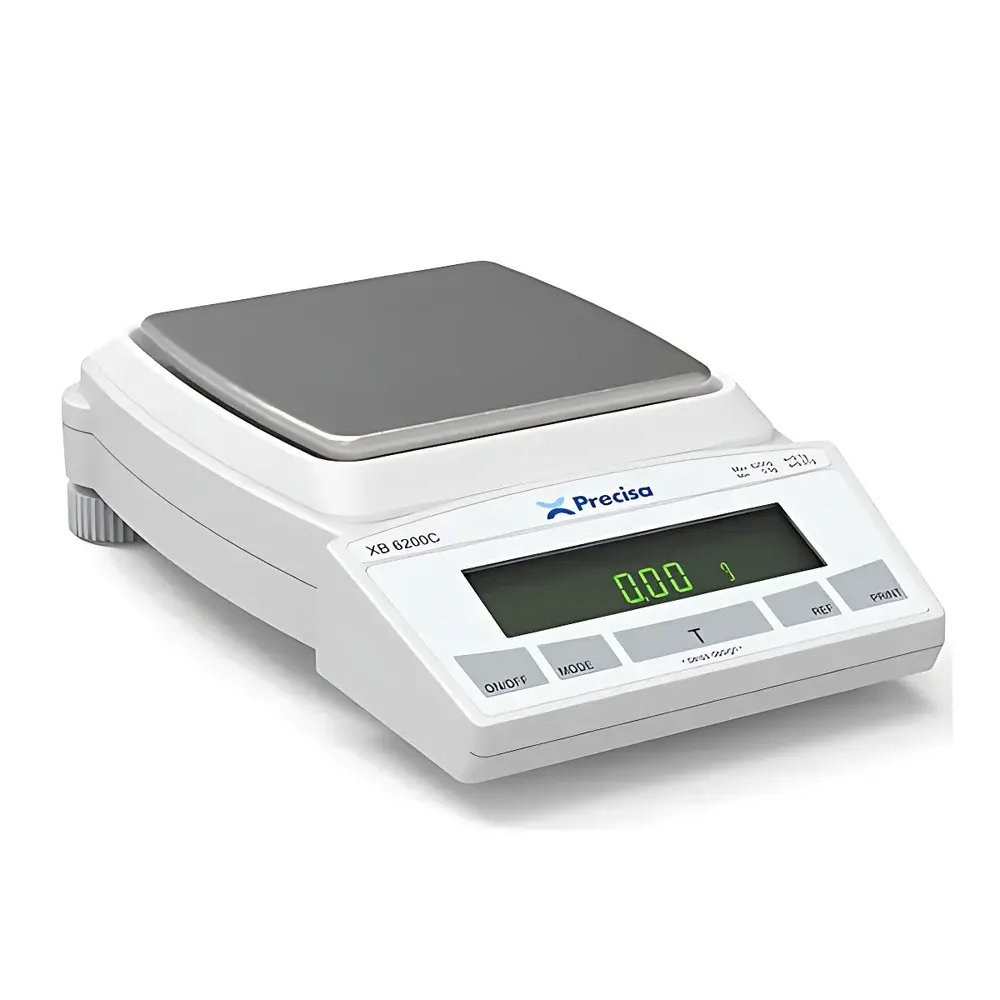
Precisa 320XB Series Analytical Balance
| Key | Brand: Precisa |
|---|---|
| Origin | Shanghai, China |
| Model | 320XB |
| Type | Analytical Balance |
| Capacity | 120 g |
| Readability | 0.1 mg |
| Repeatability | 0.1 mg |
| Calibration | Smart Internal Calibration System (SCS), optional automatic internal calibration triggered by time or temperature change |
| Display | High-contrast VFD screen |
| Construction | Die-cast aluminum housing |
| Interface | RS232 serial port |
| Compliance | Designed to support GxP environments with built-in real-time clock and audit-ready operation log structure |
| Applications | Weighing, piece counting, percentage weighing, animal weighing, density determination, formulation weighing, below-hanger weighing |
Overview
The Precisa 320XB Series Analytical Balance is an entry-level precision weighing instrument engineered for laboratories requiring consistent 0.1 mg readability, robust mechanical integrity, and operational reliability under routine QC, R&D, and educational conditions. Based on electromagnetic force compensation (EMFC) sensor technology—a well-established principle in high-stability analytical balances—the 320XB delivers stable measurements with minimal drift across ambient temperature fluctuations (15–30 °C). Its die-cast aluminum housing provides structural rigidity, resistance to mechanical shock, and long-term corrosion resistance—critical attributes for environments where benchtop instruments are subject to frequent handling, cleaning agents, or humidity exposure. While manufactured in Shanghai under Precisa’s quality oversight, the 320XB adheres to core design principles aligned with ISO 9001-certified production protocols and conforms to international metrological requirements for Class I analytical balances per OIML R76-1.
Key Features
- Electromagnetic force compensation (EMFC) transducer architecture ensures low maintenance, high linearity, and extended service life without mechanical wear typical of strain-gauge systems.
- Die-cast aluminum monocoque chassis enhances thermal stability and minimizes vibration transmission from adjacent equipment or foot traffic.
- High-contrast vacuum fluorescent display (VFD) offers wide viewing angles, uniform brightness, and reduced eye fatigue during prolonged use—particularly beneficial in low-light or multi-user lab settings.
- Smart Calibration System (SCS) supports both manual and automated internal calibration routines; optional time- or temperature-triggered recalibration ensures traceable measurement continuity without user intervention.
- Five dedicated function keys streamline access to common workflows—eliminating nested menu navigation and reducing operator training time.
- Built-in real-time clock (RTC) enables timestamped data logging, supporting documentation requirements for GLP, GMP, and FDA 21 CFR Part 11-compliant environments when paired with compliant software.
Sample Compatibility & Compliance
The 320XB accommodates standard sample containers up to Ø120 mm and height ≤200 mm, compatible with universal weighing pans (e.g., stainless steel, ceramic, or anti-static options). Its draft shield compatibility (sold separately) allows operation in non-laminar airflow environments while maintaining repeatability within ±0.1 mg. The balance meets EN 45501:2015 (formerly OIML R76) for accuracy class II and is suitable for applications referenced in ASTM E898, USP , and ISO/IEC 17025:2017 clause 6.4.2 regarding equipment verification. All calibration events—including internal SCS activation—are recorded with timestamps and user identifiers (when connected to external software), forming an auditable chain of traceability.
Software & Data Management
Data export occurs via RS232 serial interface at configurable baud rates (up to 115.2 kbps), supporting ASCII-formatted output compatible with LIMS, ELN, and Excel-based reporting tools. No proprietary drivers are required—standard COM port communication enables seamless integration with third-party laboratory informatics platforms. When used with validated data capture software, the 320XB supports electronic signature, audit trail generation, and role-based access control—fulfilling foundational elements of 21 CFR Part 11 Subpart B for electronic records and signatures. The internal memory retains last-calibration metadata, including date, time, and deviation values, accessible via front-panel query.
Applications
- Quantitative sample preparation for HPLC, GC, and ICP-MS workflows requiring ≤0.1 mg mass accuracy.
- Pharmaceutical formulation development and batch release testing per USP repeatability criteria.
- Quality control of raw materials and excipients in food, cosmetics, and chemical manufacturing.
- Density determination of solids using Archimedes’ principle with auxiliary accessories (e.g., density kit).
- Piece counting for components with known average unit weight—applied in electronics, medical device assembly, and packaging QA.
- Animal weighing in preclinical research where moderate throughput and positional stability are prioritized over ultra-micro sensitivity.
FAQ
Is the 320XB compliant with FDA 21 CFR Part 11?
The hardware supports Part 11 compliance when integrated with validated third-party software that provides electronic signatures, audit trails, and role-based permissions. The balance itself supplies timestamped, user-attributed calibration and weighing logs via RS232.
What is the maximum pan diameter supported without a draft shield?
Standard operation accommodates pans up to Ø120 mm; larger diameters require optional draft shield installation to maintain repeatability specifications.
Does the SCS internal calibration require external weights?
No—SCS uses an integrated reference mass and motor-driven actuation system; no external weights are needed for internal calibration cycles.
Can the balance be connected to a networked LIMS?
Yes—via RS232-to-Ethernet converters or serial servers, enabling direct integration into enterprise laboratory information management systems with appropriate middleware configuration.
What environmental conditions affect repeatability performance?
Operation outside 15–30 °C ambient range or in locations with air currents >0.2 m/s may degrade repeatability beyond ±0.1 mg; use of a draft shield and thermal stabilization period (≥30 min after power-on) is recommended for critical measurements.