
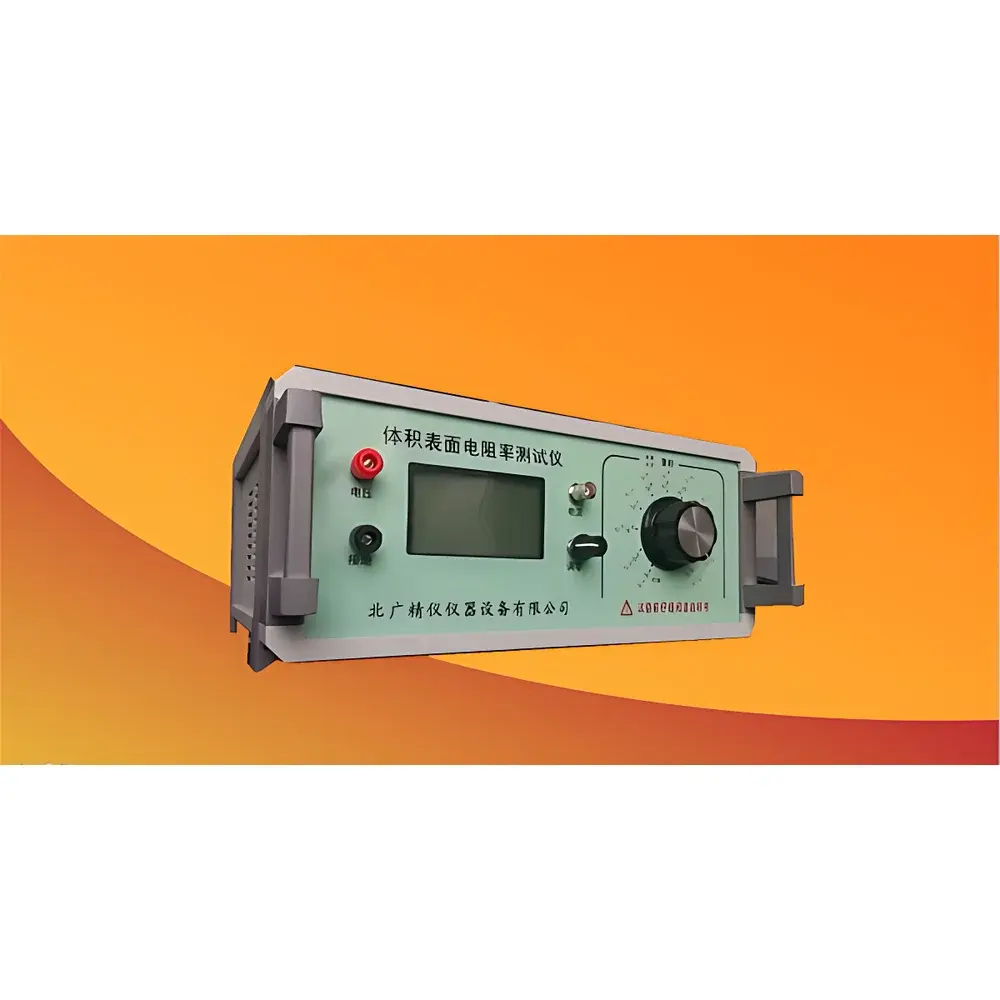
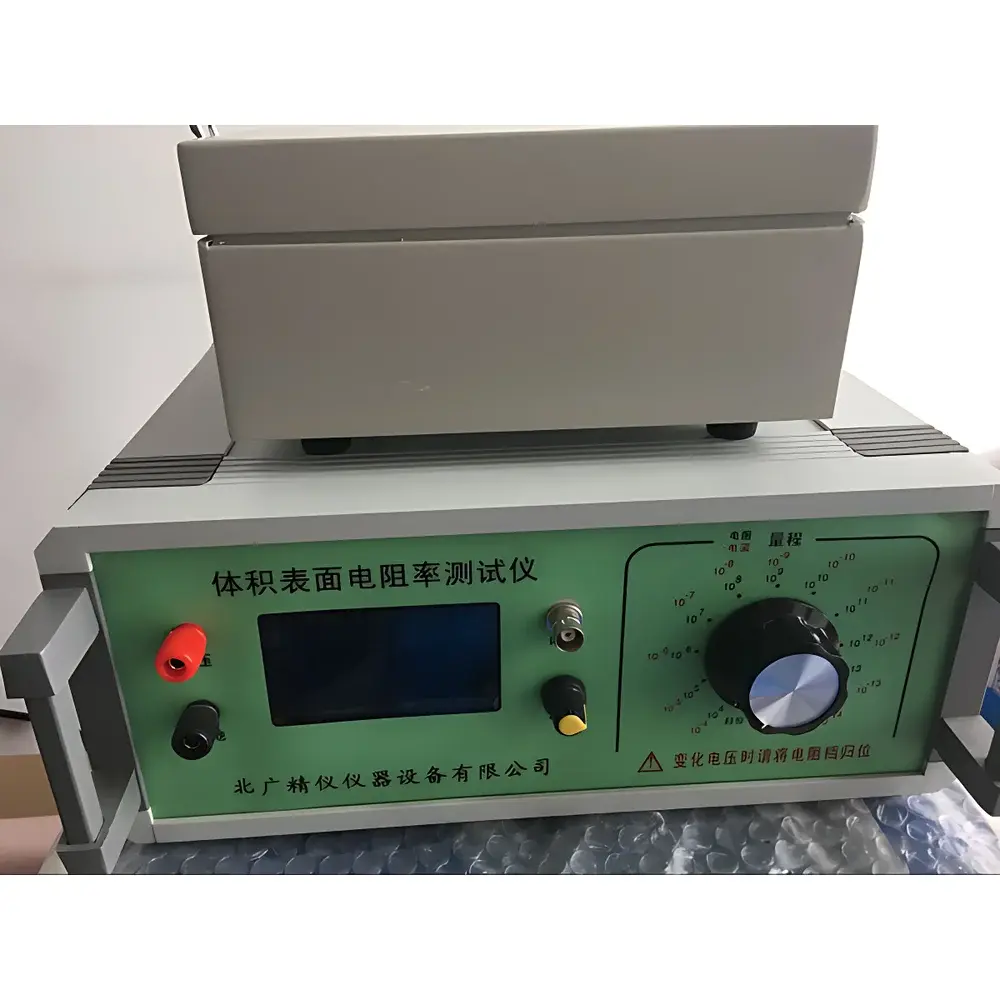
All Precision Instrument BEST-121 Volume Resistivity Tester for Silicone Rubber Sheets
| Brand | All Precision Instrument |
|---|---|
| Model | BEST-121 |
| Origin | Beijing, China |
| Manufacturer Type | Direct Manufacturer |
| Voltage Range | DC 10 V, 50 V, 100 V, 500 V, 1000 V |
| Resistance Measurement Range | 1×10⁴ Ω to 1×10¹⁸ Ω |
| Current Measurement Range | 2×10⁻⁴ A to 1×10⁻¹⁶ A |
| Operating Temperature | 0–40 °C |
| Relative Humidity | ≤70% RH |
| Power Supply | AC 220 V ±10%, 50 Hz |
| Continuous Operation Time | 8 hours |
| Power Consumption | ~10 W |
| Dimensions (W×D×H) | 285 mm × 245 mm × 120 mm |
| Weight | ~6 kg (main unit) |
Overview
The All Precision Instrument BEST-121 Volume Resistivity Tester is a precision high-resistance measurement system engineered for the quantitative determination of volume resistivity (ρv) and surface resistivity (ρs) in insulating and antistatic materials—particularly silicone rubber sheets, elastomers, plastics, coatings, and liquid plasticizers. It operates on the fundamental principle of Ohm’s Law (R = V/I), where a stable, calibrated DC test voltage is applied across a defined electrode geometry, and the resulting leakage current is measured with sub-femtoamp sensitivity. The instrument implements guarded three-electrode configuration per ASTM D257 and IEC 60093, minimizing surface leakage errors and ensuring traceable volumetric current path definition. Designed for compliance-driven laboratories, it supports standardized test protocols for quality control, R&D validation, and regulatory submissions in electronics packaging, medical device manufacturing, aerospace sealing components, and ESD-safe material development.
Key Features
- Five selectable DC test voltages (10 V, 50 V, 100 V, 500 V, 1000 V) optimized for material-specific polarization response and dielectric stability.
- Ultra-wide resistance range: 1×10⁴ Ω to 1×10¹⁸ Ω, enabling characterization from conductive elastomers to ultra-high-purity insulators.
- Current measurement resolution down to 1×10⁻¹⁶ A, achieved via low-noise electrometer architecture with active guarding and shielded input circuitry.
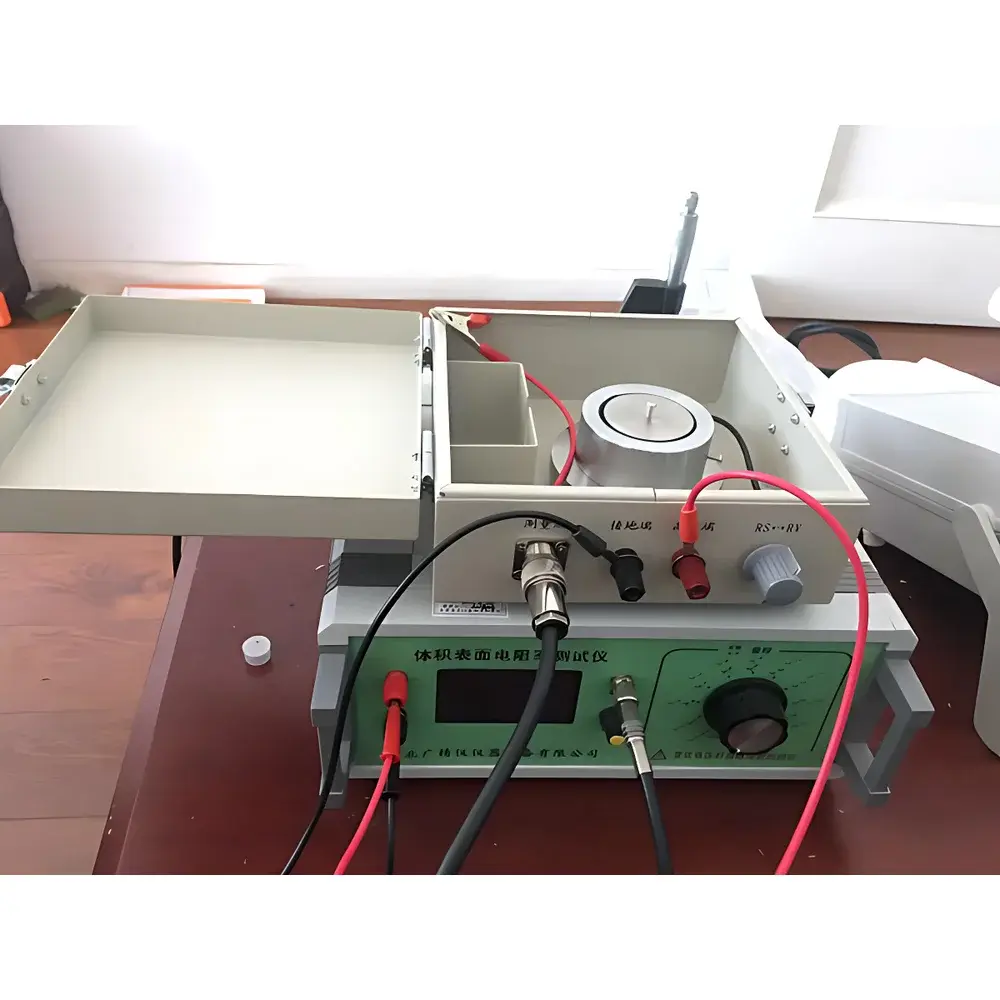
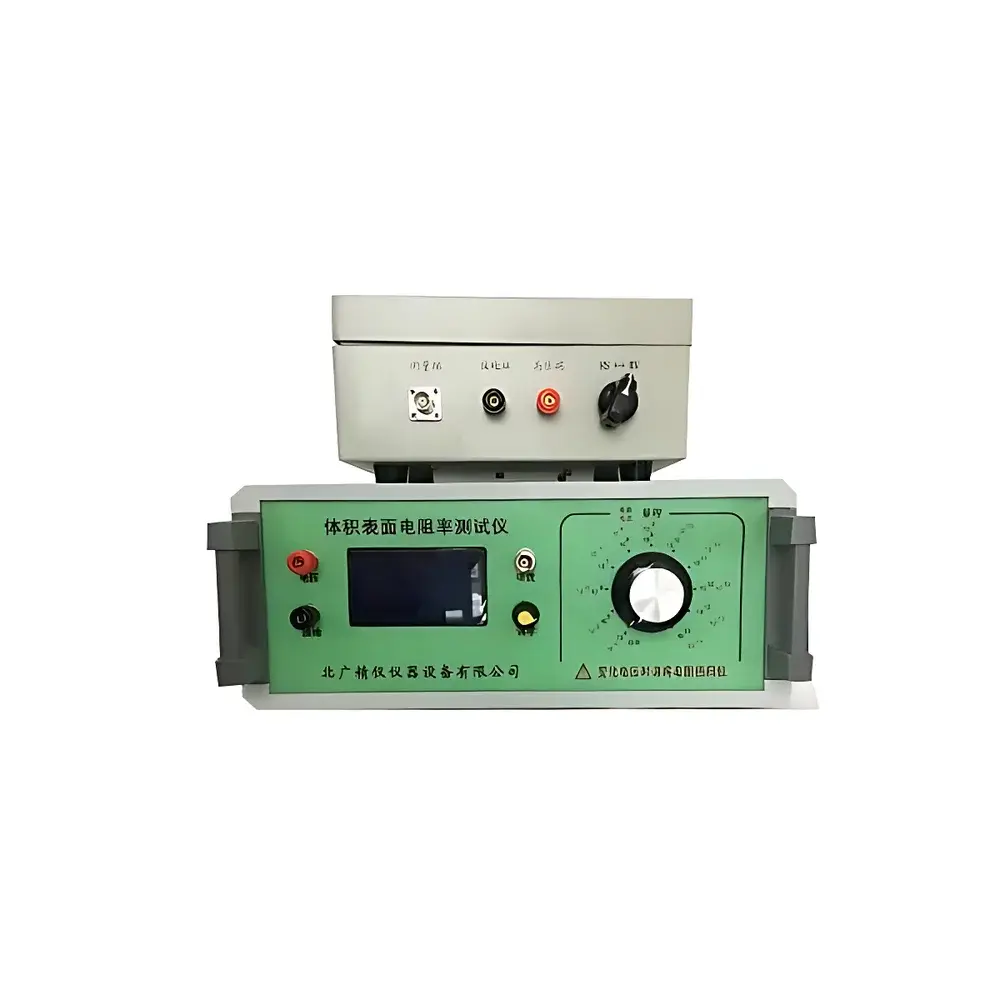
- Integrated electrode interface compatible with standard three-terminal cells (e.g., ASTM D257-compliant concentric ring electrodes with guard gap).
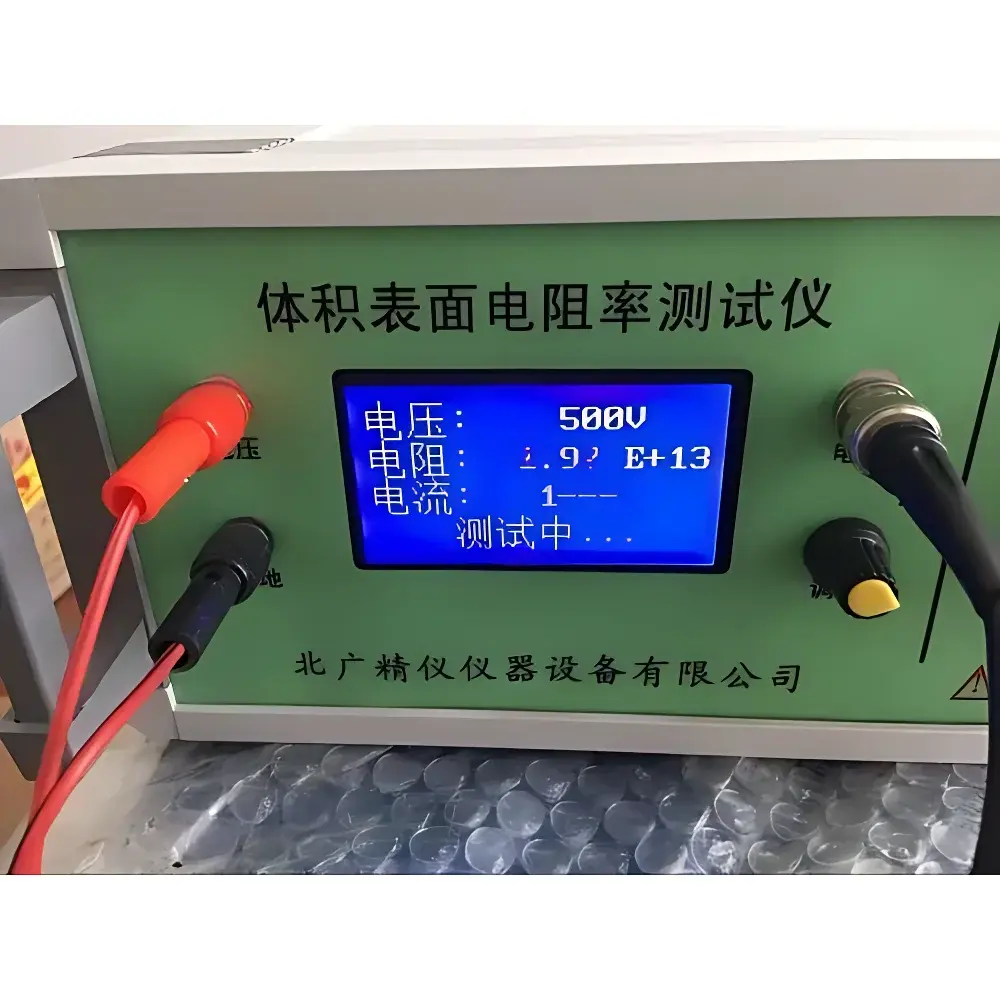
- Auto-ranging digital display with real-time scaling; overload protection prevents meter saturation during high-resistance transitions.
- Thermally stabilized internal reference and drift-compensated analog front-end ensure ≤±5% accuracy up to 10¹² Ω, and ≤±10–15% up to 10¹⁴ Ω per GB/T 1410–2006 calibration requirements.
- Compact benchtop form factor (285 × 245 × 120 mm) with low power consumption (~10 W), suitable for shared lab environments and ISO 17025-accredited testing spaces.
Sample Compatibility & Compliance
The BEST-121 accommodates solid sheet specimens (e.g., silicone rubber, EPDM, fluorosilicone), liquids (plasticizers per GB 1672–1988), and powdered formulations. For volume resistivity testing of silicone sheets, users input specimen thickness (in mm or m) directly into the measurement interface; the system computes ρv = Rv × (S/d), where S is the effective electrode area and d is sample thickness. Surface resistivity mode requires no dimensional input and uses guarded two-terminal measurement per ASTM D257 Annex A3. The instrument conforms to over 30 national and industry standards, including GB/T 1410–2006 (equivalent to IEC 60093), GB/T 1692–2008 (rubber resistivity), GB/T 12703.6–2010 (textile electrostatic evaluation), and GJB 105A–1998 (military-grade ESD material qualification). It supports GLP documentation workflows through manual result logging aligned with FDA 21 CFR Part 11 data integrity expectations.
Software & Data Management
While the BEST-121 operates as a standalone analog-digital hybrid instrument without embedded firmware-based software, its measurement protocol is fully compatible with external laboratory information management systems (LIMS) and Excel-based QA templates. All readings—including applied voltage, measured current, calculated resistance, and derived resistivity—are displayed with four-digit resolution and auto-scaled exponent notation. Users may manually record timestamped results alongside environmental conditions (temperature, humidity) to satisfy ISO/IEC 17025 clause 7.7 (result reporting) and GB/T 27025–2019 audit requirements. Calibration certificates traceable to NIM (National Institute of Metrology, China) are provided with each unit, and annual verification against certified high-resistance standards (e.g., 10¹² Ω and 10¹⁴ Ω reference resistors) is recommended.
Applications
- Quality assurance of medical-grade silicone sheets used in implantable device encapsulation and biocompatible seals.
- ESD control validation for cleanroom gaskets, antistatic flooring compounds, and semiconductor handling trays.
- R&D screening of conductive filler dispersion (e.g., carbon black, graphene) in silicone matrices for tailored resistivity profiles.
- Regulatory testing of plasticizers in PVC medical tubing per GB 1672–1988 and ISO 306:2020 Annex E.
- Failure analysis of insulation breakdown in high-voltage cable jacketing and aerospace elastomeric bushings.
- Comparative aging studies (thermal, UV, humidity) tracking resistivity drift in silicone elastomers under accelerated stress conditions.
FAQ
What standards does the BEST-121 support for silicone rubber volume resistivity testing?
It complies with GB/T 1410–2006 (identical to IEC 60093), GB/T 1692–2008, and ASTM D257 for solid insulating materials, including cured silicone elastomer sheets.
Can the instrument measure both volume and surface resistivity on the same sample?
Yes—users select measurement mode via front-panel interface; volume resistivity requires thickness input, while surface resistivity uses guarded two-electrode geometry without dimensional entry.
Is calibration required before each use?
No—routine zero-check and open-circuit verification are sufficient for daily operation; full metrological calibration is recommended annually or after repair.
Does the tester include electrodes?
Standard configuration includes a three-terminal electrode cell compliant with GB/T 1410–2006 dimensions (high-voltage electrode ID: 146 mm, measuring electrode OD: 120 mm, guard gap: 8 mm); optional liquid cells and powder holders are available separately.
How is measurement accuracy verified across the full 10⁴–10¹⁸ Ω range?
Accuracy is validated using NIST-traceable high-resistance standards at key decades (10⁶, 10⁹, 10¹², 10¹⁴ Ω); uncertainty budgets follow ISO/IEC Guide 98-3 (GUM) and are documented in the supplied calibration report.
Related Products



