
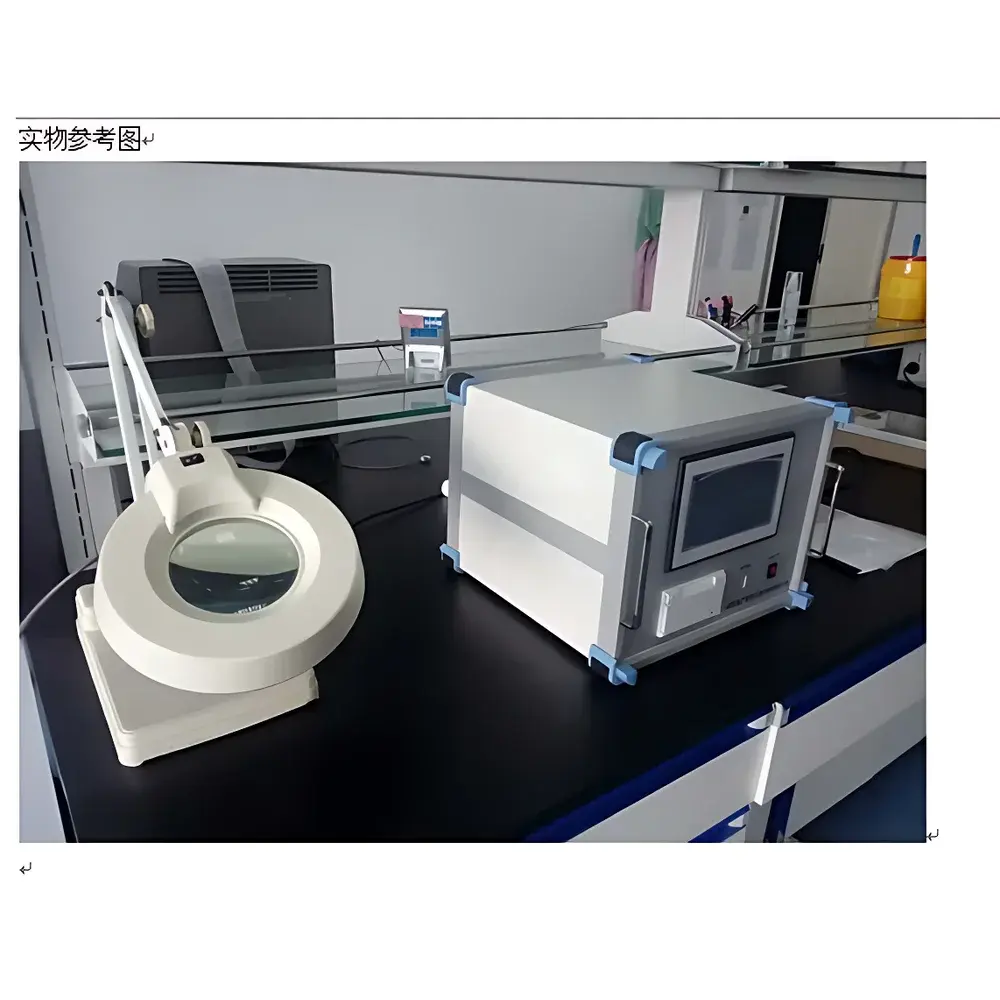
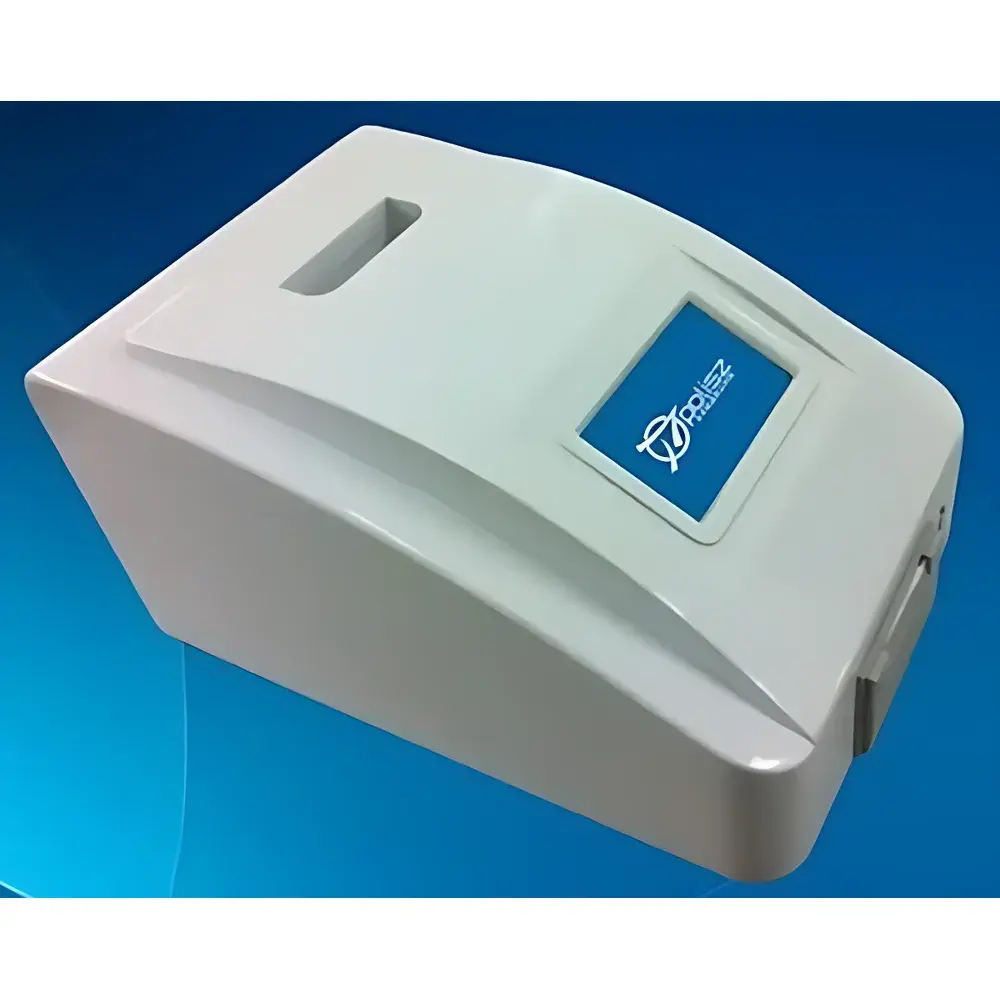
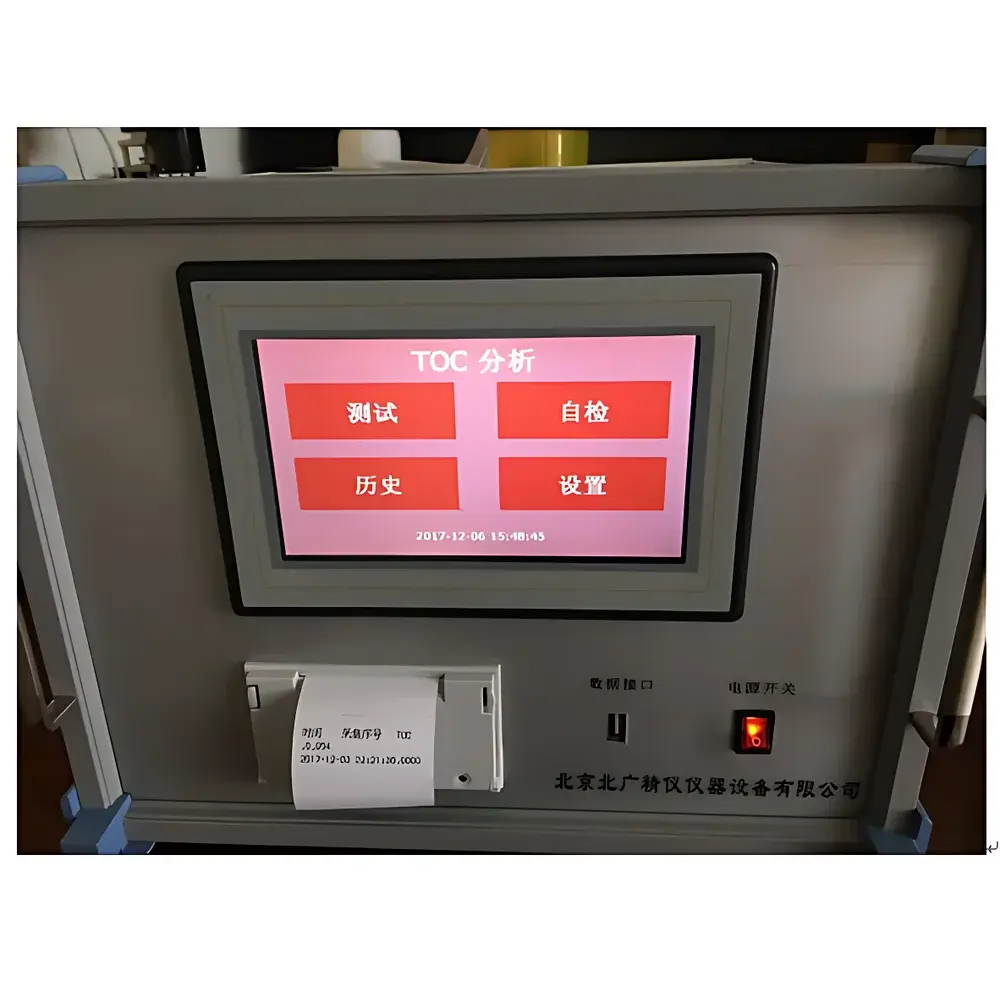
All Precision Instrument BC-40A Portable Total Organic Carbon (TOC) Analyzer for Purified Water and Water for Injection (WFI)
| Brand | All Precision Instrument |
|---|---|
| Origin | Beijing, China |
| Manufacturer Type | OEM Manufacturer |
| Instrument Type | Portable TOC Analyzer |
| Detection Principle | UV/Persulfate Oxidation + NDIR (Non-Dispersive Infrared) Detection |
| Measurement Range | 0.001–1.0 mg/L (customizable up to 1000 mg/L via sensor configuration) |
| Accuracy | ±4% |
| Resolution | 0.001 mg/L |
| Detection Limit | 0.001 mg/L |
| Repeatability | ≤3% |
| Response Time | <4 minutes |
| Sample Temperature Range | 1–95 °C |
| Display | 640×480 color TFT touchscreen |
| Data Storage | 6-month history retention |
| Compliance | Chinese Pharmacopoeia 2010 Edition, Appendix VIII R |
| Interface | RS232 |
| Power Supply | 220 V AC |
Overview
The All Precision Instrument BC-40A is a portable, laboratory-grade Total Organic Carbon (TOC) analyzer engineered specifically for regulatory-compliant monitoring of purified water (PW) and Water for Injection (WFI) in pharmaceutical manufacturing environments. It employs a dual-stage oxidation and detection methodology: organic carbon in aqueous samples is quantitatively oxidized to CO₂ using combined ultraviolet (UV) radiation and persulfate chemistry under acidic conditions; the resulting CO₂ is then measured via high-stability non-dispersive infrared (NDIR) absorption. The instrument calculates TOC as the difference between total carbon (TC) and total inorganic carbon (TIC), adhering strictly to the differential measurement principle mandated by the Chinese Pharmacopoeia (ChP) 2010 Edition, Appendix VIII R. This architecture ensures trace-level sensitivity (detection limit: 0.001 mg/L), minimal reagent dependency, and absence of consumable gases—making it suitable for GMP-aligned cleanroom laboratories, QC release testing, and water system validation (IQ/OQ/PQ).
Key Features
- Portable, benchtop-integrated design with integrated carrying handle and low footprint—enables direct sampling at point-of-use locations without compromising analytical integrity.
- UV/persulfate oxidation module with temperature-controlled reaction chamber ensures complete oxidation of recalcitrant organic compounds (e.g., humic acids, low-molecular-weight organics) while minimizing chloride interference.
- NDIR CO₂ detector with dual-wavelength compensation provides long-term signal stability and resistance to humidity-induced drift.
- Embedded 640×480 color touchscreen interface with intuitive Chinese/English bilingual navigation—supports one-touch method execution, automated system rinse cycles, and real-time status diagnostics.
- No gas cylinders or liquid reagents required; zero moving parts in the detection path—reducing maintenance frequency and eliminating cross-contamination risks associated with peristaltic pump tubing wear.
- User-configurable alarm thresholds with relay output for integration into facility SCADA or PLC systems—triggers visual, audible, and external control signals upon TOC excursion beyond specification limits (e.g., ≤500 ppb for WFI per USP & ChP).
- Modular sensor architecture allows field-upgradable range extension (up to 1000 mg/L) via calibrated NDIR cell replacement—supporting both ultra-trace PW/WFI analysis and higher-concentration cleaning validation rinse waters.
Sample Compatibility & Compliance
The BC-40A is validated for use with low-conductivity, low-particulate aqueous matrices typical of pharmaceutical water systems—including purified water, Water for Injection (WFI), and clean-in-place (CIP) final rinse samples. It meets all instrumental performance criteria specified in ChP 2010 Appendix VIII R, including system suitability testing (SST), sensitivity verification (≤0.001 mg/L), and linearity across the 0.001–1.0 mg/L working range. While not pre-certified to 21 CFR Part 11, its embedded audit trail functionality—including timestamped method parameters, operator ID logging, and immutable result storage—provides foundational traceability required for GLP/GMP environments. Optional IQ/OQ documentation packages are available to support qualification under ISO 17025 or EU Annex 15 frameworks.
Software & Data Management
Data acquisition and reporting are managed through an embedded Linux-based firmware platform. All measurements are time-stamped and stored locally with full metadata (sample ID, operator, method version, ambient temperature, oxidation efficiency flag). Internal memory retains ≥10,000 records with automatic rollover; data export is supported via RS232 serial interface to LIMS or Excel-compatible CSV files. The system supports configurable report templates—including ChP-mandated SST summary tables—and integrates with optional thermal line printers for immediate hard-copy documentation. Firmware updates are delivered via USB flash drive, preserving data integrity during version upgrades.
Applications
- Release testing of PW and WFI per pharmacopoeial monographs (ChP, USP <643>, EP 2.2.44).
- Periodic surveillance of distribution loops and point-of-use outlets during routine water system monitoring.
- Cleaning validation studies—quantifying residual organics on equipment surfaces via rinse water analysis.
- Investigation of TOC excursions during root cause analysis (RCA) of water system anomalies.
- Supporting FDA/EMA inspection readiness through documented system suitability, calibration history, and electronic record retention.
FAQ
Does the BC-40A comply with USP <643> requirements?
Yes—the instrument implements the TC–TIC differential method, achieves ≤0.001 mg/L detection limit, and supports system suitability testing as defined in USP <643>. Full compliance requires site-specific OQ/PQ execution.
Can it be used for online monitoring?
The BC-40A is a portable offline analyzer. For continuous online TOC monitoring, All Precision Instrument offers the BC-40A-Online variant with ¼” Swagelok inlet/outlet ports and 4–20 mA analog output.
Is UV lamp replacement a field-serviceable procedure?
Yes—UV lamp and oxidation reactor components are accessible without disassembling the main chassis, requiring only standard hex tools and <5 minutes downtime.
What sample volume is required per analysis?
Standard protocol uses 15–20 mL per injection; low-volume mode (optional) supports 5 mL with equivalent precision.
How is calibration verified?
Calibration is performed using certified potassium hydrogen phthalate (KHP) standards traceable to NIST SRM 84a; daily system suitability checks include sucrose and 1,4-benzoquinone challenge solutions.
Related Products







