
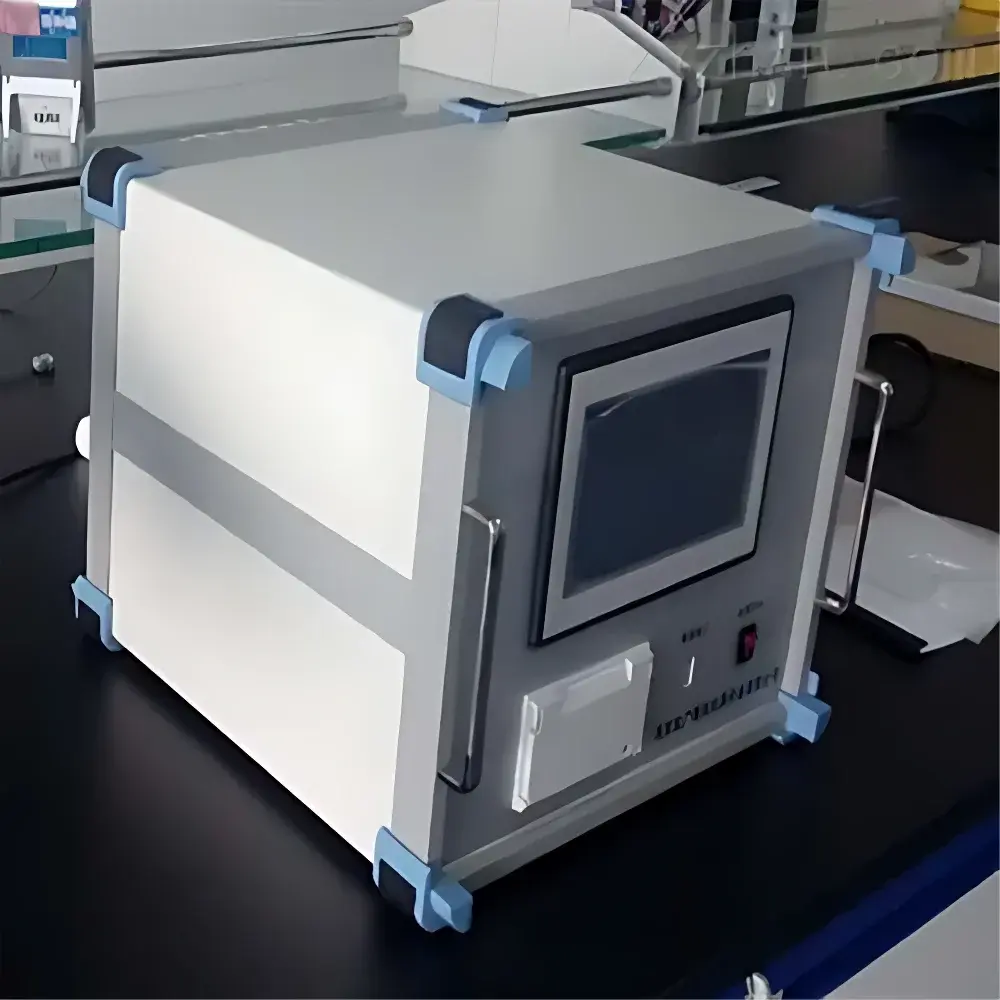
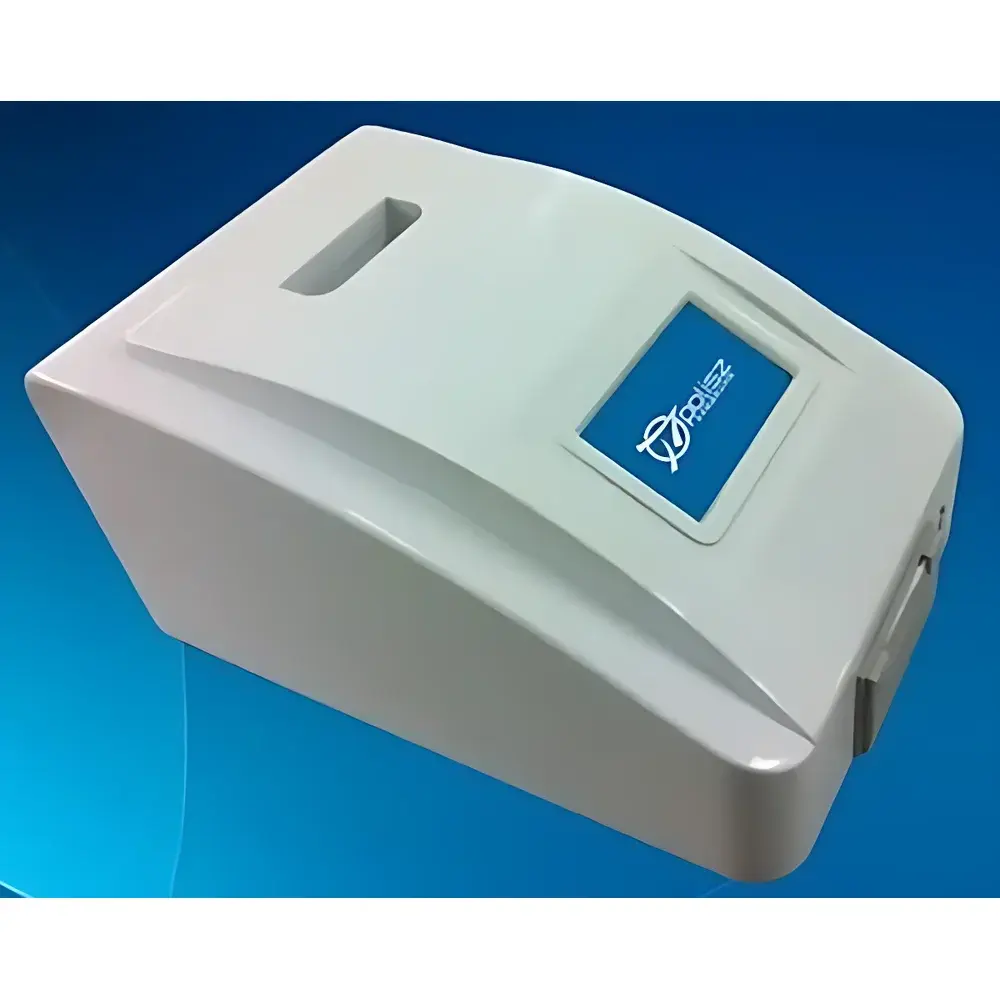
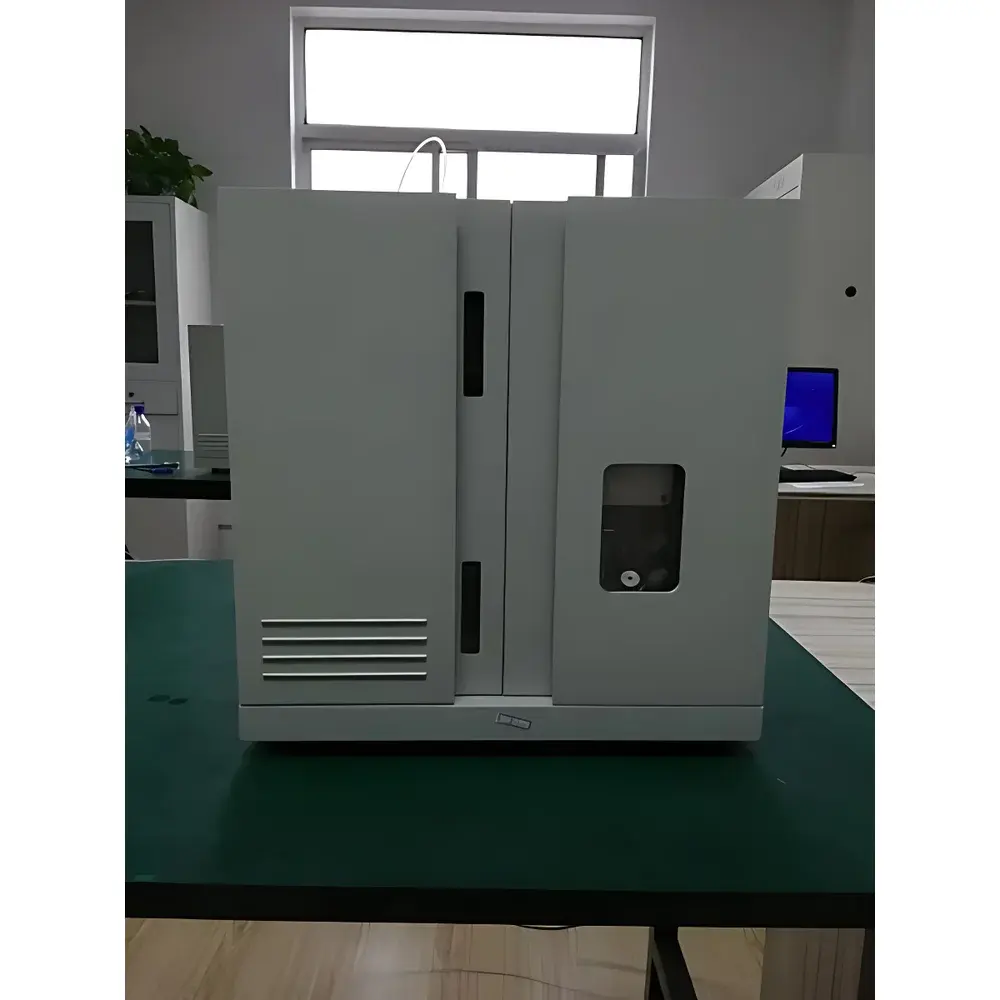
All Precision Instrument BC-40A UV-Persulfate Total Organic Carbon Analyzer
| Brand | All Precision Instrument |
|---|---|
| Origin | Beijing, China |
| Manufacturer Type | Direct Manufacturer |
| Instrument Type | Laboratory TOC Analyzer |
| Model | BC-40A |
| Detection Principle | Non-Dispersive Infrared (NDIR) Absorption |
| Oxidation Method | UV/Persulfate Oxidation |
| Measurement Range | 0.001–1.000 mg/L |
| Accuracy | ±5% |
| Detection Limit | 0.001 mg/L |
| Repeatability | ≤3% |
| Analysis Time | 4 min |
| Response Time | ≤15 min |
| Sample Temperature Range | 1–95 °C |
| Ambient Temperature Range | 10–40 °C (max. ±5 °C/day drift) |
| Internal Flow Rate | 0.5 mL/min |
| Relative Humidity | ≤85% |
| Zero Drift | ±5% FS/24 h |
| Span Drift | ±5% FS/24 h |
| UV Lamp | Dual-wavelength (185 nm & 254 nm) |
| Pump Tubing | Imported high-stability peristaltic tubing |
Overview
The All Precision Instrument BC-40A UV-Persulfate Total Organic Carbon Analyzer is a laboratory-grade instrument engineered for precise, compliant measurement of total organic carbon in ultrapure water systems—including purified water (PW) and water for injection (WFI)—in accordance with pharmacopeial standards. It employs a dual-stage oxidation strategy combining 185 nm/254 nm ultraviolet irradiation with persulfate catalysis to quantitatively convert non-volatile and refractory organic compounds into carbon dioxide. The generated CO2 is then measured via high-sensitivity non-dispersive infrared (NDIR) detection—ensuring robust linearity, minimal interferences from inorganic carbon species, and trace-level resolution down to 0.001 mg/L. Unlike conductivity-based TOC analyzers, the BC-40A’s NDIR detector provides direct, stoichiometric quantification of CO2, eliminating reliance on indirect conductivity calibration curves and associated matrix effects.
Key Features
- Dual-wavelength UV lamp (185 nm + 254 nm) enabling efficient photolysis of recalcitrant organics and simultaneous generation of hydroxyl radicals for persulfate activation
- Integrated persulfate dosing system with programmable reagent injection timing and concentration control to optimize oxidation efficiency across diverse sample matrices
- NDIR detection module with temperature-stabilized optical path and auto-zero referencing, delivering ±5% accuracy and ≤3% RSD over repeated injections
- Automated TC/TIC differential calculation: measures total carbon (TC) under UV/persulfate oxidation, then total inorganic carbon (TIC) via acidification without oxidation—TOC = TC − TIC
- Compact, modular flow cell design with 0.5 mL/min controlled sample throughput, minimizing carryover and enabling rapid 4-minute analysis cycles
- Onboard environmental monitoring: real-time tracking of ambient temperature (10–40 °C), humidity (≤85% RH), and internal thermal stability (±5 °C/day max drift)
- Self-diagnostics and maintenance alerts for critical consumables—including UV lamp output decay and peristaltic pump tube fatigue—aligned with GMP-recommended replacement intervals
Sample Compatibility & Compliance
The BC-40A is validated for use with low-conductivity aqueous samples typical of pharmaceutical water systems, including PW and WFI meeting USP , EP 2.2.44, and JP 2.07 requirements. Its oxidation efficiency exceeds 95% for common pharmaceutical residuals (e.g., ethanol, acetone, citric acid, and residual sanitants such as hydrogen peroxide). The analyzer supports method verification per USP and system suitability testing per USP , including daily zero/spike recovery checks and 72-hour stability assessments. Data integrity complies with FDA 21 CFR Part 11 expectations through audit-trail-enabled software (see Software & Data Management), and hardware architecture meets IEC 61326-1 for electromagnetic compatibility in regulated laboratory environments.
Software & Data Management
The BC-40A operates with embedded firmware and optional PC-based analytical software supporting GLP/GMP workflows. All measurements are timestamped, user-ID authenticated, and stored with full metadata—including oxidation parameters, NDIR raw signal traces, calibration history, and maintenance logs. Audit trails record every data modification, method change, or user login event with immutable timestamps. Software supports export of CSV and PDF reports compliant with ALCOA+ principles (Attributable, Legible, Contemporaneous, Original, Accurate, Complete, Consistent, Enduring, Available). Electronic signatures, role-based access control, and configurable retention policies align with Annex 11 and data governance frameworks for regulated biopharma QC labs.
Applications
- Real-time release testing of PW and WFI distribution loops in compliance with USP and EU GMP Annex 1
- Validation and routine monitoring of still and multiple-effect distillation units, RO/DI polishing trains, and storage/distribution systems
- Investigation of organic ingress events—e.g., biofilm sloughing, carbon bed breakthrough, or cleaning agent residuals—in purified water networks
- Supporting regulatory submissions requiring documented TOC performance qualification (PQ), including oxidation efficiency, detection limit verification, and system suitability protocols
- Environmental monitoring of low-TOC process streams in semiconductor ultrapure water (UPW) facilities where sub-ppb sensitivity is required
FAQ
What pharmacopeial standards does the BC-40A support for PW/WFI testing?
The analyzer meets the methodological and performance criteria outlined in USP , EP 2.2.44, and JP 2.07, including the 50 ppb (0.05 mg/L) reporting threshold and system suitability requirements.
How often must the UV lamp and peristaltic tubing be replaced?
Per manufacturer validation and GMP best practices, the dual-wavelength UV lamp and imported peristaltic tubing are rated for 12 months of continuous operation under standard usage conditions.
Does the BC-40A require external gas supply or chemical reagents beyond persulfate solution?
No. It operates solely on deionized water, certified persulfate reagent, and standard line power—eliminating need for carrier gases, acid pumps, or catalyst beds.
Can the instrument perform standalone TIC analysis without oxidation?
Yes. The method sequence includes an acidification-only mode to quantify inorganic carbon, enabling full TC/TIC/TOC tripartite reporting per pharmacopeial guidance.
Is the NDIR detector field-calibratable?
Yes—using certified CO2 span gases or traceable liquid standards; calibration certificates and SOP templates are provided for IQ/OQ/PQ execution.
Related Products







