
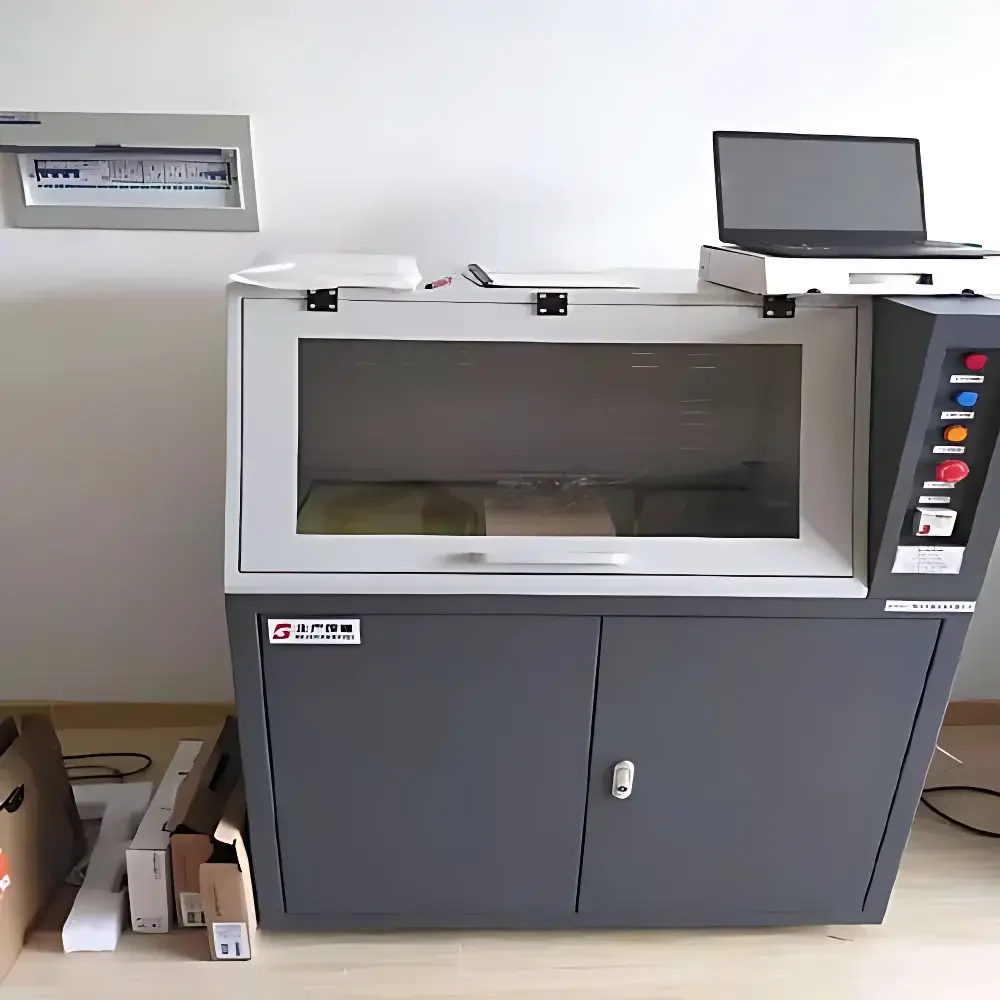
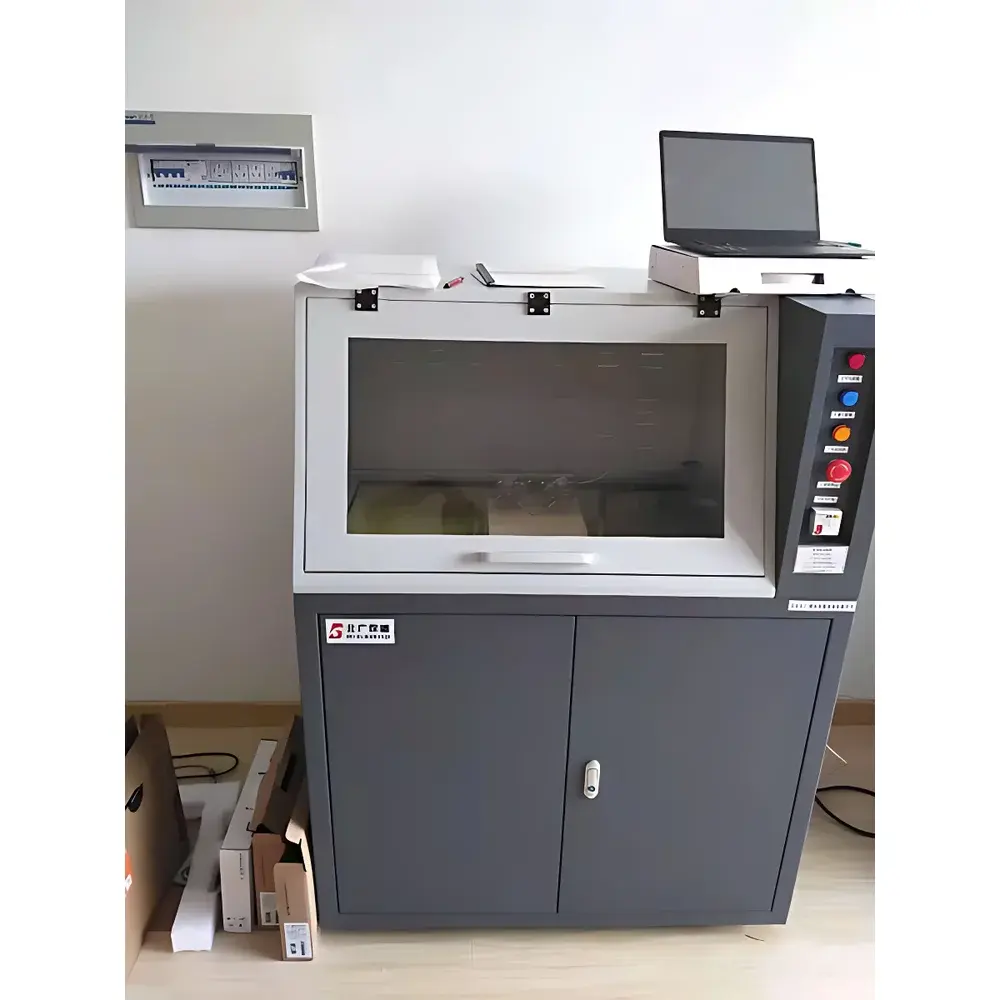
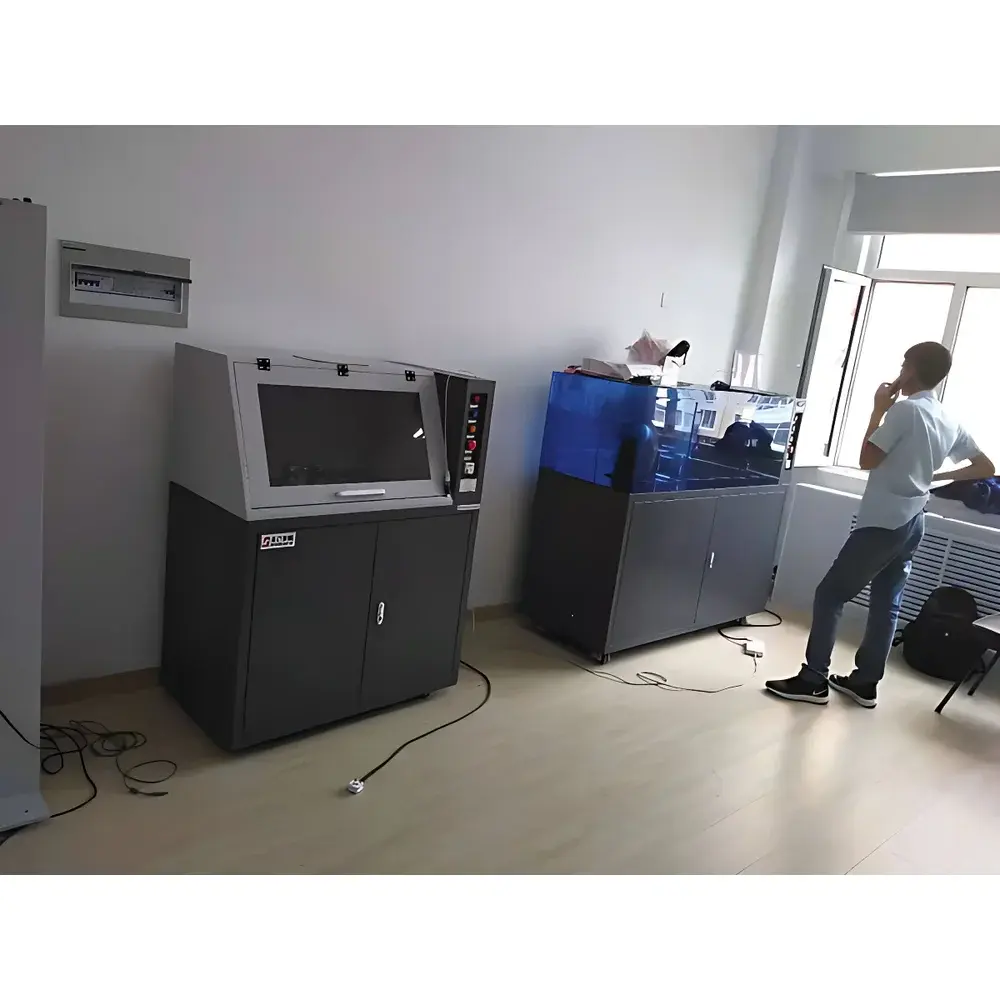
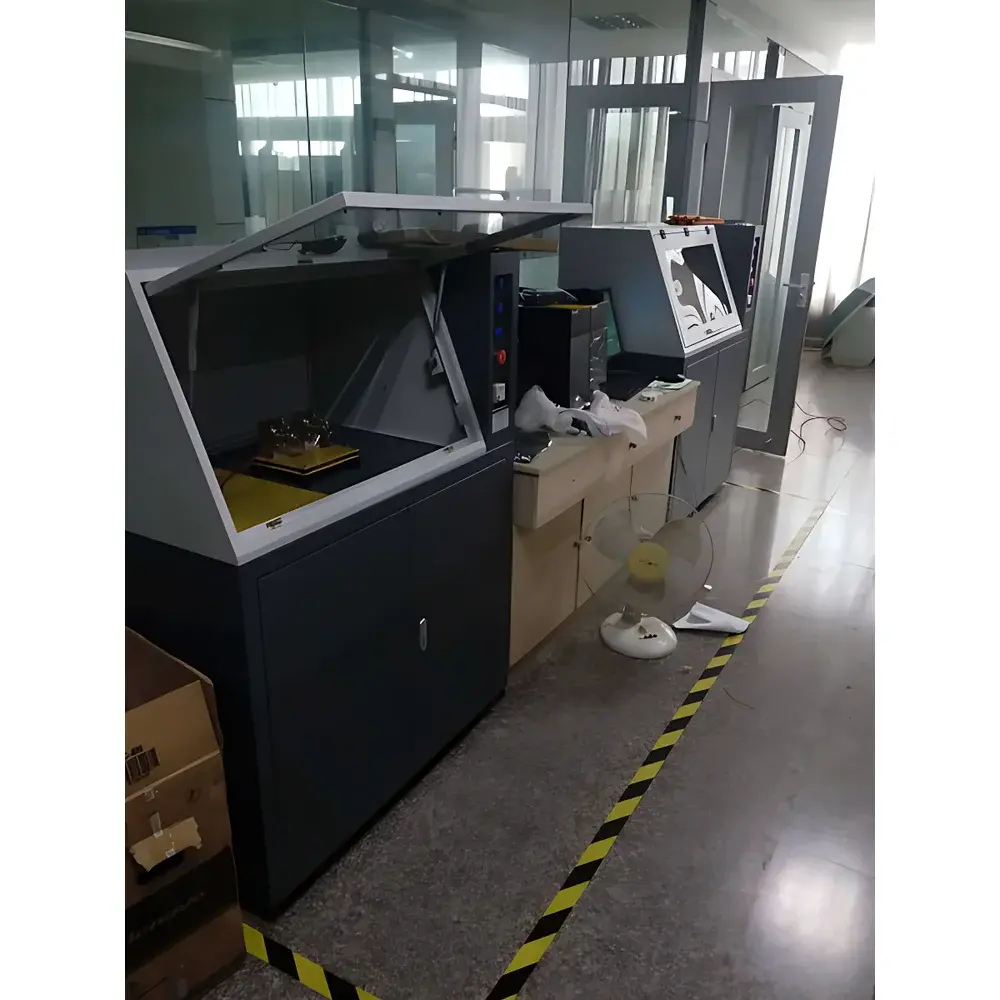
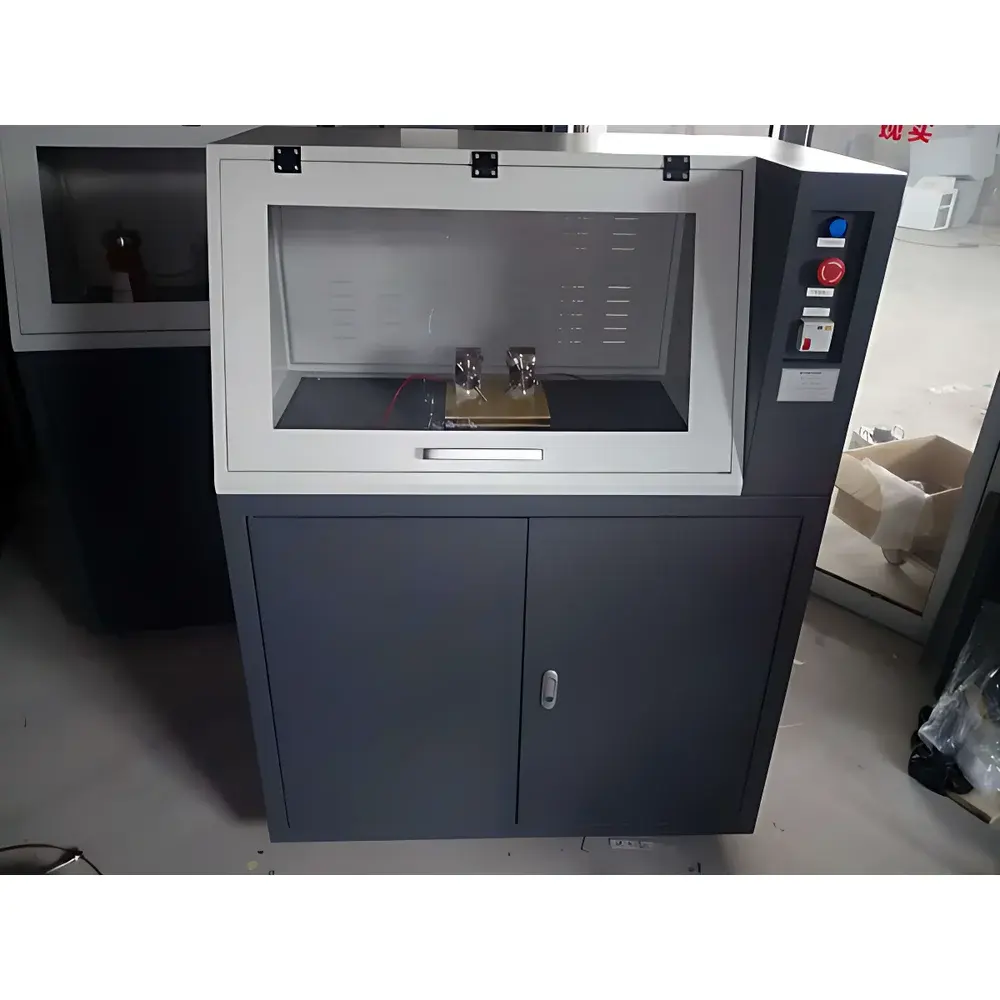
All Precision Instrument BDH-20KV Microcomputer-Controlled Arc Resistance Tester
| Brand | All Precision Instrument |
|---|---|
| Origin | Beijing, China |
| Manufacturer Type | Direct Manufacturer |
| Model | BDH-20KV |
| Voltage Range | 0–20 kV (continuously adjustable) |
| Arc Voltage Accuracy | ≤1% |
| Current Acquisition Resolution | Milliampere (mA)-level, real-time sampling |
| Communication Interface | USB 2.0 (up to 3 MB/s), RS-232, Bluetooth 5.0, optional regional Ethernet port |
| Control Mode | PC-based or embedded EPC terminal |
| Electrode Materials | Tungsten carbide, carbon steel, platinum |
| Cabinet Material | AISI 304 stainless steel |
| Compliance Standards | GB/T 1411–2002 (equivalent to IEC 61621:1997), ASTM D495, IEC 149, UL 746A |
| Safety Protections | Dual-stage overvoltage protection, short-circuit interruption, arc fault detection, interlocked safety door, automatic zero-voltage reset, post-test discharge circuit, independent grounding, TVS-based high-voltage surge suppression, software-based misoperation lockout |
| Calibration | Supplied with traceable calibration certificate from nationally accredited metrology institute (CNAS or equivalent) |
Overview
The All Precision Instrument BDH-20KV Microcomputer-Controlled Arc Resistance Tester is a precision-engineered system designed for quantitative evaluation of the arc resistance of solid electrical insulating materials under standardized high-voltage, low-current arcing conditions. It operates on the principle of controlled electric arc initiation and propagation between two fixed electrodes—typically tungsten carbide—mounted on a non-conductive test platform. A programmable high-frequency AC voltage (50 Hz ±1%) is applied across the electrodes, generating intermittent then continuous arcs that progressively carbonize the material surface. The endpoint is defined as the time elapsed until surface tracking establishes a conductive path sufficient to extinguish the arc—a metric reported in seconds per ASTM D495 and GB/T 1411–2002. This test method directly correlates with real-world performance in circuit breakers, switchgear housings, busbar supports, and motor winding insulation where transient arcing events pose critical degradation risks.
Key Features
- True microcomputer-controlled architecture integrating Siemens S7-1200 PLC and custom embedded CPU unit for deterministic real-time control and data acquisition.
- SPWM-based solid-state electronic voltage regulation ensures stable, contactless, and linear 0–20 kV ramping at user-defined rates (0–50 kV/s range programmable).
- Dual-channel high-fidelity sensing: 16-bit isolated voltage transducer (±0.5% FS accuracy) and milliampere-range current transducer (1 mA resolution, 10 kHz sampling rate).
- Multi-layered safety architecture: hardware-level TVS clamping, dual-redundant overcurrent relays, interlocked stainless-steel test chamber door, automatic post-test discharge (<50 ms decay to <30 V), and grounded copper-shielded enclosure (AISI 304).
- Flexible operation modes: local EPC touchscreen interface or remote PC control via USB 2.0 (3 MB/s throughput), Bluetooth 5.0, or regional Ethernet port—enabling fully isolated operator positioning.
- Comprehensive fault diagnostics: simultaneous upper- and lower-level alarm logging (including arc flash detection, open-circuit warning, thermal overload, and sensor drift alerts).
Sample Compatibility & Compliance
The BDH-20KV accommodates rigid flat specimens up to 120 mm × 120 mm × 12 mm (L × W × H), including thermosetting plastics (e.g., phenolic, epoxy), thermoplastics (e.g., PBT, PET), laminates (G10/FR4), ceramics, glass, mica composites, insulating varnishes, and impregnated paper. Electrode spacing is mechanically fixed at 6.35 mm per ASTM D495 or adjustable per customer-specified protocols. The system meets full mechanical, electrical, and software traceability requirements for GLP and GMP environments. Its firmware implements audit-trail functionality compliant with FDA 21 CFR Part 11 for electronic records and signatures. Calibration certificates are issued by CNAS-accredited national metrology institutes, with optional third-party validation against NIST-traceable standards.
Software & Data Management
The proprietary ArcTest Pro v3.2 software features role-based access control (RBAC), enabling multi-user operation with password-protected profiles and granular permission tiers (operator, supervisor, administrator). Test parameters—including arc cycle timing (on/off intervals), current ramp gradients, hold durations, and pass/fail thresholds—are configurable per IEC 61621, ASTM D495, or custom sequences. Real-time waveform visualization displays voltage, current, and arc continuity status synchronized to millisecond timestamps. All raw data (including 10 kHz sampled current/voltage streams) are stored in IEEE-compliant HDF5 format with embedded metadata (operator ID, timestamp, environmental temperature/humidity tags). Comparative analysis supports overlay of up to eight test curves with color-coded differentiation, statistical summary (mean, SD, CV%), and automated report generation in PDF/CSV/XLSX formats—including customizable headers, logos, and compliance statement footers.
Applications
This instrument serves quality assurance laboratories in electrical equipment manufacturing (OEMs and Tier-1 suppliers), polymer R&D centers evaluating flame-retardant additives, certification bodies performing UL/CSA/IEC type testing, and academic institutions conducting dielectric aging studies. Primary use cases include: qualification of insulating housings for EV battery disconnect units; comparative screening of halogen-free flame-retardant polyamides; validation of arc-resistant coatings for medium-voltage switchgear; lifetime modeling of resin systems under repeated partial discharge stress; and regulatory submission testing for IEC 60695-11-10 (fire hazard testing). Its reproducibility (CV < 2.3% across ten repeat tests on identical PMMA samples) makes it suitable for ASTM D495 Category A and B classification protocols.
FAQ
What standards does the BDH-20KV comply with?
It is fully aligned with GB/T 1411–2002 (identical to IEC 61621:1997), ASTM D495, UL 746A, and IEC 149. Optional firmware modules support IEC 60112 tracking index derivation.
Can test parameters be modified beyond standard cycles?
Yes—the software allows full customization of arc duration, rest interval, current amplitude progression, and termination criteria without firmware reflash.
Is remote operation supported during high-voltage testing?
Absolutely. Wireless Bluetooth 5.0 and Ethernet interfaces enable full functional control and real-time monitoring from ≥10 meters away, satisfying IEC 61000-4-3 immunity requirements.
How is measurement traceability ensured?
Each unit ships with a factory calibration certificate traceable to CNAS-accredited national metrology institutes; annual recalibration services include uncertainty budgets per ISO/IEC 17025.
What maintenance is required for long-term stability?
Biannual inspection of electrode tip geometry, cleaning of HV bushings with isopropyl alcohol, and verification of grounding resistance (<0.1 Ω) using a dedicated earth bond tester.



