
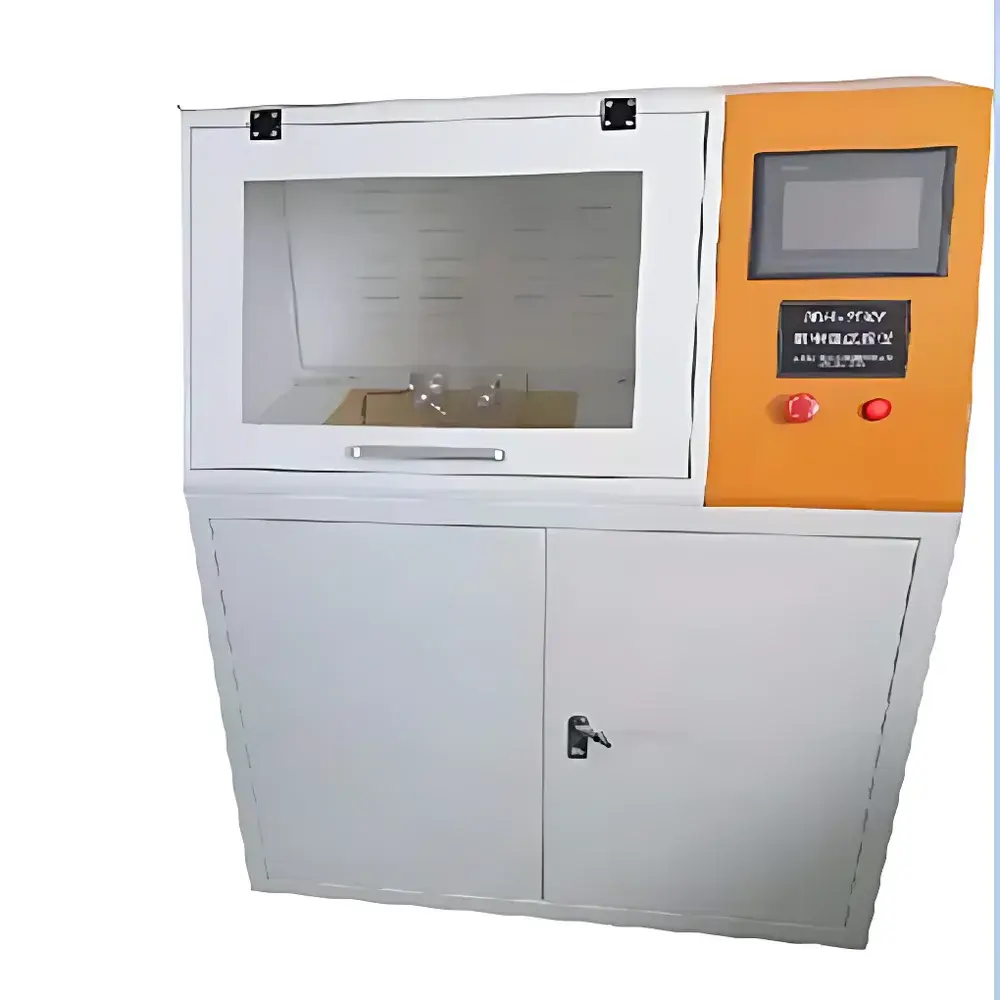
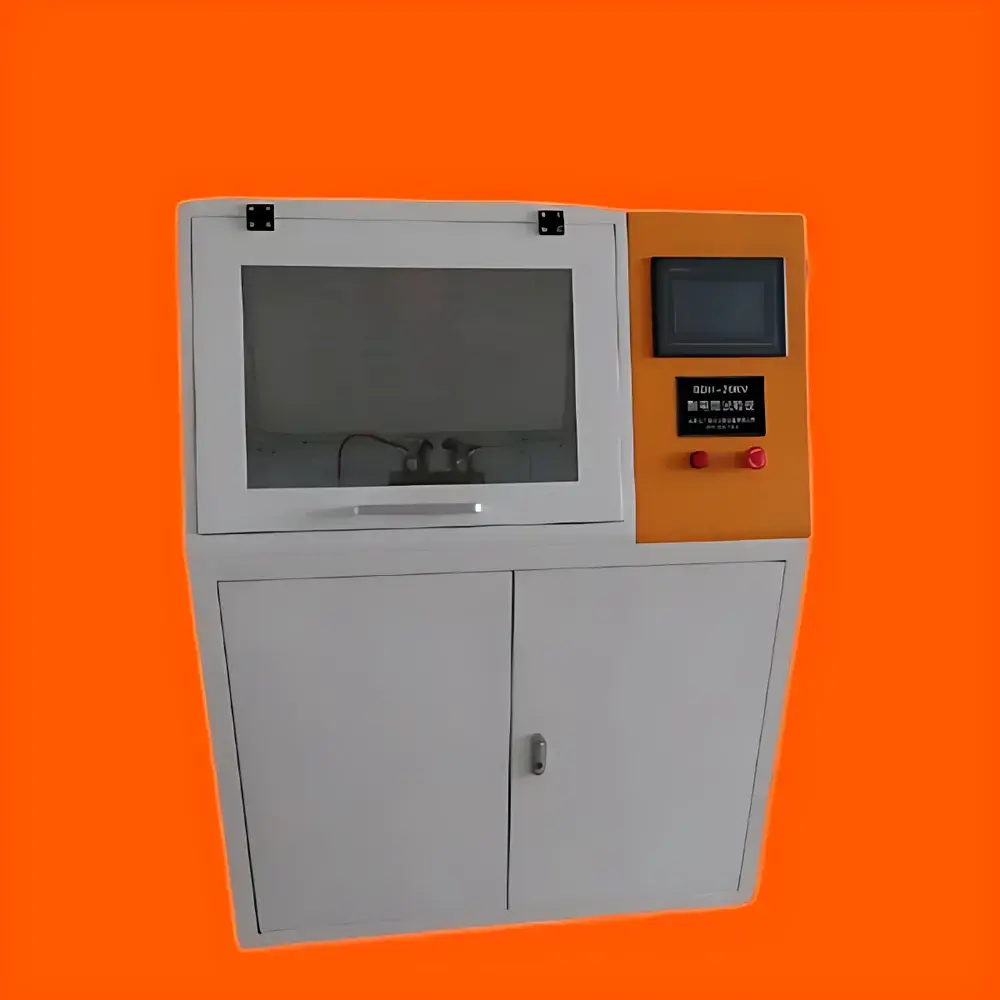
All Precision Instrument BDH-B Arc Resistance Tester
| Brand | All Precision Instrument |
|---|---|
| Origin | Beijing, China |
| Manufacturer Type | Direct Manufacturer |
| Model | BDH-B |
| Output Voltage Range | 0–20 kV AC |
| Rated Power | 1.5 kVA |
| Test Current Options | 10 mA / 20 mA / 30 mA / 40 mA |
| Electrode Configuration | 110° included angle |
| Electrode Materials | Stainless steel plate electrode (25.4 mm × 12.7 mm × 0.15 mm), Tungsten carbide rod electrode (56 mm × 7 mm × 30 mm) |
| Arc Timing Accuracy | <5 ms |
| Voltage Regulation Error | ≤1% |
| Test Modes | Intermittent arc and continuous arc |
| Compliance Standards | GB/T 1411, IEC 61621, ASTM D495, IPC-TM-650 2.5.1, JIS C 2137, UL 746A |
Overview
The All Precision Instrument BDH-B Arc Resistance Tester is a precision-engineered high-voltage test system designed to evaluate the resistance of solid insulating materials to electrical surface tracking and carbonization under controlled arcing conditions. Operating on the principle of sustained or pulsed high-voltage surface discharge, the instrument subjects standardized test specimens to repetitive electric arcs generated between two fixed electrodes under defined current, voltage, and timing parameters. This method simulates real-world failure mechanisms observed in electrical insulation systems—particularly in motor windings, transformer components, circuit breaker housings, and printed wiring board substrates—where localized surface degradation can initiate conductive carbonized paths leading to short circuits or flashover. The BDH-B complies with internationally recognized test protocols including ASTM D495 (Standard Test Method for Dielectric Breakdown Voltage of Insulating Oils of Petroleum Origin), IEC 61621 (Electrical insulating liquids — Determination of the dielectric breakdown voltage), GB/T 1411 (Test method for arc resistance of solid electrical insulating materials), and UL 746A (Polymeric Materials – Short Term Property Evaluations). Its architecture integrates high-stability voltage regulation, galvanically isolated current sensing, and microprocessor-based arc sequencing to ensure repeatability and traceability required for quality assurance and regulatory submissions.
Key Features
- Adjustable AC output voltage range from 0 to 20 kV with ≤1% regulation error, enabling precise replication of stress levels specified across multiple international standards.
- Dual-mode operation supporting both intermittent arc (programmed on/off cycles) and continuous arc testing, configurable via embedded microcontroller interface.
- High-precision tungsten carbide and stainless steel electrodes conforming to dimensional tolerances per ASTM D495: tungsten rod (56 mm × 7 mm × 30 mm) and stainless plate (25.4 mm × 12.7 mm × 0.15 mm), mounted at a fixed 110° included angle to ensure consistent arc geometry.
- Isolated voltage and current acquisition modules provide noise-immune signal conditioning for accurate real-time monitoring during arc initiation, propagation, and extinction phases.
- Integrated 1.5 kVA high-frequency high-voltage generator with thermal overload protection and automatic shutdown upon abnormal current rise or arc quenching failure.
- Full serial communication interface (RS-232/485) enables seamless integration with external PCs for automated test logging, report generation, and audit trail compliance.
Sample Compatibility & Compliance
The BDH-B is optimized for rigid and semi-rigid non-conductive solids up to 12 mm thickness, including thermosetting resins (e.g., epoxy, phenolic), thermoplastics (e.g., PBT, PET, PC), insulating varnishes, laminated composites (e.g., FR-4), and molded elastomeric encapsulants. Specimens must be flat, dry, and free of surface contaminants prior to testing. The system supports standard specimen dimensions per IEC 61621 (125 mm × 12.7 mm × 3–6 mm) and ASTM D495 (127 mm × 12.7 mm × 3.2 mm). Calibration and verification are traceable to provincial metrology institutes (certified calibration certificate included), and all operational parameters—including arc duration, current setpoint, voltage ramp rate, and total exposure time—are fully documented to support GLP/GMP-aligned laboratory practices and FDA 21 CFR Part 11-compliant data integrity requirements when used with validated software.
Software & Data Management
The bundled Windows-based Arc Resistance Measurement & Control Software provides intuitive test setup, real-time waveform visualization (voltage vs. time, current vs. time), and automated pass/fail classification based on user-defined thresholds (e.g., time-to-failure, number of arcs before tracking, carbonized path length). Raw data is stored in CSV and XML formats with embedded metadata (operator ID, timestamp, environmental conditions, calibration status). Audit logs record all parameter modifications, test starts/stops, and system alerts. Software supports export to LIMS-compatible formats and includes built-in report templates aligned with ISO/IEC 17025 documentation requirements. Optional validation packages (IQ/OQ/PQ) are available for regulated environments requiring formal system qualification.
Applications
- Qualification of polymer formulations for high-voltage switchgear housings and busbar insulation.
- Comparative evaluation of arc-resistant additives in epoxy molding compounds used in power electronics modules.
- QC release testing of PCB substrate laminates per IPC-TM-650 2.5.1.
- Failure analysis of insulating coatings on stator windings subjected to partial discharge aging.
- Material screening for aerospace wire insulation per MIL-STD-202 Method 302.
- Supporting R&D efforts in developing halogen-free flame-retardant thermoplastics with enhanced tracking resistance.
FAQ
What standards does the BDH-B comply with?
The BDH-B meets the technical and procedural requirements of GB/T 1411, IEC 61621, ASTM D495, IPC-TM-650 2.5.1, UL 746A, and JIS C 2137.
Is the system suitable for use in ISO/IEC 17025-accredited laboratories?
Yes—when operated with calibrated electrodes, verified HV generator output, and validated software, the BDH-B supports full traceability, uncertainty estimation, and documented measurement procedures required for accreditation.
Can test parameters be modified beyond the default presets?
Yes—voltage ramp profiles, arc dwell times, current step sequences, and termination criteria are fully programmable via the control software interface.
Does the system include safety interlocks and emergency shutdown?
Yes—the unit incorporates dual-channel door interlock switches, overcurrent cutoff, arc containment shielding, and a manually operated emergency stop button compliant with IEC 61010-1.
What maintenance is required for long-term accuracy?
Annual recalibration of the HV divider and current transducer is recommended; electrode wear should be inspected after every 50 test cycles and replaced if pitting or dimensional deviation exceeds ±0.05 mm.



