
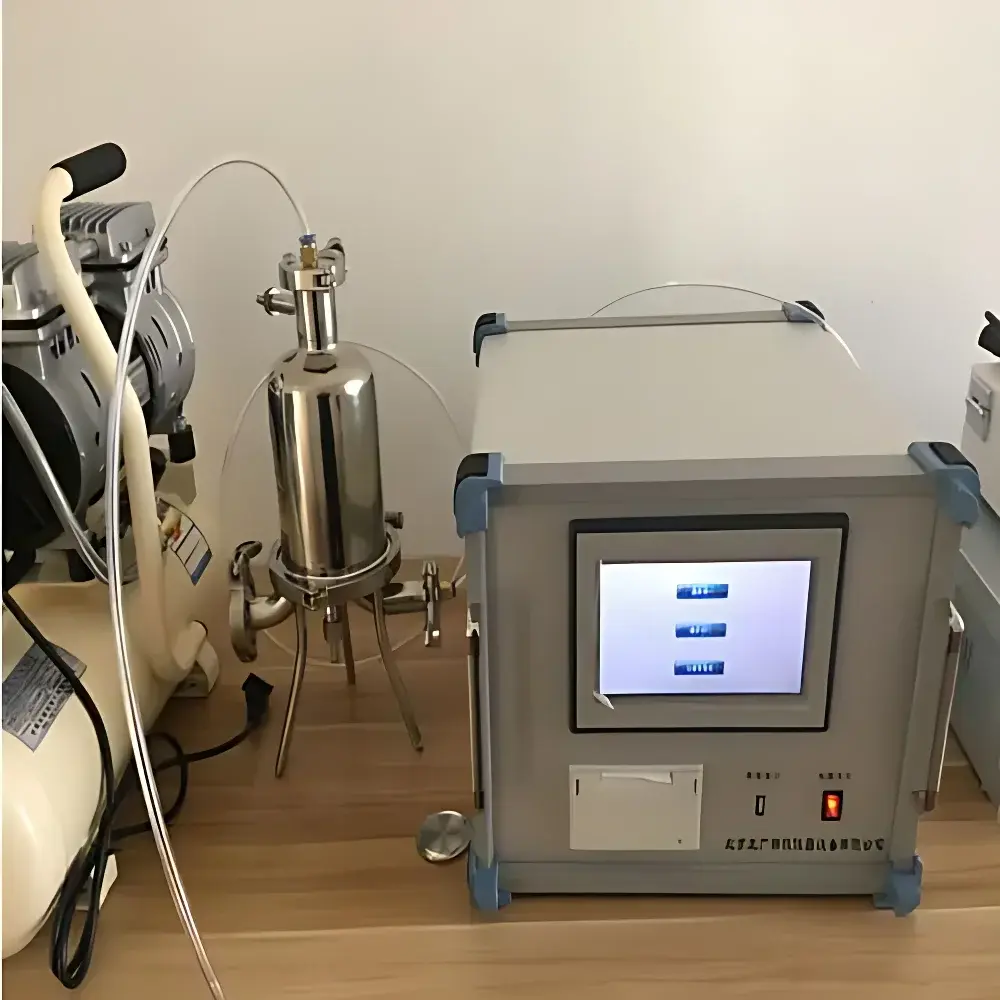
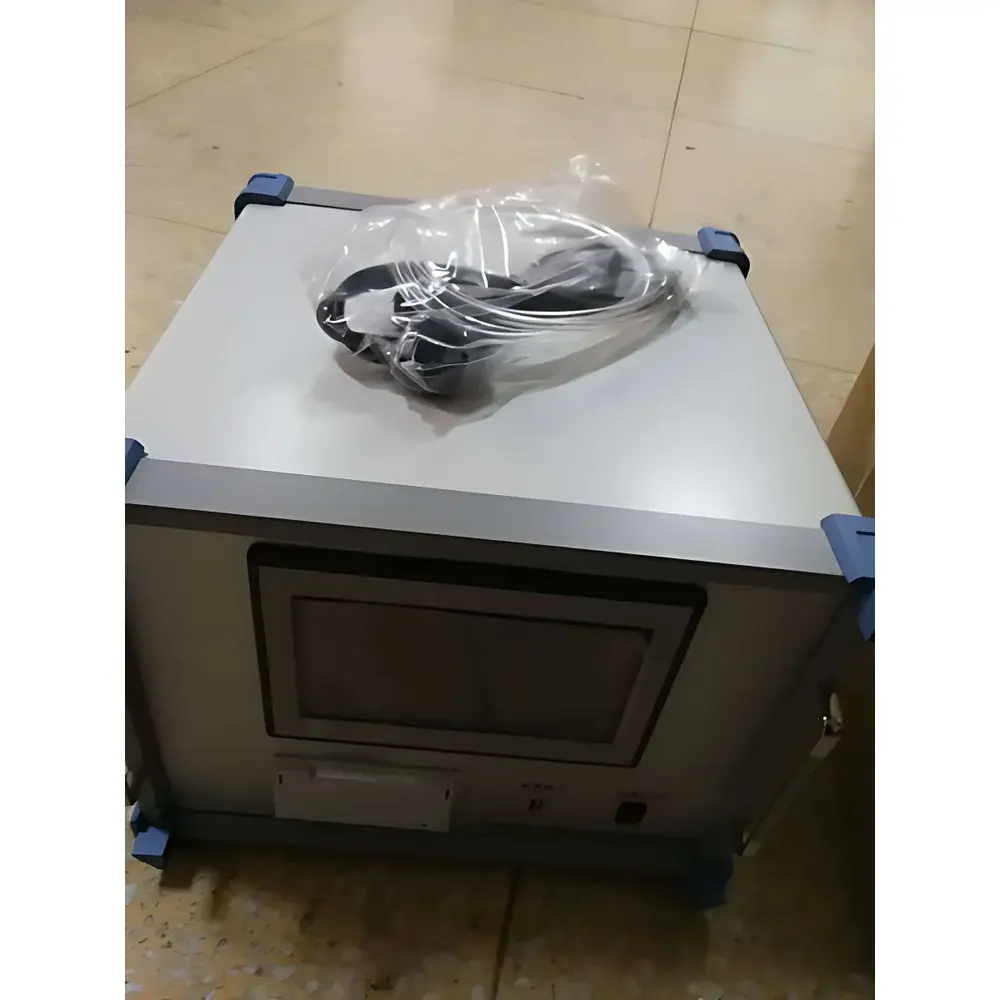
All Precision Instrument BQS-19+ Bubble Point Integrity Tester for Pharmaceutical Membrane Filtration Systems
| Brand | All Precision Instrument |
|---|---|
| Origin | Beijing, China |
| Manufacturer Type | Direct Manufacturer |
| Country of Origin | China |
| Model | BQS-19+ |
| Power Supply | 100–240 V AC, 50/60 Hz, ≤100 W |
| Max Operating Pressure | 9999 mbar |
| Min Inlet Pressure | 4000 mbar |
| Pressure Range for Testing | 100–8000 mbar (1.5–116 psi) |
| Bubble Point Accuracy | ±50 mbar |
| Diffusion Flow Accuracy | ±4% |
| Net Volume Test Accuracy | ±4% |
| Test Duration (Bubble Point) | 15 ± 2 min |
| Test Duration (Enhanced Bubble Point) | 20 ± 2 min |
| Test Duration (Diffusion Flow) | 10 ± 2 min |
| Display | 5.7" monochrome TFT LCD |
| Interface | RS232 serial port |
| Data Storage | 500 test records (configurable extension via PC connection) |
| Environmental Operating Conditions | 5–35 °C, 10–80% RH |
| Dimensions (W × D × H1 × H2) | 400 × 380 × 100 × 235 mm |
Overview
The All Precision Instrument BQS-19+ Bubble Point Integrity Tester is a fully automated, GMP-compliant instrument engineered for deterministic integrity verification of hydrophilic and hydrophobic membrane filters used in pharmaceutical, biotechnology, and sterile manufacturing processes. It operates on the fundamental principle of capillary flow physics: when a wetted porous membrane is subjected to increasing upstream gas pressure, liquid is displaced from the largest pores first—producing visible bubbles at the downstream surface. The pressure at which this occurs—the bubble point (BP)—is inversely proportional to the effective pore diameter and directly dependent on the surface tension and contact angle of the wetting fluid (e.g., water, isopropyl alcohol/water mixtures). The BQS-19+ implements ISO 13408-2 and ASTM F838-22 compliant test protocols, including standard bubble point, enhanced bubble point, diffusion flow, and water intrusion testing for hydrophobic filters. Its digital pressure regulation architecture ensures stable, repeatable pressurization regardless of inlet supply fluctuations—a critical requirement for regulatory auditability and inter-laboratory reproducibility.
Key Features
- Fully automated digital pneumatic control system—replaces legacy manual needle-valve regulation with closed-loop pressure ramping and real-time feedback, eliminating operator-induced variability.
- Auto-exit function upon successful test completion—preserves filter integrity by terminating pressurization immediately after pass criteria are met, extending consumable service life.
- Integrated thermal line printer with bilingual (English/Chinese) output—supports unattended operation and permanent hard-copy documentation per ALCOA+ data integrity principles.
- Multi-tier user access control (operator, supervisor, administrator) with password customization—enables role-based parameter locking, audit trail compliance, and alignment with FDA 21 CFR Part 11 electronic record requirements.
- High-resolution signal processing module optimized for large-area filters (up to multi-cartridge systems ≥1000 cm²), minimizing measurement uncertainty across diverse geometries (flat sheet, pleated cartridges, capsule filters, vent filters).
- RS232 interface with dedicated PC software for remote monitoring, centralized fleet management, and unlimited historical data export—facilitates integration into MES/QMS platforms and supports periodic review per ICH Q5A and EU Annex 1.
- Embedded safety logic: continuous pressure self-check during standby; automatic venting if internal pressure exceeds safe threshold—ensuring operator protection and preventing inadvertent pressurized handling.
Sample Compatibility & Compliance
The BQS-19+ accommodates a broad spectrum of filter configurations without hardware modification: single-use flat-sheet membranes, cylindrical pleated cartridges (polyethersulfone, polytetrafluoroethylene, nylon, cellulose acetate), sterilizing-grade capsule filters, and hydrophobic vent filters. It supports both aqueous (water, buffer) and low-surface-tension wetting agents (e.g., 60% IPA/water), enabling accurate BP determination across material classes. The instrument conforms to key international standards governing filter validation and integrity testing, including ISO 13408-2 (sterility assurance), ASTM F838-22 (bacterial retention and bubble point), USP (package integrity evaluation), and EU GMP Annex 1 (sterile product manufacture). Its test algorithms and calibration traceability support GLP/GMP audits and regulatory submissions requiring documented method suitability, repeatability, and robustness.
Software & Data Management
The embedded firmware delivers full test lifecycle management: parameter configuration, real-time pressure/flow curve visualization, pass/fail decision logic based on user-defined limits (e.g., BP threshold, diffusion rate limit), and automatic generation of timestamped reports. All test records—including raw pressure vs. time data, calculated metrics, operator ID, and environmental conditions—are stored with immutable metadata. When connected to a host PC via RS232, the included Windows-compatible application enables batch export to CSV or PDF, trend analysis across multiple filters or batches, and generation of summary dashboards for quality review meetings. Audit trails log all user actions (login/logout, parameter changes, test initiation/abort), satisfying FDA 21 CFR Part 11 requirements for electronic signatures and data integrity.
Applications
This instrument is routinely deployed in pre-sterilization filter qualification, post-use integrity verification prior to process release, and periodic in-line filter monitoring in aseptic filling lines, bioreactor harvest, and final formulation filtration. It supports validation of filters used in viral clearance studies, cell culture media sterilization, and solvent filtration where pore size distribution must be confirmed. Its water intrusion mode provides a non-destructive alternative to diffusion flow for large-scale hydrophobic gas filters—particularly valuable in HVAC terminal filtration and compressed air systems serving cleanrooms. The BQS-19+ is also employed in R&D labs for comparative filter screening, pore size distribution profiling, and wetting agent optimization studies.
FAQ
What wetting fluids are compatible with bubble point testing on the BQS-19+?
Water, 60% isopropyl alcohol/water mixtures, and other low-surface-tension solvents (e.g., ethanol, methanol) may be used—provided the membrane material is chemically compatible and fully wetted prior to pressurization.
Can the BQS-19+ validate multi-cartridge filter housings?
Yes—the instrument’s high-resolution pressure transducer and adaptive flow compensation algorithm maintain accuracy across total filtration areas exceeding 5000 cm², including 5-element, 20-inch PES cartridge assemblies.
Does the system support 21 CFR Part 11 compliance?
It provides foundational elements: electronic signatures via password-protected user roles, secure audit trails, and tamper-evident data storage—though full implementation requires site-specific procedural controls and IT infrastructure validation.
How is calibration verified?
The device includes built-in zero and span checks; external calibration using NIST-traceable deadweight testers or certified pressure calibrators is recommended annually or per internal SOP.
Is temperature compensation applied during bubble point testing?
While the instrument does not integrate real-time temperature sensing, it provides configurable correction factors for surface tension variation—users must input ambient temperature manually to adjust expected BP values per manufacturer-supplied correlation tables.
Related Products







