
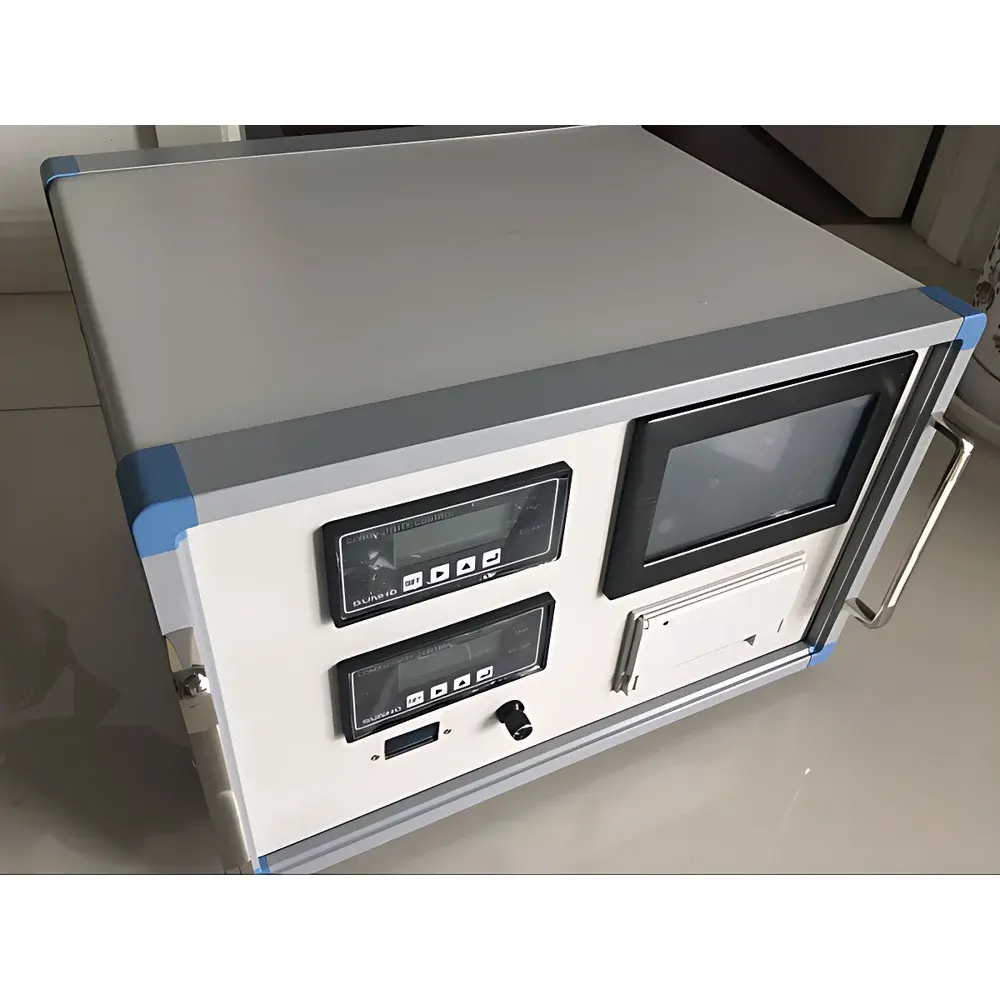
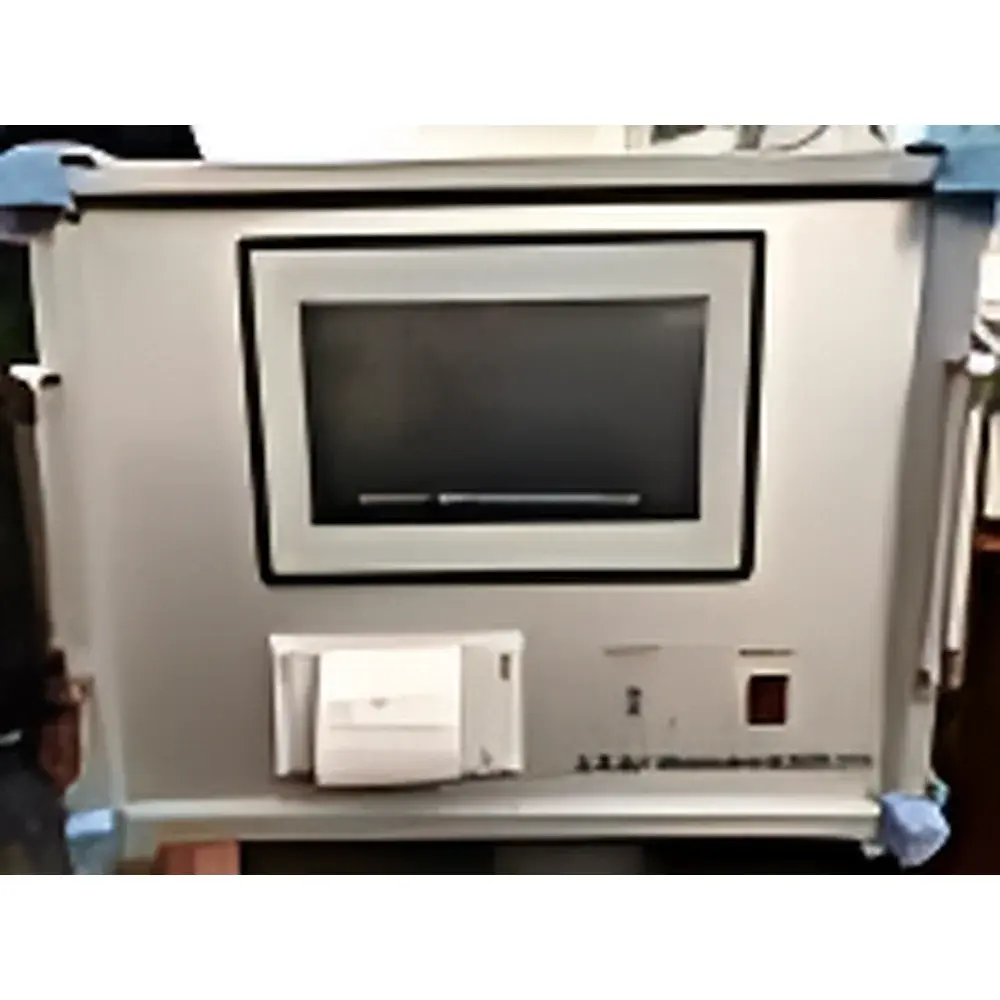
All Precision Instrument BQS-19 Series Automated Filter Integrity Tester
| Brand | All Precision Instrument |
|---|---|
| Origin | Beijing, China |
| Manufacturer Type | OEM Manufacturer |
| Country of Origin | China |
| Model | BQS-19 Series |
| Power Supply | 170–240 V AC, 50/60 Hz, 100 W |
| Max Operating Pressure | 7999 mbar |
| Minimum Inlet Pressure | 3000 mbar |
| Test Pressure Range | 500–6900 mbar |
| Pressure Sensitivity | ±1.0 mbar |
| Bubble Point Accuracy | ±60 mbar |
| Test Duration (Bubble Point) | 2 ± 2 min |
| Test Duration (Diffusion Flow / Water Intrusion) | 7 ± 2 min |
| System Leak Test Time | 3 ± 1 min |
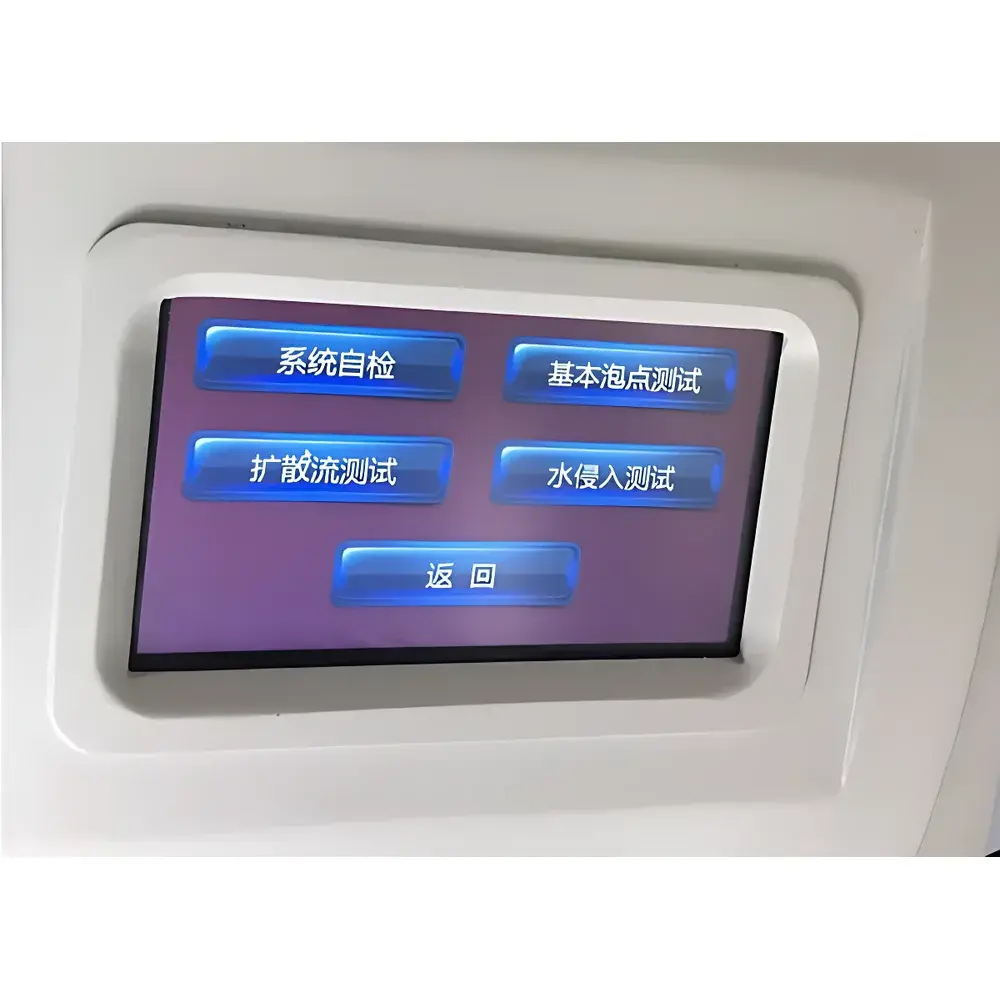
| Display | 5.7-inch 32-bit touchscreen |
| Data Storage | 32 GB (≥1 million records) |
| Interface | RS232/USB/Ethernet for PC connectivity |
| Compliance Support | FDA 21 CFR Part 11 (audit trail enabled), GMP/GLP-ready |
| Language Options | English & Chinese |
| Dimensions | 500 × 200 × 180 mm (L×W×H) |
| Environmental Operating Range | 0–50 °C, 10–80% RH |
Overview
The All Precision Instrument BQS-19 Series Automated Filter Integrity Tester is an engineered solution for quantitative, non-destructive integrity verification of hydrophilic and hydrophobic membrane filters used in sterile pharmaceutical manufacturing, bioprocessing, and parenteral drug production. It operates on three internationally recognized test principles defined in ASTM F838, ISO 13408-2, and USP <1207>: the bubble point test (BP), diffusion flow test (DF), and water intrusion test (WIT). The instrument applies controlled gas pressure to a wetted filter assembly and measures real-time pressure decay or gas flow across the membrane — enabling precise determination of maximum pore size (via BP), membrane defect presence (via DF), or hydrophobic barrier integrity (via WIT). Its closed-loop digital pneumatic control architecture ensures stable pressure regulation regardless of upstream supply fluctuations, eliminating manual valve adjustments and reducing operator dependency. Designed for integration into regulated environments, the BQS-19 meets foundational requirements for data integrity, traceability, and process validation under current Good Manufacturing Practice (cGMP) frameworks.
Key Features
- Digital automatic gas pressure control system with adaptive feedback compensation — eliminates reliance on mechanical needle valves and ensures consistent test repeatability across variable inlet pressures.
- Intelligent pass/fail logic with auto-exit function upon successful test completion — reduces unnecessary exposure of sensitive membranes to prolonged pressure stress and extends consumable service life.
- Integrated thermal and pressure self-diagnostic routine at power-on and standby — continuously monitors internal chamber pressure; triggers automatic venting if residual pressure exceeds safe thresholds (>50 mbar), preventing inadvertent pressurized handling.
- User-level access control with configurable password management (operator, supervisor, administrator) — supports role-based parameter editing, audit log viewing, and report generation in compliance with FDA 21 CFR Part 11 Annex 11 expectations.
- High-resolution signal processing module optimized for large-area filters (up to 40-inch multi-cartridge systems and capsule filters >1000 cm²) — maintains measurement fidelity without signal averaging artifacts or drift-induced offset.
- Real-time graphical display of pressure vs. time curves during all test modes — enables visual confirmation of stabilization phase, onset of diffusion, and endpoint detection.
- Onboard 32 GB flash storage with timestamped record retention (≥1 million entries), including full test conditions, raw sensor data, calculated results, and annotated curves.
Sample Compatibility & Compliance
The BQS-19 accommodates a broad spectrum of filter configurations without hardware modification: disc membranes (Φ25 mm to Φ300 mm), standard pleated cartridges (2.5″ to 40″, 1–9 core), capsule filters, mini-cartridges, and vent filters. Both hydrophilic (e.g., PVDF, PES, nylon) and hydrophobic (e.g., PTFE, PP) membranes are supported via appropriate wetting agents (e.g., isopropanol/water for BP/WIT; water for DF on hydrophilic media). All test protocols adhere to pharmacopeial standards: USP <1207>, EP 2.6.27, JP 17, and ISO 13408-2. The instrument’s firmware embeds built-in calibration verification routines traceable to NIST-certified pressure standards, and its electronic records include immutable metadata (user ID, timestamp, instrument ID, test mode, environmental conditions) required for regulatory submissions and inspection readiness.
Software & Data Management
Running on Windows CE 6.0 with ARM9 real-time controller architecture, the BQS-19 provides deterministic response times and deterministic I/O latency critical for pressure-critical sequences. Its embedded software includes automated test sequence scripting, customizable pass/fail criteria (e.g., adjustable diffusion rate thresholds per filter area), and configurable report templates compliant with ALCOA+ principles (Attributable, Legible, Contemporaneous, Original, Accurate, Complete, Consistent, Enduring, Available). Data export is supported via USB mass storage or Ethernet TCP/IP to validated LIMS or MES platforms. Optional PC-based desktop software enables centralized fleet monitoring, remote test initiation, historical trend analysis, and electronic signature capture — fulfilling enterprise-level requirements for distributed manufacturing operations under Annex 11 and EU GMP Chapter 4.
Applications
This instrument is deployed in pre-use post-sterilization (PUPSIT) and post-use integrity testing workflows across sterile fill-finish lines, bioreactor harvest trains, viral clearance filtration steps, and compressed gas distribution systems. It validates final sterilizing-grade filters (0.22 µm and 0.1 µm) used in bulk drug substance purification, vaccine formulation, and cell/gene therapy vector processing. In R&D settings, it supports membrane qualification studies, compatibility screening with process fluids, and accelerated stability assessments under varying temperature/humidity conditions. Its WIT capability is specifically intended for integrity assurance of hydrophobic air and gas filters in HVAC systems and nitrogen blanketing lines where aqueous-based methods are impractical.
FAQ
What regulatory standards does the BQS-19 comply with?
The instrument conforms to ASTM F838-22, ISO 13408-2:2021, USP <1207>, EP 2.6.27, and supports implementation of FDA 21 CFR Part 11 and EU Annex 11 requirements through audit-trail-enabled operation and electronic signature functionality.
Can the BQS-19 perform tests on multi-cartridge housings?
Yes — it supports integrity testing of housings containing up to nine parallel cartridges using proprietary pressure-compensation algorithms that normalize flow contributions across asymmetric configurations.
Is water intrusion testing validated for large-scale gas filters?
Yes — the WIT method is validated for hydrophobic filters with upstream volumes ≥1000 cm³, and the instrument calculates water intrusion rate (WIR) from measured pressure decay, test duration, and known upstream void volume.
How is data integrity ensured during power loss or unexpected shutdown?
All test sessions are written to non-volatile memory incrementally; partial records are preserved and recoverable upon reboot, with no risk of file corruption or incomplete saves.
Does the system support third-party LIMS integration?
Yes — via standardized MODBUS TCP or custom API protocols, enabling bidirectional communication with major laboratory informatics platforms for automated result ingestion and workflow orchestration.





