
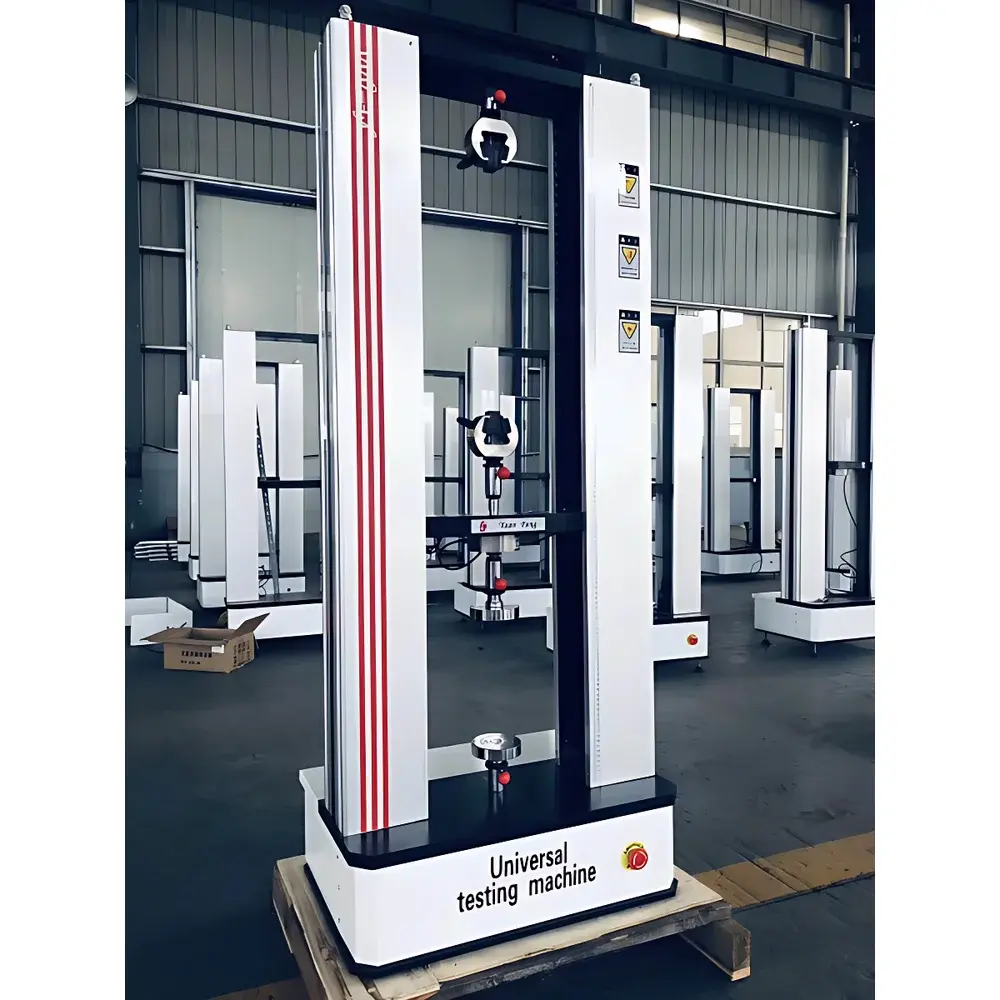
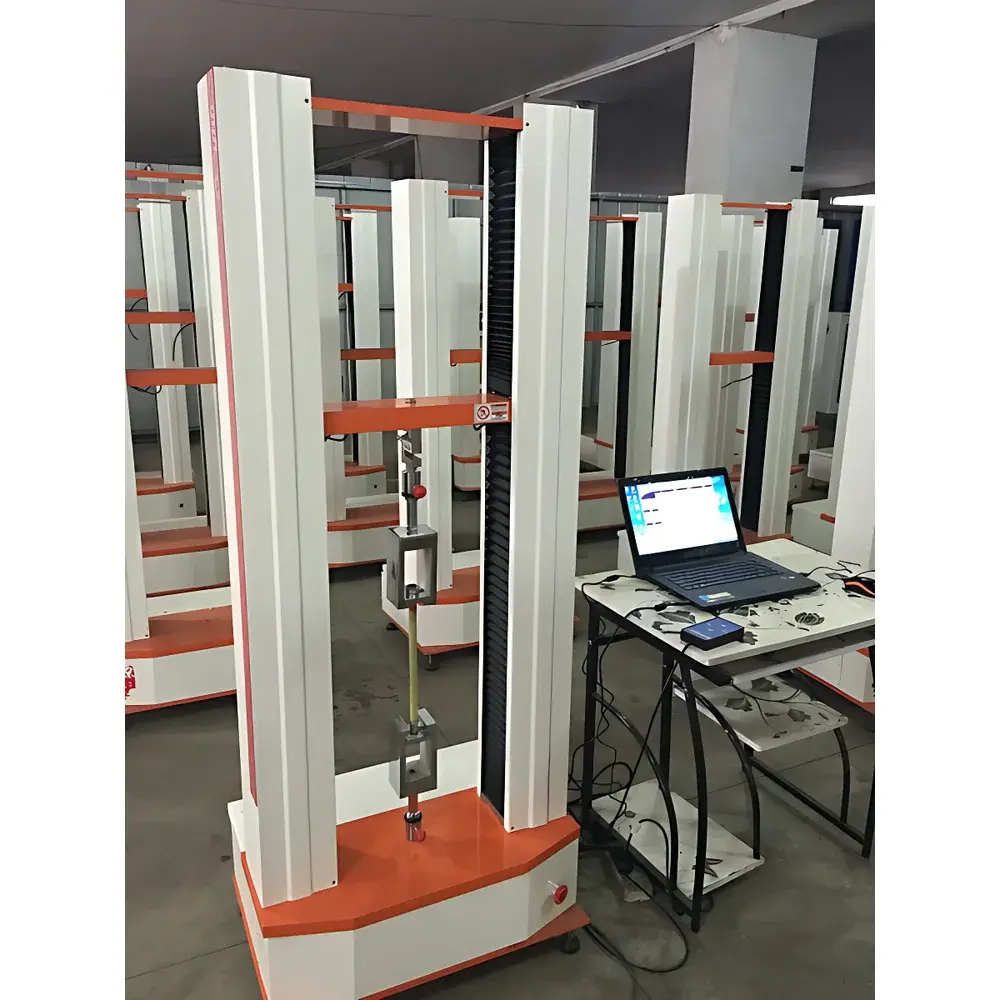
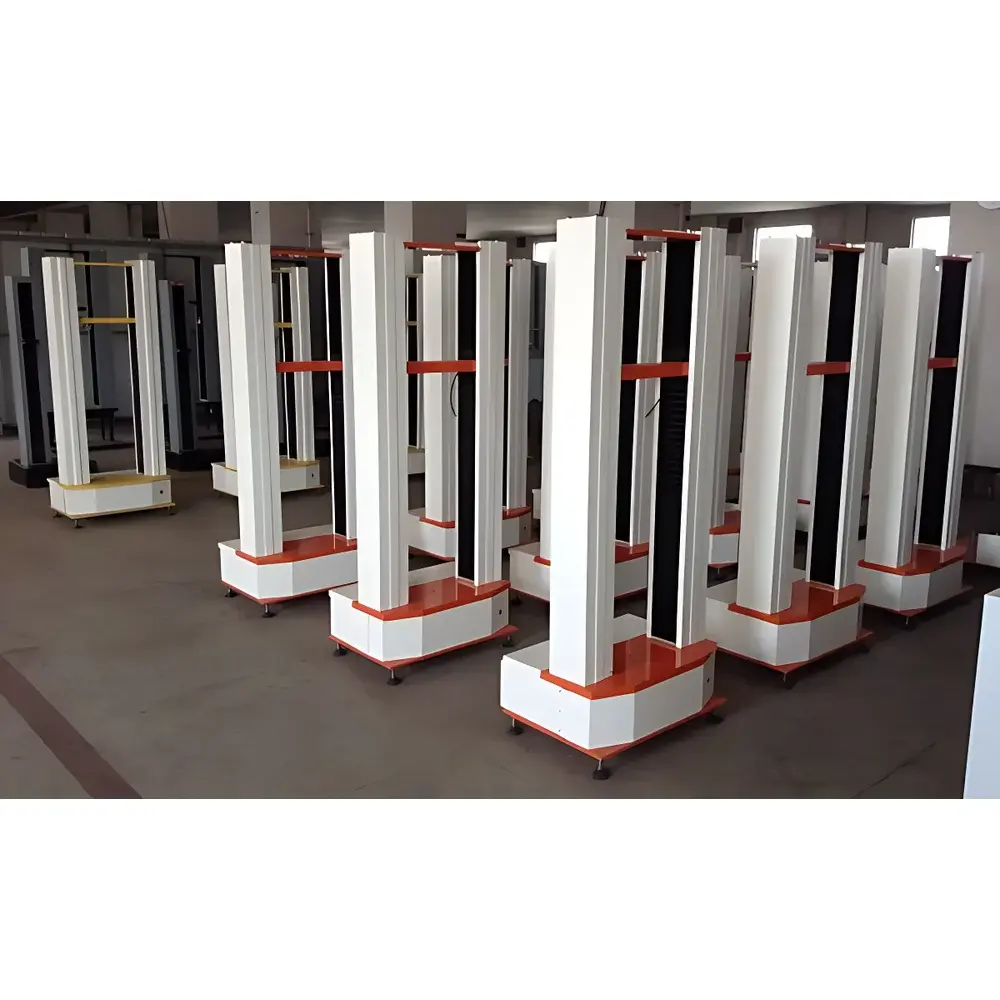
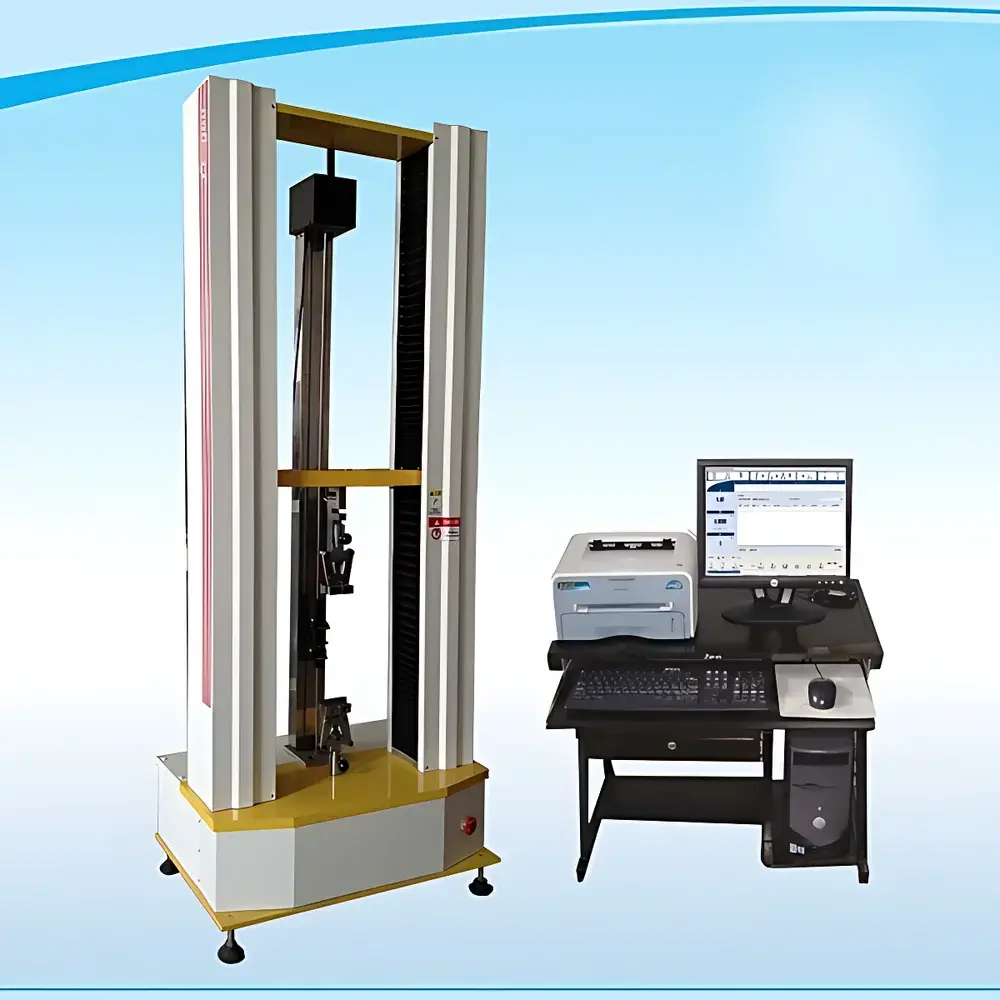
All Precision Instrument BWN Series Microcomputer-Controlled Tensile Testing Machine
| Brand | All Precision Instrument |
|---|---|
| Origin | Beijing, China |
| Manufacturer Type | Direct Manufacturer |
| Instrument Type | Electronic Tensile Testing Machine |
| Maximum Test Load | 6 kN |
| Force Measurement Range | 2–100% of Full Scale |
| Force Accuracy | ±1% FS |
| Test Stroke | 600 mm |
| Displacement Resolution | 0.01 mm |
| Speed Range | 0.05–500 mm/min |
| Speed Accuracy | ±1% |
| Compliance Standards | GB/T 16491, GB/T 1040, ASTM D412, ASTM D3759, ISO 37, ISO 34-1, EN ISO 1798, DIN 53507-A |
| Power Supply | AC 220 V ±10%, 50 Hz, 0.5 kW |
| Dimensions (W×D×H) | 400 × 400 × 1300 mm |
Overview
The All Precision Instrument BWN Series Microcomputer-Controlled Tensile Testing Machine is a precision-engineered electromechanical system designed for static mechanical property evaluation of metallic and non-metallic materials under uniaxial loading conditions. Based on servo-controlled electromechanical actuation and high-fidelity load-cell transduction, the system implements standardized tensile, compression, bending, peel, shear, and tear testing in strict accordance with international test protocols including ISO 37, ASTM D412, GB/T 1040, and EN ISO 1798. Its rigid frame architecture, coupled with a high-resolution displacement encoder (0.01 mm) and dual-range load sensing (2–100% FS), ensures traceable force measurement with ±1% full-scale accuracy—meeting GLP-aligned validation requirements for QC laboratories and R&D facilities. The machine operates under closed-loop control of displacement rate or load rate, enabling reproducible strain-rate-dependent characterization essential for yield point detection, modulus calculation, and failure mode analysis.
Key Features
- High-precision digital servo drive system with integrated planetary gear reduction, delivering smooth, low-noise motion across a wide speed range (0.05–500 mm/min) with ±1% speed fidelity.
- Modular crosshead design with optional universal joint couplings to ensure axial alignment and minimize eccentric loading effects—critical for accurate stress–strain curve derivation in brittle or irregular specimens.
- Dual-limit protection architecture: programmable software-based stroke limits combined with mechanical end-stop switches prevent overtravel and safeguard both load cell and specimen integrity.
- Intelligent auto-ranging force measurement: automatic selection of optimal load cell range during test initiation enhances signal-to-noise ratio and measurement resolution without manual intervention.
- Real-time multi-curve visualization interface: simultaneous display of load–displacement, stress–strain, load–time, and displacement–time plots with dynamic AutoScale functionality for adaptive axis scaling.
- Overload protection triggers automatic shutdown at 103–105% of rated capacity, preventing sensor saturation and preserving long-term calibration stability.
Sample Compatibility & Compliance
The BWN Series accommodates a broad spectrum of material forms—including metal wires, rods, plates, foils, polymer films, elastomeric sheets, textiles, composites, adhesives, and safety-critical components such as seat belts and cable harnesses. Standardized fixtures (e.g., wedge-action grips, pneumatic clamps, peel jigs, bend supports) are supplied per ISO 20753 and ASTM E8/E21 dimensional guidelines. All test routines adhere to documented procedures compliant with ISO/IEC 17025:2017 clause 7.2.2 (method validation), supporting audit readiness for FDA 21 CFR Part 11–enabled environments when paired with validated software configuration. Built-in support for GB, ASTM, DIN, JIS, BS, and ISO test method libraries enables seamless transition between regional regulatory frameworks without revalidation.
Software & Data Management
The Windows-based control software provides full GLP-compliant data governance: electronic signatures, audit trails, user-level access controls, and time-stamped metadata logging for every test event. It supports fully customizable report generation in native Microsoft Word and Excel formats—including embedded graphs, statistical summaries (mean, SD, CV%), and pass/fail thresholds aligned with specification limits. Raw data export includes ASCII CSV and binary .DAT files for third-party analysis (e.g., MATLAB, Python pandas). The system implements automatic archiving with configurable retention policies, incremental backup to network drives or local partitions, and historical test replay functionality for root-cause investigation. All calculations—including Young’s modulus, yield strength (0.2% offset), ultimate tensile strength, elongation at break, and peel adhesion energy—are performed per ISO 527-1 and ASTM D882 algorithms, with traceability to NIST-traceable reference standards.
Applications
This system serves as a primary mechanical characterization platform in quality assurance labs for incoming raw material verification, in-process batch release testing, and final product conformance assessment. Typical applications include tensile strength verification of stainless steel fasteners (per ASTM F606), elongation testing of aluminum extrusions (GB/T 228.1), peel strength quantification of laminated packaging (ASTM D903), tear resistance evaluation of geotextiles (ISO 9863), and compression modulus determination of elastomeric gaskets (ISO 7743). It is routinely deployed in Tier-1 automotive suppliers for rubber hose validation, in medical device manufacturers for suture tensile certification (ISO 10993-12), and in wire & cable producers for conductor elongation compliance (IEC 60811-501).
FAQ
What standards does this machine natively support?
It includes preconfigured test methods for over 40 standards including GB/T 1040, ASTM D412, ISO 37, EN ISO 1798, and DIN 53507-A—with editable templates for custom protocol development.
Is the software compliant with FDA 21 CFR Part 11?
Yes—when installed in a validated environment with role-based authentication, electronic signatures, and immutable audit trails enabled.
Can the system perform cyclic or hold tests?
Yes—via programmable step profiles supporting load-controlled hold, displacement-controlled dwell, and ramp-hold-ramp sequences.
What is the warranty coverage and service response time?
Standard 12-month parts-and-labor warranty; extended service contracts include remote diagnostics and on-site calibration support within 5 business days.
Are third-party calibration certificates available?
Yes—NIST-traceable calibration certificates issued by CNAS-accredited laboratories can be procured separately upon request.



