
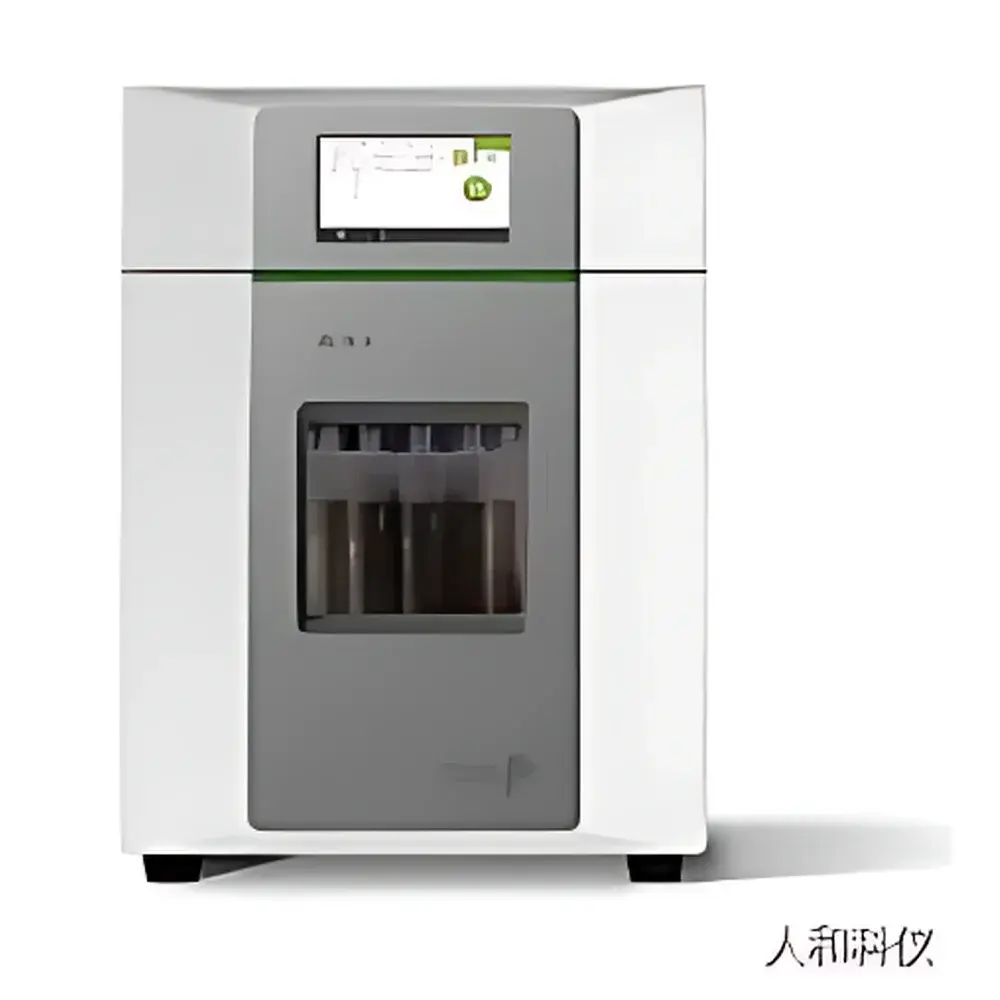
PreeKem Aurora-3 Microwave Digestion System
| Brand | PreeKem |
|---|---|
| Origin | Shanghai, China |
| Manufacturer Type | Authorized Distributor |
| Product Origin | Domestic (China) |
| Model | Aurora-3 |
| Price Range | USD 21,000 – 28,000 |
| Cavity Class | Industrial-Grade |
| Max. Sample Capacity | 16 vessels |
| Microwave Source | Magnetron |
| Max. Temperature | 330 °C |
| Max. Pressure | 1500 psi |
| Cavity Material | 316L Stainless Steel (Laser-Welded, Multi-Layer PTFE-Coated) |
| Microwave Frequency | 2450 MHz |
| Output Mode | Non-Pulsed Continuous Microwave |
| Cooling System | Twin Air Dual-Direction Rapid Cooling |
| Safety Door | Independent Floating Buffer Design with Auto-Interlock |
| Control Interface | 7″ High-Resolution Color Touchscreen |
| Temperature Monitoring | Dual-Sensor Infrared + Real-Time Full-Vessel Monitoring |
| Pressure Monitoring | Full-Vessel Active Pressure Sensing |
| Heating Profile | Slope-Controlled Ramp, Power Calibration, Temperature Compensation |
| Compliance | Designed to support ISO/IEC 17025 workflows, ASTM D5511/D5512 (waste digestion), USP <231>, EPA Methods 3050B/3051A/3052, and GLP/GMP data integrity requirements |
Overview
The PreeKem Aurora-3 Microwave Digestion System is an industrial-grade, high-throughput sample preparation platform engineered for precision, reproducibility, and operational safety in regulated analytical laboratories. It operates on the principle of controlled microwave energy absorption by polar molecules—primarily water and nitric acid—in sealed quartz or TFM-lined digestion vessels, enabling rapid, uniform thermal decomposition of complex organic and inorganic matrices. Unlike legacy systems relying on single-point temperature sensing or passive pressure relief, the Aurora-3 implements true full-vessel temperature and pressure monitoring across all 16 positions simultaneously—eliminating thermal lag and spatial heterogeneity. Its resonant cavity architecture is computationally optimized for field homogeneity, ensuring consistent energy coupling regardless of vessel loading configuration. The system meets foundational engineering benchmarks for method transferability, robustness under variable sample loads, and compatibility with downstream elemental analysis techniques including ICP-OES, ICP-MS, and AAS.
Key Features
- Full-vessel real-time temperature and pressure control across all 16 digestion positions—no reliance on reference vessels or statistical extrapolation.
- Laser-welded 316L stainless steel cavity with multi-layer PTFE coating, delivering exceptional corrosion resistance against aggressive acid mixtures (e.g., HNO₃/HF/HCl) and extended service life under daily high-pressure cycling.
- Twin Air dual-direction forced-air cooling system with adaptive airflow modulation—reducing post-digestion cooldown time to under 15 minutes without manual fan adjustment or external chiller dependency.
- Independent floating buffer safety door with mechanical–electrical interlock: automatically vents transient overpressure while resealing upon normalization; microprocessor prevents microwave emission unless door is fully engaged and latched.
- Non-pulsed continuous microwave output at 2450 MHz (IEC 61000-3-2 compliant), minimizing thermal shock and improving digestion repeatability versus pulsed architectures.
- Slope-controlled heating profiles, integrated power calibration, and dynamic temperature compensation algorithms—enabling method optimization for diverse sample types without hardware modification.
Sample Compatibility & Compliance
The Aurora-3 accommodates standard 55 mL and 100 mL high-pressure digestion vessels fabricated from TFM-PTFE, quartz, or reinforced composite materials. It supports digestion protocols for solid, semi-solid, and liquid samples—including soils, sediments, biological tissues, pharmaceutical excipients, food products, herbal matrices, polymers, and catalysts. Method validation aligns with EPA Methods 3050B (acid digestion of sediments and soils), 3051A (microwave-assisted acid digestion of solid waste), and 3052 (microwave-assisted acid digestion of siliceous and organically based matrices); ASTM D5511/D5512 (anaerobic biodegradation testing); USP (heavy metals); and ISO 11885 (water quality—determination of selected elements by ICP-AES). Data acquisition and audit trail functionality comply with ALCOA+ principles and support 21 CFR Part 11 readiness when paired with validated LIMS integration.
Software & Data Management
The embedded 7″ capacitive touchscreen interface runs a deterministic real-time OS with localized language support (English, Spanish, German, Chinese). All methods—including ramp rates, hold times, power limits, and safety thresholds—are stored in a hierarchical, user-accessible library with version-controlled naming and timestamped execution logs. Each run generates a complete digital record: vessel ID mapping, thermal profile (°C vs. time), pressure trace (psi vs. time), microwave power history (% of max), and operator metadata. Export formats include CSV and PDF reports compatible with laboratory informatics systems. Firmware updates are delivered via encrypted USB or network push, with rollback capability and SHA-256 signature verification.
Applications
The Aurora-3 serves as a core sample preparation tool in environmental testing labs (EPA-compliant soil and wastewater digestions), food safety programs (heavy metal screening per EU Regulation 1881/2006), pharmaceutical QC (USP and ICH Q2(R2) method validation), clinical research (trace element analysis in serum/tissue), and geochemical laboratories (rock and ore digestion for REE profiling). Its ability to achieve full digestion of refractory matrices—including silica-rich plant material, activated carbon, and ceramic composites—within 45 minutes enables same-day turnaround for high-volume elemental screening workflows.
FAQ
Does the Aurora-3 require consumable safety components such as rupture discs or pressure-relief membranes?
No—its active full-vessel pressure monitoring and floating-buffer safety door eliminate the need for single-use pressure-release hardware.
Can digestion methods developed on other microwave platforms be transferred directly to the Aurora-3?
Yes—method portability is supported through standardized parameter mapping (ramp rate, target temperature, hold time, max power) and optional third-party validation kits for cross-platform equivalence studies.
Is remote monitoring or integration with laboratory information management systems (LIMS) supported?
Yes—RS-232, Ethernet, and optional Wi-Fi interfaces enable bidirectional communication with LIMS and centralized instrument management platforms; audit trails meet GLP/GMP documentation requirements.
What maintenance intervals are recommended for routine operation?
Cavity inspection and PTFE coating integrity check every 6 months; magnetron performance verification annually; no scheduled replacement of temperature or pressure sensors due to solid-state infrared and piezoresistive design.
How is temperature accuracy verified during operation?
The system performs automatic self-calibration prior to each run using dual-wavelength infrared pyrometry referenced against NIST-traceable blackbody standards embedded in the cavity wall.



