
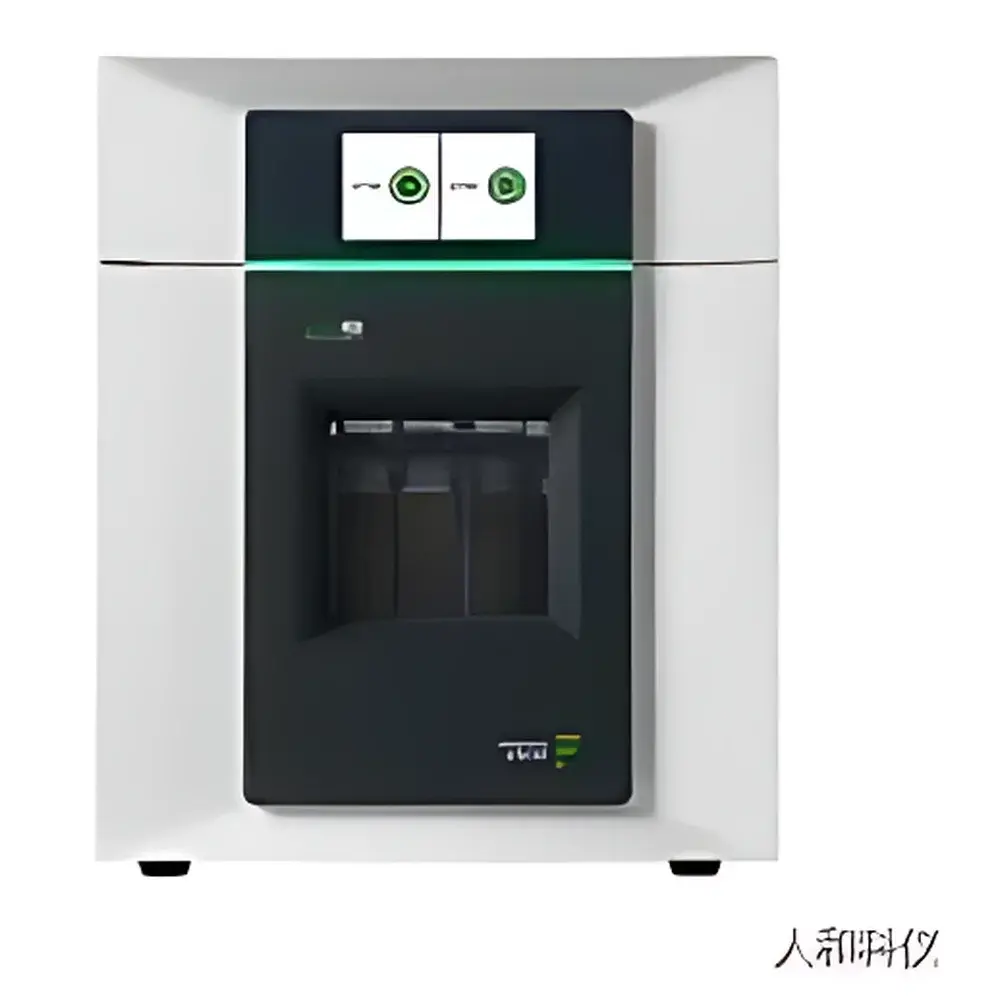
PreeKem M6 Microwave Digestion System
| Brand | PreeKem |
|---|---|
| Origin | Shanghai, China |
| Manufacturer Type | Authorized Distributor |
| Origin Category | Domestic (China) |
| Model | M6 |
| Quotation | Upon Request |
| Cavity Grade | Industrial-Grade |
| Sample Capacity | 16–40 vessels |
| Microwave Source | Dual Magnetron Configuration |
| Max Temperature | 500 °C |
| Max Pressure | 15 MPa |
| Touchscreen | 7″ High-Resolution Color LCD |
| Microwave Frequency | 2450 MHz |
| Power Delivery | Non-pulsed Continuous Microwave Output |
| Cavity Material | 316L Stainless Steel with Laser Seamless Welding & Multi-layer PTFE Coating |
| Cooling System | Twin Air Bidirectional Rapid Cooling with Intelligent Airflow Control |
| Safety Door | Independent Floating Buffer Safety Door with Interlocked Microwave Activation |
| Temperature & Pressure Monitoring | Dual Real-time Per-vessel Sensing |
| Vessel Recognition | Fully Automated Position Identification Technology |
Overview
The PreeKem M6 Microwave Digestion System is an industrial-grade, high-throughput sample preparation platform engineered for precision, reproducibility, and operational safety in regulated laboratory environments. It operates on the principle of controlled microwave-assisted acid digestion—using non-pulsed 2450 MHz continuous-wave energy to rapidly and uniformly heat closed-vessel reaction systems under inert, pressurized conditions. This enables complete decomposition of complex organic and inorganic matrices—including food, biological tissues, environmental solids (soils, sediments), geological samples (rocks, ores), pharmaceuticals, polymers, ceramics, and metallurgical alloys—into clear, acid-soluble solutions suitable for downstream elemental analysis by ICP-OES, ICP-MS, AAS, or IC. The M6’s dual-magnetron architecture, optimized waveguide design, and precisely calculated resonant cavity volume collectively enhance microwave energy density and field homogeneity—critical for achieving consistent thermal profiles across all 40 vessels simultaneously, even at extreme operating conditions up to 500 °C and 15 MPa.
Key Features
- Industrial-grade 316L stainless steel cavity fabricated via laser seamless welding and coated with multi-layer PTFE for exceptional corrosion resistance and long-term durability under aggressive HNO₃/HF/HCl/H₂O₂ chemistries.
- Dual magnetrons arranged in offset configuration, coupled with a proprietary waveguide system, ensure uniform energy distribution—validated across full-load configurations (16–40 vessels) without hot/cold spots.
- Fully automated vessel positioning recognition technology: each digestion vessel is individually tracked and its real-time temperature displayed as a dynamic column chart on the 7″ color touchscreen interface—enabling per-vessel thermal accountability and adaptive power modulation.
- Motorized rotor lift-and-shift mechanism: safety door interlock triggers automatic vertical elevation and lateral translation of the rotor assembly, eliminating manual lifting, bending, or alignment—reducing operator fatigue and mechanical handling risk.
- Twin Air bidirectional rapid cooling system: intelligently modulates airflow volume and direction based on real-time vessel temperature gradients; achieves sub-60-minute total cycle time (digestion + cooling) for food, herbal medicine, and environmental samples.
- Independent floating buffer safety door: mechanically decouples from the cavity frame during overpressure events, allowing controlled venting while maintaining structural integrity; reseals automatically once pressure normalizes. Microwave emission is physically inhibited unless the door is fully latched and verified.
Sample Compatibility & Compliance
The M6 supports interchangeable rotor platforms—including high-pressure (15 MPa) and high-throughput (40-position) configurations—allowing method-specific optimization for diverse sample classes: soft tissues, fibrous botanicals, siliceous soils, refractory oxides, and chloride-rich metallurgical slags. All digestion protocols adhere to internationally recognized standards including ASTM D5511, ISO 11466, USP , and EPA Methods 3050B, 3051A, and 3052. The system’s dual real-time per-vessel temperature and pressure monitoring—combined with hardware-enforced safety interlocks—supports GLP/GMP compliance and audit readiness. Full electronic records—including method parameters, sensor logs, door status, and error codes—are timestamped and exportable in CSV or PDF format, aligning with FDA 21 CFR Part 11 data integrity requirements when deployed with validated software configurations.
Software & Data Management
The embedded control firmware features a preloaded, searchable method library containing >120 validated digestion protocols for common sample types and regulatory workflows. Users may import, duplicate, modify, and save custom methods directly via the touchscreen interface—each with configurable ramp/hold segments, power profiles, cooling delays, and safety thresholds. All experimental metadata—including vessel IDs, temperature/pressure curves, power output history, and event timestamps—is stored locally on encrypted internal memory and exportable via USB. Audit trail functionality logs user login/logout events, parameter changes, and safety-triggered interventions—ensuring traceability for quality assurance documentation and internal audits.
Applications
The M6 is routinely deployed in accredited environmental testing labs for heavy metal extraction from contaminated soils and sediments; in food safety laboratories for lead, cadmium, and arsenic quantification in infant formula and spices; in pharmaceutical QC for residual catalyst screening in active pharmaceutical ingredients (APIs); and in geochemical research for rare earth element (REE) dissolution from monazite and bastnäsite ores. Its ability to handle both high-pressure (e.g., HF-based silicate dissolution) and high-throughput (e.g., batched plant tissue digestion) workflows makes it a versatile core instrument in central analytical facilities serving multiple departments.
FAQ
What safety certifications does the M6 hold?
The M6 complies with IEC 61000-6-3 (EMC) and IEC 61000-6-4, and meets mechanical safety requirements per ISO 13857. Third-party verification reports for electromagnetic leakage (<5 mW/cm² at 5 cm) and pressure containment integrity are available upon request.
Can the M6 be integrated into a LIMS environment?
Yes—via optional RS232 or Ethernet communication modules, raw sensor data and method execution logs can be transmitted to external LIMS or ELN platforms using ASCII or XML protocols.
Is HF-compatible digestion possible with the M6?
Yes—when used with PreeKem’s certified HF-rated quartz or composite vessels and appropriate rotor configurations, the system supports hydrofluoric acid digestion of silicates and ceramics under strict procedural controls.
How is calibration verified for temperature and pressure sensors?
Each vessel sensor undergoes factory calibration against NIST-traceable reference standards. Field verification kits—including calibrated thermocouple probes and pressure transducers—are available for routine performance checks per ISO/IEC 17025 guidelines.
What maintenance intervals are recommended?
Cavity cleaning and waveguide inspection every 200 cycles; magnetron output power verification every 1,000 hours; safety door gasket replacement every 2 years or after 5,000 cycles—whichever occurs first.



