
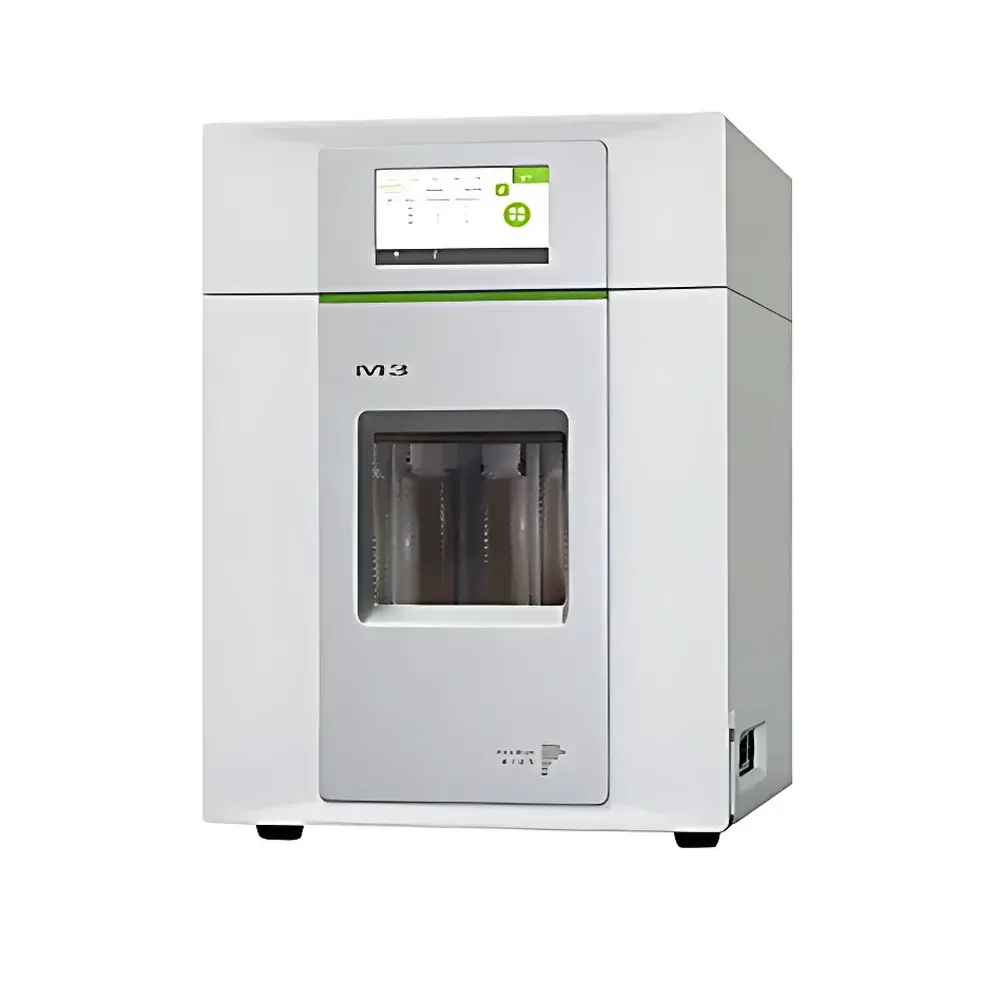
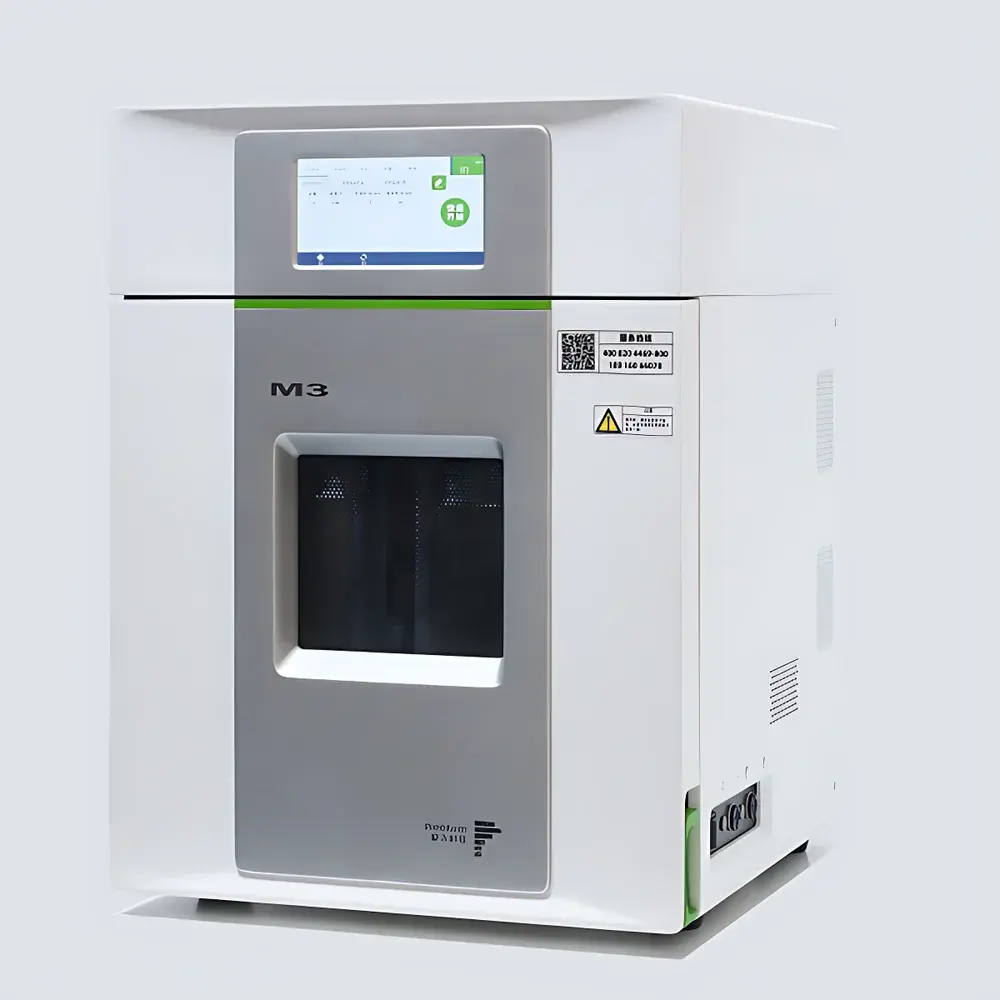
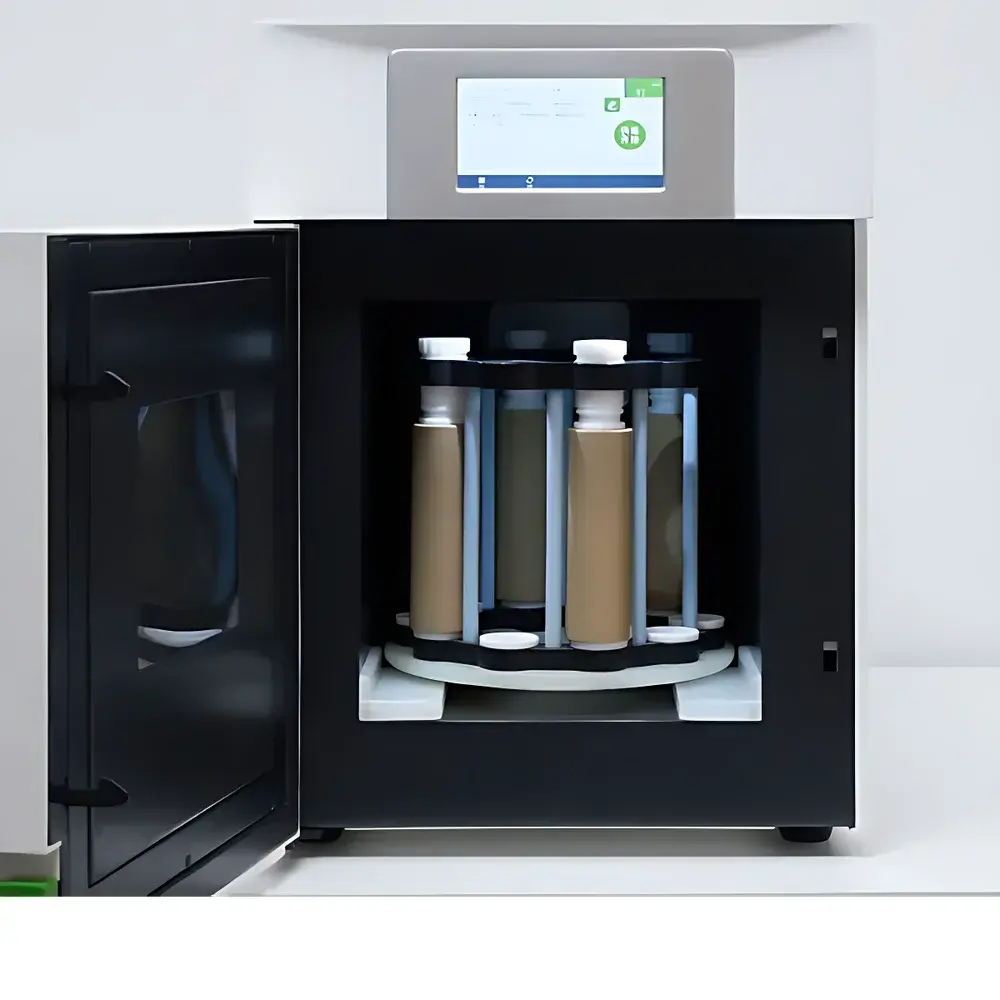
PreeKem Yitao M3 Microwave Digestion System
| Brand | PreeKem Yitao |
|---|---|
| Origin | Shanghai, China |
| Manufacturer Type | Direct Manufacturer |
| Country of Origin | China |
| Model | M3 |
| Cavity Class | Industrial-Grade |
| Max. Sample Capacity | 16 vessels |
| Microwave Source | Magnetron |
| Max. Temperature | 330 °C |
| Max. Pressure | 150 bar |
| Display | 7″ High-Resolution Color Touchscreen |
| Cavity Material | 316L Stainless Steel (Laser Seamless Welded + Multi-Layer PTFE Coating) |
| Microwave Frequency | 2450 MHz |
| Power Output Mode | Non-Pulsed Continuous Microwave |
| Cooling System | Twin Air Dual-Direction Rapid Cooling with Intelligent Fan Control |
| Safety Door | Independent Floating Buffer Safety Door with Auto-Interlock |
| Control Logic | Real-Time Dual-Parameter Monitoring (Temperature & Pressure per Vessel) |
| Compliance Features | Built-in Self-Check at Startup |
Overview
The PreeKem Yitao M3 Microwave Digestion System is an industrial-grade, fully automated sample preparation platform engineered for precision, reproducibility, and operational safety in regulated laboratory environments. Utilizing non-pulsed continuous microwave energy at 2450 MHz, the M3 delivers uniform volumetric heating within a precisely calculated resonant cavity—optimized to maximize microwave energy density and field homogeneity across all 16 digestion positions. Its core architecture integrates dual-parameter real-time monitoring (temperature and pressure) for every vessel, eliminating reliance on statistical averaging or single-point sensing. This full-vessel control architecture conforms to fundamental principles of microwave-assisted acid digestion as defined in ASTM D5511, ISO 11885, and EPA Method 3052, ensuring method traceability and data integrity for environmental, food, pharmaceutical, and geochemical applications.
Key Features
- Industrial-class 316L stainless steel cavity fabricated via laser seamless welding and coated with multi-layer PTFE for exceptional corrosion resistance against aggressive acid mixtures (e.g., HNO₃/HF/HCl/H₂O₂).
- True per-vessel temperature and pressure monitoring—no external Pt-resistors, rupture discs, vent tubes, or safety screws required—reducing consumable dependency and long-term cost of ownership.
- Twin Air dual-direction rapid cooling system with adaptive airflow modulation, achieving sub-60-minute total cycle time (digestion + cooling) for complex matrices including soil, herbal medicine, seafood, and polymer composites.
- Tool-free 16-vessel loading completed in under 180 seconds; intuitive 4-step assembly workflow validated for operator training compliance under GLP/GMP frameworks.
- 7″ high-resolution color touchscreen interface with embedded method library containing pre-validated protocols aligned with USP , FDA guidance for elemental impurities, and Chinese Pharmacopoeia ChP 0412.
- Floating buffer safety door with mechanical interlock and automatic pressure-relief resealing—microwave emission disabled unless door is fully engaged and sealed.
Sample Compatibility & Compliance
The M3 supports closed-vessel digestion of diverse solid and semi-solid samples, including but not limited to: plant tissues (herbal medicines), biological tissues (liver, muscle), environmental solids (sediments, sludge, fly ash), food products (dairy powders, cereals, oils), and industrial materials (catalysts, ceramics, alloys). All digestion vessels are constructed from reinforced quartz-glass-reinforced PEEK with chemically inert sealing gaskets. The system meets mechanical and electromagnetic safety requirements per IEC 61000-6-3 and IEC 61000-6-4. Its dual-sensor architecture enables compliance with FDA 21 CFR Part 11 when paired with optional audit-trail-enabled software, supporting electronic signatures and user-level access control.
Software & Data Management
The embedded operating system stores up to 500 user-defined methods with full parameter logging (ramp rate, hold time, power profile, real-time T/P curves per vessel). Data export is supported via USB 2.0 in CSV and PDF formats, preserving timestamped metadata including operator ID, instrument serial number, and calibration status. Optional PC-based software provides extended reporting capabilities—including comparative analysis across batches, deviation alerts based on historical control limits, and integration-ready APIs for LIMS connectivity. Firmware updates—including infrared temperature sensor calibration enhancements—are delivered free-of-charge throughout the instrument’s service life.
Applications
The M3 is routinely deployed in accredited testing laboratories performing trace metal analysis by ICP-MS, ICP-OES, and AAS. It is particularly suited for high-throughput regulatory workflows requiring full-sample digestion prior to heavy metal screening (e.g., Cd, Pb, As, Hg, Cr(VI)) in food contact materials (EU Regulation 10/2011), herbal supplements (USP /), and wastewater sludge (ISO 17294-2). Its 150 bar pressure rating and 330 °C thermal ceiling enable complete decomposition of refractory matrices such as silicates, titanium dioxide, and carbon-rich organics without carbon residue formation.
FAQ
Does the M3 support method validation per ISO/IEC 17025 requirements?
Yes—the system records raw sensor data at 1-second intervals, retains full audit trails of method edits and execution logs, and allows export of unaltered datasets for third-party review.
Is remote monitoring or network connectivity available?
Standard configuration includes local USB data export; Ethernet or Wi-Fi modules are available as factory-installed options for centralized lab management systems.
What maintenance is required for long-term cavity integrity?
No scheduled cavity servicing is required; the PTFE-coated 316L structure resists pitting and etching under routine HNO₃/HF digestions—verified through accelerated lifetime testing per ASTM B117.
Can the M3 be integrated into automated sample prep lines?
Yes—RS-232 and digital I/O ports support handshake protocols with robotic arms and autosamplers for unattended batch processing.
Is calibration traceable to national standards?
Temperature sensors are factory-calibrated against NIST-traceable reference thermometers; pressure transducers are certified to EN 837-1 with annual recalibration recommended.



