
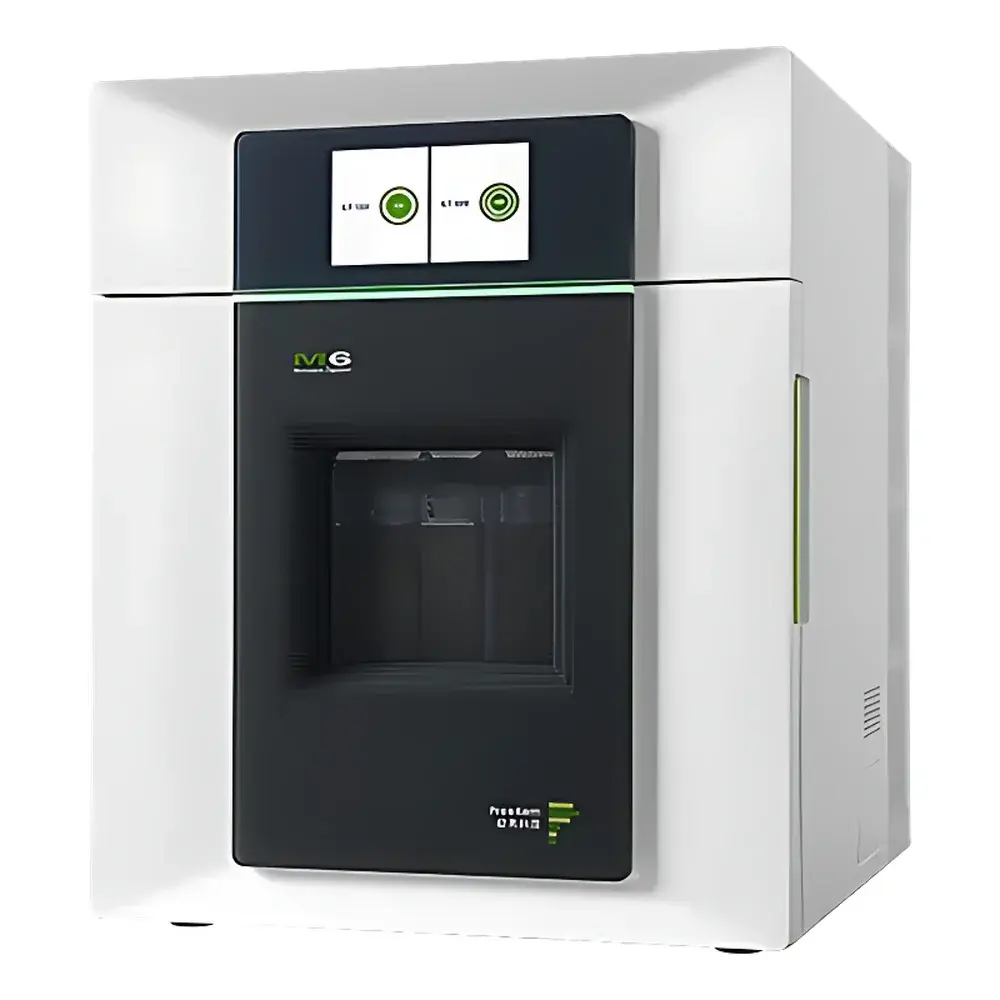
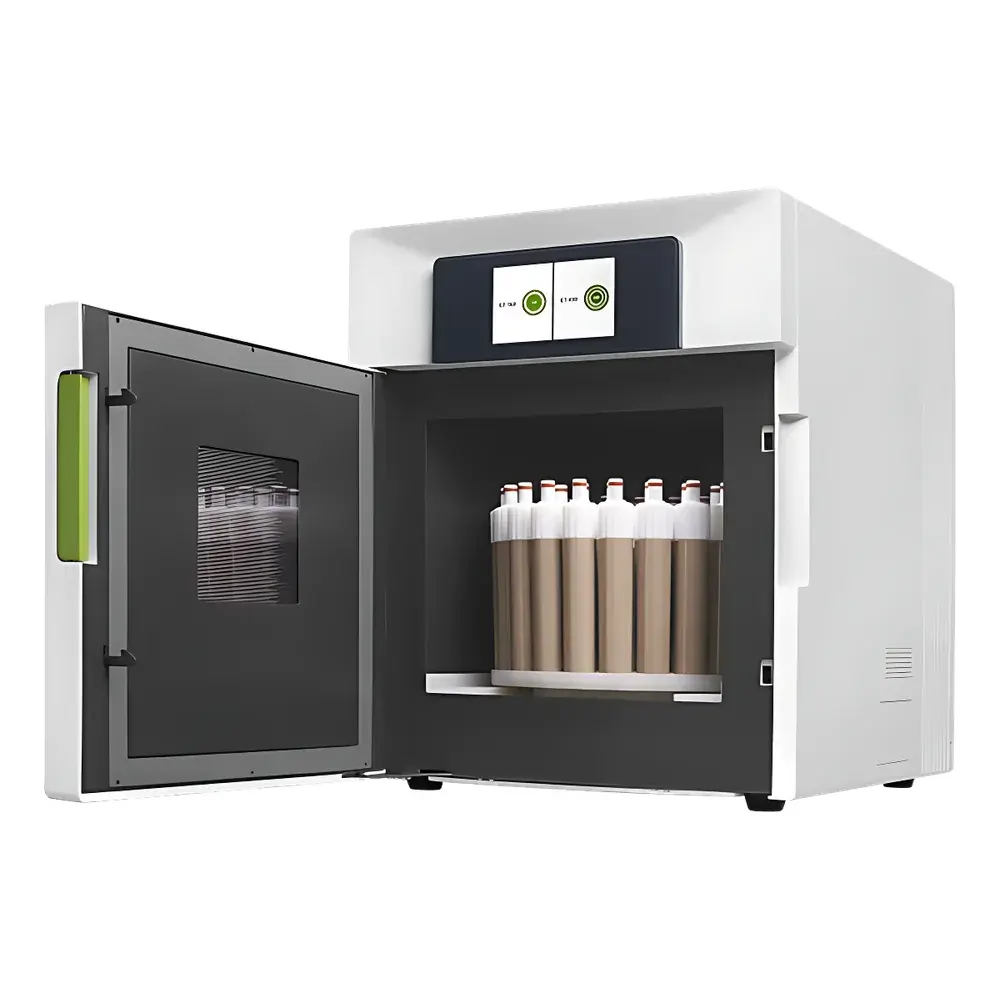
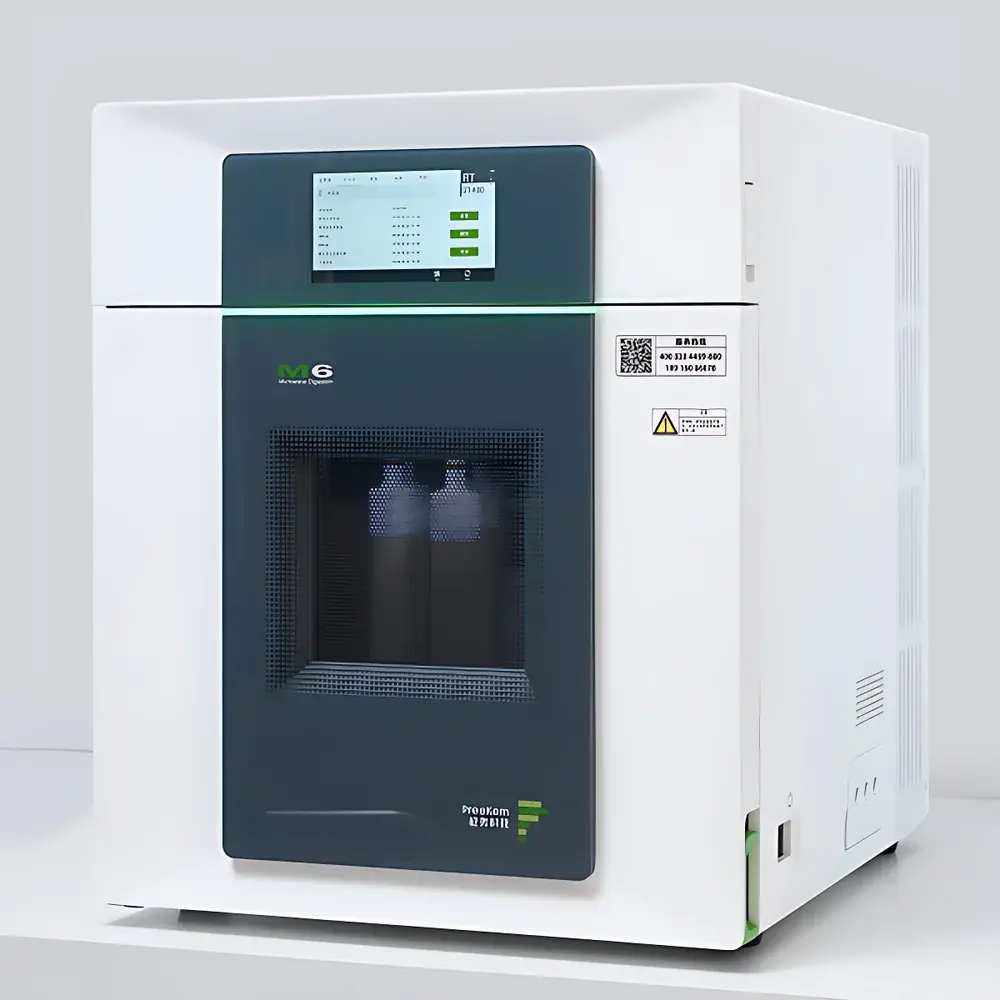
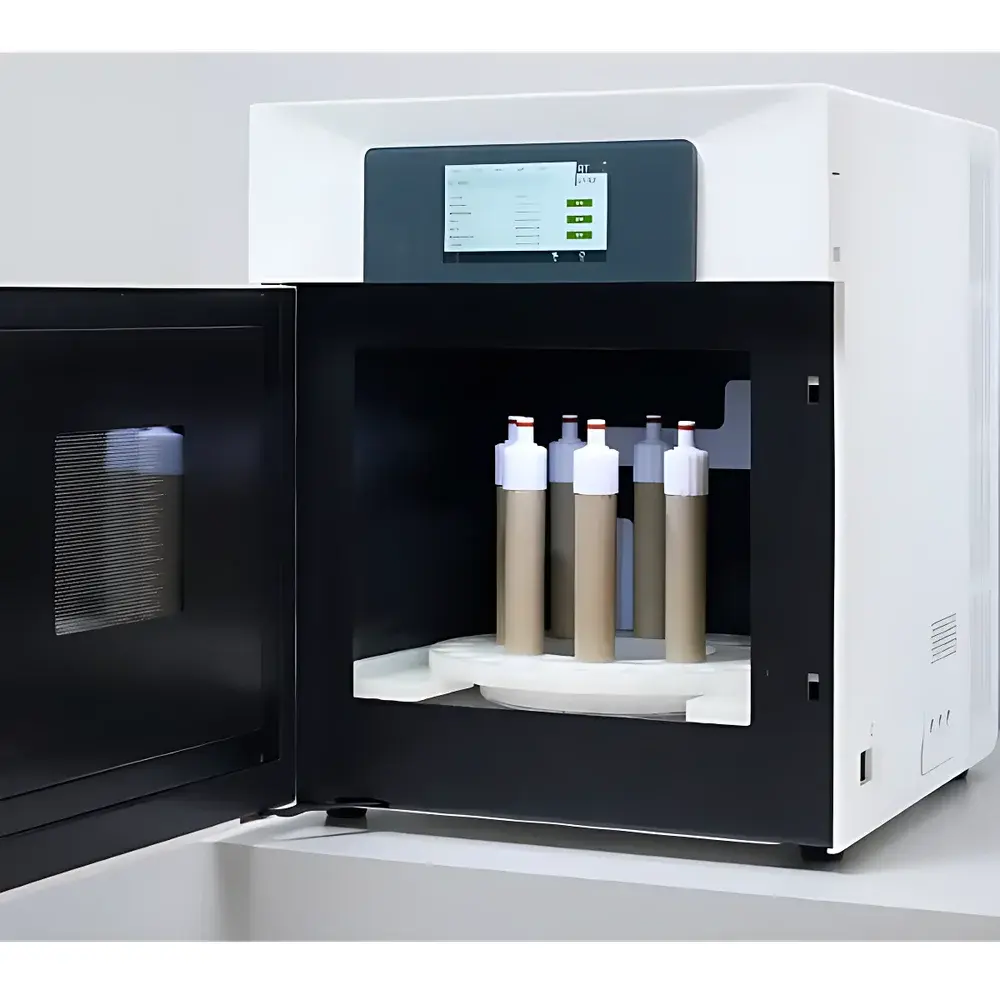
PreeKem Yitao M6 Microwave Digestion System
| Brand | PreeKem / Yitao Technology |
|---|---|
| Origin | Shanghai, China |
| Manufacturer Type | Direct Manufacturer |
| Country of Origin | China |
| Model | M6 |
| Price Range | USD 28,000 – 115,000 (FOB) |
| Cavity Class | Industrial-Grade |
| Sample Capacity | 16–40 vessels |
| Microwave Source | Dual Magnetron Configuration |
| Max Temperature | 330 °C |
| Max Pressure | 15 MPa |
| Display | 7″ High-Resolution Color Touchscreen |
| Microwave Frequency | 2450 MHz |
| Power Output Mode | Non-pulsed Continuous Microwave Emission |
| Cavity Material | Electropolished 316L Stainless Steel with Multi-layer PTFE Coating |
| Cooling System | Twin Air Bidirectional Rapid Cooling with Intelligent Airflow Control |
| Safety Door | Independent Floating Buffer Safety Interlock with Auto-Release & Re-seal Function |
| Control Logic | Real-time Dual-Parameter Monitoring (Temperature & Pressure per Vessel) |
| Compliance | Designed to Support GLP/GMP workflows and ASTM D5511, EPA 3051A/3052, ISO 11466, and USP <231> sample preparation requirements |
Overview
The PreeKem Yitao M6 Microwave Digestion System is an industrial-grade, dual-magnetron microwave digestion platform engineered for high-throughput, high-pressure, and high-temperature sample preparation in regulated analytical laboratories. It operates on the principle of controlled microwave energy absorption by polar molecules—primarily water and nitric acid—in sealed quartz or reinforced PTFE-TFM digestion vessels, enabling rapid, uniform thermal decomposition of complex organic and inorganic matrices. With a maximum operational pressure of 15 MPa and temperature up to 330 °C, the M6 supports rigorous digestion protocols required for trace metal analysis in environmental, pharmaceutical, food safety, and geological applications. Its cavity design—featuring electropolished 316L stainless steel with multi-layer PTFE coating and laser-welded seams—ensures long-term corrosion resistance against aggressive acid mixtures (e.g., HNO₃/HF/HCl). The non-pulsed continuous microwave emission at 2450 MHz, coupled with asymmetric magnetron placement and optimized waveguide geometry, delivers enhanced field homogeneity across all 40 vessel positions—critical for reproducible digestion kinetics and minimal inter-vessel variance.
Key Features
- Dual-parameter real-time monitoring: Independent fiber-optic temperature sensors and piezoresistive pressure transducers provide per-vessel feedback, visualized as dynamic bar graphs on the 7″ capacitive touchscreen interface.
- Automated rotor handling: Motor-driven vertical lift-and-shift mechanism enables hands-free insertion and extraction of digestion rotors—eliminating operator bending and reducing ergonomic strain during high-volume workflows.
- Modular rotor architecture: Interchangeable high-throughput (40-vessel) and ultra-high-pressure (16-vessel, 15 MPa) rotors allow method-specific configuration without hardware modification.
- Twin Air bidirectional cooling: Asymmetric airflow channels and dual centrifugal blowers reduce post-digestion cooling time to under 30 minutes for full 40-vessel batches—without manual fan adjustment.
- Intelligent safety interlocks: Floating-buffer safety door with pressure-triggered micro-gap venting; microwave emission disabled unless door is fully latched and system confirms zero residual cavity pressure.
- Preloaded method library: Over 120 validated digestion protocols—including EPA 3051A (soils/sediments), USP (pharmaceutical heavy metals), and GB 5009.12-2017 (food)—accessible via intuitive touch navigation.
Sample Compatibility & Compliance
The M6 accommodates standard 55 mL and 100 mL high-performance digestion vessels made from TFM-PTFE, quartz, or reinforced composite materials. It supports open-vessel evaporation, closed-vessel ramp-hold digestion, and multi-step temperature/pressure programs for heterogeneous samples including plant tissues, animal feed, polymers, catalysts, and silicate-rich geological matrices. All control firmware and data logging modules are structured to align with audit-ready documentation requirements under FDA 21 CFR Part 11 (electronic signatures, user access tiers, immutable audit trails), ISO/IEC 17025 (method validation records), and GLP-compliant laboratory information management systems (LIMS). Full traceability is maintained for every run—including vessel ID, setpoint profiles, actual sensor readings, error logs, and operator credentials.
Software & Data Management
The embedded operating system provides local data storage (≥10,000 runs) with USB export capability in CSV and PDF formats. Optional Ethernet/Wi-Fi connectivity enables remote monitoring and integration with enterprise LIMS via standard OPC UA or Modbus TCP protocols. All method parameters, calibration histories, and maintenance logs are timestamped and digitally signed. Audit trail functionality complies with ALCOA+ principles (Attributable, Legible, Contemporaneous, Original, Accurate, Complete, Consistent, Enduring, Available), supporting regulatory inspections for environmental testing labs accredited to ISO/IEC 17025 and pharmaceutical QC facilities operating under ICH Q2(R2).
Applications
- Environmental analysis: Total recoverable metals in wastewater sludge, soil, and airborne particulate matter per EPA Methods 3051A, 3052, and 6010D.
- Food & agriculture: Lead, cadmium, arsenic, and mercury quantification in cereals, spices, infant formula, and herbal medicines following AOAC 999.10 and GB 5009 series standards.
- Pharmaceutical quality control: Residual catalyst screening in active pharmaceutical ingredients (APIs) and excipients per USP and Ph. Eur. 2.4.8.
- Geochemical research: Rare earth element (REE) and platinum group metal (PGM) dissolution from refractory minerals using HF-containing reagents at sustained 300 °C/12 MPa conditions.
- Materials science: Digestion of battery cathode materials (NMC, LFP), catalysts, and nanocomposites prior to ICP-MS or ICP-OES quantification.
FAQ
What safety certifications does the M6 hold?
The system meets IEC 61000-6-3 (EMC emissions), IEC 61000-6-2 (immunity), and UL 61010-1 (laboratory equipment safety). It is CE-marked and conforms to EN 62496-1 for microwave radiation leakage (<5 mW/cm² at 5 cm distance).
Can the M6 be integrated into an automated sample prep line?
Yes—via optional RS-485, Ethernet, or dry-contact I/O ports, it supports handshake protocols with robotic autosamplers and upstream weighing stations for unattended batch processing.
Is method transfer from older Yitao models supported?
All legacy method files (.mdf) from Yitao TANK, ETHOS UP, and UltraWAVE platforms can be imported and auto-converted into M6-compatible format with parameter mapping validation.
How is calibration verified for temperature and pressure sensors?
Each unit ships with NIST-traceable calibration certificates for both primary sensors. Field verification is performed using certified reference materials (CRMs) such as NIST SRM 2783 (air particulate) and BCR-680 (marine sediment) with recovery acceptance criteria per ISO 17025 Clause 7.7.
What maintenance intervals are recommended?
Magnetron output power and cavity integrity are validated quarterly; waveguide gaskets and pressure sensor O-rings require replacement every 12 months or after 500 cycles—whichever occurs first. Full preventive maintenance is scheduled annually by authorized service engineers.



