
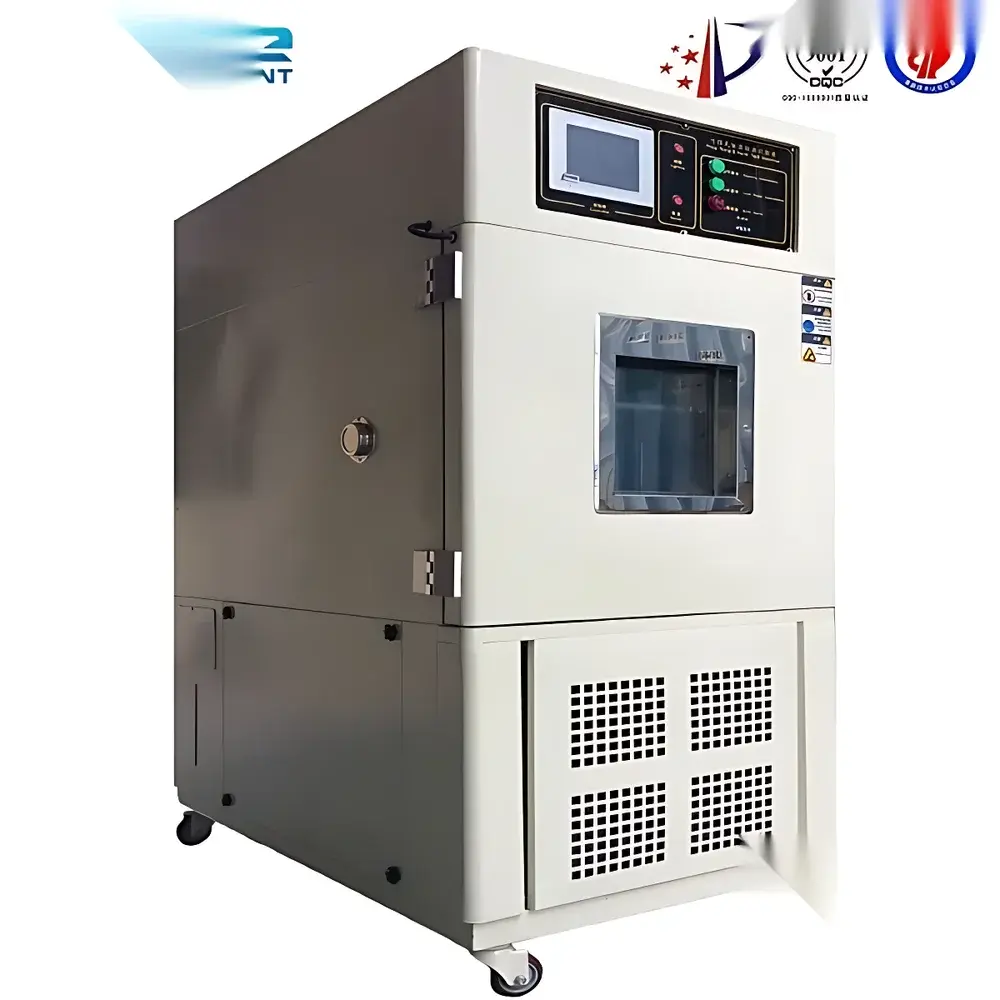
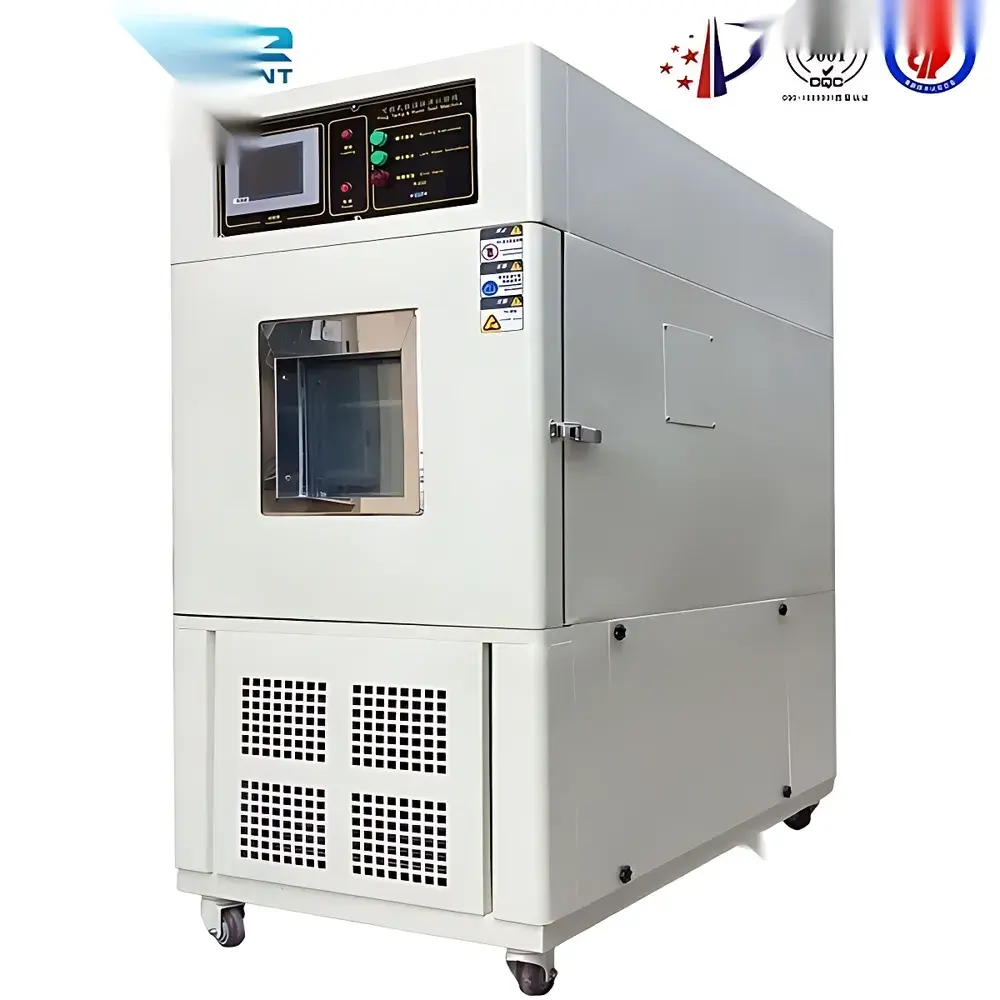
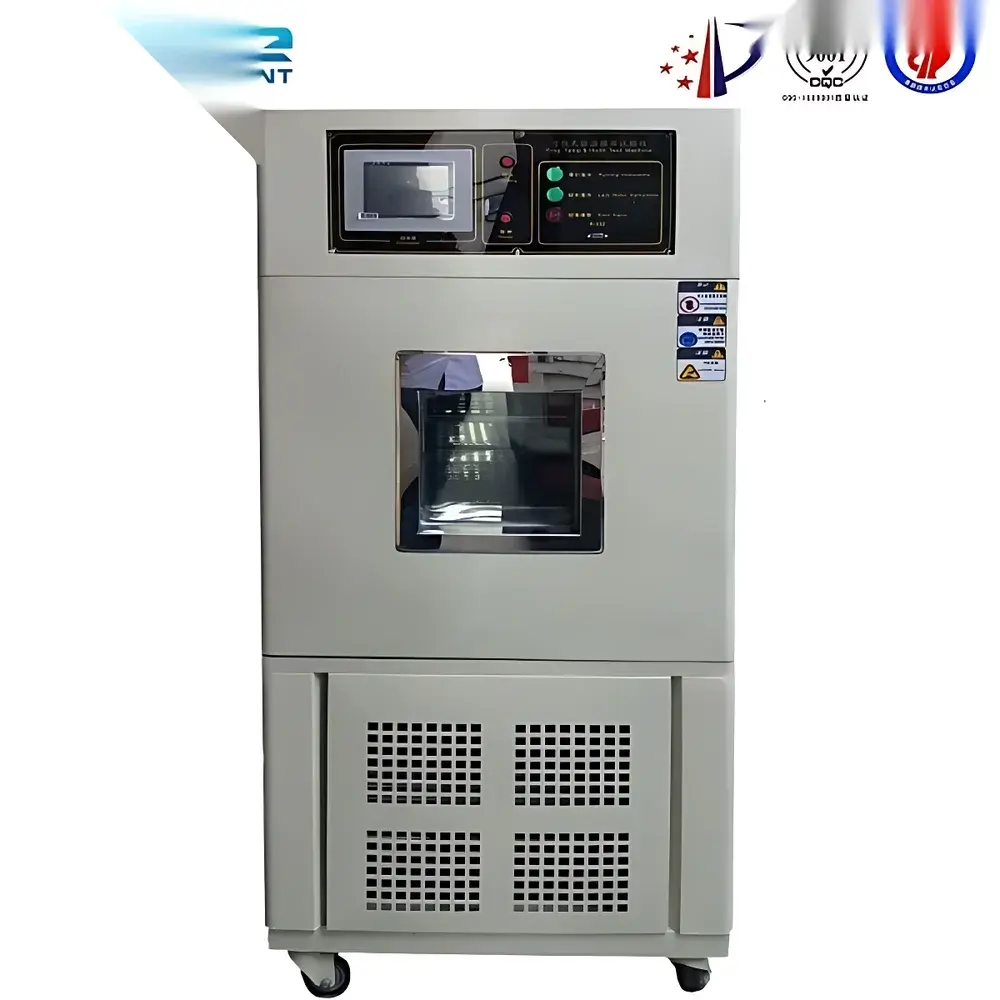
Programmable Temperature and Humidity Environmental Test Chamber
| Brand | OEM |
|---|---|
| Origin | Imported |
| Manufacturer Type | Authorized Distributor |
| Price | USD 3,100 (FOB) |
Overview
The Programmable Temperature and Humidity Environmental Test Chamber is a precision-engineered climatic simulation system designed for rigorous environmental stress testing of materials, components, and finished products under controlled temperature and relative humidity conditions. Operating on the principle of balanced heating, cooling, humidification, and dehumidification—governed by a robust BTHC (Balanced Temperature & Humidity Control) architecture—the chamber maintains stable setpoints across wide operational ranges. It supports programmable ramp-and-soak profiles with multi-segment cycles, enabling compliance-driven validation of thermal and hygroscopic stability per international test standards including IEC 60068-2, ISO 16750-4, ASTM D4332, and MIL-STD-810H. The chamber’s air-circulation system employs centrifugal fans with adjustable airflow velocity to ensure uniform distribution (±0.5 °C temperature uniformity, ±2 % RH uniformity in working volume), critical for repeatable qualification testing in R&D, quality assurance, and production release workflows.
Key Features
- Full-arc ergonomic enclosure design with seamless stainless-steel interior and insulated double-wall construction for low thermal leakage and high energy efficiency
- Advanced touchscreen controller with intuitive GUI, real-time graphing, data logging (up to 10,000 points), USB export, and password-protected parameter access
- BTHC control algorithm utilizing PID-regulated SSR outputs to dynamically match heating/humidifying output with thermal/hygric load—ensuring long-term stability without overshoot or drift
- Capillary-tube-based refrigeration system with automatic capacity modulation—superior to thermostatic expansion valves in response time, reliability, and low-temperature consistency
- Integrated water-cooled condenser requiring inlet coolant at 10–28 °C and 0.1–0.3 MPa pressure for consistent sub-zero performance down to –40 °C
- Modular structural design supporting custom internal dimensions, door configurations (single/double swing, pass-through), and optional features including RS-485/Modbus RTU, Ethernet/IP, and 4–20 mA analog I/O
Sample Compatibility & Compliance
This chamber accommodates a broad range of sample types—including PCB assemblies, polymer enclosures, automotive ECUs, medical device housings, and packaging materials—without requiring internal fixtures or modifications. Internal volume options span from 100 L to 1,000 L (custom larger units available). All models are built and verified per GB/T 5170.2–2017 (temperature calibration), GB/T 5170.5–2016 (humidity calibration), and aligned with ISO/IEC 17025 traceability requirements when used with accredited calibration services. The system meets electromagnetic compatibility (EMC) per EN 61326-1 and safety standards per IEC 61010-1. For regulated industries, optional audit-trail-enabled firmware supports 21 CFR Part 11-compliant electronic records and signature workflows when integrated with validated LIMS or MES platforms.
Software & Data Management
Standard controller firmware includes cycle programming (up to 99 segments, 999 loops), real-time deviation alarms (with configurable thresholds and relay outputs), and event-triggered data capture. Optional PC-based software provides remote monitoring via TCP/IP, automated report generation (PDF/CSV), trend analysis with statistical process control (SPC) overlays, and integration with enterprise systems through OPC UA or RESTful API endpoints. All logged data includes timestamp, setpoint, actual value, alarm status, and user ID—enabling full GLP/GMP traceability. Data integrity safeguards include write-protection, cyclic redundancy checks (CRC), and non-volatile memory retention during power loss.
Applications
- Accelerated aging studies for elastomers, adhesives, and composite laminates under combined thermal-hygric stress
- Pre-conditioning of lithium-ion battery cells prior to electrical performance testing (per UN 38.3 Section 42.3)
- Environmental screening of aerospace avionics per DO-160G Section 4 (temperature) and Section 7 (humidity)
- Stability testing of pharmaceutical primary packaging (blister cards, HDPE bottles) in accordance with ICH Q1A(R2)
- Validation of IP-rated ingress protection (IP54/IP65) enclosures under cyclic condensation and thermal shock protocols
- Qualification of printed circuit board assemblies per IPC-J-STD-004 and JEDEC JESD22-A104 (temperature cycling) and JESD22-A101 (damp heat)
FAQ
What is the typical temperature and humidity operating range?
Standard configuration: –40 °C to +150 °C; 20 % to 98 % RH (non-condensing). Extended low-temperature and high-humidity variants available upon request.
How is temperature uniformity validated?
Uniformity is measured using nine calibrated PT100 sensors placed at standardized locations (center + six faces + top/bottom corners) per GB/T 5170.2–2017, with results documented in the factory acceptance test (FAT) report.
Can the chamber be integrated into an existing MES or SCADA infrastructure?
Yes—standard Modbus RTU over RS-485 is included; optional Ethernet/IP, Profibus DP, or OPC UA gateways support seamless plant-level connectivity and centralized monitoring.
Is calibration certification provided with shipment?
Each unit ships with a NIST-traceable as-left calibration certificate covering temperature and humidity sensors at three points across the operational range. ISO/IEC 17025-accredited field calibration services are available separately.
What maintenance intervals are recommended?
Compressor oil and refrigerant levels: annually | Humidifier tank cleaning and descaling: weekly | Air filter replacement: every 3 months | Full system performance verification: biannually or after 2,000 operational hours.



