
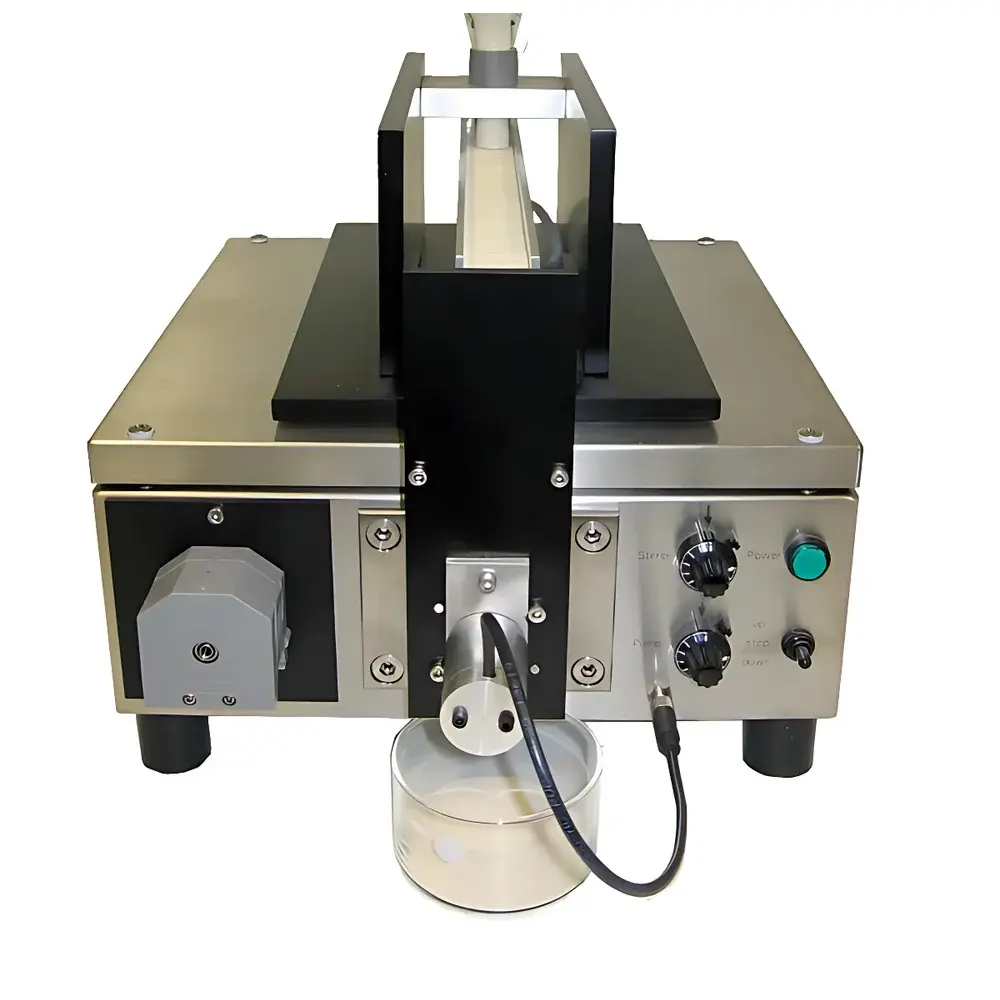
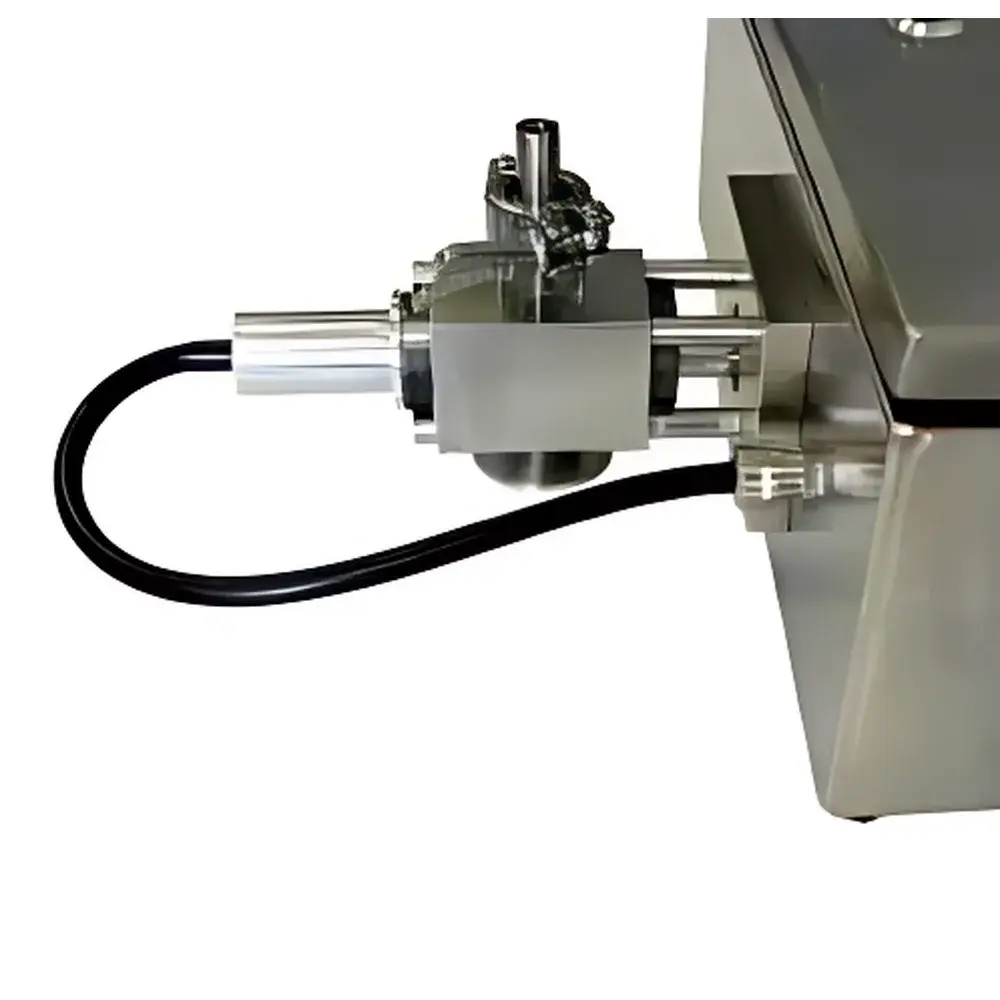
PS XPT-CP&CV Optical Powder Particle Analysis System
| Brand | PS |
|---|---|
| Origin | Switzerland |
| Model | XPT-CP&CV |
| Product Type | Intelligent Online Analyzer |
| Display | Digital |
| Measurement Range | 10 µm – 3 mm |
| Compliance | ASTM E2457, ISO 13322-2, FDA 21 CFR Part 11 (with hardware token & electronic signature) |
| Configuration Options | XPT-P (in-process probe), XPT-C (suspension flow cell), XPT-CP (powder feeder + vibratory dosing), XPT-CV (Venturi vacuum-sampling closed-loop system) |
| Enclosure Rating | IP65 (XPT-CV), Stainless Steel Housing |
| Imaging | High-speed CCD with ultra-short shutter time or pulsed LED illumination |
| Frame Rate | ≥30 fps |
| Data Throughput | Thousands of particles analyzed and stored per second |
| Software Architecture | Parallelized real-time image acquisition and analysis engine |
Overview
The PS XPT-CP&CV Optical Powder Particle Analysis System is an intelligent, real-time dynamic image analysis (DIA) platform engineered for in-line and at-line characterization of dry powders, granules, and suspensions. Unlike static sieve-based or laser diffraction methods, the XPT series employs high-resolution, high-frame-rate CCD imaging coupled with ultra-short exposure control to capture sharp, motion-artifact-free images of particles in free-fall (XPT-CP) or pneumatically conveyed flow (XPT-CV). Each captured frame undergoes pixel-level morphological segmentation and geometric parameter extraction—enabling simultaneous quantification of particle size distribution (PSD), shape descriptors (e.g., circularity, aspect ratio, convexity, thickness-to-length ratio), and count-based concentration metrics. The system operates in strict accordance with ISO 13322-2:2013 (“Particle size analysis — Image analysis methods — Part 2: Dynamic image analysis”), ensuring metrological traceability and regulatory acceptability across GMP, GLP, and industrial QA/QC environments.
Key Features
- Real-time, non-contact particle analysis at ≥30 frames per second—no sample dilution, drying, or dispersion solvents required
- Modular hardware architecture supporting four operational configurations: XPT-P (in-pipe probe), XPT-C (liquid suspension flow cell), XPT-CP (vibratory powder feeder + gravity-fed measurement zone), and XPT-CV (Venturi-driven closed-loop powder sampling)
- IP65-rated stainless steel enclosure for XPT-CV; robust mechanical design suitable for continuous operation in harsh production environments
- Ultra-short shutter timing and synchronized high-intensity pulsed LED illumination eliminate motion blur for particles moving at velocities up to several meters per second
- Fully parallelized software engine capable of extracting and storing morphological data from thousands of individual particles per second
- Compliant with FDA 21 CFR Part 11: includes hardware-authenticated user access control, role-based permissions, full audit trail, and electronic signatures for methods, analyses, and reports
Sample Compatibility & Compliance
The XPT-CP&CV system accommodates a broad spectrum of industrially relevant particulate materials—including free-flowing pharmaceutical excipients, detergent granules, fertilizer prills, instant coffee agglomerates, and functional food powders. Its dual-mode capability allows seamless transition between dry powder (XPT-CP/XPT-CV) and liquid suspension (XPT-C) analysis via simple flow cell exchange and fluid media substitution. All measurement protocols adhere to ISO 13322-2 for dynamic image analysis validation, while the software’s electronic record integrity satisfies requirements for regulated environments under USP <1059>, ASTM E2457 (Standard Practice for Validation of Dynamic Image Analysis Systems), and EU Annex 11. The system supports method qualification per ICH Q2(R2) guidelines and provides raw image archives for retrospective reanalysis—a critical capability for root cause investigation and regulatory inspection readiness.
Software & Data Management
The proprietary XPT software suite serves as the central analytical and integration hub. It enables fully automated image acquisition, real-time particle detection and classification, trend visualization over time (e.g., median size drift, shape index shifts), and configurable alarm thresholds linked to process control systems (via OPC UA or Modbus TCP). Analytical methods—including region-of-interest definitions, grayscale thresholding, noise filtering, and shape filter logic—are saved as encrypted, version-controlled templates. All image metadata, particle-by-particle feature tables (diameter, length, thickness, circularity, solidity), and statistical summaries are stored in ACID-compliant SQLite databases with optional SQL Server backend integration. Raw image sequences can be exported in TIFF or HDF5 format for third-party validation or AI training pipelines. Audit trails log every user action, parameter change, and report generation event with timestamp, operator ID, and reason-for-change annotation.
Applications
- On-line monitoring of fluid bed dryer output for granule size and sphericity consistency
- Real-time detection of oversized agglomerates or foreign particulates in detergent blending lines
- In-process verification of milling endpoint in API micronization processes
- Shape-based discrimination of crystalline vs. amorphous domains in lyophilized formulations
- Trend analysis of particle attrition during pneumatic conveying in bulk chemical handling
- Batch release testing of spray-dried nutritional powders against predefined circularity and aspect ratio specifications
FAQ
What standards does the XPT system comply with for regulatory submissions?
The system conforms to ISO 13322-2:2013 for dynamic image analysis methodology and implements full 21 CFR Part 11 compliance—including electronic signatures, audit trails, and secure user authentication—when configured with the optional hardware security token.
Can the same instrument measure both powders and suspensions?
Yes. By swapping the measurement cell (XPT-CP or XPT-CV for dry powders; XPT-C for suspensions) and adjusting illumination and fluid handling parameters, the platform supports both modalities without hardware modification.
Is calibration traceable to national standards?
Primary calibration uses NIST-traceable particle reference standards (e.g., PSL spheres, glass ballotini) imaged under identical optical and motion conditions; secondary field calibration is supported via embedded reference microgrids and automated focus validation routines.
How is data integrity maintained during extended unattended operation?
All acquired images and derived particle data are written to redundant local storage with automatic checksum verification; database transactions are journaled and recoverable after unexpected power loss or system restart.
Does the system support integration with MES or SCADA platforms?
Yes—native OPC UA server functionality enables bidirectional communication with manufacturing execution systems; custom REST APIs and CSV export modules support integration with LIMS and enterprise analytics platforms.



