
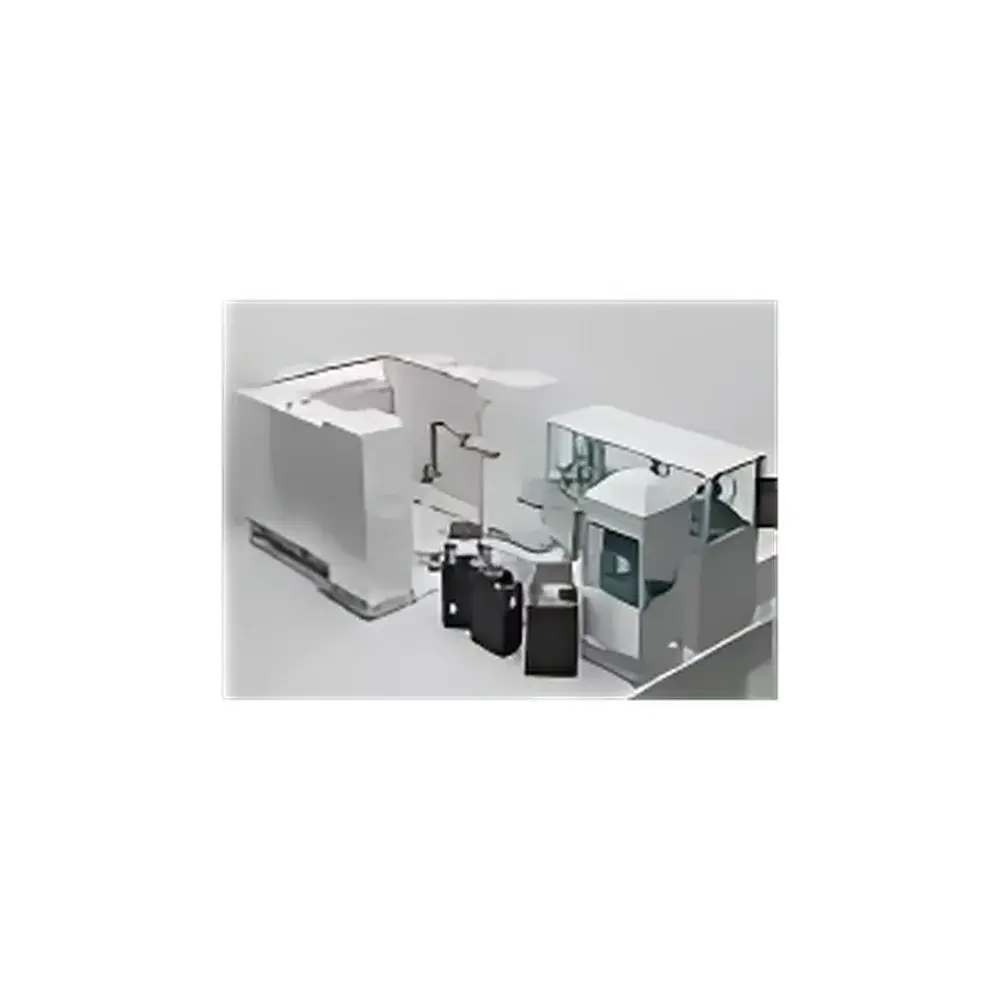
PSI PlantScreen Automated High-Throughput Agar-Based Plant Phenotyping Imaging Platform
| Brand | PSI (Czech Republic) |
|---|---|
| Origin | Czech Republic |
| Model | PlantScreen Automated High-Throughput |
| Compliance | CE, ISO 9001-certified manufacturing |
| System Capacity | 2160 custom agar plates (129 × 129 × 16.5 mm) |
| Imaging Sensors | CMOS, 12.36 MP (4112 × 3006), global shutter, 12-bit depth, GigE interface |
| Chlorophyll Fluorescence Excitation | 620 nm, 5700 K white, 735 nm far-red |
| Multispectral Fluorescence Excitation | 365 nm UV, 445/470/505/530/590 nm LEDs |
| VNIR Hyperspectral Range | 350–900 nm, 2 nm FWHM resolution, 480 spectral bands, 45 fps |
| LED Growth Light | Adjustable R:FR ratio (0.5–0.82), max irradiance 400 µmol/m²·s at 30 cm |
| Stratification Cabinet | Precise 5 °C dark control, 720-plate capacity |
| Environmental Control | Optional GMO-compliant growth chamber with HEPA + UV-C sterilization |
Overview
The PSI PlantScreen Automated High-Throughput Agar-Based Plant Phenotyping Imaging Platform is an integrated robotic phenomics system engineered for standardized, non-invasive, longitudinal analysis of plant morphology, physiology, and biochemistry under controlled environmental conditions. Built upon the Couette-type agar plate cultivation paradigm—where seedlings grow vertically on solidified nutrient media—the platform enables precise root architecture quantification alongside dynamic measurements of photosynthetic performance, secondary metabolite fluorescence, and spectral reflectance signatures. Its modular architecture combines robotics, multi-modal optical imaging, and programmable environmental control to support reproducible, hypothesis-driven experiments in functional genomics, stress physiology, and crop improvement research. The system operates fully autonomously across all major workflow stages: agar dispensing, precision seeding, stratification, germination, controlled growth, and high-content imaging—eliminating manual handling variability and enabling true biological replication at scale.
Key Features
- End-to-end automation via high-precision SCARA robot capable of seamless transport of 2160 custom agar plates (129 × 129 × 16.5 mm) among functional modules including agar dispensing station, stratification cabinet, LED growth cabinets, liquid handling station, and imaging workstations.
- Three independently controllable LED growth cabinets (4 shelves per cabinet, 9 trays per shelf, 20 plates per tray), each equipped with spectrally tunable light sources (cool white, red, far-red) enabling programmable R:FR ratios (0.5–0.82) and maximum PAR output of 400 µmol/m²·s at 30 cm distance.
- Dual chlorophyll fluorescence & multispectral fluorescence imaging stations supporting kinetic parameter extraction (Fo, Fm, Fv/Fm, NPQ, qL, ETR, Rfd, etc.) from over 50 standardized fluorescence metrics compliant with PAM and JIP-test conventions.
- VNIR hyperspectral imaging station (350–900 nm, 2 nm FWHM resolution) delivering quantitative reflectance and transmittance data for pigment profiling, water status estimation, and biochemical trait mapping—including coumarin-specific fluorescence detection using narrow-band excitation and emission filtering.
- Stratification cabinet maintaining stable 5 °C in complete darkness for synchronized vernalization, with dual-stack capacity for 720 plates and integrated temperature logging traceable to NIST standards.
- Liquid handling station featuring biosafety-grade laminar flow enclosure and robotic pipetting for automated bacterial inoculation, chemical treatment application, or nutrient supplementation—fully compatible with GLP-compliant experimental protocols.
Sample Compatibility & Compliance
The PlantScreen platform is validated for use with model and crop species including Arabidopsis thaliana, Nicotiana benthamiana, tomato (Solanum lycopersicum), and quinoa (Chenopodium quinoa). All agar-based growth modules conform to OECD Guideline 208 (Terrestrial Plant Test) and EU Regulation (EC) No 1107/2009 requirements for standardized phytotoxicity assessment. Optional GMO containment configuration includes interlocked access doors, negative pressure differential control, HEPA filtration (ISO Class 5), and UV-C decontamination cycles—meeting national biosafety regulations for contained use of genetically modified organisms. Hardware and firmware comply with CE marking directives (2014/30/EU EMC, 2014/35/EU LVD), while manufacturing adheres to ISO 9001:2015 quality management standards.
Software & Data Management
The PlantScreen Control Suite provides unified orchestration of hardware modules through a role-based web interface supporting experiment scheduling, real-time monitoring, and audit-trail generation. Image acquisition workflows are governed by ISO/IEC 17025-aligned calibration protocols, with metadata embedded per image (timestamp, illumination settings, sensor gain, plate ID, environmental logs). Raw data are stored in vendor-neutral HDF5 format; processed outputs include annotated TIFF stacks, CSV-exportable trait matrices, and FAIR-compliant JSON-LD metadata packages. Integration with ELN systems (e.g., LabArchives, Benchling) and LIMS platforms is supported via RESTful API. Full compliance with FDA 21 CFR Part 11 is achieved through electronic signature enforcement, user-level permissions, and immutable audit logs covering all instrument control actions and data transformations.
Applications
- High-resolution root phenotyping: Quantitative analysis of primary root length, lateral root density, gravitropic response, and auxin-mediated branching patterns under controlled light and nutrient gradients.
- Photosynthetic phenomics: Time-resolved chlorophyll fluorescence kinetics for early detection of abiotic stress responses (drought, salinity, heat) and evaluation of photoprotective capacity across genetic lines.
- Secondary metabolism screening: Multispectral fluorescence profiling of flavonoids, anthocyanins, and coumarins using excitation-emission matrix (EEM) acquisition and spectral unmixing algorithms.
- Pathogen–host interaction studies: Automated GFP/RFP-tagged pathogen inoculation followed by spatiotemporal tracking of infection progression and defense gene reporter expression.
- Chemical phenomics: Dose–response characterization of herbicides, phytohormones, or allelochemicals using morphometric and physiological endpoints derived from co-registered multimodal image datasets.
FAQ
What types of plant species are compatible with the agar-based cultivation module?
The system supports dicot and monocot seedlings amenable to vertical agar culture—including Arabidopsis, tobacco, tomato, barley, wheat, and quinoa—with protocol optimization available for species-specific germination and early development requirements.
Is remote operation and monitoring supported?
Yes—PlantScreen Control Suite offers secure HTTPS-based remote access with live camera feeds, real-time environmental telemetry, and asynchronous job submission from any location with enterprise-grade TLS 1.3 encryption.
How is data integrity ensured during long-term imaging campaigns?
All imaging sensors undergo daily auto-calibration against certified reference targets; environmental parameters (temperature, humidity, light intensity) are logged at 1-second intervals with NTP-synchronized timestamps and exported as machine-readable time-series archives.
Can the system be integrated into existing institutional phenotyping infrastructure?
PlantScreen supports standard industrial communication protocols (Modbus TCP, OPC UA) and provides documented Python SDKs for custom pipeline integration with downstream analysis tools such as PlantCV, R-Shiny dashboards, or deep learning frameworks (TensorFlow/PyTorch).
What regulatory documentation is provided for GLP/GMP environments?
PSI delivers full IQ/OQ/PQ validation packages, 21 CFR Part 11 compliance reports, instrument qualification records, and traceable calibration certificates aligned with ISO/IEC 17025 for accredited laboratories.




