
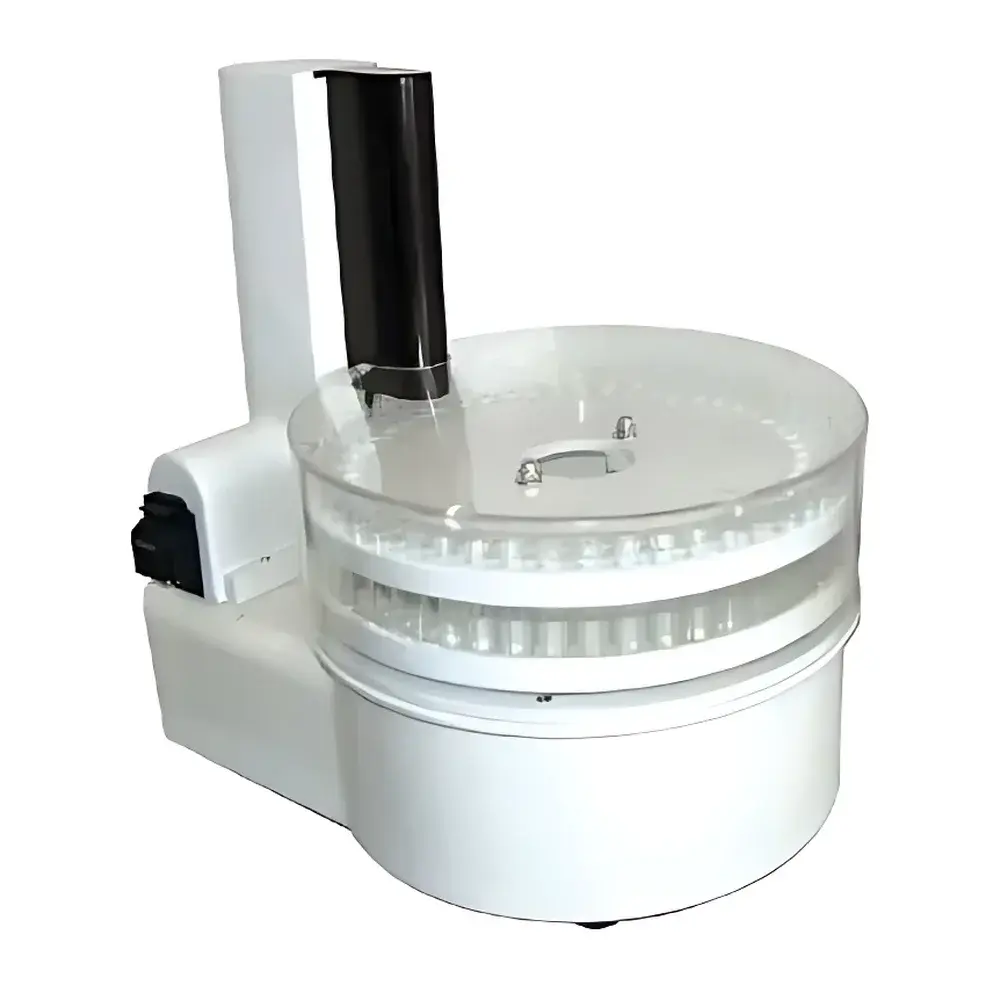
PUREN PAS Multifunctional Autosampler for Ion Chromatography
| Brand | PUREN |
|---|---|
| Origin | Shandong, China |
| Manufacturer Type | Original Equipment Manufacturer (OEM) |
| Product Category | Domestic |
| Model | PAS |
| Instrument Type | Multifunctional Autosampler |
| Interface Compatibility | Dual-system IC mainframe or two independent single-system IC mainframes |
| Sampling Method | Motor-driven rotary valve with full-loop injection |
| Patents | 1 invention patent (autosampler), 5 utility model patents (needle clamp, needle rack extension/lifting mechanisms, turntable base assembly, syringe holder), 1 design patent |
Overview
The PUREN PAS Multifunctional Autosampler is an engineered solution designed specifically for high-precision, unattended sample introduction in ion chromatography (IC) workflows. It operates on the principle of full-loop, motor-driven rotary valve injection—a configuration that ensures quantitative transfer of liquid samples into the IC separation system without manual intervention. Unlike partial-loop or pressure-assisted injection methods, the full-loop approach eliminates variability introduced by air gaps or inconsistent loop filling, thereby enhancing reproducibility and minimizing carryover between injections. The PAS supports flexible deployment: it can be interfaced with a single dual-channel IC system for parallel analysis or synchronized with two independent single-channel IC instruments to maximize laboratory throughput. Its architecture is built around robust electromechanical actuation, precise positional control, and sealed fluidic pathways—critical attributes for maintaining integrity in trace-level anion and cation analysis where contamination and memory effects directly impact data validity.
Key Features
- Full-loop injection mechanism with motorized 6-port or 10-port rotary valve, ensuring consistent sample volume delivery and eliminating air entrapment
- Modular interface design compatible with both dual-system IC platforms and two discrete single-system IC instruments via standardized fluidic and electrical connectors
- Dedicated needle handling subsystem featuring patented needle clamp, vertically adjustable needle rack, and extendable/retractable needle positioning for optimized vial access and wash station alignment
- Integrated turntable base with indexed sample tray rotation and precision stepper-motor control for repeatable positioning across up to 120 sample positions (configurable)
- Onboard syringe holder with passive thermal stabilization and low-dead-volume tubing connections to minimize analyte adsorption and dispersion
- Firmware-controlled wash cycle with programmable solvent selection, dwell time, and rinse repetitions to suppress cross-contamination in ultra-trace applications
Sample Compatibility & Compliance
The PAS accommodates standard 10–15 mL screw-cap or crimp-top vials, as well as 96-well microplates (with optional adapter). It handles aqueous matrices containing common IC eluents (e.g., KOH, NaOH, methanesulfonic acid) and is chemically resistant to concentrations up to 100 mM hydroxide or 50 mM MSA. All wetted materials—including PEEK, sapphire, and chemically inert elastomers—meet USP Class VI biocompatibility requirements. While not certified to ISO/IEC 17025 as a standalone instrument, the PAS is designed to support GLP and GMP environments: its firmware logs all injection events, valve actuations, and wash sequences with timestamps, enabling audit-ready traceability when integrated with compliant IC data systems. It aligns with ASTM D4327 and ISO 14911 methodologies for anion/cation quantification in environmental and industrial water testing.
Software & Data Management
The PAS operates under host-controlled command protocols via RS-232 or Ethernet (TCP/IP) communication. It does not include proprietary acquisition software but integrates natively with industry-standard IC platforms—including Thermo Scientific Dionex Chromeleon, Metrohm MagIC Net, and Shodex IC solutions—through open API frameworks. Injection sequence definition, wash parameters, and tray mapping are configured externally within the host chromatography data system (CDS). All operational metadata—including injection number, timestamp, valve position, and error flags—is relayed back to the CDS in real time and embedded in raw data files. For regulated laboratories, this architecture supports 21 CFR Part 11 compliance when paired with a validated CDS featuring electronic signatures, audit trails, and user-access controls.
Applications
- High-throughput monitoring of inorganic anions (F⁻, Cl⁻, NO₂⁻, Br⁻, NO₃⁻, PO₄³⁻, SO₄²⁻) and cations (Li⁺, Na⁺, NH₄⁺, K⁺, Mg²⁺, Ca²⁺) in drinking water, wastewater, and groundwater per EPA Methods 300.0 and 300.1
- Quality control of pharmaceutical excipients and active ingredients where residual counterions must be quantified below 10 ppb levels
- Electrolyte composition analysis in lithium-ion battery manufacturing, including trace HF, PF₆⁻, and Li⁺ impurities in carbonate-based solvents
- Food and beverage testing for preservatives (benzoate, sorbate), nitrate/nitrite adulteration, and mineral profiling
- Research-scale method development requiring sequential injection of calibration standards, blanks, and unknowns with minimal operator involvement
FAQ
Can the PAS operate independently without connection to an IC system?
No—it is a peripheral device requiring real-time synchronization with a host IC controller for timing-critical valve actuation and data correlation.
What is the maximum sample volume capacity per vial?
The standard configuration supports up to 12 mL per vial; custom trays accommodate larger volumes upon request.
Does the PAS support gradient elution-compatible injection timing?
Yes—its external trigger input accepts TTL pulses from the IC pump or detector to align injection with specific gradient segments.
How is carryover minimized during high-concentration sample runs?
Through a three-stage wash protocol: post-injection flush with eluent, intermediate rinse with organic modifier (e.g., 10% acetonitrile), and final equilibration with starting mobile phase—all programmable per sample group.
Is firmware update capability available remotely?
Firmware updates require local USB connection and are performed using manufacturer-provided utilities under controlled validation protocols.





