
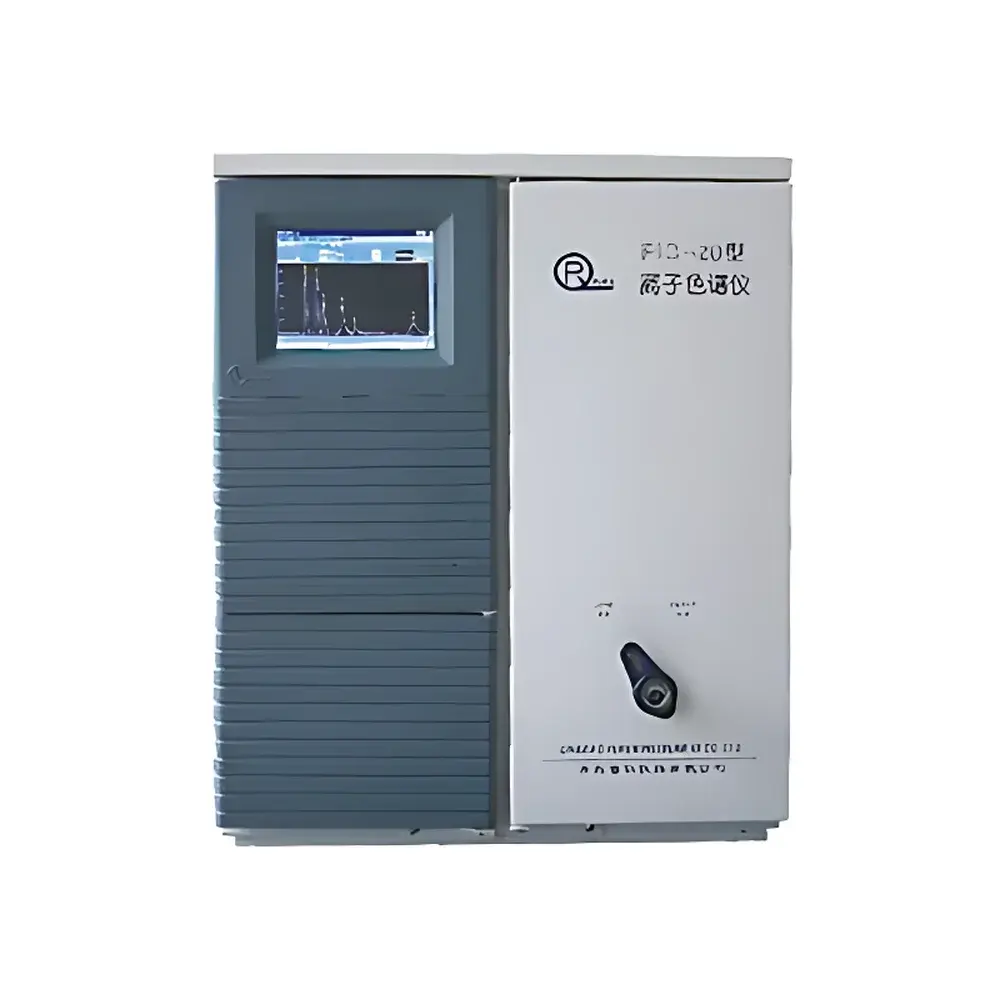
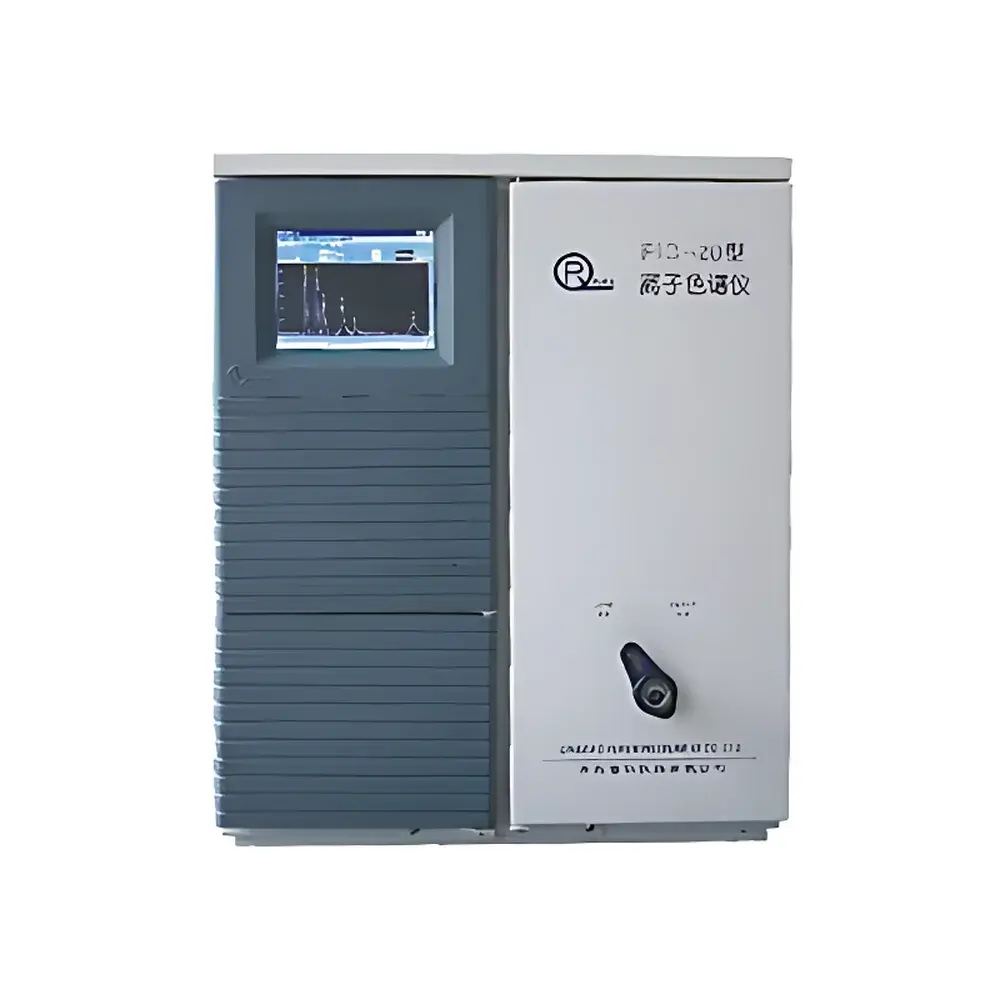
PUREN PIC-20 Ion Chromatograph
| Brand | PUREN |
|---|---|
| Origin | Shandong, China |
| Manufacturer Type | Direct Manufacturer |
| Origin Category | Domestic (China) |
| Model | PIC-20 |
| Instrument Type | Laboratory Benchtop |
| Application Scope | General-Purpose Ion Analysis |
| Pump Maximum Pressure | 0–42.0 MPa (stainless steel), 0–35 MPa (PEEK) |
| Flow Rate Range | 0.001–9.999 mL/min (adjustable in 0.001 mL/min increments) |
| Eluent Flow Rate | 0.7–1.5 mL/min |
| System Operating Pressure Limit | 10 MPa (1500 psi) |
| Column Oven Temperature Range | 5–65 °C |
| Temperature Stability | ±0.004 °C |
| Eluent Concentration Range | 1.92–4.8 mM |
Overview
The PUREN PIC-20 Ion Chromatograph is a benchtop, general-purpose analytical instrument engineered for high-precision separation and quantitative detection of common anions and cations in aqueous matrices. It operates on the principle of suppressed conductivity detection following ion-exchange chromatography—where analyte ions are separated on a high-efficiency, low-capacity ion-exchange column under controlled eluent composition and flow conditions. The system integrates a dual-pump gradient-capable eluent delivery module, thermostatically regulated column compartment, and a built-in digital data acquisition and processing workstation—eliminating dependency on external PCs for routine operation. Designed for reproducible, low-noise baseline performance, the PIC-20 supports both single- and dual-channel detection configurations and accommodates simultaneous or sequential anion/cation analysis within a single injection cycle.
Key Features
- Integrated onboard workstation with real-time data acquisition, peak integration, calibration curve generation, and batch processing—no external computer required for standard operation.
- Dual-material high-pressure pump system: stainless steel for compatibility with aggressive eluents (e.g., strong acids/bases), and PEEK for low-metal-leaching applications requiring trace-level cation analysis.
- Precise flow control across 0.001–9.999 mL/min range (0.001 mL/min resolution), enabling method scalability from microbore to standard-bore columns.
- Column oven with ±0.004 °C temperature stability over 5–65 °C range—critical for retention time reproducibility in regulated environments.
- Modular detector interface supporting conductivity detection (standard), amperometric detection (optional伏安 module), and future-ready expansion for UV/Vis or mass spectrometry coupling.
- Gradient elution capability with programmable multi-step concentration profiles, facilitating complex sample matrices such as environmental waters, food extracts, and pharmaceutical excipients.
Sample Compatibility & Compliance
The PIC-20 is validated for direct injection of filtered aqueous samples—including drinking water, wastewater, soil leachates, biological fluids, and industrial process streams—without derivatization. Its eluent concentration range (1.92–4.8 mM) aligns with common carbonate/bicarbonate and methanesulfonic acid-based systems compliant with ASTM D4327, ISO 10304-1, and USP . The instrument’s hardware architecture and firmware support audit trail functionality, electronic signatures, and data integrity controls consistent with GLP and GMP laboratory practices. While not pre-certified to FDA 21 CFR Part 11, its data export formats (CSV, CDF, PDF reports) and user-access logging framework enable straightforward validation by end-user QA teams.
Software & Data Management
The embedded software provides full chromatographic control—including pump programming, valve sequencing, detector parameter tuning, and temperature setpoint management. Raw data files are stored in vendor-neutral CDF format (compatible with third-party chemometrics tools) and include metadata headers documenting instrument configuration, method parameters, and operator ID. Batch processing mode enables automated recalibration, peak identification via retention time windows, and report generation per ICH Q2(R2) guidelines. All processing steps—including baseline correction, integration event flags, and manual reintegration—are timestamped and logged for traceability. Export options include Excel-compatible tables, AIA-compliant chromatograms, and PDF analytical reports with embedded calibration curves.
Applications
- Environmental monitoring: simultaneous quantification of F⁻, Cl⁻, NO₂⁻, Br⁻, NO₃⁻, PO₄³⁻, SO₄²⁻, ClO₂⁻, BrO₃⁻, ClO₃⁻ and Li⁺, Na⁺, NH₄⁺, K⁺, Ca²⁺, Mg²⁺, Sr²⁺, Ba²⁺ in surface water, groundwater, and effluent per EPA Method 300.0 and 317.0.
- Pharmaceutical quality control: assay of counterions (e.g., Na⁺ in sodium heparin, Cl⁻ in hydrochloride salts) and residual catalyst metals (e.g., Ni²⁺, Co²⁺) using amperometric detection.
- Food & beverage safety: nitrate/nitrite profiling in cured meats, sulfate in wine, and ammonium in dairy products per AOAC Official Methods.
- Electrolyte formulation analysis: purity assessment of lithium-ion battery electrolytes and fuel cell membrane conditioning solutions.
- Academic research: method development for novel ion-selective stationary phases and kinetic studies of ion-exchange equilibria.
FAQ
Does the PIC-20 support regulatory compliance for pharmaceutical testing?
Yes—the system’s data handling architecture, user access controls, and audit trail capabilities provide foundational elements for validation against USP , ICH Q5, and internal SOPs. Full 21 CFR Part 11 compliance requires site-specific configuration and IQ/OQ/PQ documentation.
Can the instrument perform gradient elution for complex anion mixtures?
Yes—dual-pump gradient programming allows linear or stepwise variation of eluent strength, improving resolution of co-eluting species such as ClO₃⁻/BrO₃⁻ or organic acids in fermentation broths.
Is amperometric detection limited to heavy metals only?
No—while optimized for Cu²⁺, Pb²⁺, Cd²⁺, and As(III), the optional伏安 module also supports detection of iodide, sulfide, hydrazine, and catechol derivatives under pulsed or DC waveform modes.
What column dimensions and chemistries are compatible with the PIC-20?
Standard 4 × 250 mm and microbore 2 × 150 mm columns with sulfonated polystyrene-divinylbenzene (cation) or quaternary ammonium-functionalized polymer (anion) phases are supported. Guard columns and suppressor cartridges follow industry-standard threading (10-32 UNF).
How is method transfer handled between PIC-20 and legacy PUREN systems?
Method files (.pim) are backward-compatible with PIC-10A firmware v3.2+, preserving gradient profiles, detector settings, and integration parameters—minimizing revalidation effort during instrument upgrades.
Related Products






