
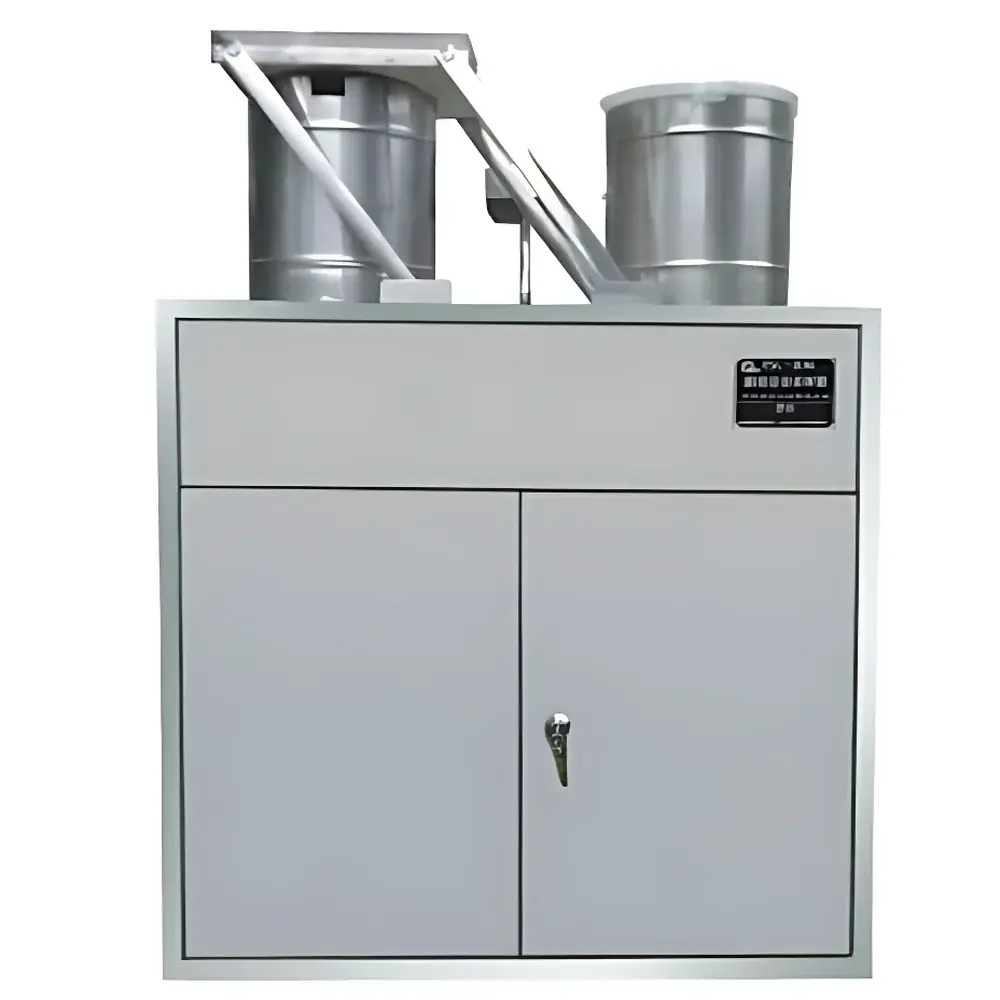
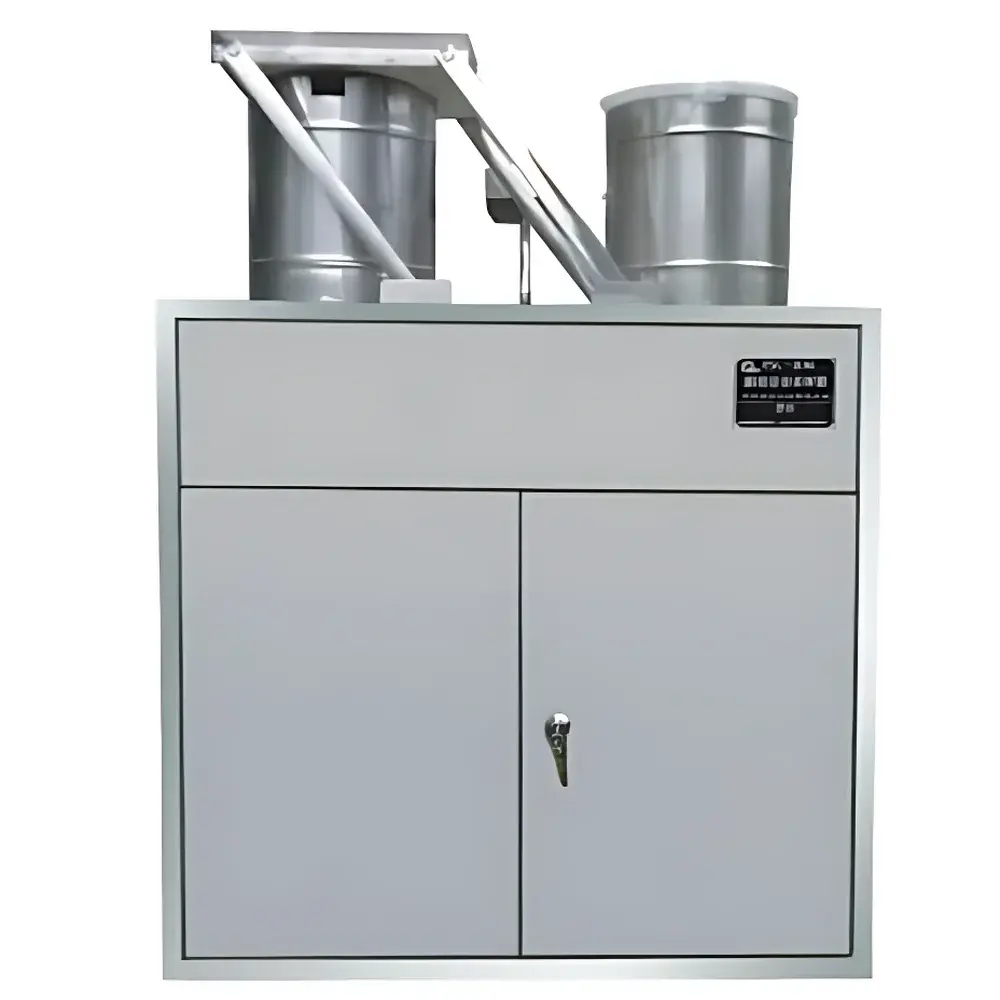
PUREN PSC Cabinet-Style Automatic Precipitation Sampler
| Brand | PUREN |
|---|---|
| Origin | Shandong, China |
| Manufacturer Type | Direct Manufacturer |
| Country of Origin | China |
| Model | PSC |
| Instrument Type | Laboratory-Grade Automatic Precipitation Sampler |
| Sampling Height | 1.2 m |
| Collection Bucket Diameter | 30 cm |
| Power Consumption | 2 W (standby), 100 W (sampling) |
| Operating Temperature Range | −40 °C to +50 °C |
| Relative Humidity Tolerance | 100% RH |
| Wind Resistance | Up to Beaufort Scale 9 |
| Sensor Sensitivity | ≥0.05 mm/h |
| Housing Material | Stainless Steel Frame with Polyethylene Sampling Buckets |
| Net Weight | 50 kg |
| Internal Data Retention | Multi-year (non-volatile memory, no refresh required) |
| Communication Range | Up to 40 km via wireless telemetry |
| Rain Cover Closure Delay | User-configurable from 1–20 minutes post-precipitation |
| Integrated Rain Gauge | Yes (optional standard rain gauge compatible) |
| Refrigerated Sample Storage | Optional 1–5 °C cooling module available |
Overview
The PUREN PSC Cabinet-Style Automatic Precipitation Sampler is an engineered environmental monitoring instrument designed for unattended, long-term, high-reliability collection of wet and dry atmospheric deposition. It operates on a dual-mode sampling principle: during precipitation events (rain or snow), it automatically deploys the precipitation bucket while sealing the dry-deposition (dust/fallout) bucket; following cessation of precipitation, it retracts the precipitation bucket and exposes the dry-deposition bucket—enabling continuous, time-resolved separation of wet-only, dry-only, and bulk deposition samples. The system employs a comb-type capacitive precipitation sensor with intrinsic immunity to fog, dew, and wind-blown particulates, supplemented by integrated heating elements to prevent condensation interference and actively melt accumulated snow. Its cabinet architecture provides structural integrity, weatherproofing, and thermal stability across extreme ambient conditions—from −40 °C Arctic winters to +50 °C desert summers—while maintaining full operational functionality under 9-Bft wind loads and 100% relative humidity.
Key Features
- Dual-bucket four-bar linkage mechanical system ensures precise, repeatable actuation with zero cross-contamination between wet and dry sampling compartments.
- Heated sensor array and programmable post-event evaporation cycle eliminate residual moisture, enabling rapid bucket closure and minimizing sample degradation risks.
- Stainless steel chassis and food-grade polyethylene sampling buckets comply with ISO 9060 (rain gauge performance) and ASTM D5907 (suspended solids in precipitation) material compatibility requirements.
- Low-power standby mode (2 W) extends battery-backup viability; peak draw remains within 100 W during active sampling and heating phases.
- Onboard non-volatile memory retains precipitation metadata—including start/stop timestamps, cumulative volume per event, and sensor trigger logs—for multi-year archival without external power or refresh cycles.
- User-configurable rain cover closure delay (1–20 minutes) supports standardized protocols such as EPA Method IO-3.3 and EMEP/EBAS deposition sampling guidelines.
Sample Compatibility & Compliance
The PSC sampler accommodates standard 30-cm-diameter collection surfaces conforming to WMO No. 8 (Guide to Meteorological Instruments and Methods of Observation) dimensional specifications. Its 1.2-m mounting height aligns with national meteorological network standards (e.g., China’s AQSIQ JJG 213–2019, US NOAA/NWS Technical Memorandum NWS SR-145). The stainless steel and polyethylene construction meets NSF/ANSI Standard 61 for contact with potable water-related sampling media and resists UV-induced polymer degradation per ASTM G154. When equipped with optional refrigerated storage (1–5 °C), the system satisfies cold-chain requirements for trace-metal and organic contaminant analysis per ISO 5667-3 and US EPA SW-846 Method 5035A.
Software & Data Management
The PSC integrates with Windows-based acquisition software (compatible with Windows 95 through Windows 11) running on IBM PC-compatible systems (≥166 MHz CPU, ≥500 MB HDD). The application provides real-time telemetry display, configurable alarm thresholds, automated report generation (CSV, PDF, Excel), and audit-trail logging compliant with GLP principles. Wireless communication up to 40 km enables remote deployment in mountainous or rural networks without cellular infrastructure. All internal data—including timestamped precipitation onset/duration/volume, sensor status flags, and actuator cycle logs—are stored with millisecond-resolution timestamps and exportable for integration into LIMS platforms or national deposition databases (e.g., EMEP, CASTNET, CNEMC).
Applications
- Long-term atmospheric deposition monitoring for sulfur, nitrogen, heavy metals, and persistent organic pollutants (POPs).
- Acid rain research and transboundary pollution tracking in regional air quality networks.
- Calibration and validation of satellite-based precipitation retrieval algorithms (e.g., GPM IMERG, TRMM 3B42).
- Source apportionment studies requiring chemically segregated wet/dry deposition fluxes.
- Regulatory compliance reporting under national environmental protection statutes (e.g., China’s GB 3095–2012, EU Directive 2008/50/EC).
- Climate change impact assessment on biogeochemical cycling in sensitive ecosystems (alpine lakes, forests, peatlands).
FAQ
Does the PSC support regulatory-compliant data integrity requirements?
Yes—the onboard memory maintains immutable timestamps and sensor-triggered event logs; exported data includes full chain-of-custody metadata suitable for EPA 40 CFR Part 136 and ISO/IEC 17025 documentation.
Can the system operate autonomously during extended power outages?
With optional DC+12V backup (e.g., deep-cycle battery or solar charge controller), the PSC sustains core sampling logic and memory retention for >72 hours at −20 °C; heating and motor functions require AC mains or high-capacity DC supply.
Is calibration traceable to national metrology institutes?
The integrated rain gauge is field-calibratable using NIST-traceable tipping-bucket or weighing-type reference gauges per WMO Guide §7.3.2; sensor sensitivity (≥0.05 mm/h) is verified using controlled drip-rate test fixtures.
How is sample integrity maintained during high-wind or freezing conditions?
The cabinet enclosure and sealed four-bar linkage minimize turbulence-induced splashing; heated sensor and bucket rim prevent ice bridging; post-event evaporation ensures no frozen residue compromises lid seal integrity.
What level of cybersecurity is implemented for wireless data transmission?
Telemetry uses AES-128 encrypted packet framing over licensed ISM-band RF links; no internet-facing ports or cloud dependencies are included—data remains under full user control.







