
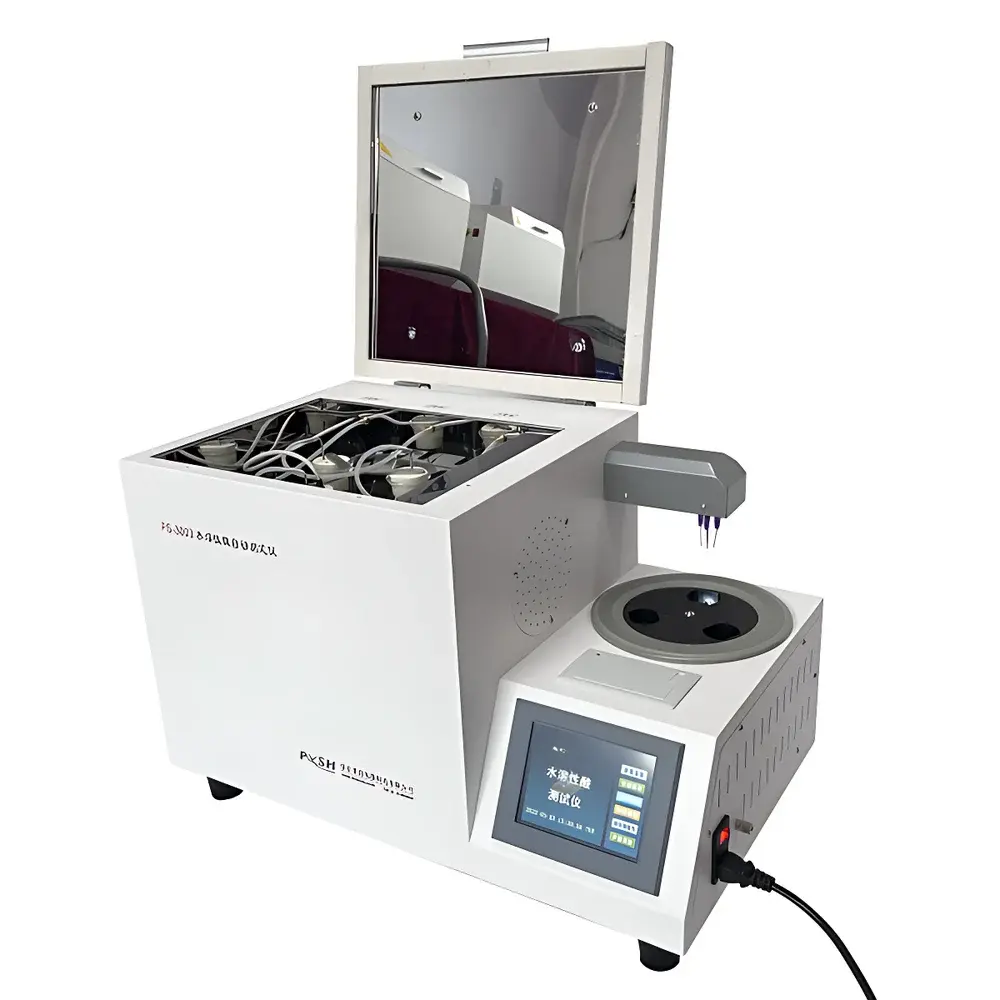
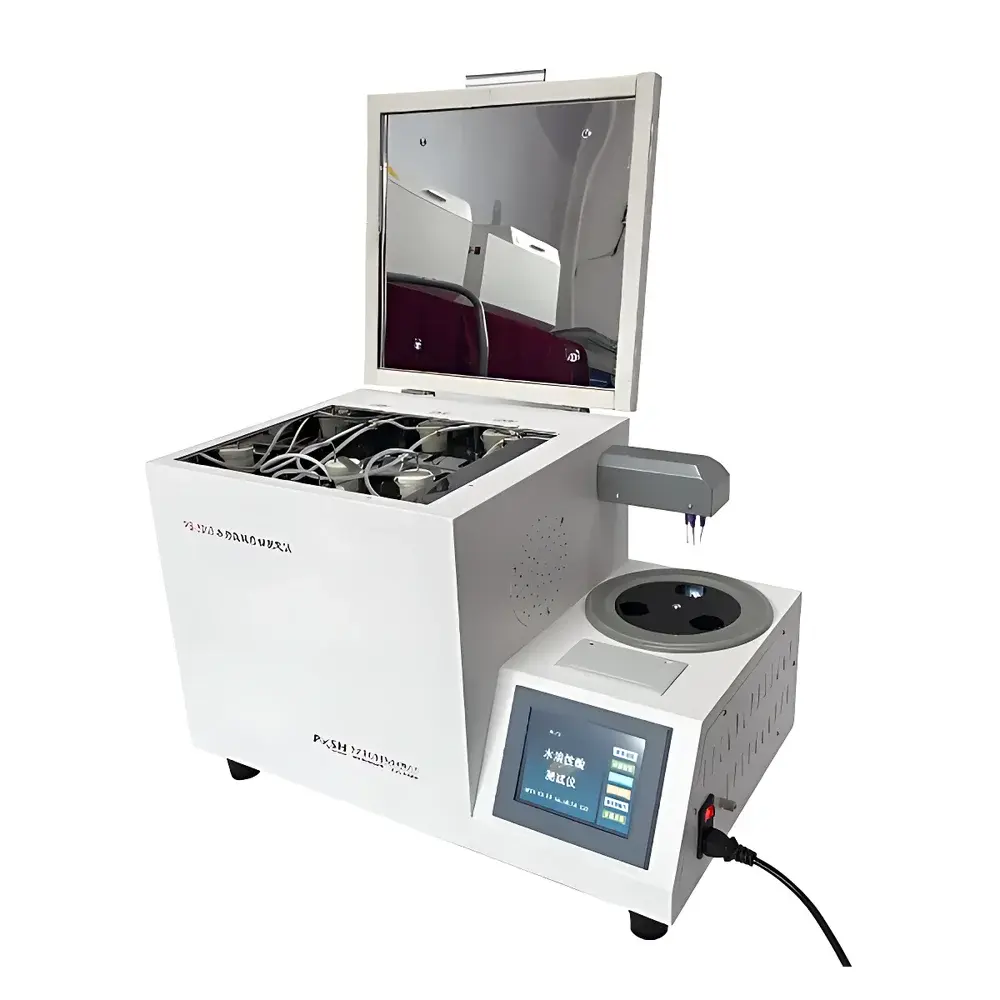
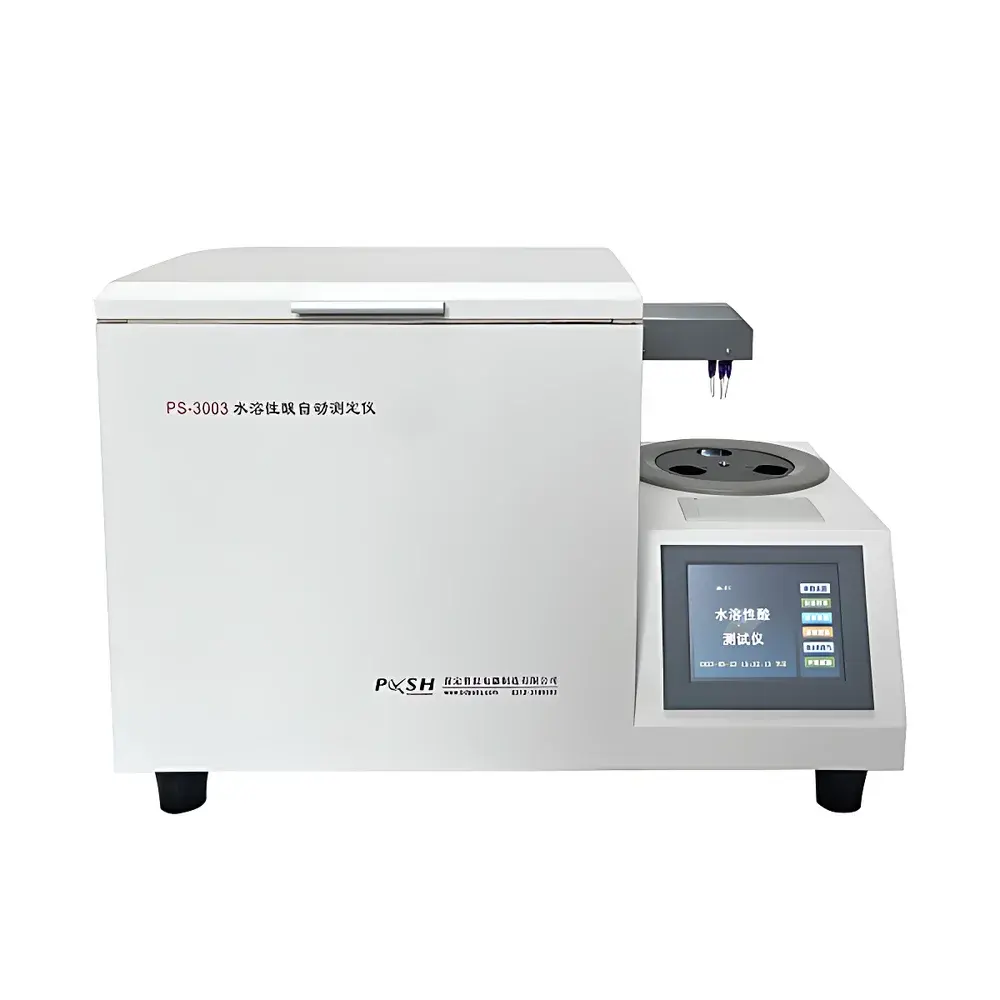
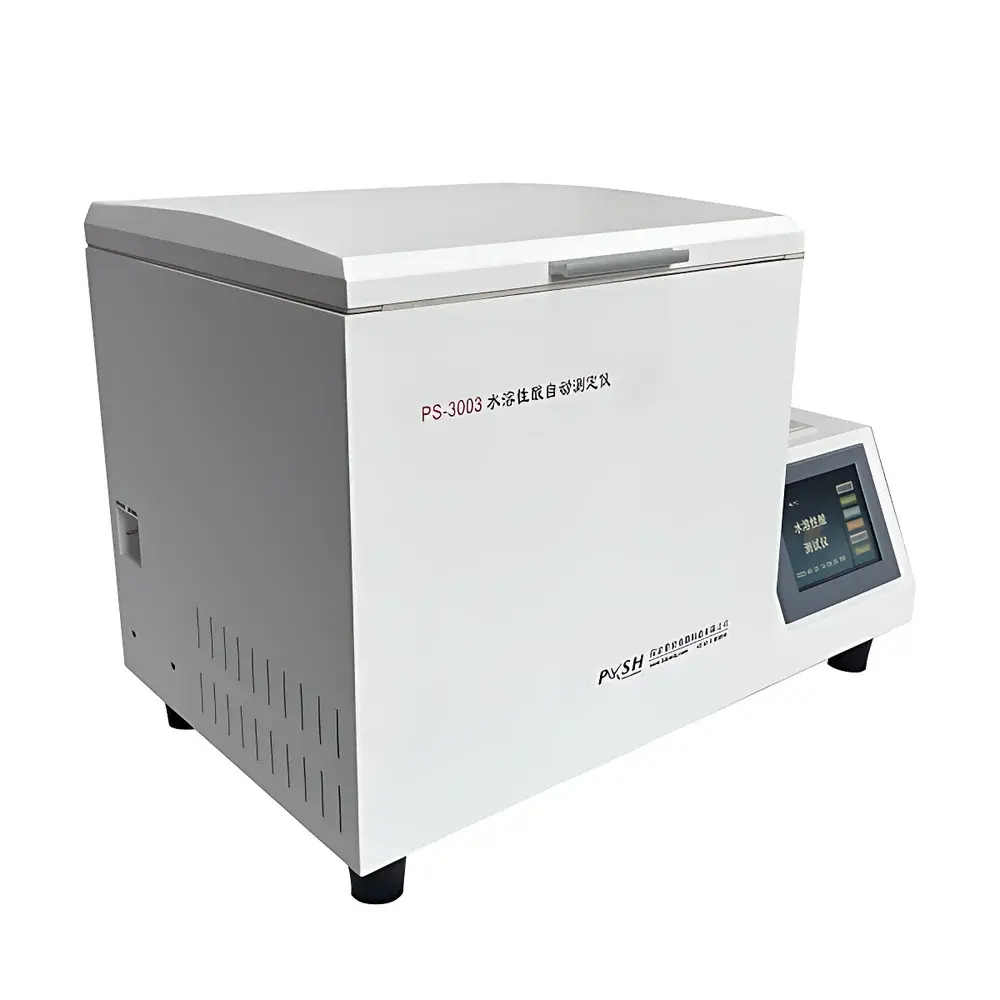
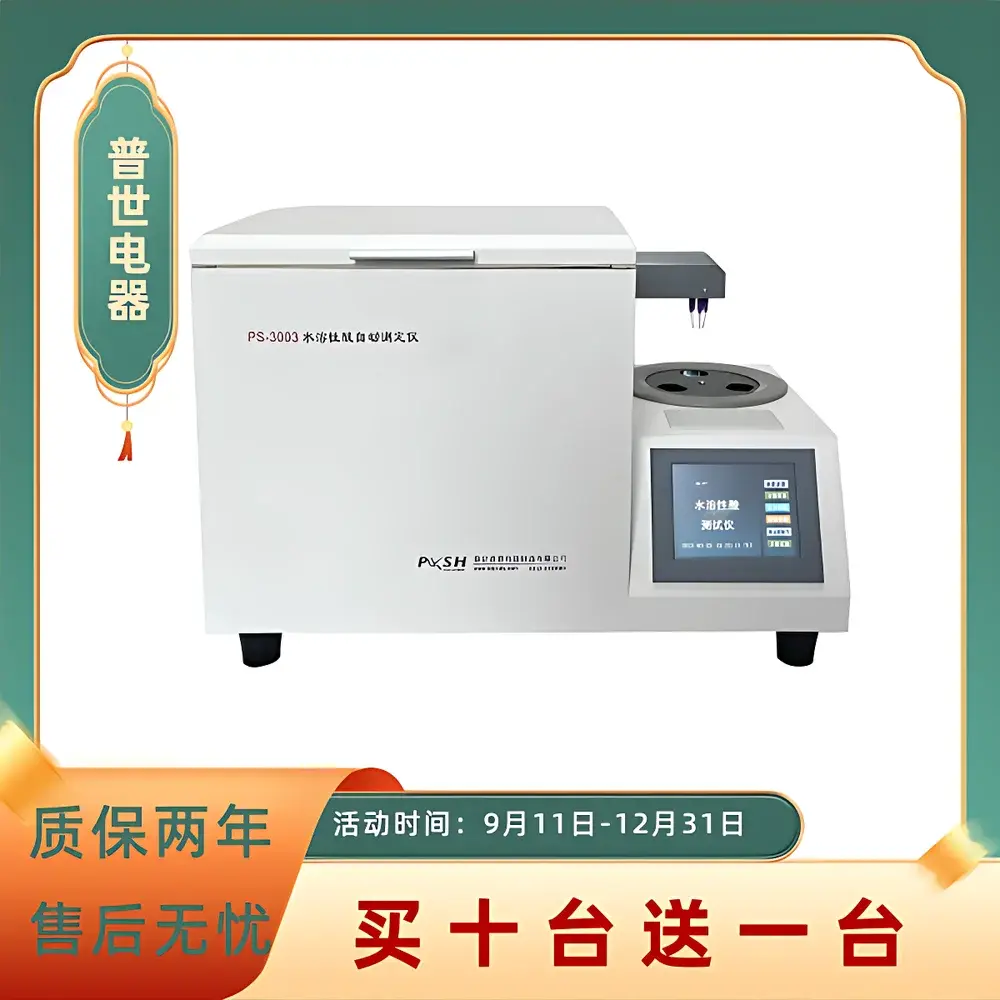
PUSH PS-3003 Automated Water-Soluble Acid Analyzer (Colorimetric pH Method)
| Brand | PUSH |
|---|---|
| Origin | Hebei, China |
| Manufacturer Type | Direct Manufacturer |
| Instrument Type | Benchtop |
| Model | PS-3003 |
| Measurement Range | pH 3.8–7.0 |
| Minimum Display Resolution | 0.1 pH unit |
| Temperature Control Accuracy | ±2 °C |
| Measurement Accuracy | ≤ ±0.1 pH |
| Operating Environment | 5–45 °C, ≤85% RH, AC 220 V ±10%, 50 Hz ±1 Hz |
| Sample Throughput | 1–3 samples per run |
| Interface | USB for PC connectivity |
| Compliance | Designed per GB/T 7598–2008 (Determination of Water-Soluble Acids in In-Service Transformer Oil) |
Overview
The PUSH PS-3003 Automated Water-Soluble Acid Analyzer is a benchtop electrochemical instrument engineered for precise, standardized quantification of water-soluble acidic components in insulating oils—primarily mineral-based transformer oils used in high-voltage power equipment. It operates on the colorimetric pH measurement principle defined in GB/T 7598–2008, the Chinese national standard aligned with international practices for assessing oil degradation through acid number proxy evaluation. Unlike conventional manual titration or standalone pH meters, the PS-3003 integrates thermal conditioning, mechanical agitation, optical endpoint detection, and automated fluid handling into a single workflow. The system extracts water-soluble acids from oil via aqueous extraction, conditions the extract at a controlled temperature (±2 °C), homogenizes the phase interface via programmable oscillation, and measures the resulting aqueous-phase pH using a calibrated, temperature-compensated solid-state pH sensor. This approach delivers trace-level sensitivity within the critical diagnostic window of pH 3.8–7.0—where early-stage oxidation products (e.g., low-molecular-weight organic acids such as formic, acetic, and octanoic acids) begin to accumulate but before severe sludge formation or corrosion occurs.
Key Features
- Benchtop architecture with integrated heating block, precision stepper-driven shaker, and microfluidic sampling loop for unattended multi-sample processing (1–3 samples per cycle)
- Large backlit LCD display with intuitive menu navigation and real-time status feedback (temperature, agitation stage, measurement progress)
- Microprocessor-controlled sequence execution: automatic heating → temperature stabilization → aqueous extraction agitation → supernatant sampling → pH measurement → sensor rinsing → thermal cooldown → result printing
- USB 2.0 interface compliant with standard CDC/ACM class protocols, enabling direct data export to Windows-based laboratory information management systems (LIMS) without proprietary drivers
- Onboard thermal calibration verification routine supporting periodic validation against NIST-traceable buffer standards (pH 4.01 and 6.86 at 25 °C)
- Robust housing rated IP20 for use in controlled electrical substation labs and ISO/IEC 17025-accredited testing facilities
Sample Compatibility & Compliance
The PS-3003 is validated for use with unused and in-service mineral insulating oils conforming to IEC 60296, ASTM D3487, and GB 2536 specifications. It accommodates standard 100 mL oil samples per test vial and requires only deionized water (resistivity ≥18.2 MΩ·cm) for extraction. The instrument’s operational protocol satisfies the procedural requirements of GB/T 7598–2008—including mandatory 80 °C extraction temperature, 5-minute agitation duration, and 10-minute phase separation period—while maintaining full traceability of all critical parameters (time stamps, setpoints, measured values). Though not certified to FDA 21 CFR Part 11, its audit trail functionality (via USB-exported CSV logs containing operator ID, timestamp, sample ID, raw pH value, temperature reading, and pass/fail flag per test) supports GLP-compliant documentation in third-party certification audits.
Software & Data Management
No proprietary software installation is required. Raw measurement data—including date/time stamp, sample identifier, measured pH, equilibrium temperature, and system status codes—are logged internally and exported as plain-text CSV files via USB mass storage emulation. Each file includes header metadata specifying firmware version (v2.1+), calibration date, and last sensor rinse time. Laboratories may import these files directly into Excel, MATLAB, or LIMS platforms for trending analysis (e.g., acid number vs. service life), statistical process control (SPC) charting, or integration with enterprise asset management (EAM) systems. Optional Python scripts (provided in documentation) enable batch parsing and automated report generation compliant with IEEE C57.104 guidelines for dissolved gas and acidity trend interpretation.
Applications
- Routine condition monitoring of power transformers, reactors, and tap changers in utility and industrial substations
- Acceptance testing of new oil batches prior to commissioning
- Diagnosis of accelerated aging due to thermal stress, oxygen ingress, or catalytic copper corrosion
- Supporting maintenance decision-making per IEEE Std C57.104–2019 (Guide for the Statistical Interpretation of Field DGA and Acidity Data)
- Quality assurance in oil reclamation and regeneration facilities
- Teaching laboratories demonstrating ASTM D974 / GB/T 258 principles via automated colorimetric correlation
FAQ
What standard methods does the PS-3003 implement?
It is fully aligned with GB/T 7598–2008 and technically compatible with the core extraction and measurement logic of ASTM D974 (acid number by colorimetry) and IEC 62021-1 (acidity of insulating liquids).
Can the instrument be used for non-transformer oils?
It is validated only for mineral insulating oils meeting IEC 60296; performance with synthetic esters, silicone fluids, or inhibited turbine oils has not been characterized.
Is external calibration required between runs?
A two-point calibration (pH 4.01 and 6.86) is recommended before each daily shift or after 10 consecutive tests, using buffers traceable to NIST SRM 186c.
Does the system support remote diagnostics?
No embedded Ethernet or Wi-Fi; remote troubleshooting is limited to USB log review and firmware update via offline PC.
What maintenance intervals are specified?
Daily: rinse electrode and sample path with deionized water; monthly: inspect agitation gasket and clean heater block; annually: verify thermal sensor accuracy with dry-block calibrator.



