
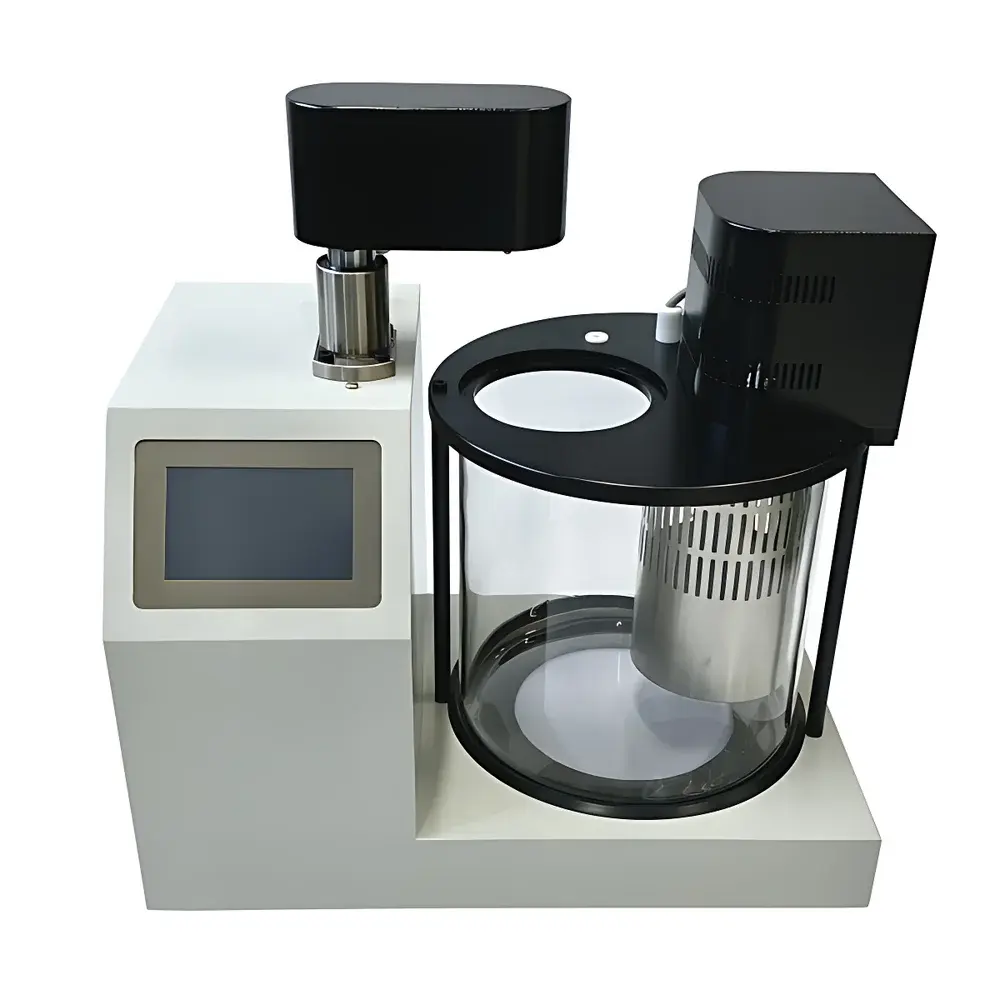
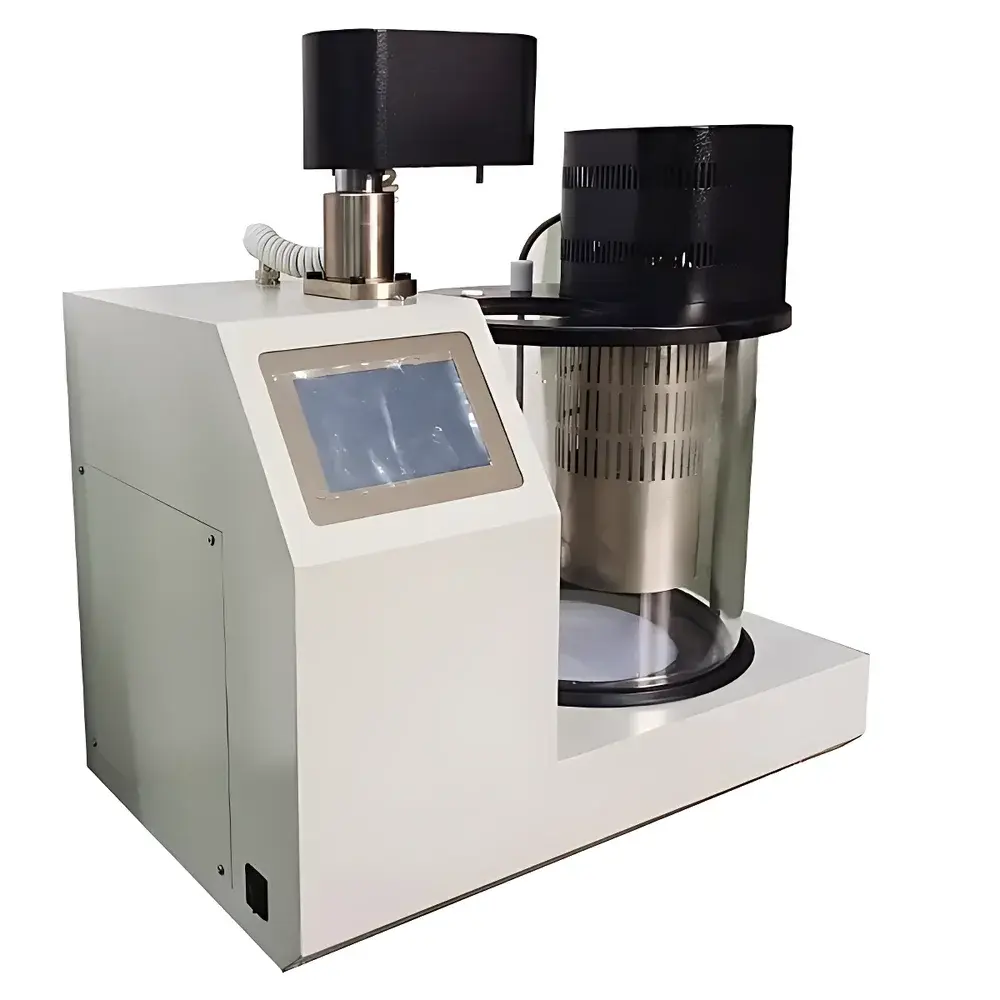
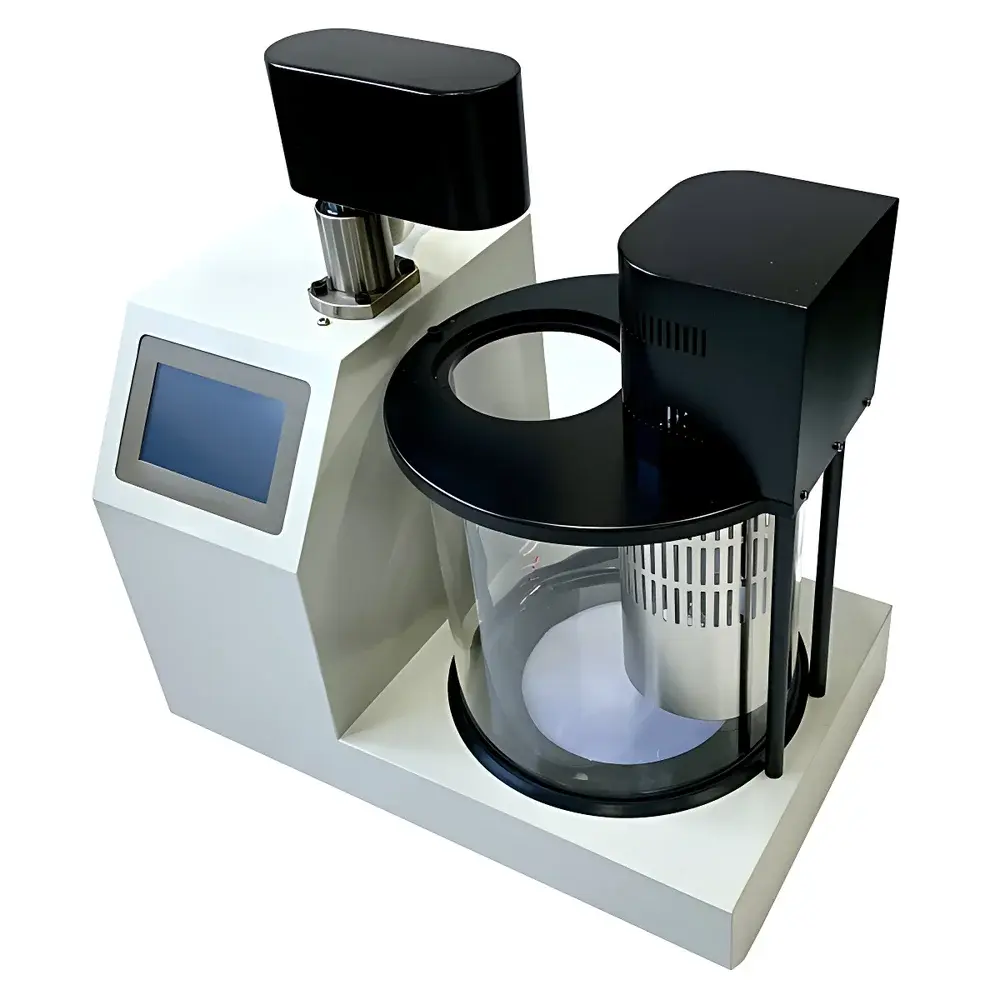
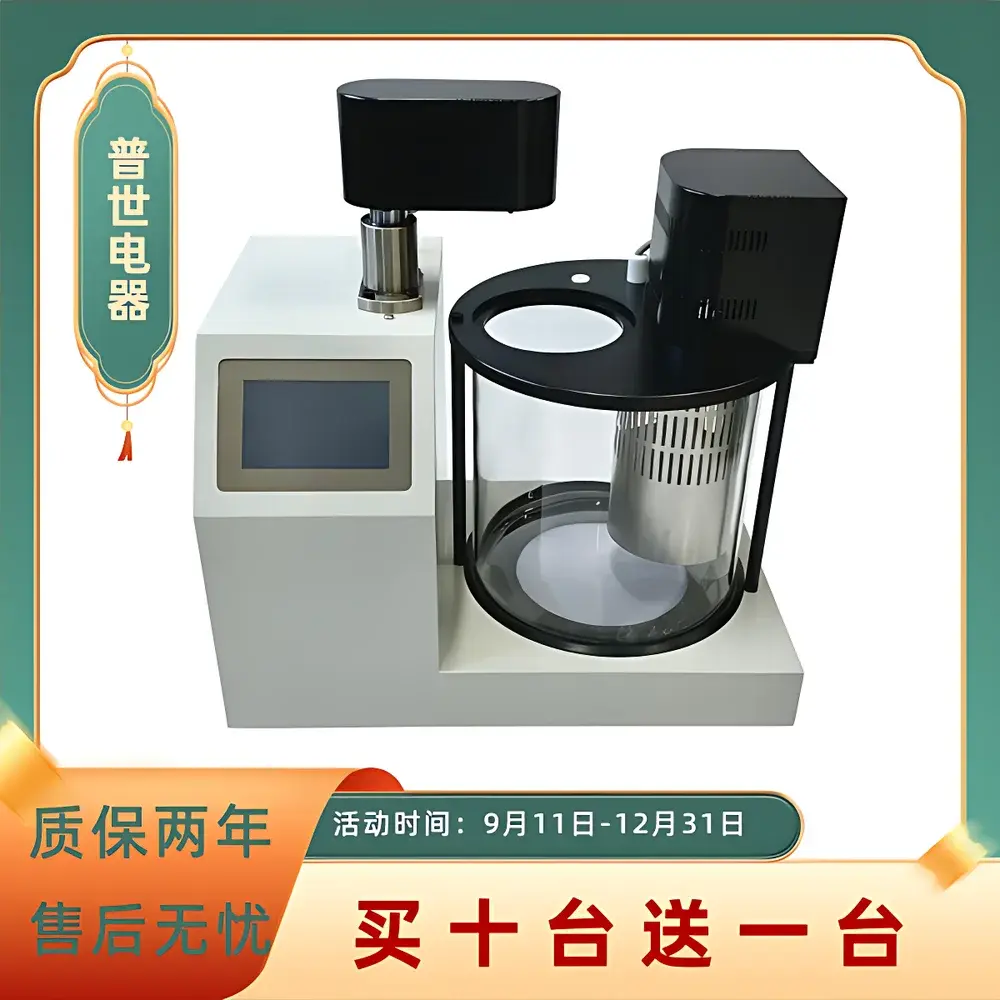
PUSH PS-KR206 Petroleum Demulsibility and Emulsion Resistance Tester
| Brand | PUSH |
|---|---|
| Origin | Hebei, China |
| Manufacturer Type | Direct Manufacturer |
| Country of Origin | China |
| Model | PS-KR206 |
| Price | USD 2,380 (approx.) |
| Display | 5-inch HD color touchscreen |
| Sample Capacity | 4 parallel test cells |
| Temperature Control Range | Ambient to 110 °C |
| Temperature Accuracy | ±0.02 °C |
| Temperature Sensor | Imported PT100 platinum resistance thermometer |
| Heating Method | PID-controlled resistive heating |
| Stirring Mechanism | Motorized vertical lift with gear-free mechanical transmission |
| Stirring Duration | 0–99 minutes (adjustable) |
| Timing Range | 0–99 hours (independent countdown timer) |
| Data Storage | 500 test records with timestamp, temperature setpoint, and duration |
| Power Supply | AC 220 V ±20%, 50 Hz ±10% |
| Max. Power Consumption | 800 W |
| Operating Environment | 5–40 °C, <85% RH (non-condensing) |
Overview
The PUSH PS-KR206 Petroleum Demulsibility and Emulsion Resistance Tester is a precision-engineered instrument designed for quantitative assessment of water separation behavior in petroleum-based lubricants and industrial oils—specifically targeting demulsibility (per ASTM D1401 / GB/T 7305-2003) and emulsion resistance (per ASTM D2711 / GB/T 7605-2008). It operates on the principle of controlled thermal agitation followed by gravity-driven phase separation monitoring, where oil–water mixtures are heated to standardized test temperatures (e.g., 54 °C or 82 °C), mechanically stirred for a defined duration, and then allowed to settle while visual inspection or automated optical detection (optional add-on) records the time required for distinct layer formation. The instrument’s architecture integrates thermodynamic stability control with reproducible mechanical agitation, enabling consistent evaluation of additive performance, oxidation-induced interfacial degradation, and formulation robustness under simulated service conditions.
Key Features
- Four independent, identical test cells enable concurrent evaluation of replicate samples or multi-formulation screening—reducing inter-test variability and improving statistical confidence in comparative studies.
- PID-controlled heating system with imported PT100 platinum resistance sensors ensures thermal stability within ±0.02 °C across the full ambient-to-110 °C range, meeting stringent repeatability requirements of ISO 4406 and ASTM D1401 Annex A.
- Motor-driven vertical stirrer lift mechanism eliminates manual handling and gear-induced vibration, delivering silent, repeatable immersion depth and rotational consistency across all four cells.
- 5-inch high-resolution capacitive touchscreen interface supports intuitive parameter entry—including setpoint temperature, stirring duration, post-stirring hold time, and user-defined labeling—without external PC dependency.
- Onboard non-volatile memory retains up to 500 complete test logs, each including date/time stamp, target temperature, actual measured temperature profile (min/max/avg), stirring duration, and operator ID (if enabled via optional login module).
- Compact footprint (W×D×H ≈ 420 × 350 × 380 mm) and lightweight aluminum alloy chassis facilitate integration into QC laboratories with space constraints or mobile testing units deployed at refinery sites.
Sample Compatibility & Compliance
The PS-KR206 accommodates standard 40-mL glass demulsibility test tubes (ASTM D1401-compliant dimensions) and accepts a broad range of petroleum-derived fluids—including turbine oils, hydraulic fluids, transformer oils, gear oils, and synthetic ester-based lubricants. Its thermal and mechanical design complies with core regulatory and industry-standard test protocols: GB/T 7305-2003 (equivalent to ASTM D1401), GB/T 7605-2008 (equivalent to ASTM D2711), and JIS K 2289. While not intrinsically 21 CFR Part 11 compliant, its data export capability (via USB port) supports traceable audit trails when integrated into validated LIMS environments under GLP or GMP frameworks. All electrical components meet IEC 61010-1 safety standards for laboratory equipment.
Software & Data Management
The embedded firmware provides standalone operation without host computer dependency. Test parameters and results are stored locally in encrypted binary format; historical records can be exported as CSV files via USB flash drive for downstream analysis in Excel, MATLAB, or statistical process control (SPC) platforms. Optional firmware upgrade enables RS-232 or Ethernet communication for remote status polling and scheduled calibration logging—supporting integration into centralized lab automation systems. Audit trail functionality (user login, parameter change history, result modification flags) may be activated to align with internal SOPs referencing ISO/IEC 17025 Clause 7.7 and FDA guidance on electronic records integrity.
Applications
- Quality control release testing of new turbine oils prior to commissioning in power generation assets.
- Evaluation of demulsibility performance loss during oxidative aging studies per ASTM D943 or ASTM D2272.
- Formulation development support for additive packages targeting enhanced water shedding in marine engine oils.
- Root-cause analysis of field failures linked to emulsion formation in hydraulic systems operating under high-humidity conditions.
- Contract laboratory services performing third-party compliance verification against OEM specifications (e.g., GEK 32568, Siemens TLV 9013).
FAQ
What standards does the PS-KR206 directly support?
It is fully aligned with GB/T 7305-2003 and GB/T 7605-2008, which are national equivalents of ASTM D1401 and ASTM D2711, respectively.
Can the instrument operate unattended for extended periods?
Yes—its 0–99 hour countdown timer and automatic shutdown after test completion allow overnight or weekend operation without supervision.
Is calibration traceability provided with the unit?
Each unit ships with a factory calibration certificate referencing NIST-traceable PT100 standards; annual recalibration is recommended per ISO/IEC 17025 requirements.
Does it support custom temperature ramp profiles?
No—the current firmware implements fixed-temperature isothermal testing only; ramped profiles require external thermal chamber integration.
How is sample contamination prevented between runs?
The design mandates manual cleaning of test tubes and stirrers between tests; no built-in solvent wash or purge function is included.





