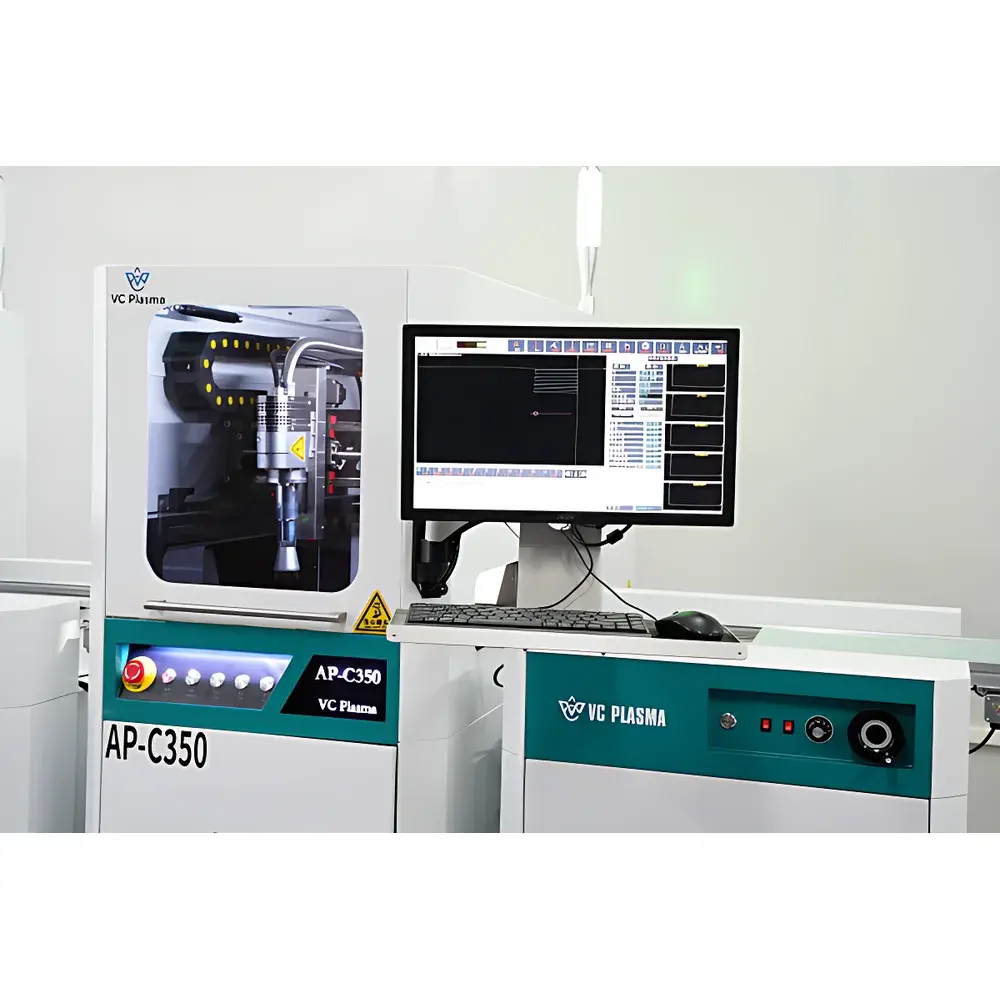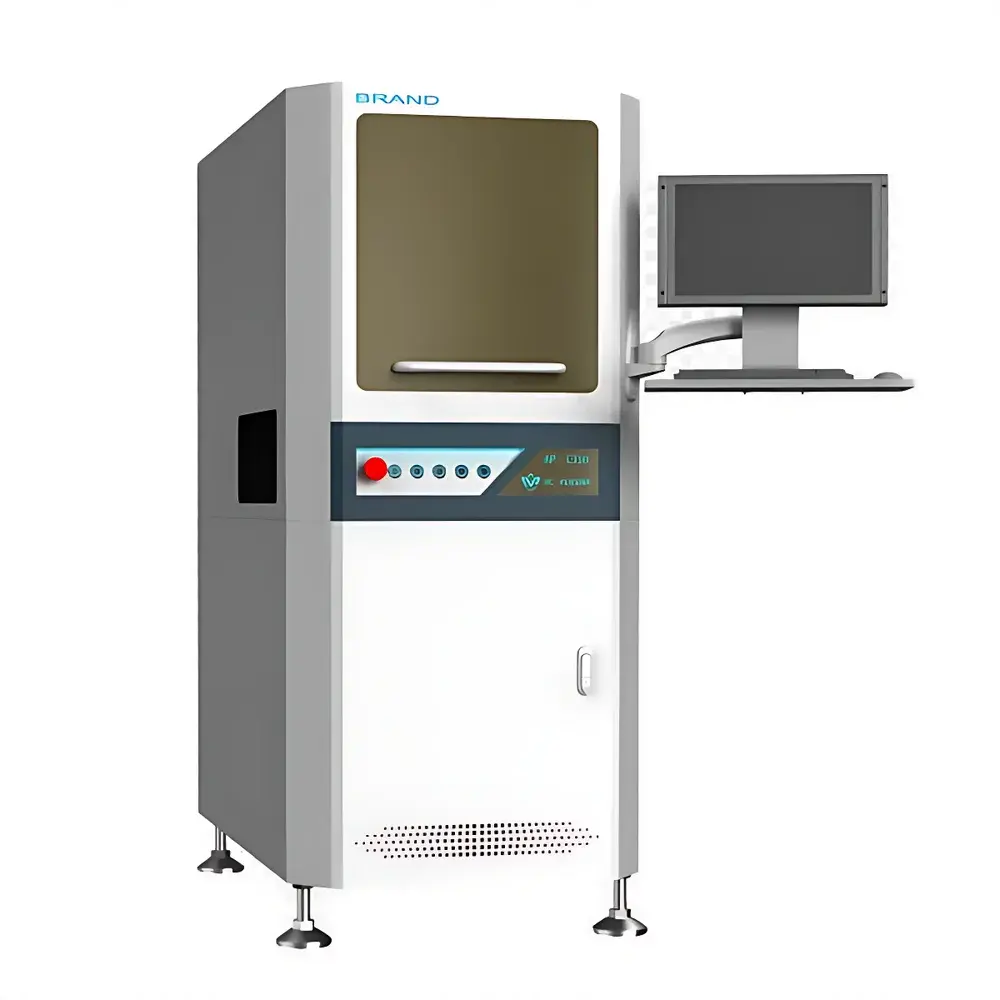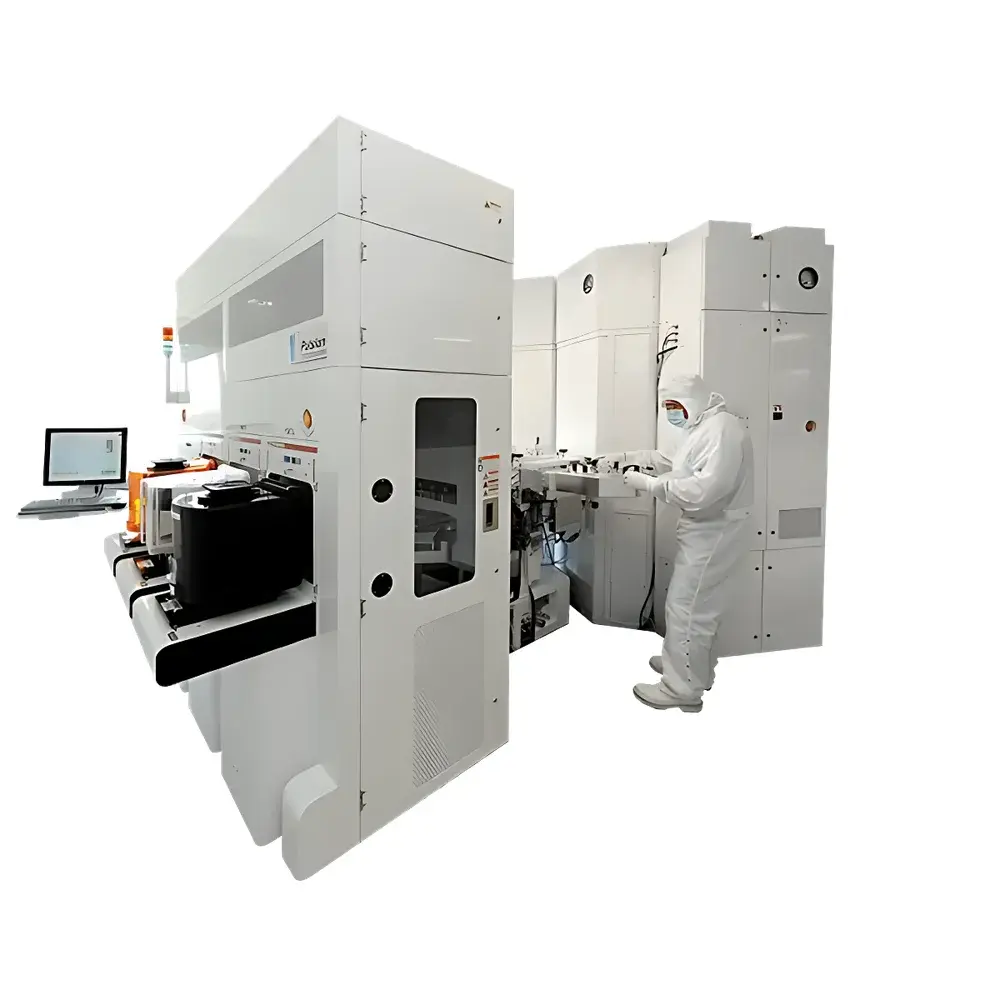
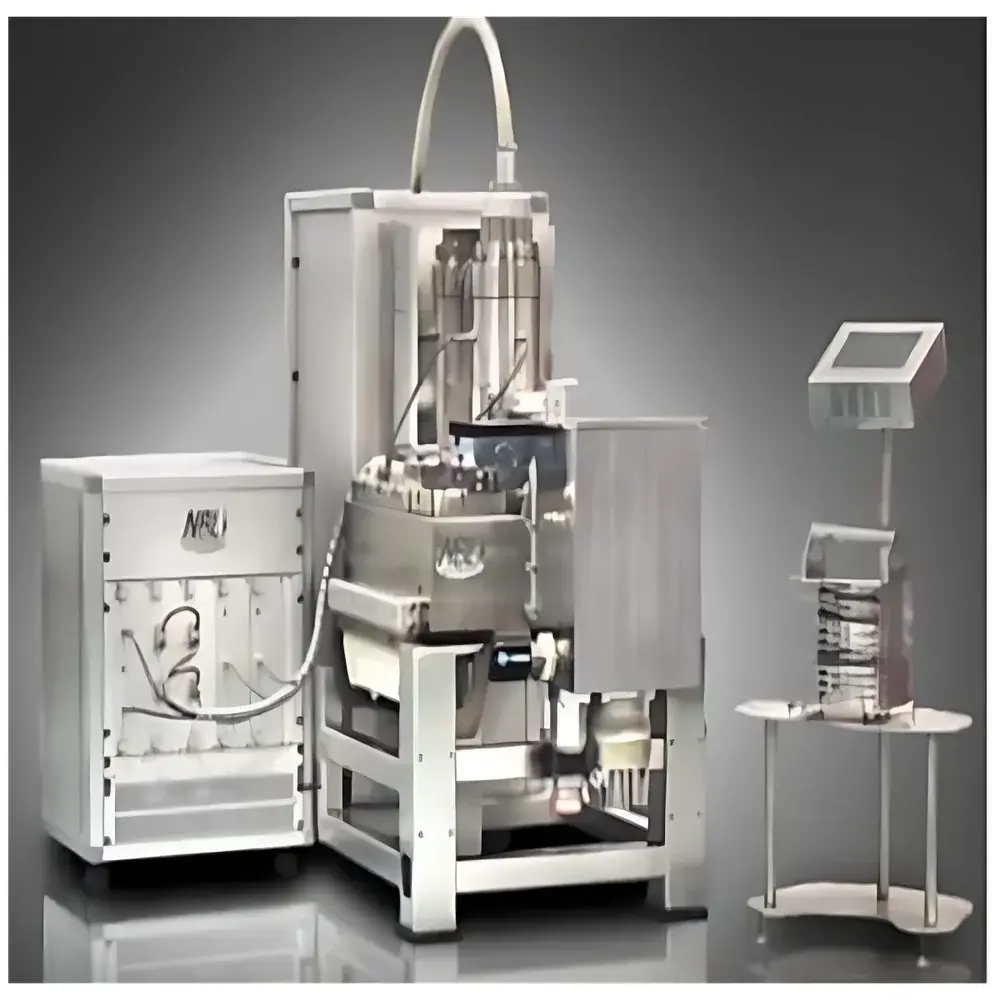
Q-ONE Deterministic Single-Ion Implantation System by LK Technology
| Brand | LK Technology |
|---|---|
| Origin | Germany |
| Model | Q-ONE |
| Product Type | Medium-Current Ion Implanter |
| Application Domain | IC Fabrication & Quantum Device Manufacturing |
| Implantation Energy | 50 keV |
| Wafer Size Compatibility | 8–12 inch |
| Implant Species | p⁺ (H⁺, B⁺, As⁺, P⁺, etc.) |
| Ion Source Options | Liquid Metal Ion Source (LMIS) & Plasma Ion Source |
| Beam Current Range | sub-fA to ~100 pA |
| Detection Efficiency | ≥98% |
| Positional Accuracy | <20 nm (3σ) |
| Stage Resolution | ≤1 nm (closed-loop) |
Overview
The Q-ONE Deterministic Single-Ion Implantation System is a purpose-built, ultra-high-precision ion beam platform engineered for quantum device fabrication and nanoscale semiconductor engineering. Unlike conventional medium-current ion implanters used in CMOS process lines, the Q-ONE operates on a fundamentally distinct principle: deterministic, event-by-event ion delivery with real-time, single-ion impact verification. It integrates a high-transmission mass-filtered focused ion beam (FIB) column with an in-situ secondary electron/ion detection architecture capable of resolving individual ion strikes at sub-femtoampere current levels. This enables true atomic-scale placement control—critical for fabricating scalable qubit arrays in silicon, diamond, or SiC host matrices where dopant positional fidelity directly governs coherence time, spin addressability, and inter-qubit coupling uniformity. The system complies with foundational requirements for quantum-grade process tool qualification, including traceable beam calibration, vacuum integrity (<5×10⁻⁸ mbar operating pressure), and electromagnetic interference (EMI)-shielded chamber design.
Key Features
- Deterministic single-ion implantation with ≥98% detection efficiency via integrated secondary electron amplification and time-correlated signal processing
- Mass-resolved FIB column with energy filtering (±0.5 eV resolution at 50 keV) to ensure isotopic and charge-state purity
- Dual-source architecture: Liquid Metal Ion Source (LMIS) for heavy elements (e.g., Bi⁺, Au⁺, Er⁺, Nd⁺, Si⁺ clusters) and plasma-based gas-fed source for light species (H⁺, N⁺, O⁺, He⁺)
- Nanometer-precision electrostatic/magnetic compound stage with active vibration isolation, supporting 8–12 inch wafers and achieving ≤1 nm closed-loop positioning repeatability
- Femtoampere-level beam current control (down to 0.1 fA) enabling statistically robust single-ion dosing across arbitrary scan patterns
- Real-time dose feedback loop synchronized with stage motion, eliminating stochastic uncertainty in implant location and count
Sample Compatibility & Compliance
The Q-ONE accommodates standard semiconductor substrates—including Si, SiC, GaN, diamond (HPHT & CVD), and sapphire—without requiring specialized mounting or conductive coatings. Its low-energy (up to 50 keV), high-mass-resolution beam minimizes lattice damage and channeling effects, preserving crystal integrity essential for spin-host systems. The system meets ISO 14644-1 Class 4 cleanroom compatibility standards and incorporates full ESD-safe grounding per IEC 61340-5-1. All hardware and software modules are designed to support GLP/GMP-aligned documentation workflows, including audit-trail-enabled operation logs, user-access-controlled parameter locking, and calibration certificate traceability to national metrology institutes (PTB, NIST). Optional integration with SEM/FIB dual-beam chambers enables correlative structural and compositional validation post-implant.
Software & Data Management
The proprietary Q-ONE Control Suite provides deterministic implant scripting via Python-based API (PyQONE), enabling automated multi-site implant sequences with conditional logic based on real-time detection events. Each implant record includes timestamped ion arrival data, beam parameters, stage coordinates, vacuum status, and detector gain settings—exportable in HDF5 format for FAIR (Findable, Accessible, Interoperable, Reusable) data management. The software supports ASTM E2777-compliant uncertainty quantification for dose accuracy and implements FDA 21 CFR Part 11-compliant electronic signatures and role-based access control. Integrated machine learning modules assist in optimizing source stability profiles and predicting LMIS lifetime based on emission current drift trends.
Applications
- Quantum Bit Fabrication: Placement of substitutional phosphorus, bismuth, or erbium atoms in silicon with <20 nm positional tolerance for donor-based spin qubits; deterministic nitrogen-vacancy center creation in diamond with controlled charge state initialization
- Nanoscale Doping Engineering: Site-specific doping of individual nanowires, graphene flakes, or colloidal quantum dots using tailored ion species (e.g., Mn²⁺ into CdSe QDs for magnetic coupling studies)
- Ion Lithography: Direct-write patterning using Bi⁺ for high-sputter-yield milling or H⁺ for resist-free lithography in hydrogen-terminated Si(100), with single-ion exposure capability for ultimate resolution benchmarking
- Materials Defect Science: Controlled introduction of isolated point defects to study defect migration kinetics, charge trapping dynamics, and radiation-hardness mechanisms under cryogenic or in-situ TEM conditions
FAQ
How does the Q-ONE achieve deterministic single-ion implantation?
It combines a mass-filtered, low-emittance ion beam with a high-gain secondary electron detection system that registers each ion impact in real time. A closed-loop feedback mechanism halts beam scanning after each confirmed event, ensuring exact one-ion-per-location delivery.
Is the system compatible with existing cleanroom infrastructure?
Yes—the Q-ONE conforms to SEMI S2/S8 safety standards and integrates with standard 200 mm/300 mm FOUP load ports. Its footprint (2.1 m × 1.8 m) and utility requirements (N₂ purge, chilled water, 3-phase 208 VAC) align with Class 1000 fab environments.
Can the Q-ONE perform multi-species sequential implantation?
Yes—via automated source switching and beam recalibration routines, users can execute interleaved implant sequences (e.g., P⁺ followed by ¹⁵N⁺) within a single vacuum cycle without breaking chamber integrity.
What level of process documentation support is provided for regulated R&D environments?
Full 21 CFR Part 11 compliance is available as an optional configuration, including electronic signature enforcement, immutable audit trails, and IQ/OQ documentation packages aligned with ISO/IEC 17025 laboratory accreditation requirements.