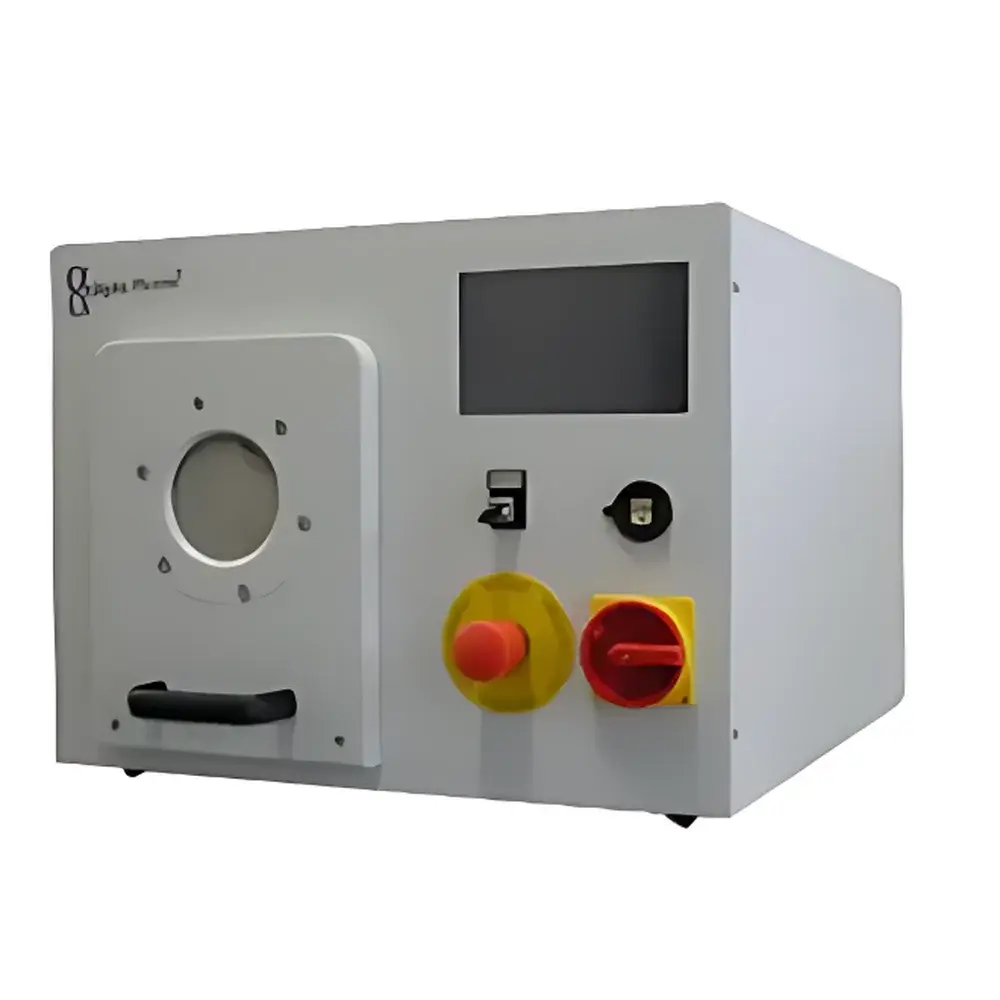
Q235 Microwave Plasma Resist Stripper by Alpha Plasma
| Brand | Alpha Plasma |
|---|---|
| Origin | Germany |
| Model | Q235 (Q-Series) |
| Type | Benchtop Microwave Plasma Asher/Stripper |
| Application Domain | Semiconductor Front-End-of-Line (FEOL) & MEMS Fabrication |
| Compliance | CE-marked, ISO 9001–certified manufacturing, compatible with cleanroom Class 100/ISO 5 environments |
Overview
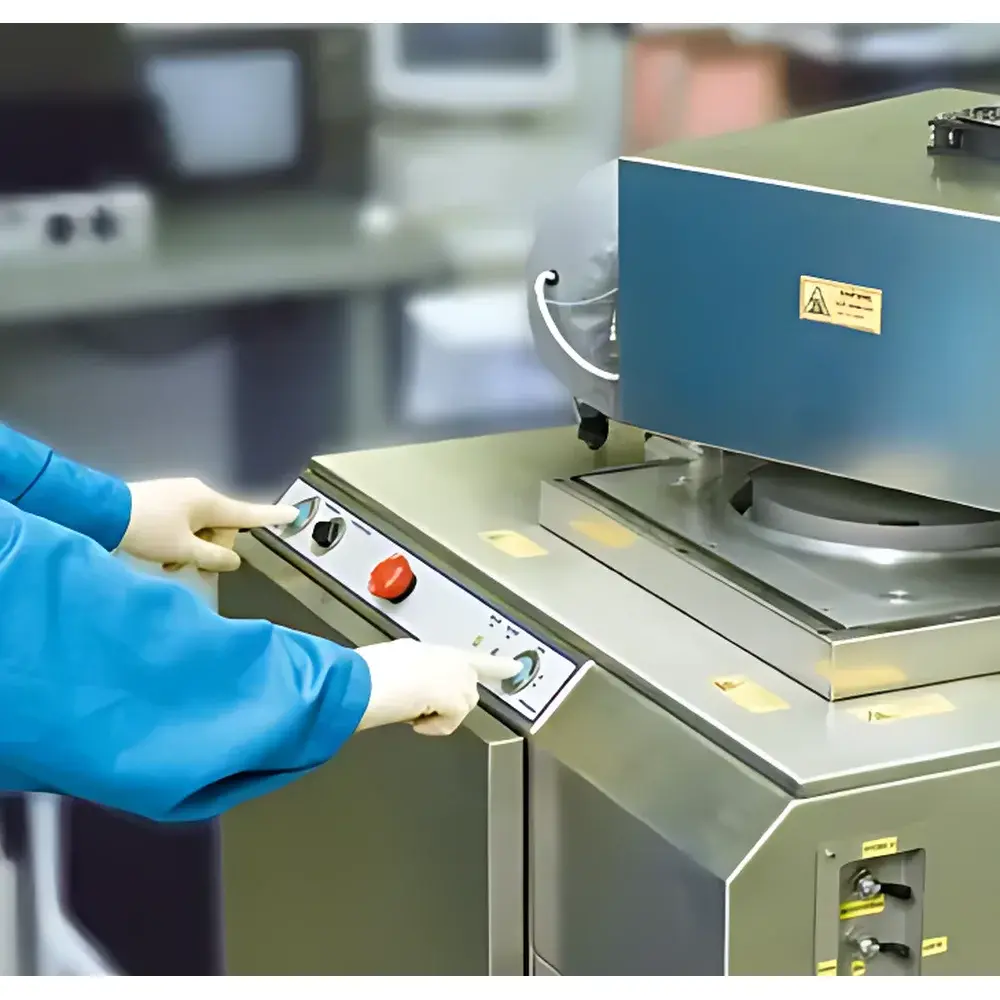
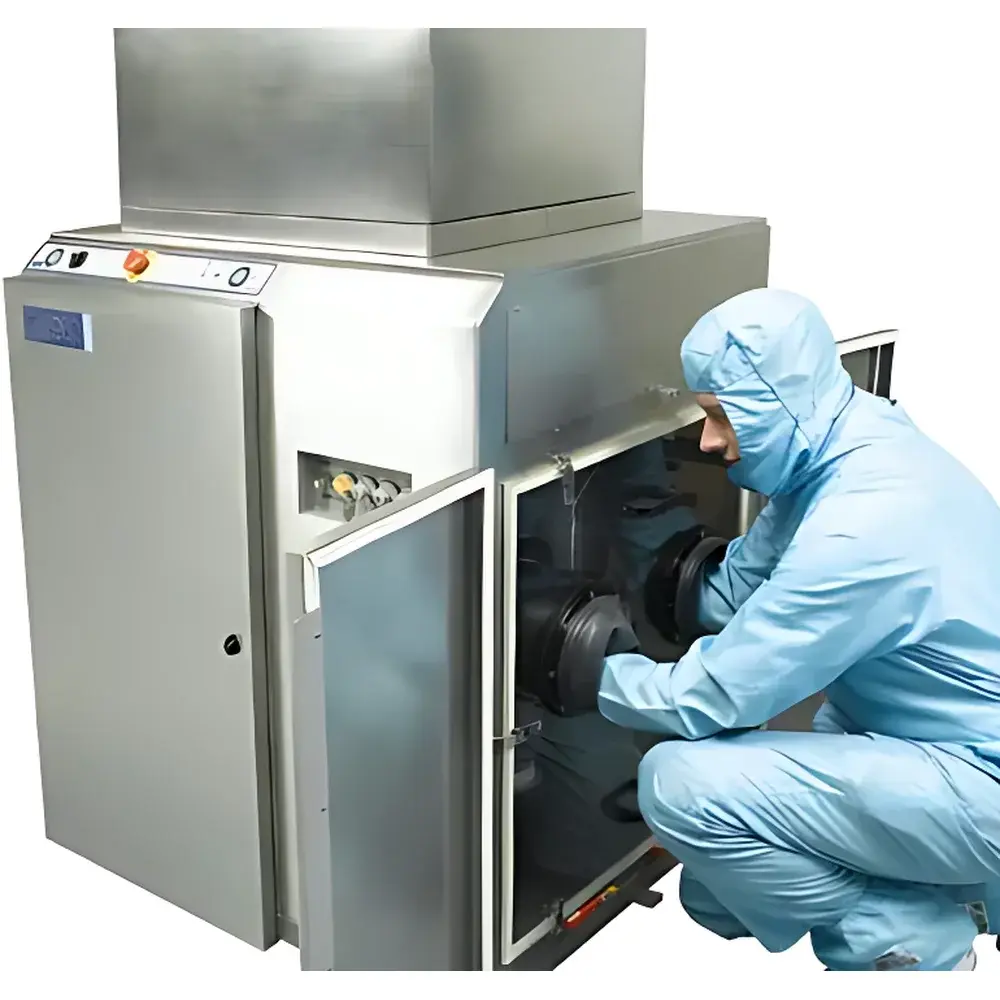
The Q235 Microwave Plasma Resist Stripper is a compact, high-efficiency benchtop plasma processing system engineered for the precise, non-damaging removal of photoresist and organic residues in semiconductor and MEMS fabrication. Utilizing 2.45 GHz microwave-generated plasma—without internal electrodes—the Q235 achieves uniform, low-bias, high-density plasma generation in a controlled O₂ or O₂/N₂ gas environment. This enables highly selective, isotropic ashing of thick, hardened resists (e.g., post-high-dose ion implantation resists), SU-8, and polymer-based sacrificial layers without inducing substrate heating, surface charging, or physical sputtering damage. Unlike reactive ion etching (RIE) tools, the Q235 operates at near-ambient wafer temperature (<60 °C), eliminating thermal stress on delicate structures such as high-aspect-ratio MEMS features or low-k dielectrics. Its design adheres to fundamental plasma physics principles—electron cyclotron resonance (ECR)-enhanced microwave coupling ensures stable plasma ignition and reproducible process windows across 100 mm to 200 mm wafers (or equivalent substrates up to 8″ diameter).
Key Features
- Electrodeless 2.45 GHz microwave plasma source: Eliminates electrode erosion, particle generation, and metal contamination—critical for yield-sensitive front-end processes.
- Benchtop footprint (W × D × H ≈ 600 × 750 × 650 mm): Integrates into limited cleanroom space without requiring dedicated exhaust ducting or RF grounding infrastructure.
- Programmable process control: Independent regulation of microwave power (0–1200 W), gas flow (O₂, N₂, or mixtures; 10–200 sccm), chamber pressure (0.1–10 mbar), and treatment time (1–300 s).
- Integrated quartz process chamber with RF-shielded viewport: Enables real-time visual monitoring and optical emission spectroscopy (OES) integration for endpoint detection.
- Passive cooling + forced-air heat management: Maintains substrate temperature below 60 °C during extended ash cycles—verified per ASTM F1558 thermal mapping protocol.
- CE-compliant safety architecture: Includes interlocked access doors, emergency stop circuitry, plasma suppression on door opening, and integrated ozone destruction module.
Sample Compatibility & Compliance
The Q235 accommodates bare silicon, SOI, compound semiconductors (GaAs, SiC), glass, quartz, and metal-coated wafers (TiN, Al, Cu). It supports standard cassette loading (up to 25 × 100 mm wafers or 13 × 150 mm wafers per batch) and single-wafer manual placement. Process validation data confirm full compatibility with industry-standard photoresists—including AZ®系列, Shipley S1800®, and MicroChem SU-8 2000 series—as well as carbon-rich hard masks and PECVD-deposited organosilicate residues. The system meets ISO 14644-1 Class 5 cleanroom requirements when operated with HEPA-filtered purge gas. All firmware and operational logs comply with GLP/GMP documentation standards; audit trails support FDA 21 CFR Part 11–aligned electronic record retention when interfaced with validated MES platforms.
Software & Data Management
The Q235 runs on Alpha Plasma’s proprietary PlasmaControl™ v3.2 software, deployed on an embedded industrial PC with touchscreen HMI. Software modules include recipe-driven process sequencing, real-time parameter logging (timestamped at 100 ms intervals), OES spectral snapshot capture, and automated pass/fail criteria evaluation based on intensity decay trends. Data export conforms to SEMI E10 (Definition of Equipment Data Items) and E122 (Data Collection Standards) formats. Optional Ethernet/IP or Modbus TCP interfaces enable integration into factory-wide SCADA systems. All user actions—including login, parameter changes, and run initiation—are logged with operator ID, timestamp, and checksum-protected records for traceability.
Applications
- Post-ion-implant resist stripping: Removal of carbonized, cross-linked resists after doses ≥1×10¹⁶ cm⁻² without silicon lattice damage or dopant redistribution.
- MEMS release etching: Clean removal of polyimide or polysaccharide sacrificial layers in inertial sensors and RF-MEMS switches.
- Pre-etch residue cleaning: Elimination of spin-on-carbon (SOC) residuals and BARC fragments prior to dielectric etch.
- SU-8 deblocking: Controlled ablation of thick (>100 µm) SU-8 structures for microfluidic mold fabrication.
- Post-develop scum removal: Low-power “scum ash” mode for eliminating sub-10 nm organic residues after TMAH development.
- Wafer-level packaging pre-clean: Surface activation and organic contaminant removal prior to wafer bonding or underfill dispensing.
FAQ
What plasma gases are supported—and are gas mixing ratios programmable?
Yes. The Q235 supports O₂, N₂, and Ar individually or in binary mixtures (e.g., O₂/N₂ at 80/20 to 95/5 vol%). Mass flow controllers are calibrated per ISO 6326-2 and allow ratio programming via PlasmaControl™.
Can the system be qualified for GMP production environments?
Yes. IQ/OQ documentation packages—including installation checks, temperature uniformity mapping, plasma density verification (via Langmuir probe calibration report), and repeatability testing (n ≥ 30 runs, RSD < 2.1% for ash rate)—are available upon request.
Is remote diagnostics and service support available?
Alpha Plasma provides secure remote access (AES-256 encrypted) for firmware updates, log analysis, and real-time parameter troubleshooting—subject to customer IT policy approval.
Does the Q235 meet semiconductor industry environmental standards for ozone and NOₓ emissions?
Yes. Integrated catalytic ozone destruct unit reduces outlet O₃ concentration to <0.05 ppm (per OSHA 29 CFR 1910.1000), and NOₓ emissions remain below 1 ppm (measured per EPA Method 7E).