
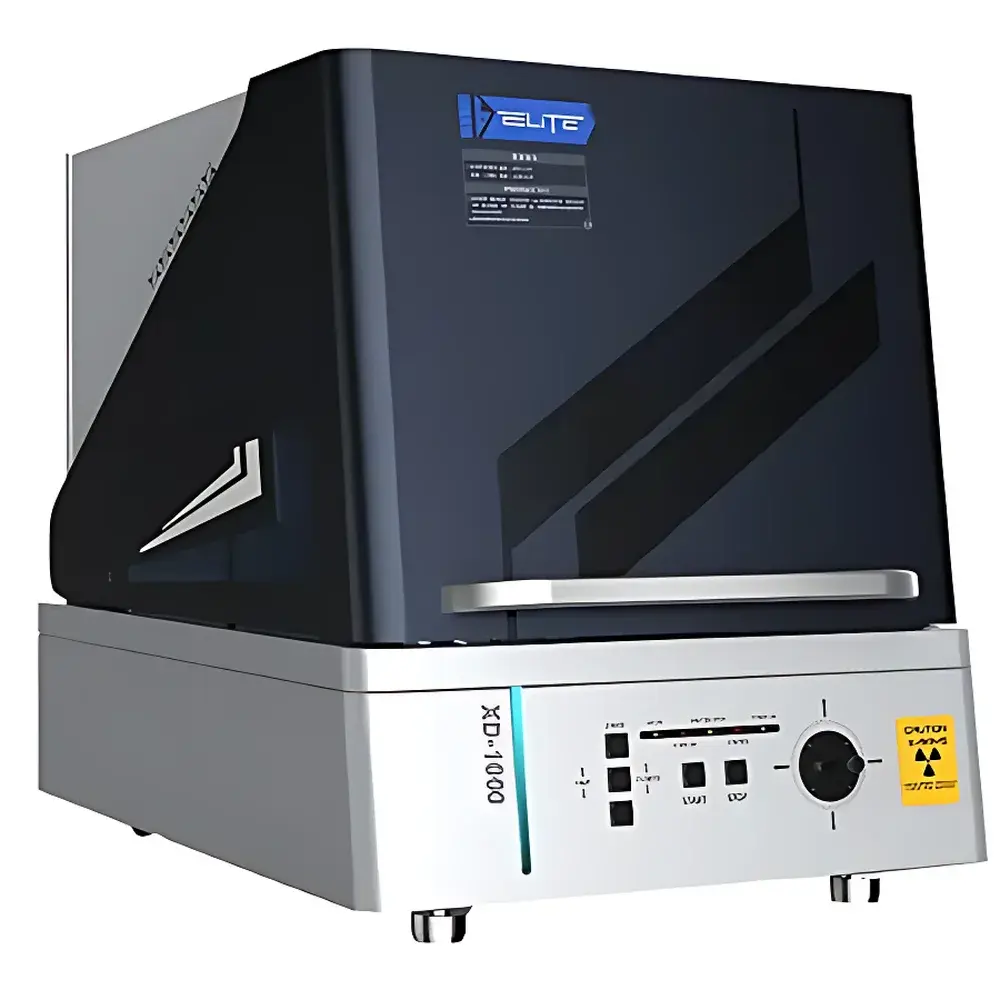
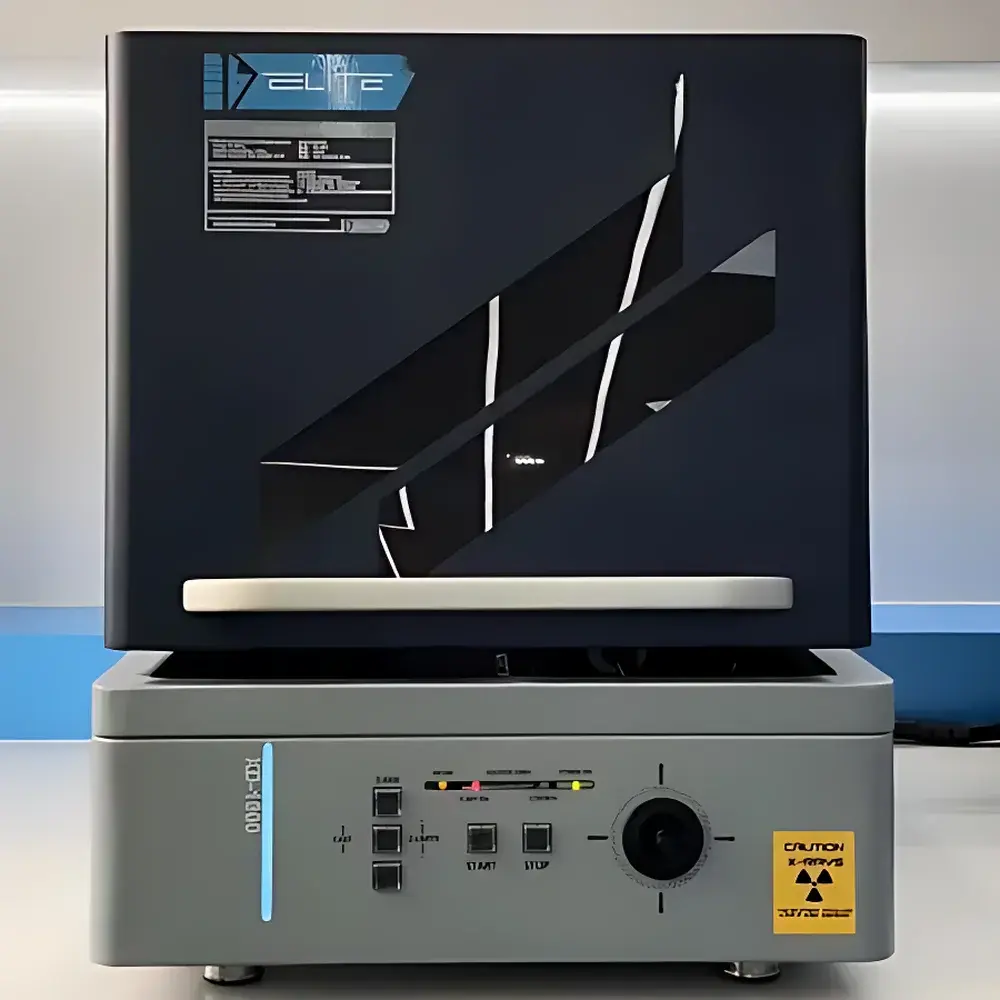
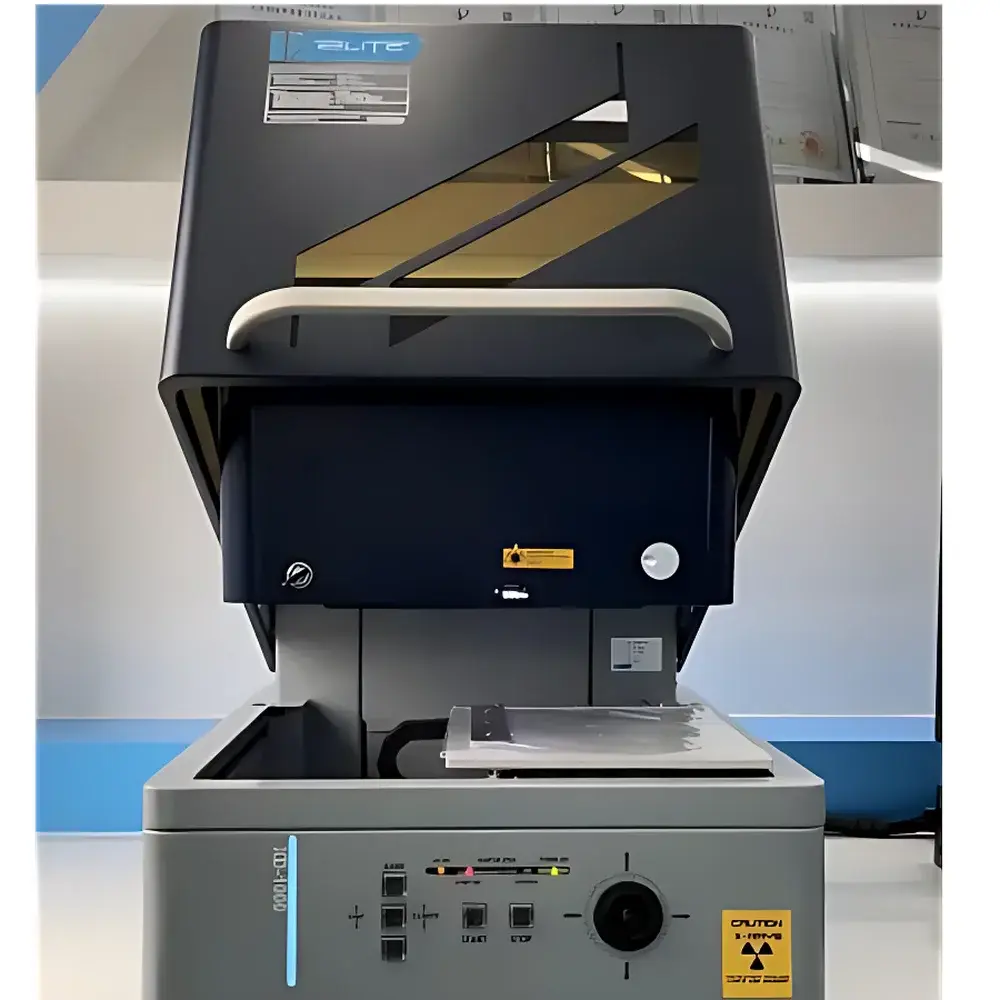
QiaoBang XD1000 Upward-Beam X-ray Fluorescence Thickness Analyzer
| Brand | QiaoBang Instrument |
|---|---|
| Origin | Jiangsu, China |
| Manufacturer Type | Authorized Distributor |
| Country of Origin | China |
| Model | XD1000 |
| Price Range | USD 16,500 – 27,500 |
Overview
The QiaoBang XD1000 is an upward-beam energy-dispersive X-ray fluorescence (EDXRF) thickness analyzer engineered for non-destructive, high-precision measurement of metallic coating thicknesses on conductive and non-conductive substrates. Unlike conventional side- or down-irradiation systems, its vertical optical path architecture enables direct analysis of large, irregular, or recessed components—such as automotive trim, PCB lead frames, sanitary ware, and electroplated fasteners—without repositioning or sample disassembly. The instrument operates on fundamental parameter (FP)-based quantification principles, utilizing characteristic X-ray emission intensities to determine elemental mass per unit area (µg/cm²), which is then converted to physical thickness (nm–µm) using substrate-specific calibration models. Its dual-function capability—simultaneous coating thickness analysis and plating bath composition monitoring—supports closed-loop process control in electroplating lines, aligning with Industry 4.0 quality assurance frameworks.
Key Features
- Upward-beam geometry with adjustable Z-axis lift mechanism, accommodating samples up to 600 × 600 × 300 mm (L×W×H) and enabling stable measurement of oversized or topographically complex parts.
- Integrated quad-focus collimation system: four independently selectable focal spots (Ø0.1 mm, Ø0.3 mm, Ø0.5 mm, Ø1.0 mm) optimized for micro-area analysis of dense multi-point arrays or deep recesses up to 90 mm depth with height differentials.
- Advanced EFP (Enhanced Fundamental Parameters) algorithm: supports multi-layer stack quantification—including alloy layers, interdiffusion zones, and overlaid coatings (e.g., Ni/Cu/Sn on PCBs)—without requiring matrix-matched standards.
- AI-powered auto-targeting: real-time CCD imaging coupled with edge-detection and pattern-matching algorithms identifies feature coordinates and aligns measurement points automatically, eliminating manual stage positioning errors.
- Modular hardware architecture with intelligent power management: includes adaptive sleep mode, thermal-stable detector housing, and plug-in SDD (Silicon Drift Detector) module for long-term spectral reproducibility (RSD < 1.2% over 8 h).
- Programmable XYZ motorized stage with repeatable positioning accuracy ±1.5 µm, supporting unattended batch analysis of hundreds of predefined locations per sample.
Sample Compatibility & Compliance
The XD1000 accommodates a broad range of industrial substrates—including steel, aluminum, copper alloys, plastics, and ceramics—and measures common electroplated metals such as Cr, Ni, Cu, Sn, Zn, Au, Ag, Pd, and their alloys (e.g., Sn–Pb, Ni–Fe, Cu–Sn). It complies with ISO 3497:2022 (Metallic coatings — Measurement of coating thickness — X-ray spectrometric methods) and ASTM B568–98(2020) (Standard Test Method for Measurement of Coating Thicknesses by X-Ray Spectrometry). For regulated environments, the software supports 21 CFR Part 11-compliant audit trails, electronic signatures, and role-based access control—enabling deployment in GLP/GMP-certified laboratories and Tier-1 automotive supplier QA labs.
Software & Data Management
QiaoBang’s proprietary AnalytiQ Suite v3.2 provides full workflow integration—from method development and calibration curve generation to statistical process control (SPC) reporting. Key capabilities include: automated calibration verification via reference foils; batch report export in PDF/CSV/XLSX formats with embedded spectra and metadata; real-time SPC charts (X-bar/R, Cpk); and seamless integration with MES/SCADA systems via OPC UA or Modbus TCP. All measurement data—including raw spectra, peak deconvolution logs, and positional metadata—is stored in a timestamped, encrypted SQLite database with configurable retention policies and backup scheduling.
Applications
- Electroplating line monitoring: simultaneous quantification of bath metal ion concentrations (Ni²⁺, Cu²⁺, Sn⁴⁺) and deposited layer thickness to optimize rectifier current density and reduce chemical waste.
- PCB and semiconductor packaging: thickness uniformity mapping of ENIG (electroless nickel immersion gold), ENEPIG, and OSP coatings across high-density interconnect substrates.
- Automotive and aerospace components: compliance verification of corrosion-resistant coatings (e.g., Zn–Ni, Cr³⁺ trivalent chrome) on brake calipers, fuel rails, and turbine blades.
- Consumer hardware QA: rapid screening of decorative chromium on faucets, door handles, and appliance trim—especially where surface curvature or undercuts preclude contact probe use.
- In-line adaptation: optional conveyor-mounted configuration with trigger-based auto-acquisition, enabling 100% inspection at production speeds up to 30 parts/min.
FAQ
Does the XD1000 require radioactive sources or external cooling?
No. It uses a low-power (<50 W) air-cooled Rh-anode X-ray tube and solid-state SDD detection—no liquid nitrogen or Peltier chillers required.
Can it measure coatings on non-flat or highly curved surfaces?
Yes. The upward-beam design combined with auto-focusing CCD imaging and dynamic Z-height compensation allows accurate measurement on radii ≥5 mm and stepped topographies.
Is plating bath analysis performed in-situ or offline?
Bath analysis requires sampling into standardized quartz cuvettes; results are reported in g/L with detection limits ranging from 0.1–5 mg/L depending on element and matrix.
What calibration standards are needed for multi-layer analysis?
EFP algorithm minimizes reliance on certified standards; however, NIST-traceable single-layer and bilayer reference materials are recommended for initial validation and periodic verification.
How is software validation handled for regulated industries?
AnalytiQ Suite includes IQ/OQ documentation templates, built-in performance verification tests, and configurable electronic audit trail logging compliant with FDA and EU Annex 11 requirements.
Related Products



