
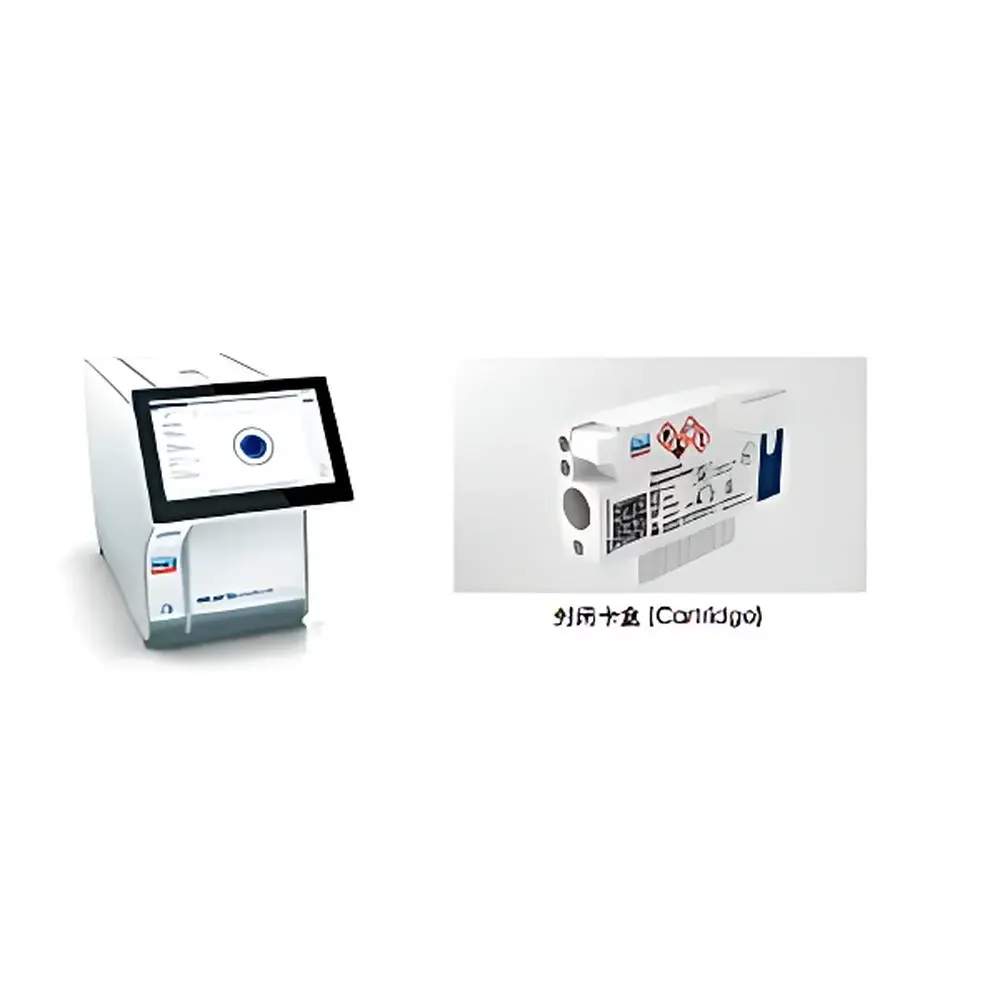
QIAstat-Dx® Fully Automated Multiplex Nucleic Acid Testing System
| Brand | QIAGEN |
|---|---|
| Origin | Germany |
| Model | QIAstat-Dx® |
| Configuration | Integrated Sample-to-Answer Platform with Modular Analyzer Units |
| Cartridge Format | Closed, Single-Use Microfluidic Cartridge |
| Maximum Multiplexing Capacity | 48 Targets per Run |
| Turnaround Time | 30–80 minutes |
| Sample Input Flexibility | Direct swab loading |
| Scalability | Up to 4 Independent Analyzer Modules per System |
| Regulatory Status | CE-IVD marked |
Overview
The QIAstat-Dx® Fully Automated Multiplex Nucleic Acid Testing System is a CE-IVD marked, sample-in–answer-out molecular diagnostics platform engineered for rapid, high-fidelity detection of multiple pathogens in clinical microbiology laboratories. Built upon integrated microfluidic cartridge technology and pneumatic fluid actuation, the system performs nucleic acid extraction, reverse transcription (where applicable), real-time PCR amplification, and fluorescent endpoint detection within a single, hermetically sealed disposable cartridge. This architecture eliminates manual pipetting, open-tube handling, and cross-contamination risks—enabling consistent performance under ISO 15189 and CLIA-compliant workflows. The system comprises a dedicated Run Module (for thermal cycling and optical detection) and one or more Analyzer Modules (for automated cartridge loading, fluidic priming, and pressure-driven reagent routing). All assay-specific reagents—including lyophilized primers, probes, enzymes, and internal controls—are pre-loaded and stabilized inside the cartridge, ensuring lot-to-lot reproducibility and minimizing cold-chain dependency.
Key Features
- True walk-away automation: Full integration of lysis, nucleic acid purification, RT-PCR, and detection without user intervention post-cartridge loading.
- Microfluidic cartridge design: Patented pneumatic valving enables precise, contamination-free metering and sequential delivery of reagents across up to 48 reaction chambers.
- Flexible sample input: Supports direct insertion of flocked or rayon nasopharyngeal/oropharyngeal swabs; accommodates liquid specimens (stool supernatant, bronchoalveolar lavage, cerebrospinal fluid) in volumes ranging from 100 µL to 1.5 mL.
- Modular scalability: Up to four Analyzer Modules can operate independently under centralized software control, supporting parallel processing for high-throughput labs.
- Validated clinical panels: Pre-configured, regulatory-cleared assays include the QIAstat-Dx Gastrointestinal Panel (24 targets, including bacteria, viruses, and parasites) and the Upper Respiratory Tract Infection Panel (21 targets, covering influenza A/B, RSV, SARS-CoV-2, rhinovirus/enterovirus, and atypical pathogens).
- Robust architecture: Designed for continuous operation in ISO Class 7 cleanroom-equivalent environments; meets IEC 61000-4 electromagnetic compatibility standards.
Sample Compatibility & Compliance
The QIAstat-Dx system demonstrates validated performance across diverse specimen types encountered in routine diagnostic microbiology, including but not limited to: nasopharyngeal swabs in viral transport media, rectal swabs, stool suspensions, sputum homogenates, and BAL fluid. Each cartridge undergoes rigorous endotoxin testing (<0.5 EU/mL) and sterility verification per ISO 11737-1. The platform complies with EN ISO 13485:2016 for quality management systems and supports audit-ready documentation for GLP and GCP environments. Assay-specific validation reports align with CLSI EP12-A2 and EP17-A2 guidelines for multiplex assay performance assessment, including limit-of-detection (LoD), inclusivity, and interference profiling. For laboratories operating under FDA-regulated frameworks, the system supports 21 CFR Part 11-compliant electronic signatures and audit trails when deployed with QIAstat-Dx Enterprise Software v3.0 or later.
Software & Data Management
QIAstat-Dx Enterprise Software provides a secure, role-based interface for instrument control, assay configuration, result interpretation, and data export. The software features embedded analytical algorithms that perform baseline correction, threshold determination, and automatic call assignment (positive/negative/indeterminate) based on predefined cycle threshold (Ct) cutoffs and internal control thresholds. Raw fluorescence curves, amplification plots, and melt curve data are stored in vendor-neutral .qdx binary format, convertible to CSV or PDF for LIS/HIS integration via HL7 v2.5.1 or ASTM E1384-compliant interfaces. Audit logs record all user actions—including login/logout timestamps, assay run initiation, result overrides, and software updates—with immutable hashing to ensure forensic traceability. Data retention policies comply with HIPAA and GDPR requirements, supporting configurable auto-purge schedules and encrypted local backup.
Applications
The QIAstat-Dx system is deployed in core hospital laboratories, reference microbiology centers, and public health surveillance units requiring rapid pathogen identification without sacrificing multiplex breadth or analytical rigor. Primary use cases include syndromic testing for acute gastroenteritis (differentiating bacterial toxin-mediated vs. viral etiologies), early triage of febrile respiratory illness during seasonal outbreaks, and targeted screening in immunocompromised cohorts (e.g., transplant recipients). Its closed-system design also facilitates deployment in point-of-care-adjacent settings—such as emergency departments and outpatient clinics—where biosafety level 2 (BSL-2) containment infrastructure may be limited. Methodologically, it serves as a validated alternative to conventional culture, antigen immunoassays, and laboratory-developed multiplex PCR tests requiring manual post-PCR processing.
FAQ
What sample types are validated for use with QIAstat-Dx cartridges?
Nasopharyngeal and oropharyngeal swabs (flocked or rayon), stool suspensions, BAL fluid, and CSF—each with defined volume and matrix-specific validation data per CE-IVD declaration.
Can the system detect co-infections across different pathogen classes (e.g., virus + bacterium)?
Yes. Each panel is designed to simultaneously detect DNA and RNA targets across viral, bacterial, and parasitic families using dual-channel hydrolysis probe chemistry.
Is raw data export supported for secondary analysis?
Yes. Amplification curves, Ct values, and internal control metrics are exportable in CSV and PDF formats; proprietary .qdx files retain full instrument metadata for reanalysis.
How is reagent stability maintained inside the cartridge?
Lyophilized reagents are formulated with trehalose-based stabilizers and sealed under nitrogen; shelf life is 18 months at 2–8 °C, with no freeze-thaw cycles required.
Does the platform support custom assay development?
Not natively. QIAstat-Dx operates exclusively with QIAGEN-validated, locked-panel cartridges; custom content requires formal collaboration under QIAGEN’s Assay Development Partnership Program.



