
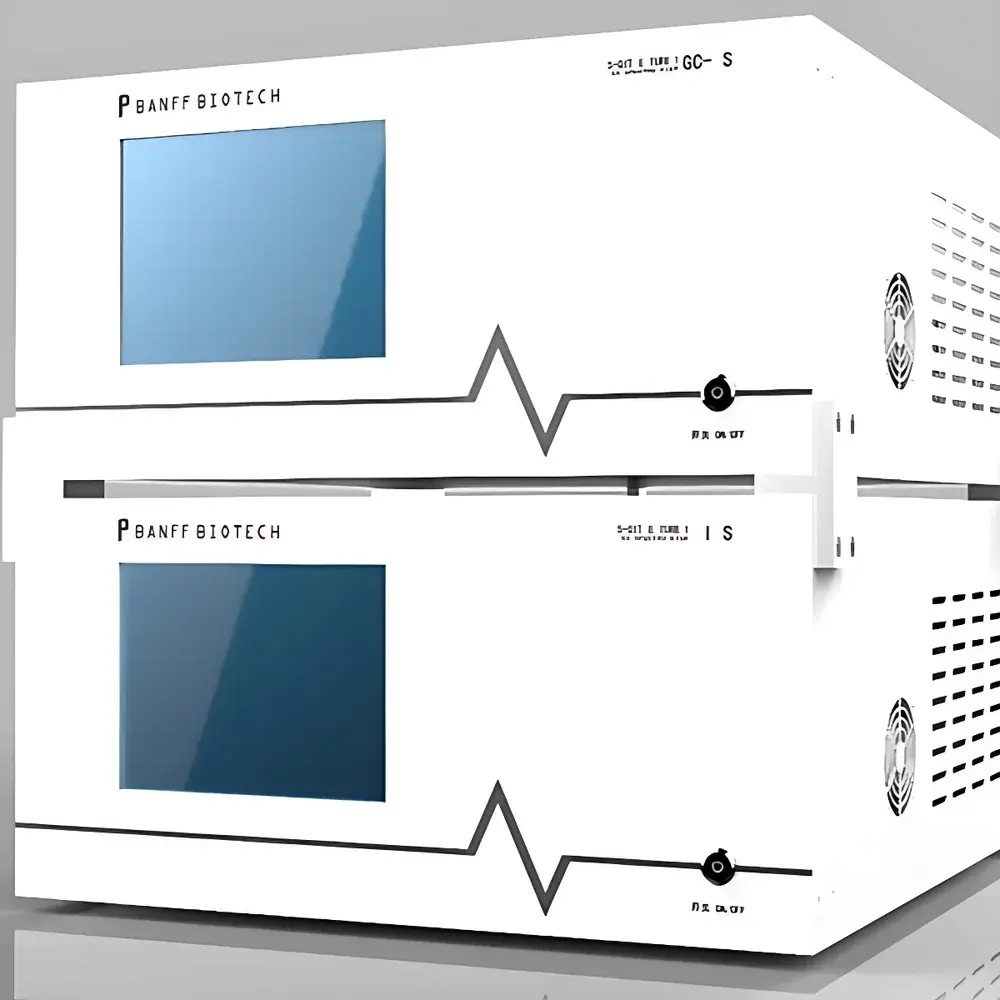
QitVenture1 Sail Vehicle-Mounted VOCs Monitoring Mass Spectrometer
| Brand | BANFF |
|---|---|
| Origin | Zhejiang, China |
| Manufacturer | BANFF Biotechnology |
| Type | Domestic |
| Model | QitVenture1 Sail |
| Detection Targets | Ambient Air & Water (VOCs) |
| Detection Method | Membrane Inlet Mass Spectrometry (MIMS) + Integrated GC-MS Confirmation |
| LOD | <0.1 ppb (for selected VOCs) |
| Compliance | Meets 2019 “Technical Specification for Mobile VOCs Monitoring in the Yangtze River Delta Eco-Green Integrated Development Demonstration Zone” |
| Mounting | Vehicle-integrated mobile platform |
| Application Scope | Real-time emission source identification, emergency response, boundary monitoring, and ambient air quality assessment |
Overview
The QitVenture1 Sail is a vehicle-mounted, real-time volatile organic compounds (VOCs) monitoring mass spectrometer engineered for high-temporal-resolution mobile environmental surveillance. It integrates membrane inlet mass spectrometry (MIMS) as its primary detection mode—enabling direct, continuous, and unattended analysis of trace-level VOCs in ambient air without pre-concentration or cryogenic trapping. MIMS provides sub-second response times and exceptional sensitivity (<0.1 ppb for key target compounds such as benzene, toluene, formaldehyde, and isoprene), making it ideal for rapid plume mapping and dynamic source attribution during drive-by surveys. For forensic-level compound identification and quantification, the system optionally interfaces with an on-board gas chromatograph–mass spectrometer (GC-MS) module, delivering orthogonal analytical validation in accordance with ISO 16000-6 and EPA TO-15/TO-17 methodologies.
Key Features
- Membrane Inlet Mass Spectrometry (MIMS) core architecture—optimized for field-deployable, real-time VOCs profiling with minimal sample preparation and zero consumables for inlet conditioning.
- Vehicle-integrated mechanical and electrical design—including shock-dampened mounting, automotive-grade power management (12–36 V DC input), and IP54-rated enclosure for operational robustness under variable climatic and road conditions.
- Simultaneous detection of >80 priority VOCs across C2–C12 hydrocarbons, oxygenates, halogenated compounds, and sulfur-containing species—configured via user-defined ion libraries aligned with EU Air Quality Directive Annexes and China’s HJ 1019-2019 standard list.
- On-device spectral deconvolution engine with retention index matching (when GC-MS module engaged), supporting automated peak alignment and multi-component quantification against NIST MS Search 2.4 and Wiley 9th Edition reference libraries.
- Embedded GPS-synchronized data logging at 1 Hz temporal resolution, with georeferenced spectral snapshots exportable in netCDF and mzML formats for GIS-integrated post-processing.
Sample Compatibility & Compliance
The QitVenture1 Sail is validated for direct analysis of ambient air (flow rate: 100–500 mL/min) and headspace vapors from aqueous samples (e.g., surface water, leachate, or wastewater effluent). Its MIMS interface employs a hydrophobic polydimethylsiloxane (PDMS) membrane, ensuring selective permeation of non-polar and semi-polar VOCs while rejecting particulates, moisture, and inorganic gases (e.g., CO₂, NOₓ). The instrument meets the performance criteria outlined in the 2019 “Technical Specification for Mobile VOCs Monitoring in the Yangtze River Delta Eco-Green Integrated Development Demonstration Zone”, including requirements for detection limit verification, spatial resolution (≤5 m positional accuracy), and reporting latency (<30 s from acquisition to display). It supports GLP-compliant audit trails and data integrity protocols aligned with ISO/IEC 17025:2017 for accredited environmental laboratories.
Software & Data Management
The proprietary QitSail Control Suite (v3.2+) provides full instrument control, real-time spectral visualization, and automated hotspot detection via adaptive threshold algorithms. Data files include embedded metadata (GPS coordinates, barometric pressure, temperature, humidity, and vehicle speed) compliant with ASTM D7419-22 for mobile air monitoring datasets. Export options include CSV (time-series concentration matrices), JSON (API-ready structured output), and standardized mzML for interoperability with open-source tools such as OpenMS and MZmine. Remote diagnostics and firmware updates are supported over LTE/5G via TLS 1.2-secured channels. All raw and processed data adhere to ALCOA+ principles (Attributable, Legible, Contemporaneous, Original, Accurate, plus Complete, Consistent, Enduring, Available) for regulatory submission readiness.
Applications
- Mobile emission source identification—supporting industrial fence-line monitoring, landfill perimeter surveys, and petrochemical corridor assessments.
- Emergency response deployment—rapid characterization of accidental VOC releases (e.g., solvent spills, chemical transport incidents) with immediate geo-tagged reporting to regional environmental authorities.
- Regulatory compliance verification—conducting routine walk-down audits for VOC abatement systems, flare efficiency evaluation, and fugitive emission screening per China’s GB 37822-2019 and EU IED Annex VII.
- Research-grade atmospheric chemistry studies—capturing diurnal VOCs dynamics, photochemical precursor mapping, and urban-rural gradient profiling in long-term mobile campaigns.
FAQ
What VOCs can the QitVenture1 Sail detect in real time?
It detects over 80 regulated and emerging VOCs—including BTEX, chlorinated solvents, carbonyls, and terpenes—based on their characteristic m/z signatures and calibrated response factors.
Does the system require calibration gases during operation?
Yes; daily zero/span verification using certified NIST-traceable standards (e.g., EPA TO-14A mixtures) is required for quantitative reporting under regulatory frameworks.
Can the instrument operate independently of the GC-MS module?
Yes; MIMS mode functions autonomously for screening and trend analysis. GC-MS is an optional add-on for confirmatory analysis and complex matrix resolution.
Is the software compatible with third-party GIS platforms?
Yes; georeferenced concentration layers can be exported as GeoJSON or shapefiles and imported directly into ArcGIS Pro, QGIS, or ENVI for spatial interpolation and plume modeling.
What maintenance intervals are recommended for field deployment?
Membrane replacement every 6 months (or after 2,000 operating hours), ion source cleaning every 3 months, and annual mass calibration with perfluorotributylamine (PFTBA) standard.
Related Products







