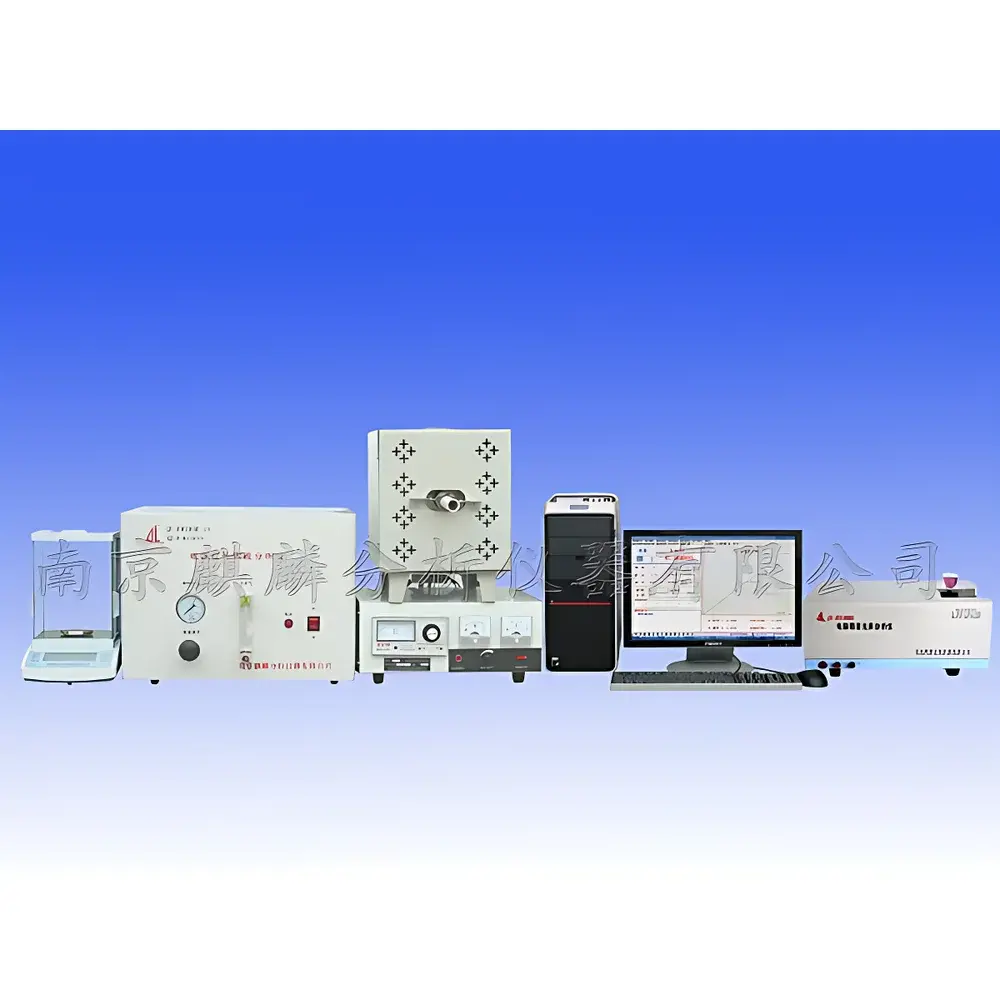
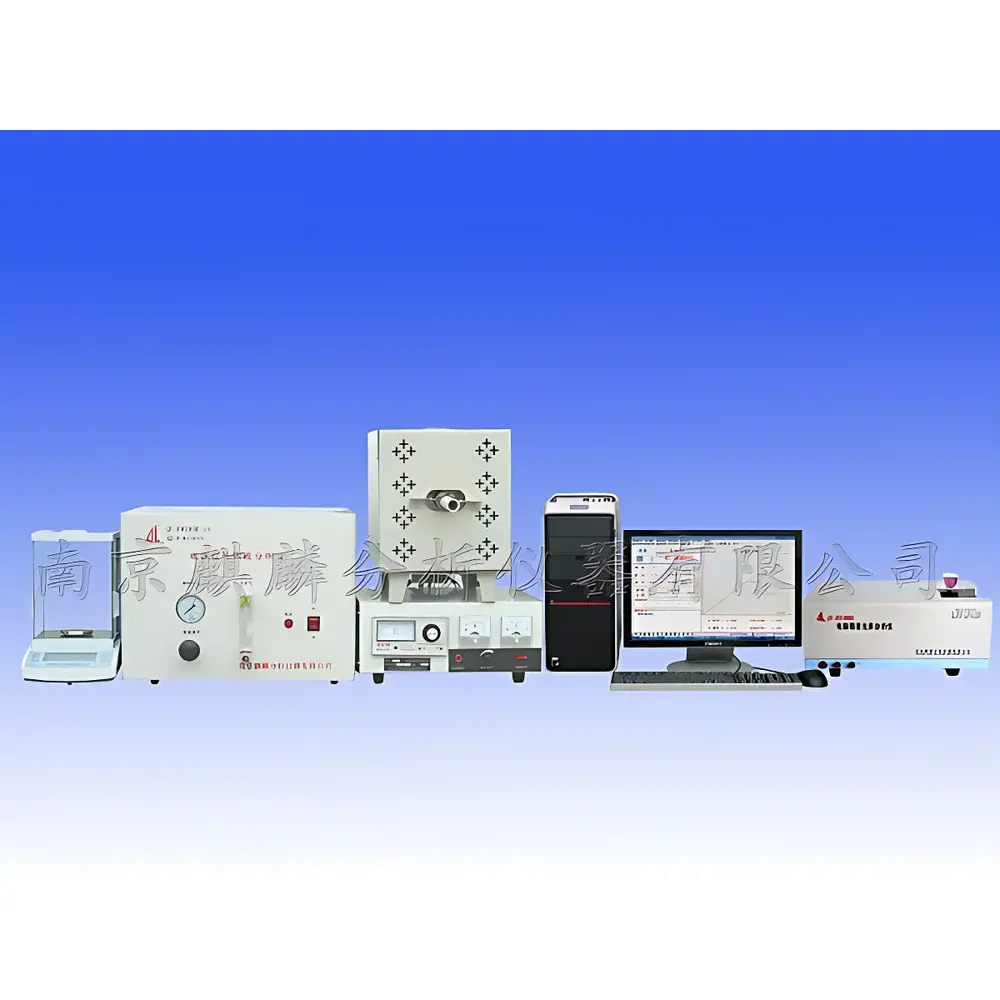
QL-S3000D Qilin Tube Furnace Infrared Carbon-Sulfur and Multi-Element Analyzer
| Brand | Qilin (QL) |
|---|---|
| Model | QL-S3000D |
| Measurement Principle | Non-dispersive Infrared (NDIR) for C/S |
| Analysis Time | ~2 min per sample |
| Compliance | GB/T 223.3–5:1988, GB/T 223.68–69:1997 |
| Elemental Range (Typical) | C: 0.001–10.00 wt%, S: 0.0005–0.5000 wt%, Mn: 0.10–15.00 wt%, Si: 0.10–5.00 wt%, P: 0.005–0.80 wt%, Cr: 0.01–25.0 wt%, Ni: 0.010–30.0 wt%, Mo: 0.101–6.00 wt%, Ti: 0.01–1.00 wt%, Cu: 0.01–10.00 wt%, Al: 0.01–8.00 wt% |
| Calibration | 99 programmable calibration curves (regression-based), expandable |
| Data Output | PC-controlled interface, customizable export formats (CSV, TXT, XML), thermal desktop printer support |
Overview
The QL-S3000D is a benchtop tube-furnace-based elemental analyzer engineered for simultaneous quantitative determination of carbon (C) and sulfur (S) via non-dispersive infrared (NDIR) detection, integrated with a photometric multi-element module for rapid analysis of up to 15 additional metallic and non-metallic constituents—including Si, Mn, P, Cr, Ni, Mo, Cu, Ti, Al, V, W, Mg, and rare earth elements—in solid ferrous and non-ferrous samples. Its hybrid architecture combines a high-stability ceramic tube furnace (operating up to 1350 °C) with dual optical detection paths: an NDIR cell optimized for CO₂ and SO₂ absorption at characteristic wavelengths (4.26 µm and 7.35 µm), and a computer-controlled photometer employing tunable wavelength selection across the visible spectrum (400–800 nm). Designed specifically for coal, metallurgical, foundry, and quality assurance laboratories, the system delivers trace-level sulfur quantification (detection limit ≤0.0003 wt%) and robust carbon measurement in complex matrices such as cast iron, alloy steels, and sintered ores—without requiring external gas chromatography or mass spectrometry.
Key Features
- Integrated dual-mode detection: NDIR for C/S + photometric colorimetry for auxiliary elements—eliminates need for separate instruments
- Ceramic tube furnace with precise temperature ramping and oxygen flow control (0–5 L/min), ensuring complete combustion and minimal SO₃ formation
- Automated calibration curve management: 99 pre-loaded regression-based working curves; user-definable curve expansion with slope/intercept verification
- Full PC-based operation via intuitive Chinese-language GUI (English firmware option available); supports Windows 10/11 with USB 2.0 interface
- On-board thermal desktop printer for immediate hardcopy reporting; data export configurable to CSV, TXT, or XML for LIMS integration
- Rugged industrial enclosure rated IP20; compliant with IEC 61000-4 electromagnetic immunity standards
Sample Compatibility & Compliance
The QL-S3000D accepts solid samples weighing 0.2–1.0 g (typical), including pulverized coal, steel chips, cast iron turnings, and sintered ore pellets. Sample preparation requires acid dissolution only for photometric elements (Si, Mn, P, etc.), while C/S analysis proceeds via direct combustion—minimizing cross-contamination risk. All reported performance metrics align with Chinese national standards GB/T 223.3–5:1988 (carbon determination) and GB/T 223.68–69:1997 (sulfur determination), which reference ASTM E1019 and ISO 4935 methodologies for validation equivalence. The instrument architecture supports GLP-compliant operation: audit trail logging (user ID, timestamp, method version), electronic signature capability, and password-protected parameter modification—meeting foundational requirements for ISO/IEC 17025-accredited testing laboratories.
Software & Data Management
The embedded software suite provides real-time spectral monitoring during combustion, automatic baseline correction, and peak-area integration with drift compensation. Calibration curves are stored with metadata (date, operator, standard lot number), and each analysis record includes raw absorbance values, calculated concentrations, confidence intervals (based on replicate standard deviation), and pass/fail flags against predefined specification limits. Export modules generate reports conforming to ASTM E1447 data formatting conventions. For regulated environments, optional firmware upgrade enables 21 CFR Part 11 compliance—featuring role-based access control, biometric or token-based electronic signatures, and immutable audit logs archived in encrypted SQLite databases.
Applications
- Coal quality control: Quantification of total sulfur content in bituminous, anthracite, and lignite coals per ISO 351 and ASTM D3177
- Metallurgical process monitoring: Rapid C/S verification in blast furnace hot metal, basic oxygen furnace slags, and ladle-treated steels
- Foundry QC: Simultaneous verification of critical alloying elements (Cr, Ni, Mo) and residual S in ductile iron and austenitic stainless castings
- Scrap metal sorting: Identification of high-sulfur contamination in recycled ferrous feedstocks prior to melting
- Research labs: Method development for low-sulfur (<0.005 wt%) material certification using certified reference materials (CRMs) such as IRMM-039 and NIST SRM 1151c
FAQ
What sample types are compatible with the QL-S3000D?
Solid conductive or semi-conductive materials including carbon steels, alloy steels, cast irons, ferroalloys, coal powders, and sintered ores. Non-ferrous metals (e.g., Cu, Al alloys) require matrix-specific calibration and may necessitate flux-assisted combustion.
Does the system require carrier gas cylinders?
Yes: High-purity oxygen (≥99.995%) is required for combustion; optional helium purge gas may be used for baseline stabilization in high-precision S measurements.
Can calibration curves be transferred between instruments?
Yes: Curve files (.qcf) are portable across QL-S3000D units running identical firmware versions; cross-instrument validation using CRMs is recommended before deployment.
Is remote diagnostics supported?
Standard Ethernet port enables secure remote access via SSH or VNC for technical support; no cloud connectivity or vendor telemetry is enabled by default.
What maintenance intervals are recommended?
Daily: Desiccant replacement in IR cell dryer; weekly: Ceramic tube inspection and furnace zone thermocouple verification; annually: Full optical path alignment and detector responsivity calibration using NIST-traceable standards.