
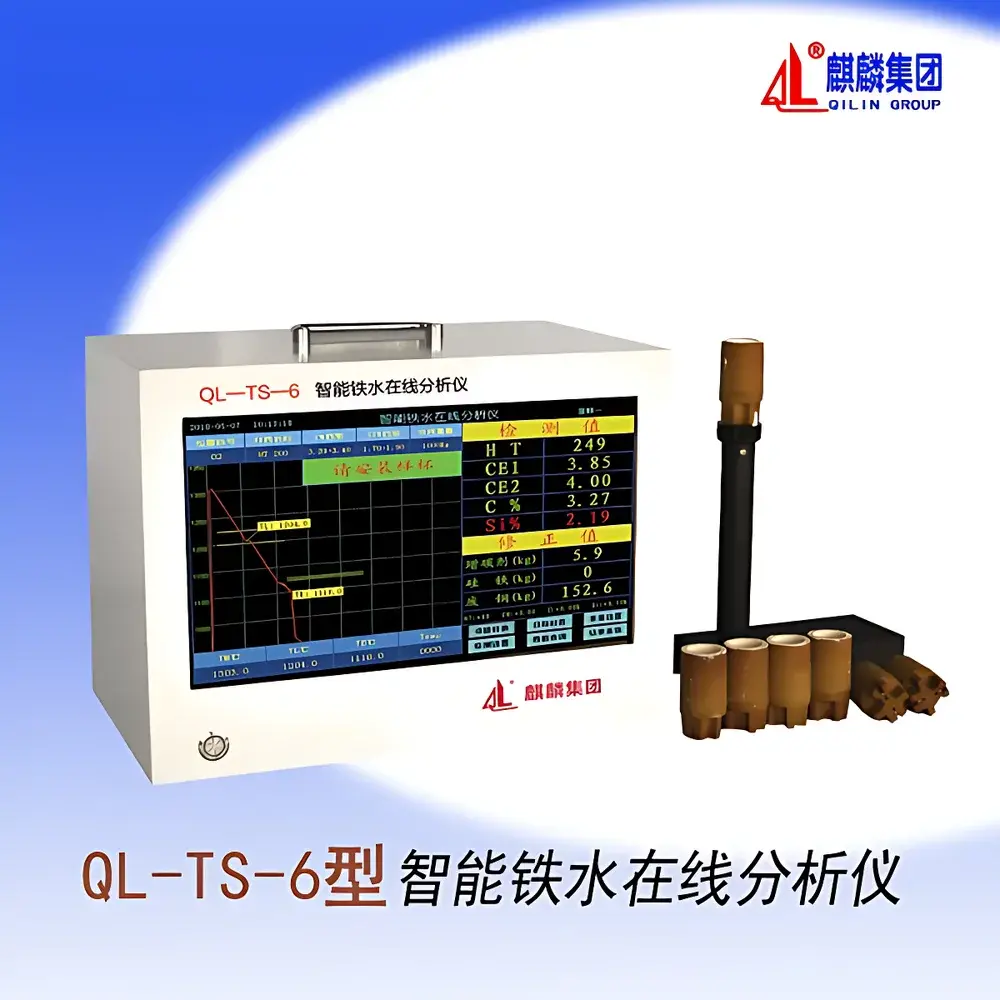
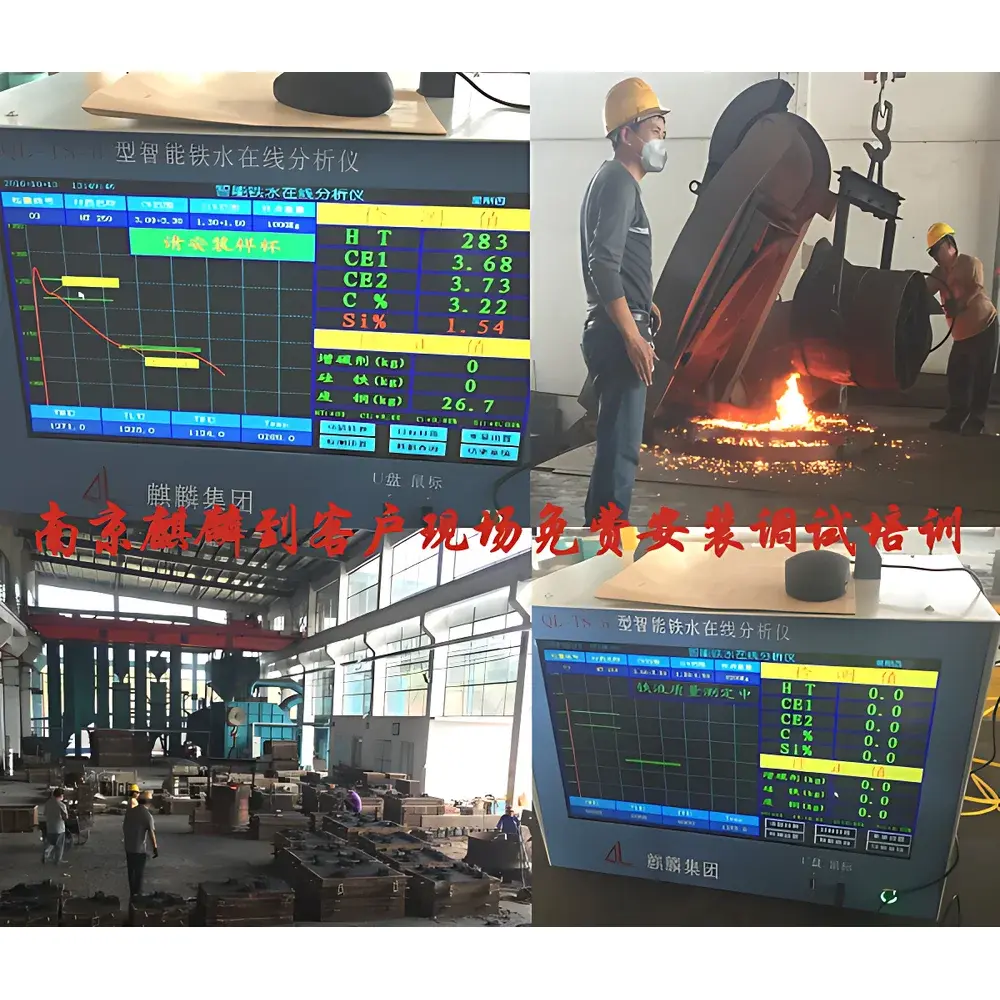
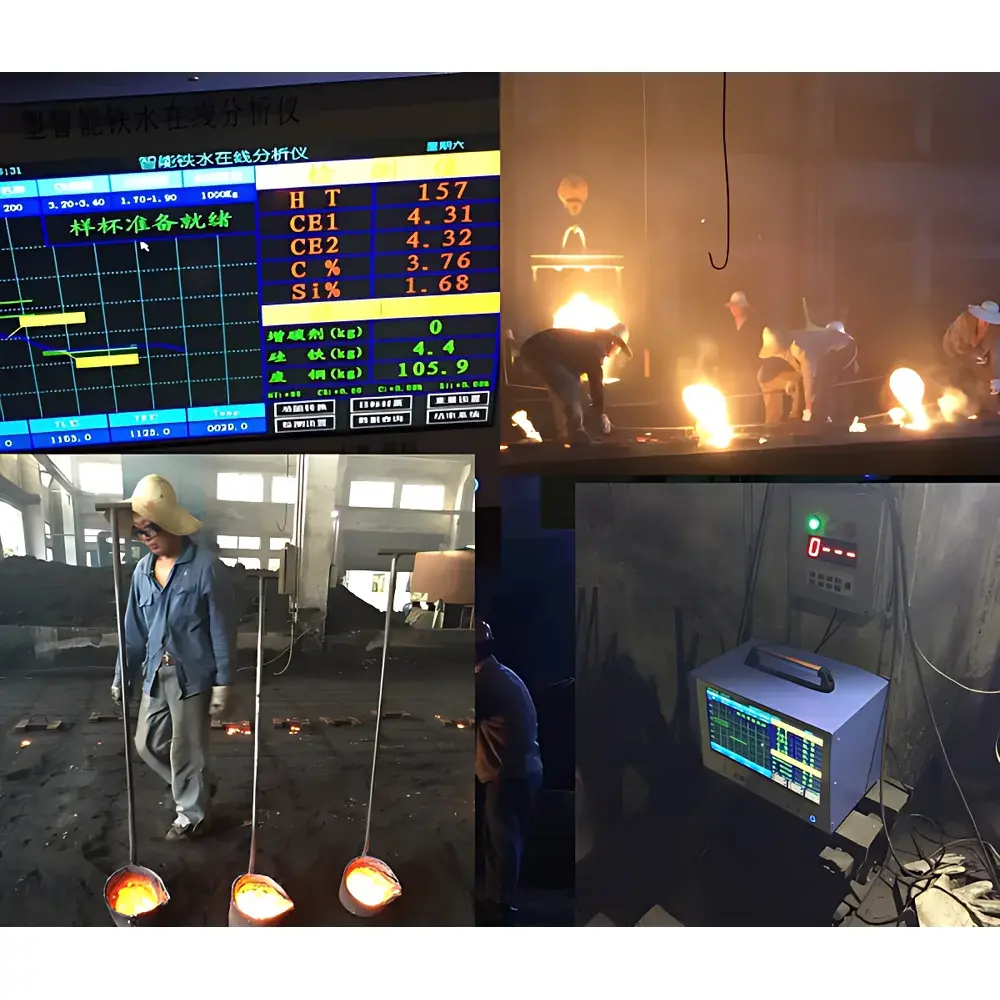
QL-TS-6 Foundry Frontline Carbon-Silicon Analyzer (Qilin Brand)
| Brand | Qilin / QL |
|---|---|
| Origin | Jiangsu, China |
| Manufacturer Type | Authorized Distributor |
| Regional Classification | Domestic (PRC) |
| Model | QL-TS-6 |
| Price Range | USD 2,800 – 7,000 |
Overview
The QL-TS-6 Foundry Frontline Carbon-Silicon Analyzer is an industrial-grade, portable thermal analysis instrument engineered for real-time melt characterization in iron foundries. It operates on the principle of solidification thermal analysis (STA), capturing and interpreting the cooling curve of molten cast iron during controlled solidification to derive critical metallurgical parameters—including carbon equivalent (CE), total carbon (C%), silicon (Si%), undercooling (ΔT), eutectic temperature (TE), liquidus temperature (TL), and nodularity-related indicators such as saturation coefficient (SC) and tensile strength (RM) estimation. Unlike laboratory-based spectrometers or wet chemical methods, the QL-TS-6 delivers quantitative compositional and microstructural insight within 90 seconds directly at the furnace tap-out point—enabling immediate process feedback and closed-loop charge correction without interrupting production flow.
Key Features
- Real-time thermal analysis platform with integrated 17-inch industrial touchscreen display and fanless embedded motherboard—designed for continuous operation in high-temperature, high-dust foundry environments (IP54-rated enclosure)
- Simultaneous multi-parameter output: CE (3.2–4.8 wt%), C% (2.8–4.2 wt%), Si% (0.9–3.0 wt%), ΔT, TE, TL, SC, and estimated RM—all derived from a single cooling curve acquisition
- Onboard calibration management supporting up to eight user-defined calibration curves (calibration lines), each linked to specific base materials (e.g., GG25, GGG40, QT600)
- Automated charge calculation module: inputs target composition, batch weight, and current measured values to generate precise ferrosilicon and scrap iron addition recommendations
- Robust electromagnetic interference (EMI) mitigation architecture—including shielded temperature-compensated thermocouple cabling (Type K, imported), grounded anti-noise mounting base, and differential signal processing
- Data logging capacity for 3,000 sequential measurements with time-stamped traceability; supports playback of cooling curves and derivative plots (dT/dt vs. T)
- USB export functionality for raw thermal data (.csv), measurement reports, and curve overlays—compatible with LIMS and ERP integration workflows
Sample Compatibility & Compliance
The QL-TS-6 is validated for use with gray iron (EN-GJL), ductile iron (EN-GJS), and compacted graphite iron (EN-GJV) melts. It accommodates standard cup sampling (200–300 g, 1450–1520 °C pour temperature) and requires no sample dilution or reagent addition. The instrument conforms to general requirements for foundry process control instrumentation per ISO 9001:2015 and supports Good Manufacturing Practice (GMP) documentation protocols. While not certified to ASTM E851 or ISO 17025 as a standalone testing laboratory device, its measurement repeatability (±0.04 wt% for C% and Si%, ±0.08 wt% for CE) meets typical in-process verification thresholds defined in foundry internal specifications and customer-facing quality agreements.
Software & Data Management
The proprietary Qilin Thermal Analysis Suite (v4.x) provides intuitive, icon-driven operation with one-touch analysis initiation and context-sensitive parameter visualization. Software modules include: (1) Real-time cooling curve overlay with automatic phase transition detection (liquidus, eutectic onset, recalescence peak); (2) Trend charting for CE, C%, and Si% across shifts or heats; (3) Batch history review with searchable filters (date/time, operator ID, material grade); (4) Remote monitoring capability via secure HTTP/HTTPS—enabling live curve streaming and configuration adjustment from tablets, PCs, or smartphones over local Wi-Fi or cellular networks. Audit trails record all user actions, parameter changes, and calibration events—supporting 21 CFR Part 11–aligned electronic record integrity when deployed in regulated manufacturing environments.
Applications
- Frontline charge optimization in cupola, induction, and electric arc furnace operations
- Rapid qualification of ladle-to-ladle composition drift in ductile iron production
- Verification of inoculation and spheroidization efficacy prior to mold pouring
- Statistical process control (SPC) charting for CE and Si% using exported datasets in Minitab or JMP
- Root cause analysis of casting defects (e.g., shrinkage porosity, carbide formation) through correlation of thermal arrest temperatures with microstructure benchmarks
- Training and process standardization across multiple foundry locations using synchronized cloud-based calibration templates
FAQ
How does the QL-TS-6 differ from optical emission spectrometers (OES)?
Unlike OES—which requires sample solidification, surface preparation, and plasma excitation—the QL-TS-6 analyzes the inherent thermal signature of the melt itself, delivering compositional estimates without consumables, argon gas, or vacuum systems.
Can the QL-TS-6 measure sulfur or phosphorus content?
No. It infers carbon and silicon behavior exclusively through solidification thermodynamics. Sulfur and phosphorus require complementary techniques such as ICP-OES or combustion infrared analysis.
Is third-party calibration certification available?
Yes—Qilin offers optional factory calibration verification against NIST-traceable reference standards (e.g., certified cast iron reference materials CRM-1 through CRM-8), documented in a certificate of conformance.
What maintenance is required for long-term accuracy?
Annual verification of thermocouple linearity and zero-drift compensation; biannual cleaning of the sample cup holder and thermal interface surfaces; no routine recalibration needed if operated within specified ambient temperature (5–45 °C) and humidity (<85% RH non-condensing) ranges.
Does the system support integration with MES or SAP?
Yes—via configurable RESTful API endpoints and flat-file export (CSV/Excel), enabling bidirectional data exchange with major manufacturing execution systems under customer-defined mapping rules.





