
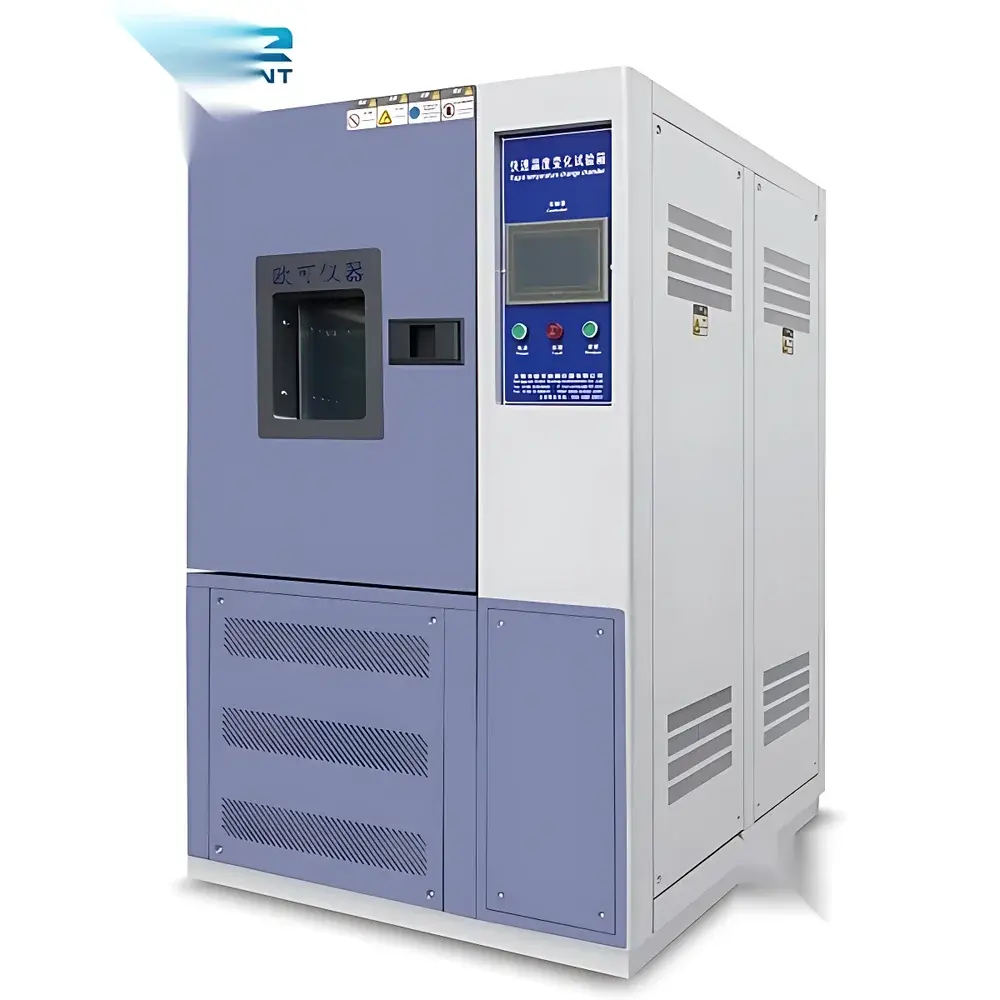
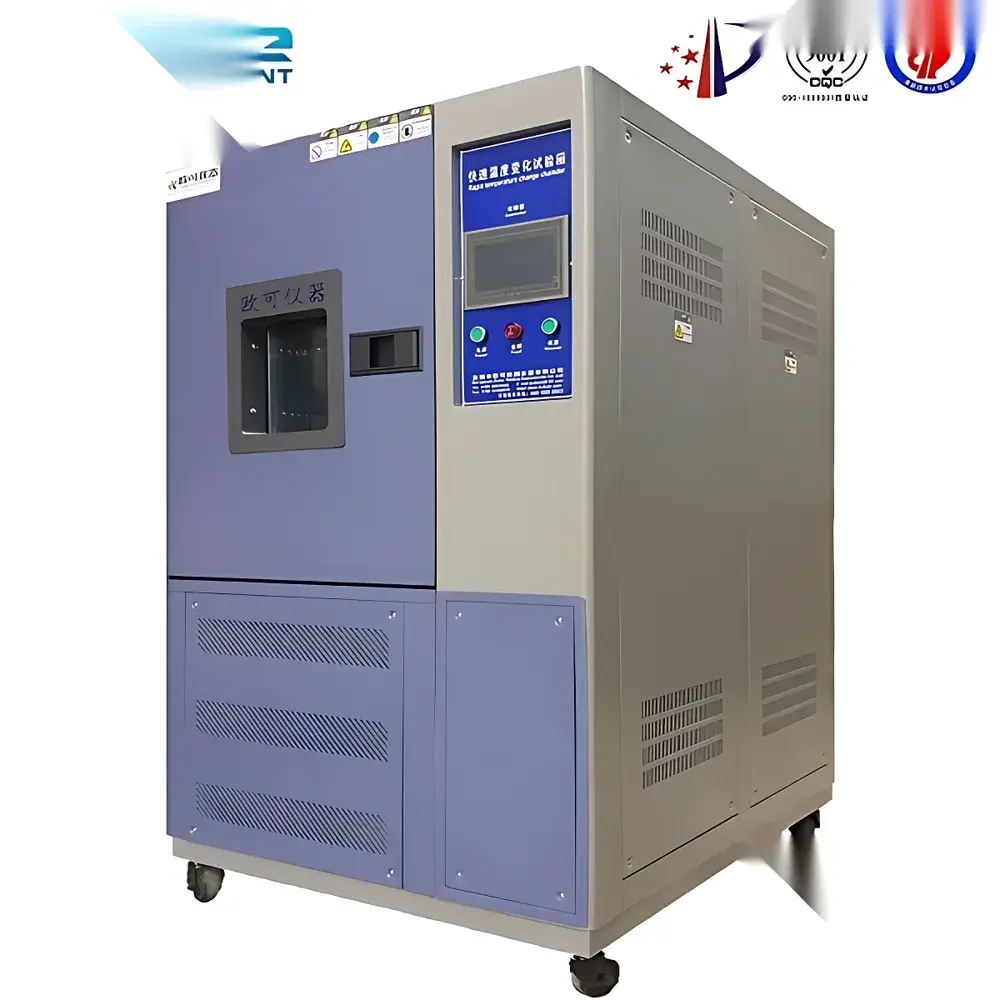
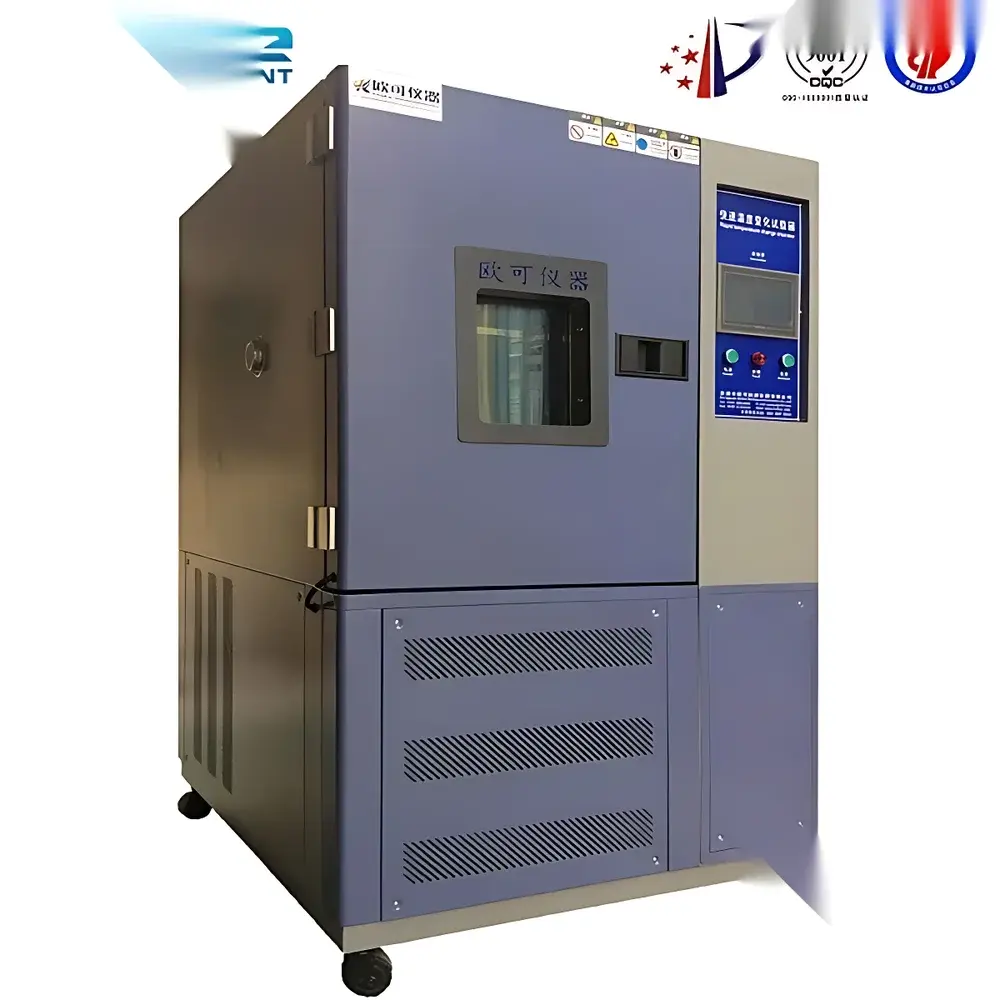
Quick-Temperature-Change Aging Test Chamber
| Brand | Other Brands |
|---|---|
| Origin | Imported |
| Manufacturer Type | General Distributor |
| Price | USD 2,700 (approx.) |
Overview
The Quick-Temperature-Change Aging Test Chamber is an environmental stress screening system engineered for high-fidelity thermal cycling simulation under controlled conditions. It operates on the principle of rapid thermal transition between predefined high- and low-temperature extremes—typically achieved via dual-chamber (hot/cold) or single-chamber forced-air configuration with optimized airflow distribution and high-capacity refrigeration circuits. Unlike conventional temperature-humidity chambers, this system prioritizes rate-of-change performance (°C/min), enabling accelerated aging assessments through repeated thermal expansion/contraction cycles. It is specifically designed to replicate field-relevant thermal shock profiles encountered by electronic assemblies, automotive ECUs, aerospace avionics, and advanced packaging substrates—including BGA, CSP, and ceramic multilayer capacitors—thereby supporting failure mechanism identification, solder joint reliability evaluation, and material interfacial stability analysis.
Key Features
- High-speed thermal ramping capability: Achieves typical temperature transition rates of ≥10 °C/min between −70 °C and +150 °C (configurable range), compliant with IEC 60068-2-14 (Test N: Change of Temperature)
- Dual-chamber architecture with independent hot/cold zones and pneumatic or servo-driven specimen transfer mechanism for minimized dwell time and enhanced thermal shock fidelity
- Inner chamber constructed from mirror-finished SUS304 stainless steel; outer enclosure fabricated from cold-rolled steel with epoxy-polyester powder coating for corrosion resistance and structural rigidity
- High-density polyurethane insulation (≥150 mm thickness) with chlorinated hydrocarbon-free formulation, ensuring low thermal conductivity (<0.022 W/m·K) and long-term dimensional stability
- Water-cooled refrigeration system utilizing dual-stage compressors—selectable from internationally certified OEM units including Tecumseh (France) or Bitzer (Germany)—with R404A/R23 cascade refrigerant circuitry
- Comprehensive safety architecture: High/low refrigerant pressure switches, compressor overload protection, over-temperature/over-humidity cut-off relays, fuse-based electrical isolation, real-time fault diagnostics with audible/visual alarms, and automatic water-level monitoring for coolant reservoirs
Sample Compatibility & Compliance
This chamber accommodates test specimens up to 2,300 kg gross weight and supports both static loading (fixed mounting) and dynamic load configurations (e.g., vibration-integrated testing upon customization). Internal volume options range from 1–20 m³, permitting evaluation of full-system assemblies such as radar modules, battery packs, and structural composite panels. The system meets and exceeds requirements defined in multiple international and industry-specific standards, including: IEC 60068-2-14 (Temperature Change), MIL-STD-810H Method 503.5 (Temperature Shock), ASTM D5229/D5229M (Low-Temperature Impact Resistance of Composites), ISO 16750-4 (Road Vehicles – Environmental Conditions), QC/T 17–1992 (Automotive Component Climate Resistance), GJB 150.5A–2009 (Military Equipment Temperature Shock), and GB/T 2423.22–2012 (Environmental Testing – Temperature Change Tests). All control algorithms and data logging functions are structured to support GLP/GMP-aligned validation protocols, including IQ/OQ documentation templates and audit-ready event logs.
Software & Data Management
Equipped with a Windows-based embedded controller featuring a 10.4″ TFT touchscreen HMI, the chamber supports programmable multi-segment thermal profiles with adjustable ramp rates, dwell durations, cycle counts, and conditional branching logic. Data acquisition records temperature (±0.3 °C accuracy), humidity (if equipped), chamber pressure, refrigerant pressures, and compressor amperage at user-defined intervals (1–60 s resolution). Export formats include CSV, PDF reports, and XML-compliant datasets compatible with LIMS integration. Optional software modules provide 21 CFR Part 11 compliance features—including electronic signatures, role-based access control, and immutable audit trails—as well as remote monitoring via Ethernet/IP or Modbus TCP. Calibration certificates traceable to NIST or equivalent national metrology institutes are available upon request.
Applications
- Thermal fatigue assessment of solder joints, wire bonds, and die-attach interfaces in semiconductor packages
- Evaluation of coefficient-of-thermal-expansion (CTE) mismatch effects in heterogeneous material stacks (e.g., Si-on-Cu, AlN substrates, LTCC modules)
- Validation of conformal coating integrity and delamination resistance under cyclic thermal stress
- Accelerated life testing of lithium-ion battery cells and module-level thermal management systems
- Qualification of optical sensor housings, MEMS devices, and fiber-optic transceivers exposed to diurnal or altitude-induced thermal gradients
- Material compatibility screening for adhesives, potting compounds, and encapsulants used in harsh-environment electronics
FAQ
What is the difference between temperature cycling and temperature shock testing?
Temperature cycling employs controlled ramp rates and dwell periods to simulate gradual environmental transitions, whereas temperature shock applies near-instantaneous transfers between extreme setpoints—often using dual-chamber designs—to induce maximal interfacial stress.
Can this chamber perform combined temperature/humidity cycling?
Standard configurations support dry thermal cycling only; optional humidification modules (with deionized water purification systems) enable combined temperature-humidity profile execution per IEC 60068-2-30.
Is the system suitable for qualification testing per AEC-Q200 or JEDEC JESD22-A104?
Yes—the chamber’s repeatability (±0.5 °C uniformity across working volume) and ramp-rate consistency meet the instrumentation requirements specified in both standards for passive component stress testing.
How is calibration maintained during long-duration tests?
Integrated PT100 sensors are auto-compensated against reference thermistors at regular intervals; optional external calibration ports allow third-party verification without chamber disassembly.
What power supply specifications are required for installation?
Three-phase AC 380 V ±10%, 50/60 Hz, with dedicated grounding and minimum 60 A circuit capacity depending on chamber size and refrigeration load.



