
Quick-Temperature-Change Humidity & Thermal Cycling Chamber – Model QTC-6050
| Brand | Other Brands |
|---|---|
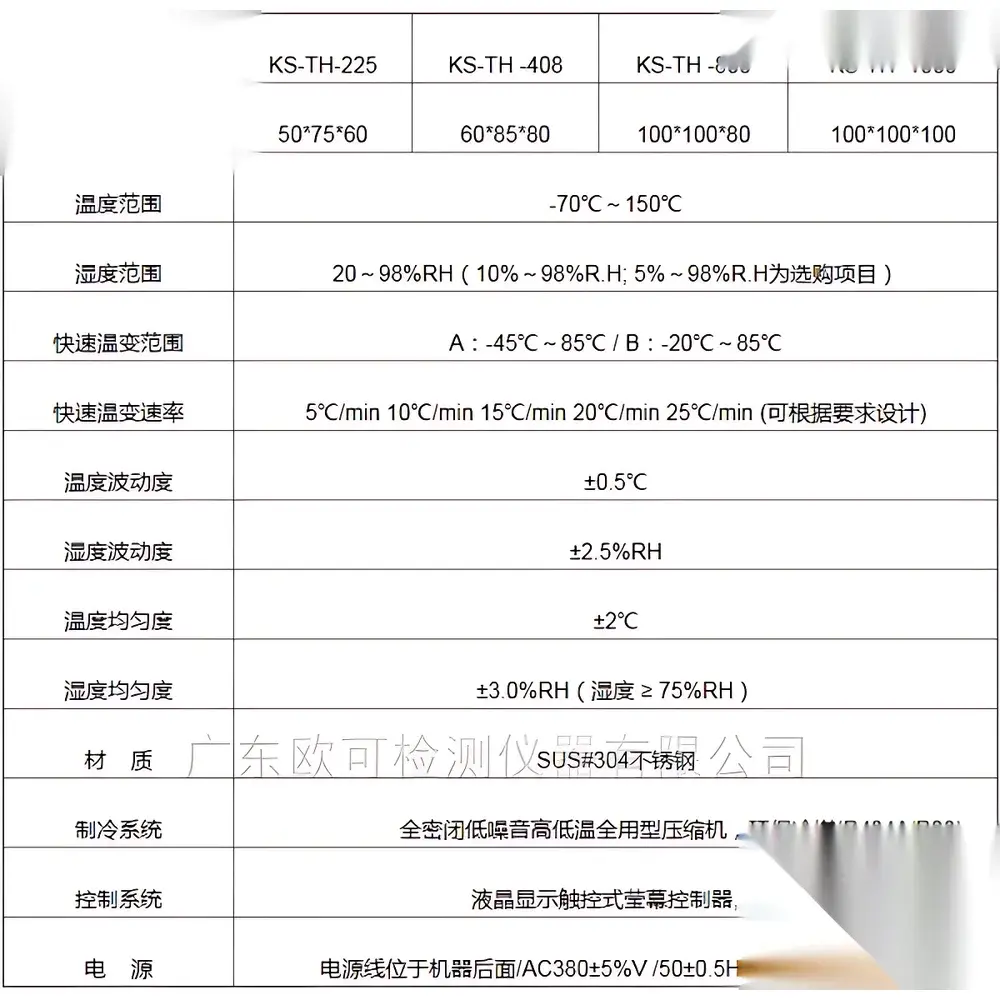
| Temperature Range (Hot Zone) | +80°C to +200°C |
| Temperature Range (Cold Zone) | −10°C to −70°C |
| Operational Test Range | −40°C to +150°C |
| Temperature Control Accuracy | ±2°C |
| Temperature Resolution | 0.01°C |
| Hot Zone Ramp Rate (RT → +150°C) | ≤40 min |
| Cold Zone Ramp Rate (RT → −70°C) | ≤100 min |
| Test Zone Temperature Recovery Time | 3–5 min |
| Internal Dimensions | 60 cm (W) × 50 cm (H) × 50 cm (D) |
| External Dimensions | 150 cm (W) × 210 cm (H) × 225 cm (D) |
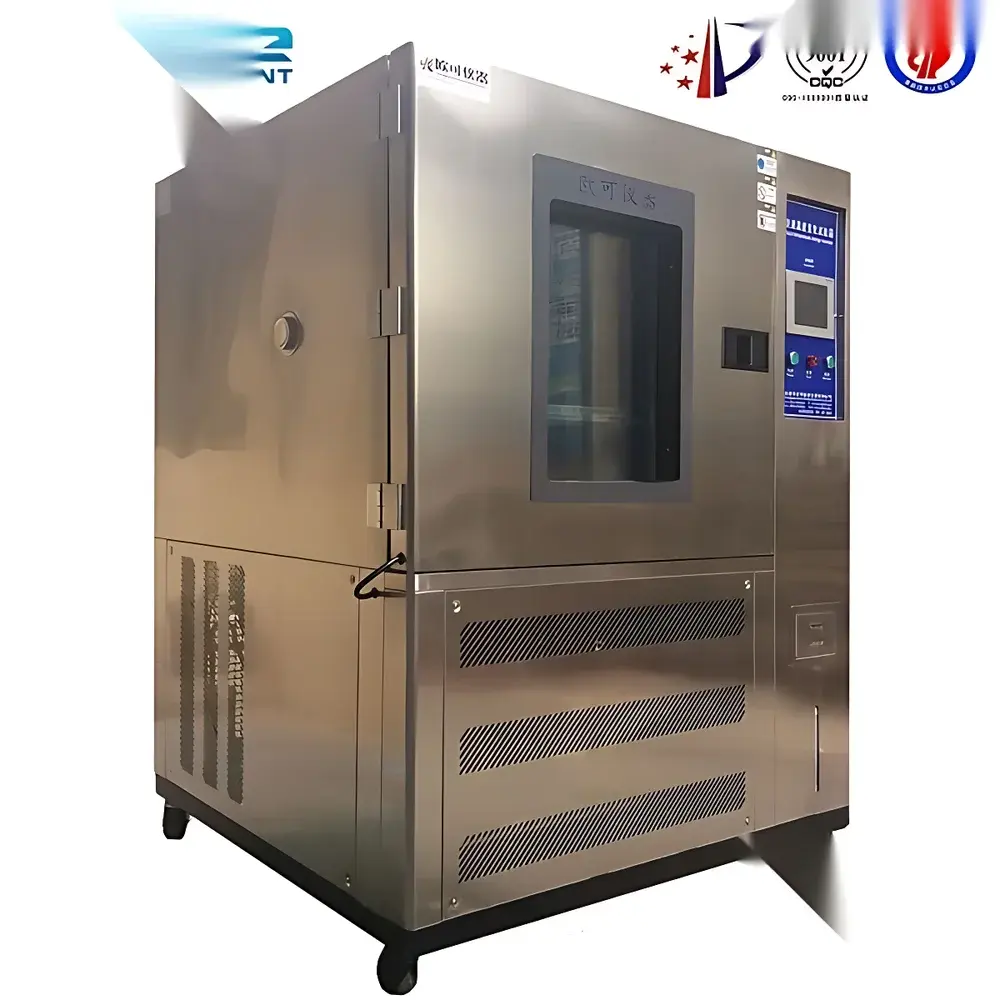
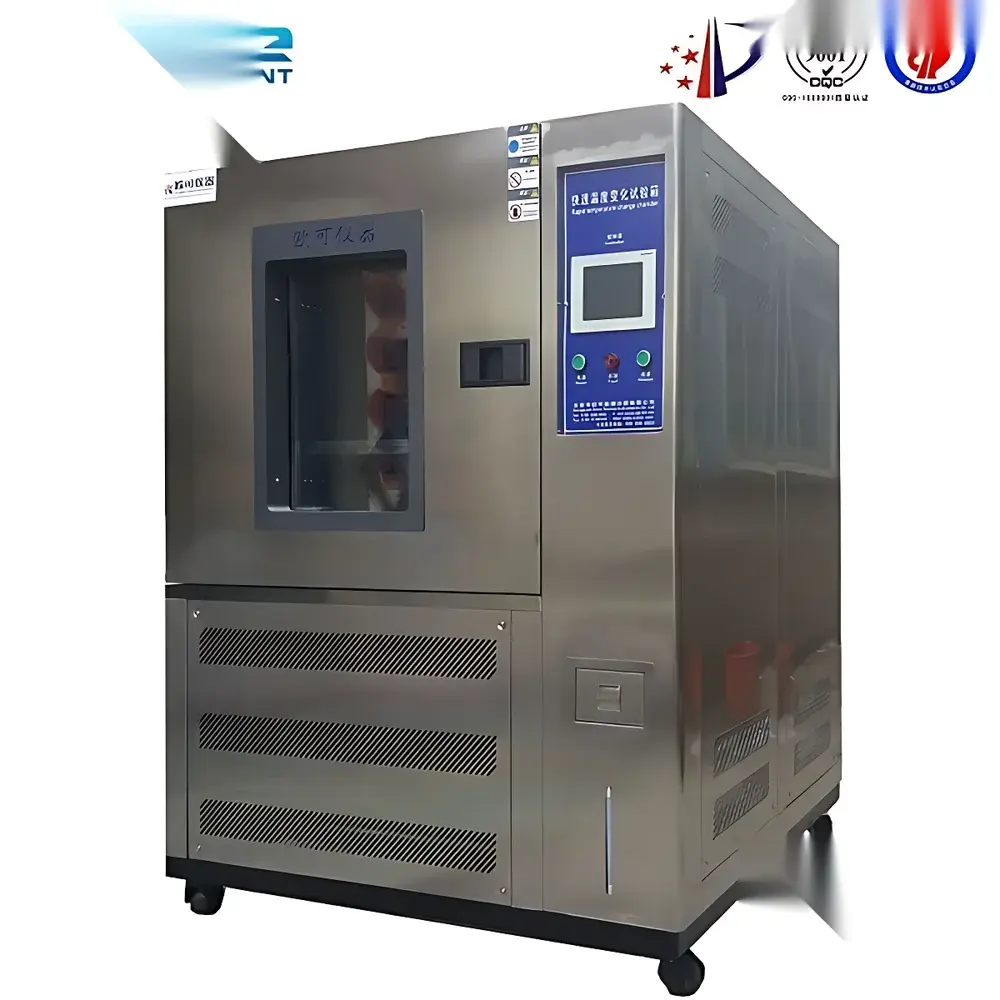
| Construction | Dual-chamber (hot/cold) + test zone architecture |
| Inner/Outer Chamber Material | SUS#304 stainless steel (polished finish) |
| Insulation | High-density glass wool + rigid polyurethane (PU) foam |
| Sealing System | High-tensile packing rated for −200°C to +400°C |
| Actuation | Pneumatic hot/cold zone isolation valves |
| Accessories | Two adjustable stainless steel test trays |
Overview
The Quick-Temperature-Change Humidity & Thermal Cycling Chamber – Model QTC-6050 is an engineered dual-zone environmental stress screening (ESS) system designed for accelerated thermal cycling under controlled humidity conditions. Unlike single-chamber systems, it employs a three-compartment architecture—separate high-temperature, low-temperature, and test zones—enabling rapid thermal transitions via pneumatic valve actuation. This configuration eliminates the need for mechanical movement of test specimens, ensuring mechanical stability during dynamic thermal profiling. The chamber operates on the principle of thermal mass isolation: test samples remain stationary in the central test zone while ambient air is rapidly exchanged between conditioned hot and cold reservoirs. This design delivers superior temperature transition repeatability and minimizes thermal lag, making it suitable for reliability validation per MIL-STD-810H Method 503.7 (Temperature Shock), IEC 60068-2-14 (Change of Temperature), and JEDEC JESD22-A104F (Temperature Cycling). Humidity control (optional integration) extends applicability to combined environmental stress testing per IEC 60068-2-30 (Damp Heat, Cycle).
Key Features
- Dual-zone thermal reservoir architecture with independent hot (+80°C to +200°C) and cold (−10°C to −70°C) chambers, enabling precise thermal gradient management
- Test zone operational range of −40°C to +150°C with ±2°C control accuracy and 0.01°C digital resolution for traceable thermal profiling
- Rapid thermal transition capability: ≤40 minutes to ramp from ambient to +150°C in hot zone; ≤100 minutes to reach −70°C in cold zone
- Short test zone recovery time of 3–5 minutes following zone switching—critical for high-throughput qualification of electronic assemblies and PCBs
- Pneumatically actuated isolation valves ensure repeatable, wear-free hot/cold air exchange without mechanical contact or vibration transmission
- Robust construction using polished SUS#304 stainless steel for both internal and external chambers, resistant to thermal fatigue and corrosion
- High-efficiency insulation combining high-density glass wool and rigid PU foam, minimizing energy consumption and external surface temperature rise
- Integrated anti-sweat system utilizing K-type thermocouple heat redistribution to prevent condensation on structural components during low-temperature operation
Sample Compatibility & Compliance
The QTC-6050 accommodates static mounting of test articles up to 60 × 50 × 50 cm (W×H×D), including printed circuit boards, automotive ECUs, aerospace avionics modules, and medical device enclosures. Its stationary-test-specimen design eliminates mechanical shock associated with shuttle-based systems, supporting compliance with IPC-J-STD-020 (Moisture Sensitivity Level classification) and AEC-Q200 (passive component stress testing). The chamber supports audit-ready operation under GLP and GMP frameworks when configured with optional data logging and electronic signature capabilities. While not inherently humidity-equipped, the structural design permits factory-integrated steam-based humidification (up to 95% RH) compliant with IEC 60068-2-30 Annex B requirements. All electrical and safety systems conform to IEC 61000-6-2 (immunity) and IEC 61000-6-4 (emission) standards.
Software & Data Management
The chamber integrates with industry-standard environmental test software platforms supporting ASTM E171, ISO 17025, and USP traceability requirements. Optional Ethernet-enabled controllers provide real-time monitoring, programmable multi-step profiles (including dwell, ramp, and hold segments), and automatic generation of CSV- and PDF-formatted test reports. Audit trail functionality—including user login history, parameter modification logs, and calibration event records—meets FDA 21 CFR Part 11 requirements when deployed with validated electronic signatures. Data export supports direct import into LIMS environments and statistical process control (SPC) dashboards for failure mode trend analysis.
Applications
- Thermal shock qualification of semiconductor packages (e.g., QFN, BGA) per JEDEC JESD22-A106B
- Reliability screening of battery management systems (BMS) and EV power electronics across extreme thermal boundaries
- Validation of adhesive bond integrity and polymer encapsulant performance under cyclic thermal stress
- Accelerated life testing of optical sensors and MEMS devices subjected to diurnal temperature variations
- Pre-compliance testing for MIL-STD-883 Method 1010.8 (Temperature Cycling) prior to formal qualification
- Material coefficient-of-thermal-expansion (CTE) mismatch evaluation in multi-layer assemblies
FAQ
What is the difference between two-box and one-box thermal cycling configurations?
The QTC-6050 uses a two-box (dual-reservoir) design with physically separate hot and cold zones. This differs from single-chamber “one-box” systems that rely on refrigeration/heating modulation alone—resulting in slower transitions and higher thermal inertia.
Can this chamber perform humidity-controlled thermal cycling?
Yes—though standard configuration is dry thermal cycling, optional steam-humidification subsystems can be factory-installed to support combined temperature/humidity profiles per IEC 60068-2-30.
Is the temperature recovery time verified per IEC 60068-3-5?
Yes—the 3–5 minute recovery specification refers to the time required for the test zone to stabilize within ±2°C of the target setpoint after pneumatic zone switching, measured per IEC 60068-3-5 Annex A.
What calibration documentation is provided?
Each unit ships with a NIST-traceable temperature mapping report (16-point sensor grid) covering the full operational range, plus certificate of conformance to IEC 60068-3-5 and ISO/IEC 17025 calibration procedures.
Are custom internal fixtures available?
Yes—custom stainless-steel tray configurations, wire routing grommets, and sensor port adapters can be supplied under engineering change order (ECO) with lead-time confirmation.



