
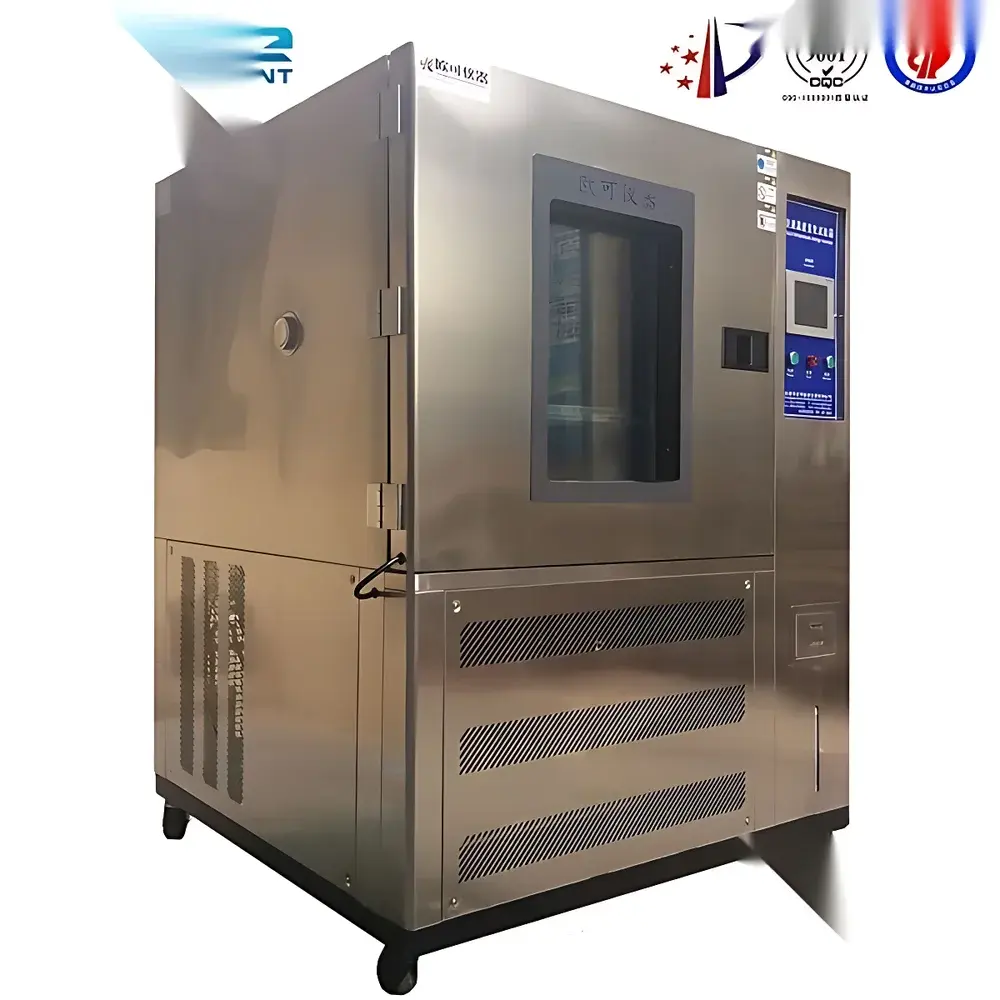
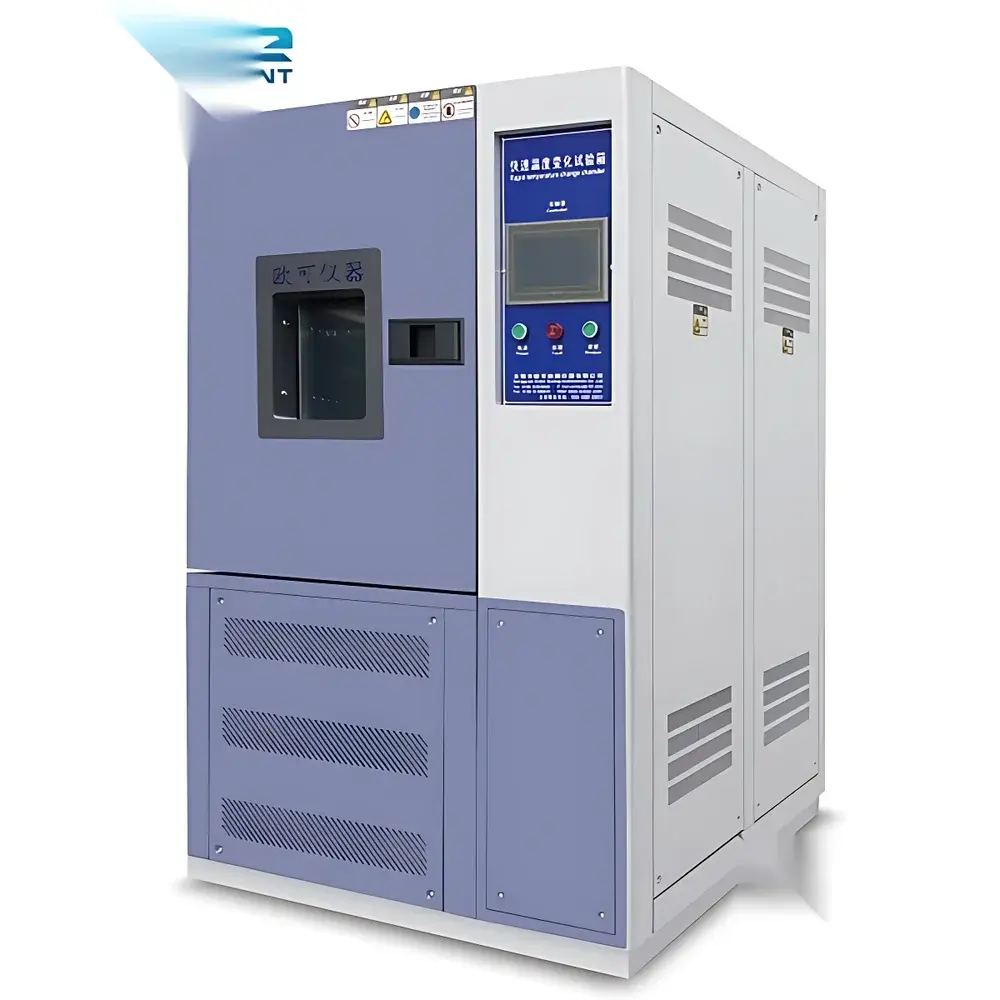
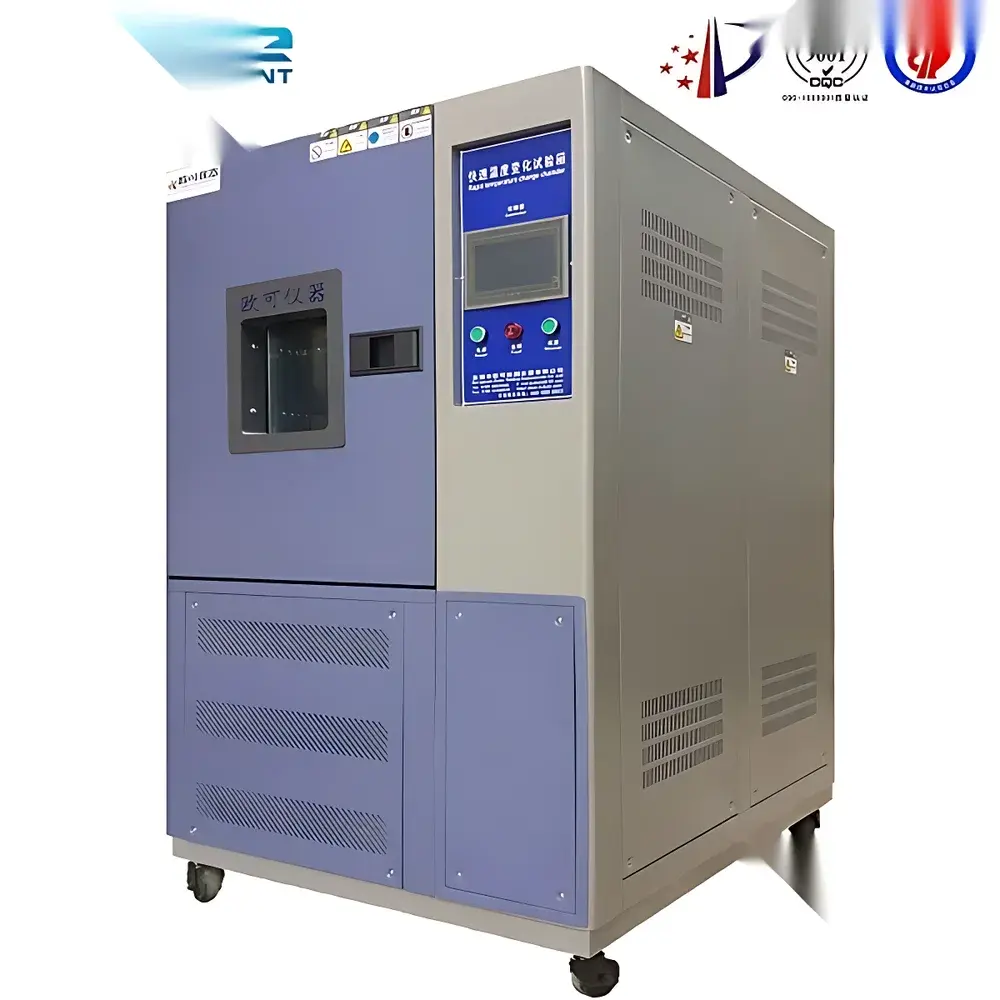
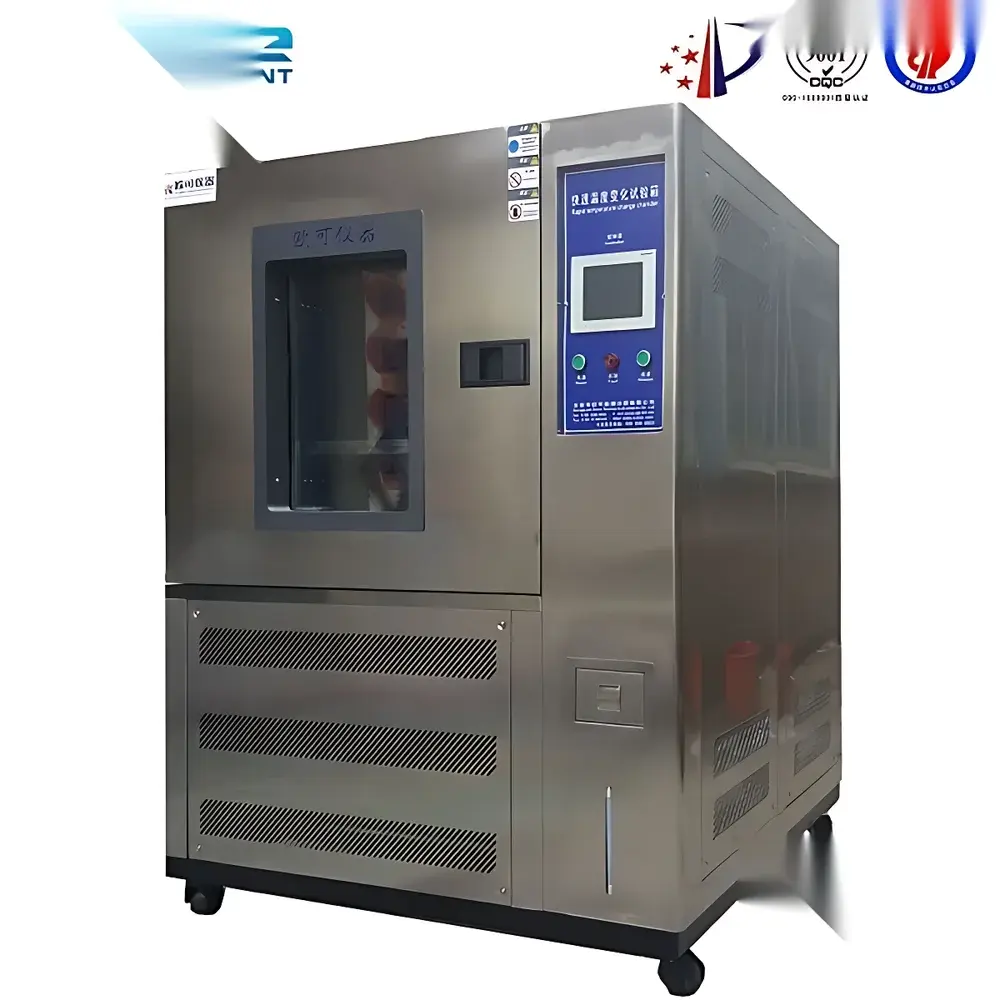
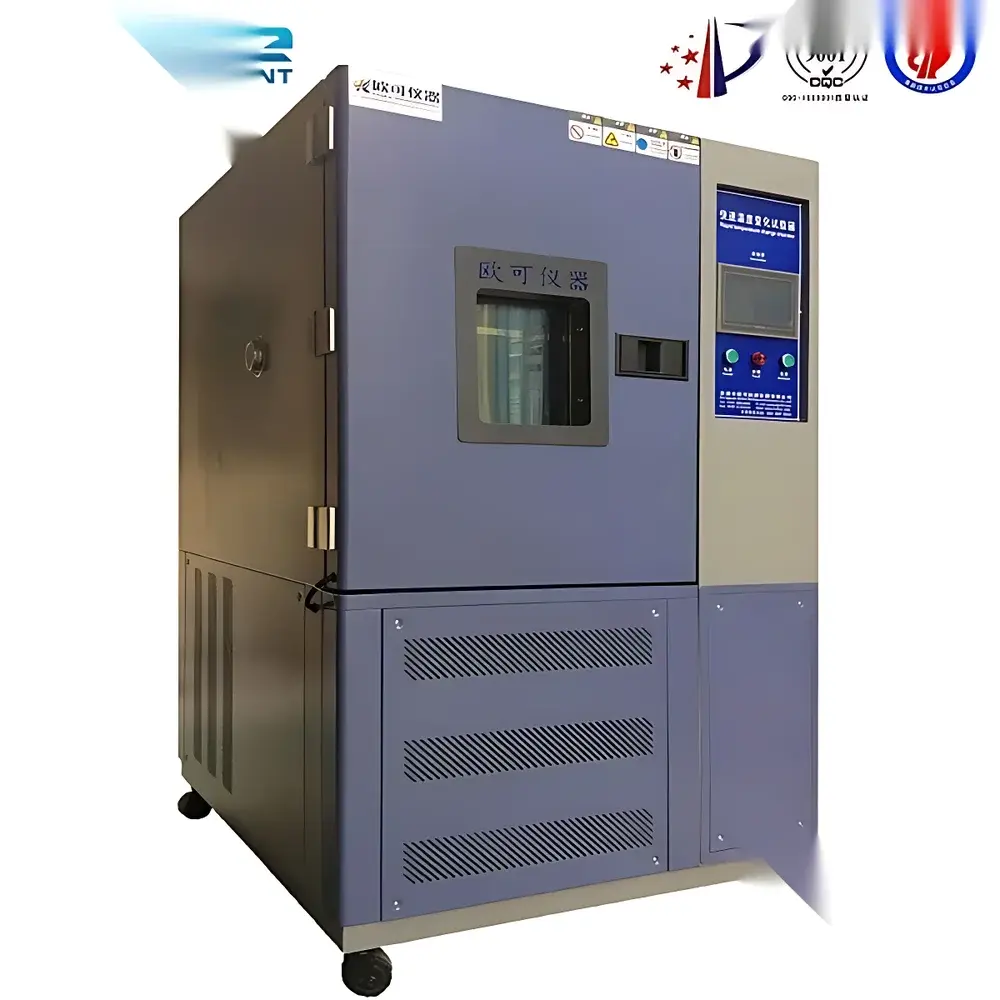
Quick Temperature Change Test Chamber
| Brand | OEM / Custom-Built |
|---|---|
| Origin | Imported |
| Manufacturer Type | Authorized Distributor |
| Price | USD 14,200 (FOB) |
Overview
The Quick Temperature Change Test Chamber is a high-performance environmental stress screening (ESS) system engineered for rapid thermal transition testing under controlled temperature and humidity conditions. It operates on the principle of forced-air convection with independent dual-loop thermal management—separating heating, cooling, and humidification subsystems to achieve precise, repeatable, and accelerated thermal cycling profiles. Designed for compliance with international reliability engineering protocols, this chamber supports qualification testing of electronic components, printed circuit boards (PCBs), optoelectronic devices (e.g., LCD panels, optical fibers), lithium-ion batteries, and automotive ECUs under extreme thermal gradients. Its architecture enables programmable ramp rates up to 15 °C/min (typical, depending on test volume and setpoint range), facilitating accelerated life testing (ALT), HALT/HASS pre-screening, and failure mode identification in early-stage product development.
Key Features
- Independent high-efficiency heating system: Dual 2 kW nickel-chromium far-infrared heating elements with microprocessor-controlled power modulation for stable thermal output and minimal overshoot.
- Dedicated refrigeration circuit: Hermetic compressor-based cooling system with cascade configuration for extended low-temperature capability (–70 °C to +180 °C standard range), decoupled from humidity control to prevent cross-interference during rapid transitions.
- Steam-generation humidification: External boiler-type humidifier with stainless-steel 0.75 kW × 3 heating tubes, auto water-level compensation, and dry-run protection—ensuring consistent RH control from 20% to 98% RH at 25–85 °C.
- Advanced TEMI880 controller: Korean-manufactured PID-based touch-panel interface with 100 programmable test profiles, up to 1000 segments per profile, and 999-cycle nesting; supports real-time curve visualization, screen lock, and password-protected parameter access.
- Communication & integration: RS-232/RS-485 serial interface compliant with Modbus RTU protocol; compatible with LabVIEW, MATLAB, and custom SCADA systems for remote monitoring, data logging, and automated start/stop sequencing.
- Energy-optimized operation: Adaptive power allocation algorithm dynamically adjusts heater/refrigerant output based on load inertia and ambient conditions—reducing energy consumption while maintaining ±0.3 °C temperature uniformity (per IEC 60068-3-5) and ±2.0 %RH humidity stability.
Sample Compatibility & Compliance
The chamber accommodates test specimens up to 500 L internal volume (custom configurations available), with standardized mounting rails, cable ports, and optional internal lighting and viewing windows. It meets essential environmental testing standards including GB/T 2423.1–2001 (cold), GB/T 2423.2–2001 (dry heat), GB/T 2423.3–1993 (damp heat, steady state), GB/T 2423.4–1993 (damp heat, cyclic), GB/T 2423.22 (temperature shock), and GB/T 2423.34 (combined temperature/humidity cycling). While not certified to UL or CE as a standalone appliance, its subsystems conform to IEC 61000-6-2 (immunity) and IEC 61000-6-4 (emission) requirements. The control software supports audit-ready data export (CSV, XML) and optional 21 CFR Part 11-compliant user authentication and electronic signature modules for regulated industries.
Software & Data Management
The embedded TEMI880 firmware provides full-cycle test documentation—including timestamped temperature/humidity logs, alarm history, and deviation reports—with configurable sampling intervals (1 s to 60 min). PC-based companion software (Windows 10/11 compatible) enables offline program creation, multi-chamber fleet monitoring, statistical process control (SPC) charting, and PDF report generation with digital signature fields. All operational parameters are stored in non-volatile memory with battery-backed retention (>10 years). Optional cloud gateway integration supports MQTT-based telemetry for centralized lab infrastructure management platforms.
Applications
This chamber is routinely deployed in R&D labs and quality assurance departments for thermal cycling validation of semiconductors, MEMS sensors, medical electronics, aerospace avionics, and EV battery modules. Typical use cases include: evaluation of solder joint integrity under repeated expansion/contraction; assessment of polymer encapsulant delamination in optoelectronic packages; verification of condensation resistance in sealed enclosures; and correlation studies between thermal ramp rate and failure onset in high-reliability components. Its reproducible thermal transients support IPC-9701, JEDEC JESD22-A104, and MIL-STD-810H Method 503.5 test execution.
FAQ
What is the typical temperature ramp rate achievable in a 200 L chamber configuration?
Standard ramp rates range from 10–15 °C/min between –40 °C and +85 °C with a 5 kg aluminum load; actual performance depends on specimen mass, thermal mass distribution, and setpoint boundaries.
Does the system support dew point control or only relative humidity?
The controller regulates relative humidity via steam injection and refrigeration-based dehumidification; dew point is derived mathematically from measured RH and temperature but not directly controlled.
Can the chamber operate continuously at –70 °C with 95% RH?
No—high humidity is not supported below 0 °C due to frost accumulation risk; the humidification system automatically disables below 4 °C to prevent ice formation in the steam line.
Is third-party calibration certification included with shipment?
A factory-as-built temperature/humidity mapping report (per ISO/IEC 17025 guidelines) is provided; NIST-traceable calibration certificates are available as an optional add-on service.
What maintenance intervals are recommended for the humidification boiler?
Descaling every 200 operational hours or quarterly—whichever occurs first—is required to maintain steam purity and prevent scaling-induced flow restriction.



