
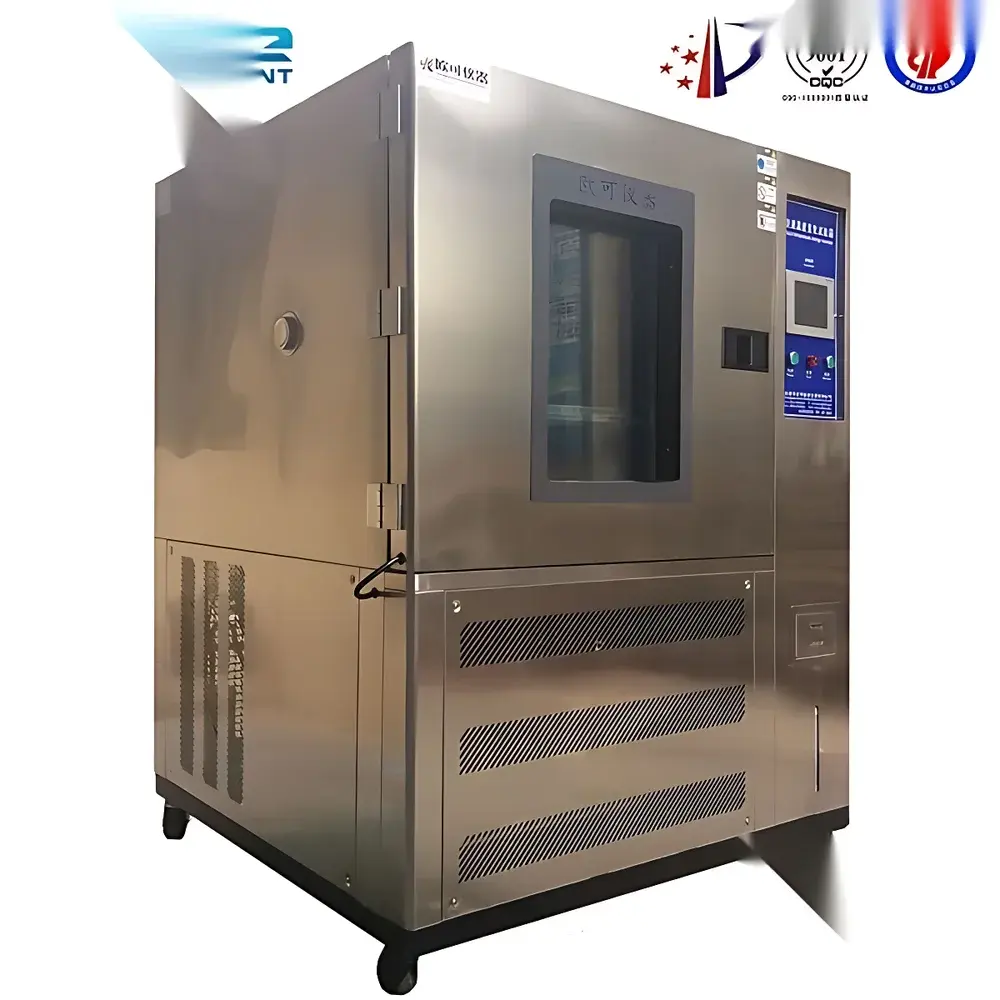
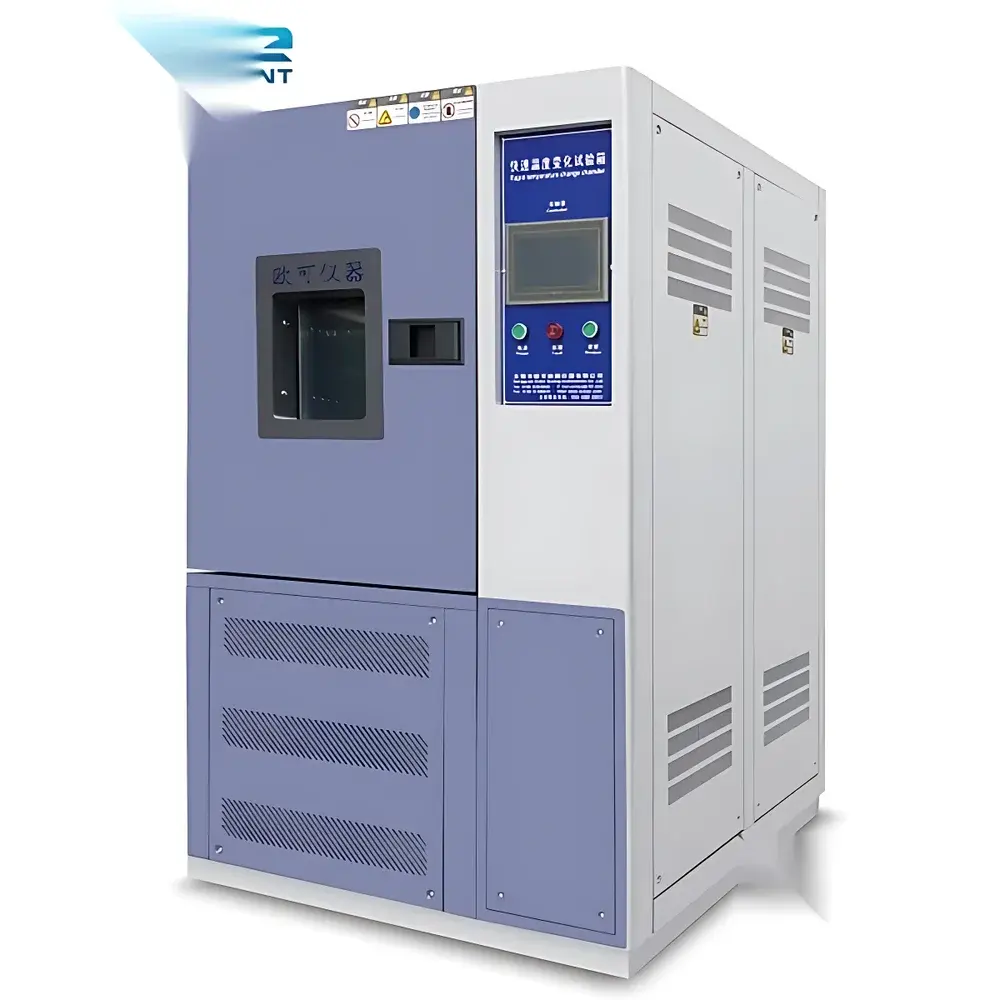
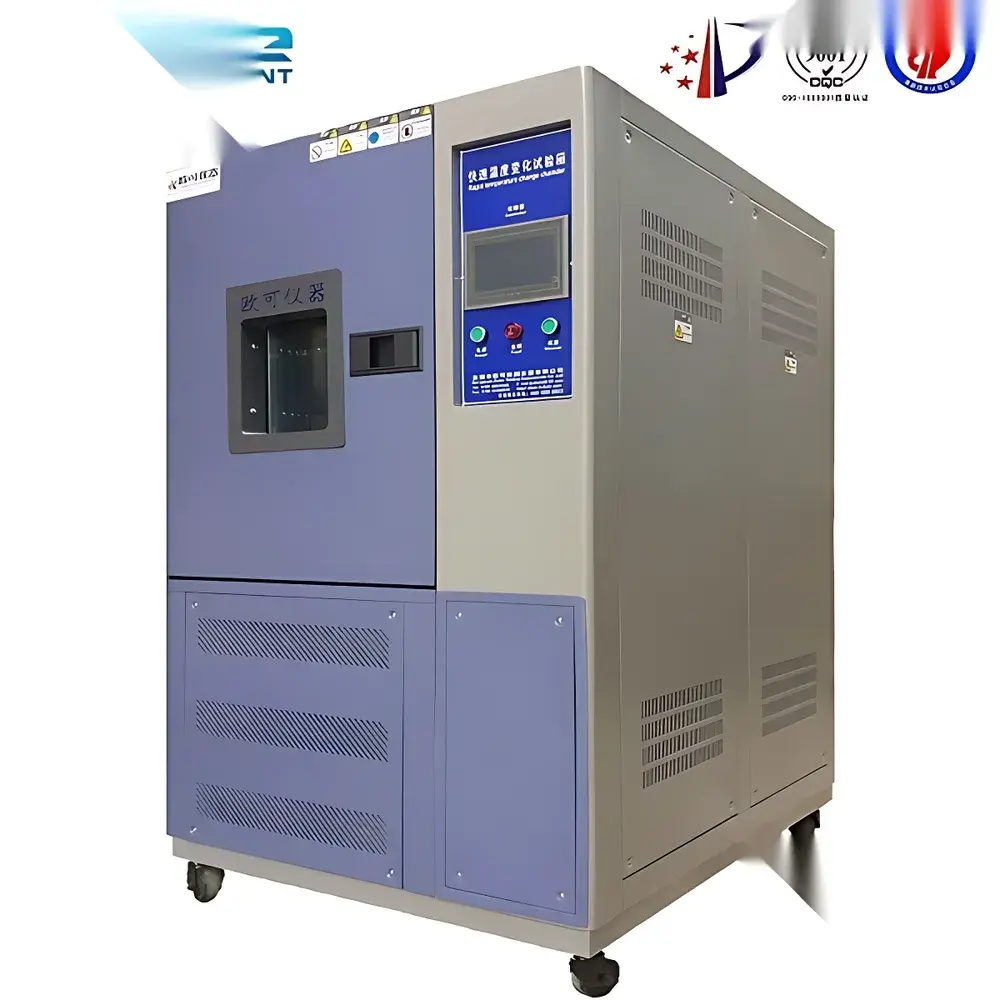
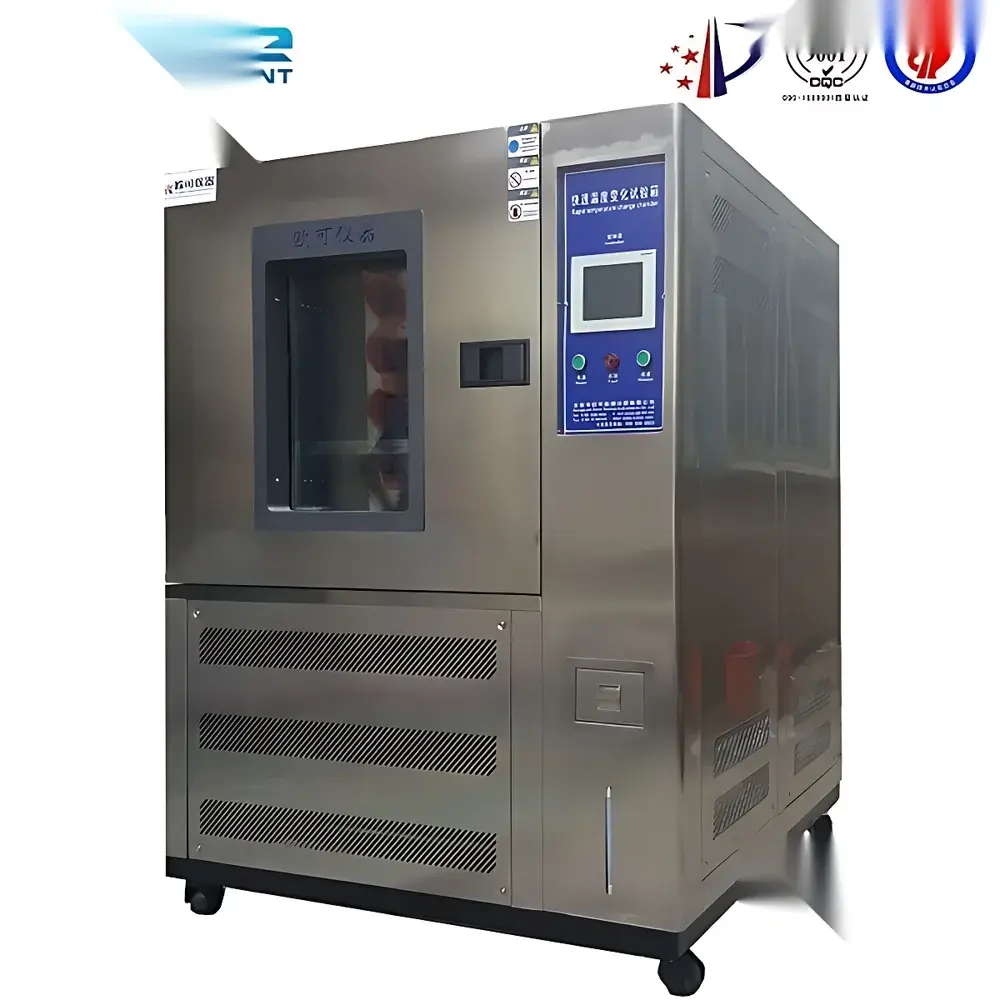
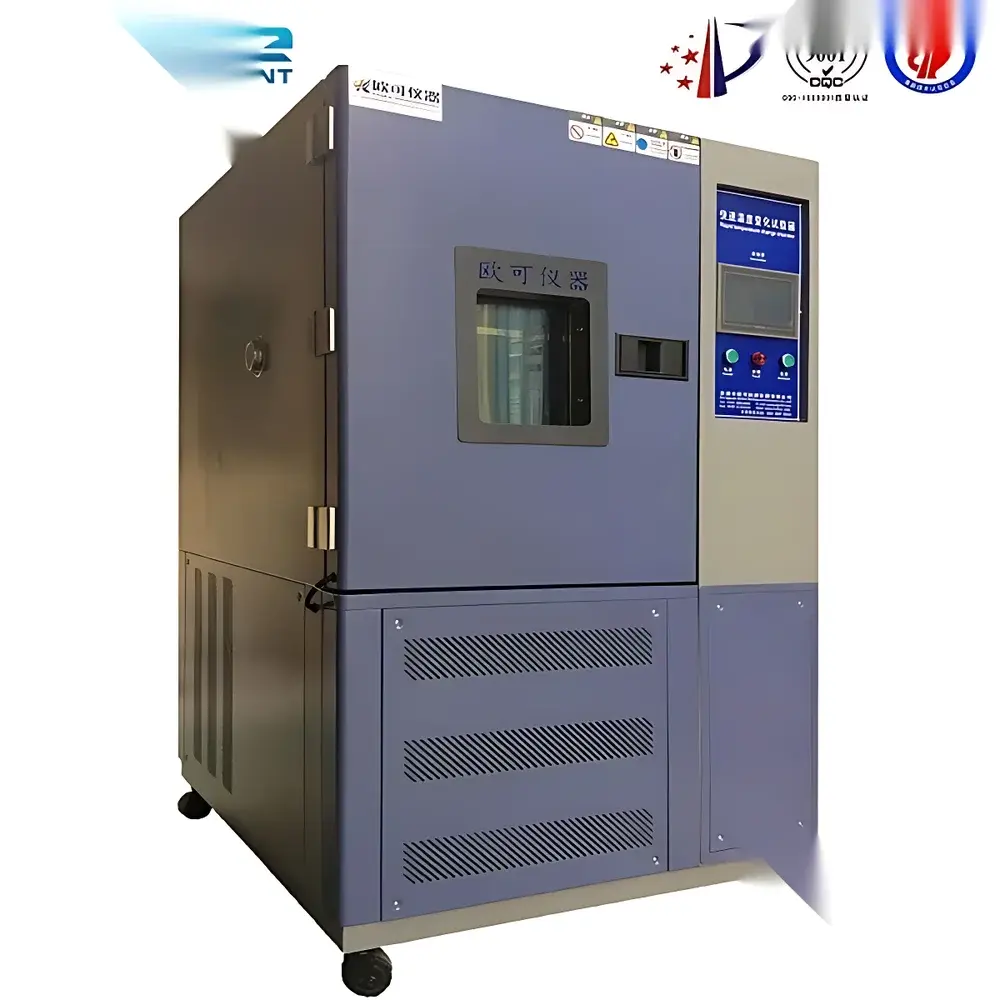
Quick Temperature Change Test Chamber – Compliant with GB, MIL-STD, and IEC Environmental Testing Standards
| Key | Internal Chamber Dimensions (W×H×D) = 500 × 600 × 500 mm |
|---|
Overview
The Quick Temperature Change Test Chamber is an engineered environmental stress screening (ESS) system designed for accelerated reliability testing of electronic components, automotive modules, aerospace subsystems, and industrial materials under dynamically shifting thermal-hygrometric conditions. Operating on the principle of forced-air convection combined with dual-stage refrigeration and precision PID-controlled steam humidification, this chamber delivers rapid, repeatable transitions between extreme temperature and humidity setpoints—enabling simulation of real-world operational stresses such as thermal shock, condensation cycles, and diurnal environmental variations. Its architecture conforms to fundamental thermodynamic stability requirements defined in ISO/IEC 17025-accredited calibration practices and supports traceable test execution in accordance with international environmental test protocols.
Key Features
- Top-mounted heat exhaust design minimizes floor footprint while optimizing airflow management and thermal dissipation efficiency.
- Door seal constructed from P.P. (polypropylene) non-metallic thermal-break material reduces conductive heat loss by >25%, improving energy efficiency and control fidelity during high-gradient cycling.
- Front-access water replenishment system integrated with automatic condensate recovery and multi-stage filtration ensures uninterrupted humidity generation without manual intervention.
- Ergonomic door handle mechanism enables smooth, vibration-free opening—even when the chamber is under active thermal load—preserving sample integrity and operator safety.
- Water-cooled refrigeration circuit utilizing Tecumseh or Bitzer compressors ensures stable low-temperature performance down to −60 °C and consistent cooling reproducibility across repeated cycles.
- SUS304 stainless steel inner chamber provides corrosion resistance, non-outgassing surface properties, and long-term dimensional stability under cyclic thermal stress.
Sample Compatibility & Compliance
This chamber accommodates samples up to 30 kg within a 150 L internal volume (500 × 600 × 500 mm), supporting standard test specimens including PCB assemblies, sensor housings, battery packs, and polymer enclosures. It meets the mechanical, thermal, and metrological requirements of multiple national and international standards—including but not limited to: GB/T 10589–1989 (Low-Temperature Test Chambers), GB/T 10586–1989 (Damp Heat Test Chambers), GB/T 10592–1989 (Climate Test Chambers), GB/T 2423.1–1989 (Cold Test Aa/Ab), GB/T 2423.3–1993 (Steady-State Damp Heat Ca, aligned with IEC 60068-2-3), GB/T 2423.4–1993 (Cyclic Damp Heat Db, equivalent to MIL-STD-810 Method 507.2 Procedure III), MIL-STD-810D Method 502.2 (Temperature Shock), and GJB 150.9–1986 (Military Standard Wet Heat Testing). All compliance claims are verifiable via documented chamber validation reports per ISO/IEC 17025 and ASTM E2297 procedures.
Software & Data Management
The chamber integrates with optional PC-based control software supporting real-time monitoring, programmable multi-step profiles, and automated data logging at user-defined intervals. Logged parameters include chamber air temperature, relative humidity, ramp rates, dwell times, and compressor status. Data export is available in CSV and Excel-compatible formats for integration into quality management systems (QMS). Audit trail functionality satisfies GLP and GMP documentation requirements; full traceability—including operator ID, timestamp, and parameter modification history—is retained for FDA 21 CFR Part 11-compliant environments when paired with validated electronic signature modules.
Applications
- Accelerated life testing (ALT) of printed circuit boards and embedded electronics under thermal-hygric stress.
- Qualification testing of automotive ECUs per AEC-Q200 and ISO 16750-4 specifications.
- Reliability assessment of lithium-ion battery cells and modules under fast-cycling thermal regimes.
- Material compatibility evaluation for aerospace seals, adhesives, and composite laminates exposed to combined temperature/humidity gradients.
- Process validation support for manufacturing facilities requiring environmental qualification per IATF 16949 Clause 8.5.1.2.
FAQ
What standards does this chamber comply with for military-grade environmental testing?
It fully supports MIL-STD-810D Method 502.2 (temperature shock) and MIL-STD-810G/H equivalents for thermal transition performance, including transition time ≤10 seconds and specified ramp rate repeatability.
Is the chamber suitable for continuous operation in a GLP-certified laboratory?
Yes—when equipped with optional audit-trail-enabled software and calibrated per ISO/IEC 17025, it meets GLP Annex 3 requirements for instrument qualification, data integrity, and procedural traceability.
Can the chamber perform combined temperature/humidity cycling per IEC 60068-2-30?
Yes—the integrated steam humidification system and precise RH control (±2 %RH) enable full compliance with IEC 60068-2-30, Ed. 3.0 (damp heat, cyclic).
What maintenance is required for the water-cooled refrigeration system?
Routine inspection of coolant flow rate, inlet water temperature (recommended ≤32 °C), and condenser cleanliness is advised quarterly; compressor oil analysis is recommended annually per Bitzer/Tecumseh OEM guidelines.
Does the chamber support remote monitoring via Ethernet or Modbus?
Standard RS-485 Modbus RTU interface is provided; optional Ethernet-to-Modbus gateways enable SCADA integration and centralized fleet monitoring in multi-chamber test labs.



