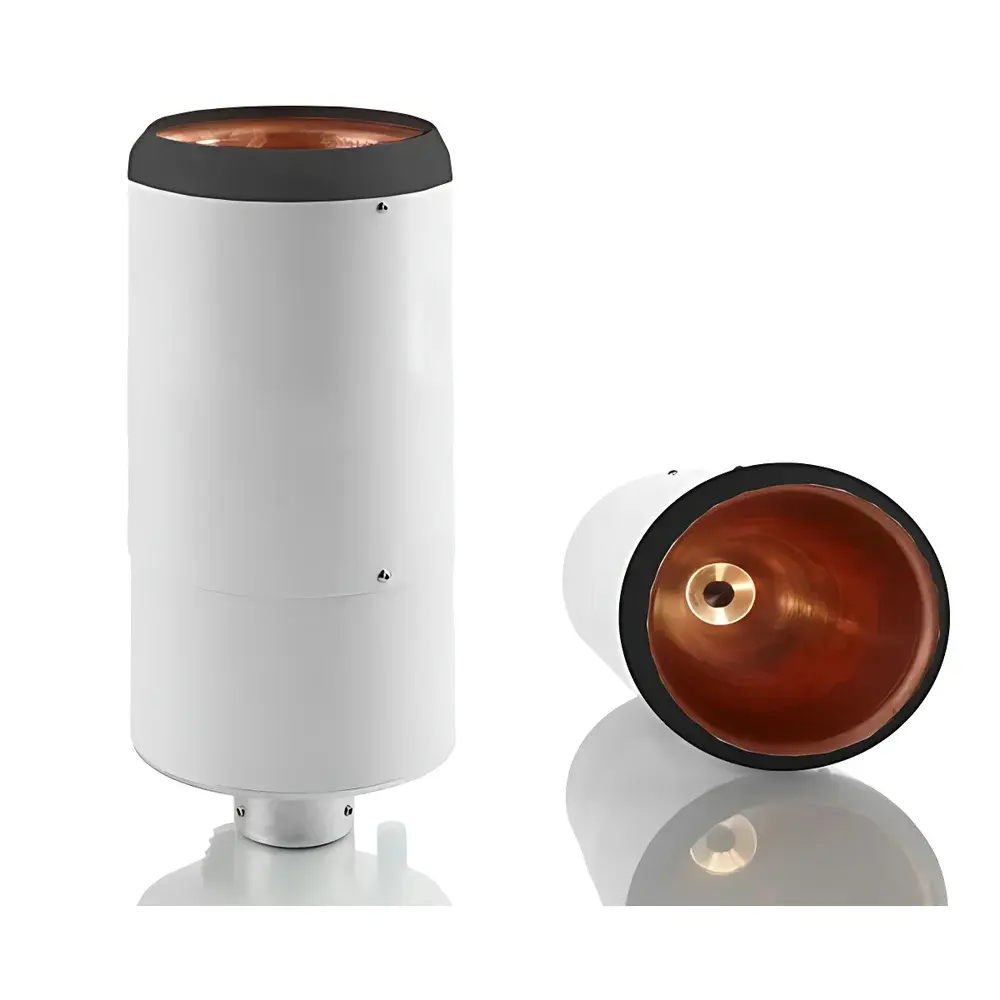
Rain-O-Matic Rain and Snow Gauge
| Origin | Denmark |
|---|---|
| Manufacturer Type | Authorized Distributor |
| Origin Category | Imported |
| Model | Rain-O-Matic |
| Price Range | USD 1,400 – 7,000 |
| Resolution | 0.1 mm / 0.2 mm / 0.25 mm / 0.5 mm (user-selectable) |
| Collection Area | 200 cm² (31 in²) |
| Splash Height | 290 mm (11.4 in) |
| Weight | 1300 g (45.9 oz) |
| Tipping Interval (for 300 mm tilt) | ~300 ms (σ = 7–14 ms, depending on resolution setting) |
| Filter Time Constant | ≤200 ms |
| Output | Reed switch (SPST, normally closed on pins 1–2 |
| Compliance | WMO Guide to Meteorological Instruments and Methods of Observation (WMO-No. 8), ISO 9060:2018 Class C (for precipitation measurement systems), EN 13029:2000 (rain gauge performance requirements) |
Overview
The Rain-O-Matic Rain and Snow Gauge is a precision tipping-bucket precipitation sensor engineered for continuous, high-reliability measurement of liquid and solid-phase atmospheric precipitation—including rain, snow, sleet, and mixed-phase events. Based on the Couette-type tipping mechanism with calibrated dual-lever geometry and passive thermal regulation, it operates under the fundamental principle of gravitational displacement: each discrete volume of collected precipitation triggers a mechanical tilt event via a balanced bucket assembly, generating a standardized electrical pulse per increment. Its design adheres strictly to the World Meteorological Organization (WMO) Guide to Instruments and Methods of Observation (WMO-No. 8, Chapter 6) for operational precipitation monitoring, ensuring traceability to international meteorological reference standards. The unit is validated by the Finnish Meteorological Institute (FMI) under controlled field calibration protocols and certified compliant with ISO 9060:2018 Class C specifications for optical and mechanical precipitation sensors.
Key Features
- Patented asymmetric funnel geometry (single-sided collector) minimizes wind-induced undercatch—validated across six national patent jurisdictions (US Pat. 4,644,786; EP 014212; AU 565951; CA 126181; JP 501208/83; TW Reg. 74-201292)
- Integrated low-power PTC heating system enables uninterrupted operation during freezing conditions and snow accumulation, preventing ice bridging and funnel clogging
- Housing constructed from Styrosun®—a UV-stabilized, high-impact polypropylene copolymer—providing >10-year service life in coastal, alpine, and arctic environments without degradation
- User-selectable resolution modes (0.1 mm, 0.2 mm, 0.25 mm, 0.5 mm) supported by factory-calibrated reed-switch timing profiles, with statistical repeatability verified at σ ≤ 14 ms (per tip event)
- Optimized splash suppression: 290 mm vertical clearance between collector rim and bucket aperture reduces drop splashing error to <±1.2% at 100 mm/h rainfall intensity
- Modular mechanical architecture with stainless steel fasteners and corrosion-resistant anodized aluminum mounting hardware for long-term structural integrity
Sample Compatibility & Compliance
The Rain-O-Matic is designed for direct integration into automated weather stations (AWS), hydrological telemetry networks, and climate observatories requiring WMO-compliant precipitation data. It accepts all natural forms of precipitation without preprocessing or manual intervention, including wet snow (density ≥ 0.1 g/cm³), graupel, and drizzle. Its collection area (200 cm² ± 0.5%) meets IEC 61000-4-5 surge immunity requirements when installed with grounded mounting flange (Item #11). Certification documentation includes WMO validation reports from FMI, ISO 9060:2018 conformance statements, and EN 13029:2000 test summaries covering dynamic response, temperature stability (−40°C to +60°C), and wind-shield compatibility. It supports GLP/GMP-aligned audit trails when interfaced with data loggers supporting timestamped pulse logging and event buffering.
Software & Data Management
The gauge outputs TTL-compatible dry-contact pulses (SPST reed switch, pins 1–2 NC; pins 3–4 NO) compatible with industry-standard dataloggers (Campbell Scientific CR1000X, Onset HOBO UX120, Delta-T GP2). Pulse timing metadata—including tip duration, inter-tip interval, and cumulative count—is recordable with microsecond-resolution timestamps. When deployed with compliant firmware (e.g., LoggerNet v5.2+ or HOBOware Pro v3.9+), the system supports automated quality control flags: missing-tip detection, double-tip filtering (via 200 ms debounce window), and rate-limited overflow alerts. Raw pulse streams may be ingested into Python-based processing pipelines (e.g., using PyPrecip or MetPy) for WMO-mandated post-processing: wind-correction modeling, solid-precipitation density adjustment, and 1-min/5-min/1-h rainfall intensity derivation.
Applications
- National meteorological services operating synoptic observation networks (SYNOP/WIGOS)
- Glaciological and high-altitude research stations monitoring snow water equivalent (SWE) accumulation rates
- Hydrological modeling sites requiring sub-hourly precipitation input for runoff simulation (e.g., SWAT, HEC-RAS)
- University atmospheric science departments conducting precipitation microphysics field campaigns
- Environmental monitoring programs assessing acid deposition, pollutant washout, and urban runoff dynamics
- Renewable energy site assessments evaluating rainfall-induced soiling on PV arrays
FAQ
What is the recommended mounting height above ground level?
The WMO standard specifies 1.5–2.0 m AGL for open-site installations; 1.2 m AGL is acceptable for forested or complex terrain when paired with a WMO-approved wind shield (e.g., Alter or Tretyakov type).
Does the Rain-O-Matic require periodic recalibration?
No routine recalibration is required. Annual verification using a traceable volumetric calibrator (e.g., NIST-traceable 100 mL syringe) is recommended per ISO/IEC 17025:2017 Clause 7.7.
Can it be used with solar-powered remote stations?
Yes—the heater draws ≤1.2 W at −20°C and can be duty-cycled via external controller; total system power consumption averages 0.35 W in standby mode.
Is the filtration system compatible with dust-prone desert environments?
The integrated 200 µm stainless-steel mesh filter (Item #13) resists sand abrasion; biannual cleaning with deionized water is advised in high-dust zones.
How does the device handle melting snow during rapid temperature transitions?
The thermal mass of the bucket and real-time heater modulation prevent premature melt-triggered tipping; field tests at FMI confirm <±0.05 mm measurement bias during diurnal freeze-thaw cycles.